
LGBTQ+ & Accessible Housing in Medellín: Expat Guide to Neighborhoods, Buildings & Rental Rights
Navigating Medellín as an LGBTQ+ or mobility-challenged expat requires understanding both progressive legal protections and rugged valley topography. Here is how to find accessible, welcoming housing.
IDIOMA DEL ARTÍCULO
Showing original language
Quick Answer: Colombia offers some of Latin America's most progressive civil protections, including constitutional anti-discrimination laws and equal marriage rights. However, physical infrastructure varies wildly across Medellín. For wheelchair users and mobility-impaired expats, flat neighborhoods like Laureles and Conquistadores provide far better daily walkability than the steep hillsides of El Poblado. When apartment hunting, always verify true step-free access from street to elevator, as many older buildings feature unexpected entry steps before the lobby.
The Reality of Inclusive Living in Medellín: Progressive Rights vs. Mountain Terrain
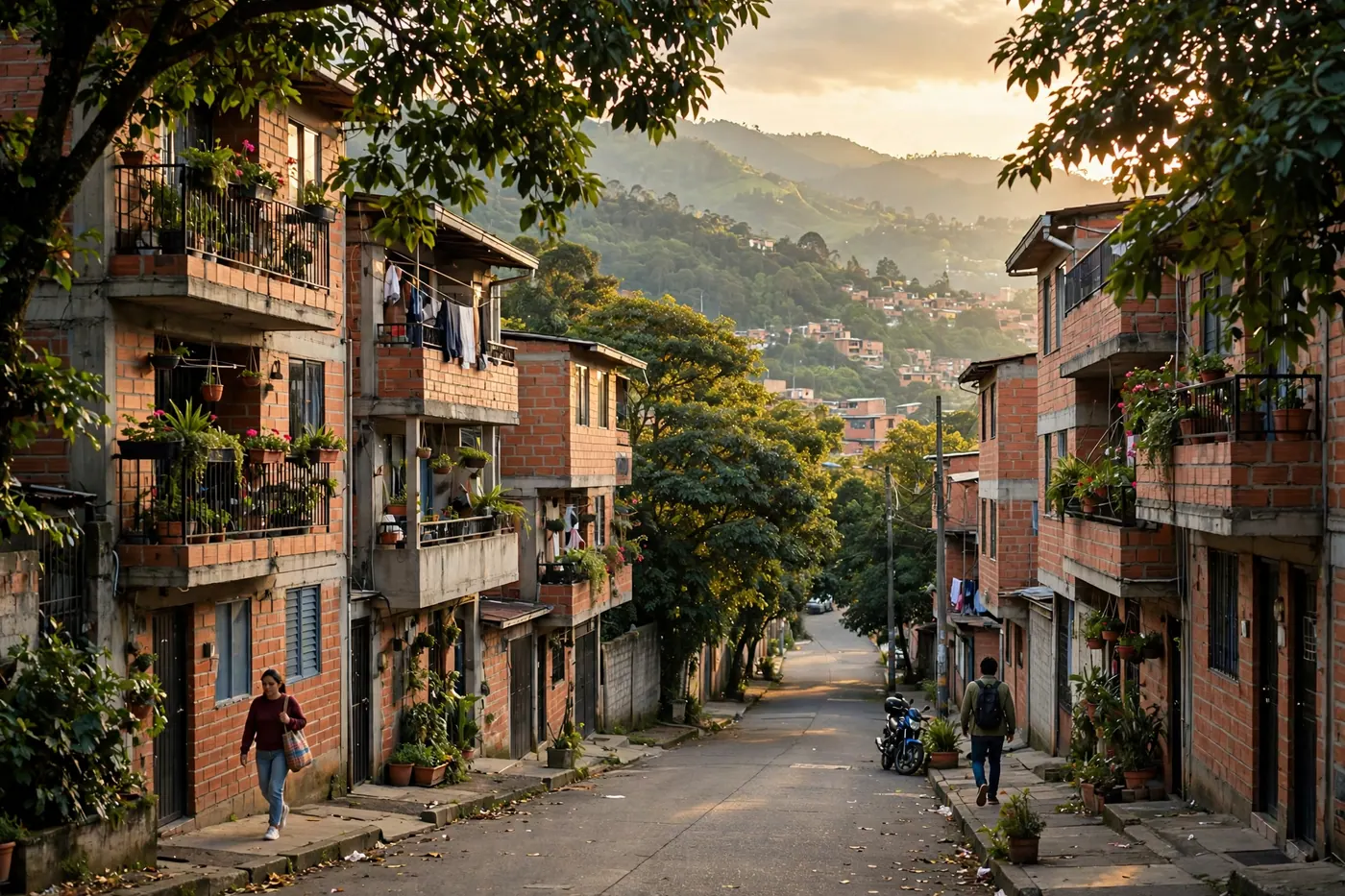
Medellín frequently charms international arrivals with its spring climate, dramatic mountain backdrop, and friendly community culture. For queer expats and people with disabilities, the city represents a fascinating contrast. On paper, Colombia possesses some of the most forward-thinking civil protections in the world. The Constitutional Court recognized nationwide same-sex marriage in 2016, and anti-discrimination legislation under Ley 1482 de 2011 criminalizes bias based on sexual orientation or disability.
Statutory standards under Ley 361 de 1997 require the progressive removal of architectural barriers in public and residential spaces. However, the physical reality on the ground is dictated by the dramatic topography of the Aburrá Valley. Mountainous geography means steep slopes, uneven curbs, and broken sidewalks are common in certain sectors. Meanwhile, social conservatism can still surface in subtle interpersonal ways. While our earlier review covered broader civic diversity and community resources in Medellín, securing a long-term home requires looking closely at neighborhood terrain, building entrance layouts, and urban rental regulations.
Keep reading: For nationwide legal context beyond apartment hunting, see the LGBTQ+ life in Colombia expat guide.
Neighborhood Topography & Wheelchair Navigation: Laureles vs. El Poblado
Choosing where to live in Medellín is largely a geographical calculation. Two neighborhoods dominate the international rental market, but their physical accessibility could not be more different.
Laureles and Conquistadores: The Flat Grid Advantage
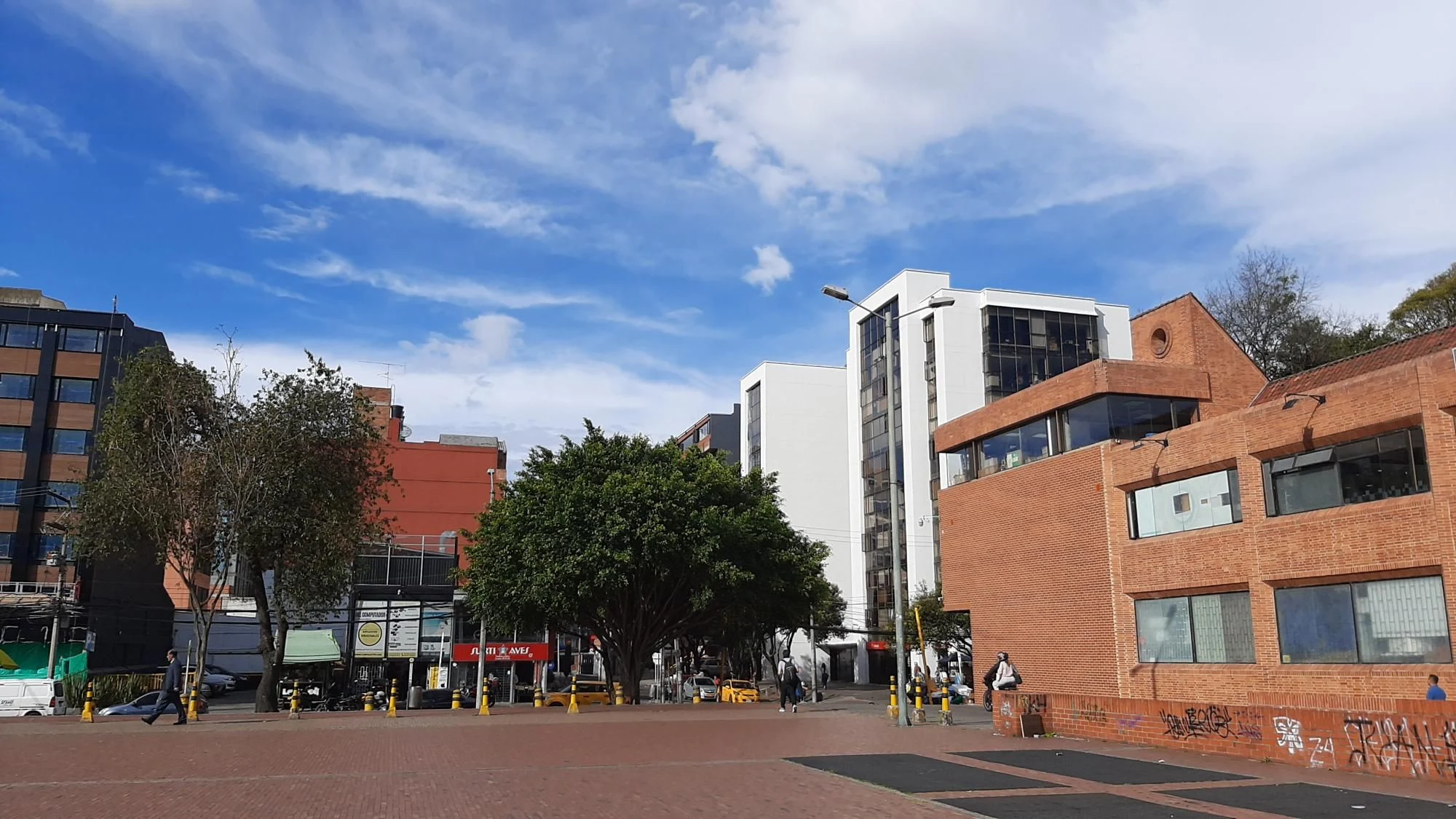
If you use a manual wheelchair, a motorized mobility scooter, or simply prefer walking without climbing vertical inclines, Laureles is the undisputed leader. Built on the valley floor west of the Medellín River, Laureles and adjacent Conquistadores feature a circular, relatively flat street grid. Sidewalks surrounding Primer Parque and Segundo Parque de Laureles are shaded, broad, and equipped with dropped curb cuts at many major intersections.
Daily necessities—supermarkets, medical offices, bakeries, and sidewalk cafés—are reachable along level streets. As noted in our Laureles expat rental guide, the neighborhood strikes an exceptional balance between vibrant community life and practical street mobility.
El Poblado and Envigado: Beautiful but Steep
El Poblado is Medellín's premier commercial hub, filled with fine dining, boutique hotels, and nightlife. Yet for anyone with limited mobility, living here without a personal car or direct taxi service is challenging. Sub-neighborhoods like Provenza, Las Lomas, El Tesoro, and Los Balsos are built straight into steep eastern hillsides. Sidewalks are frequently interrupted by steep garage ramps, raised tree roots, and sudden concrete staircases. Pushing a wheelchair along Carrera 37 or Calle 10 requires significant physical stamina, and rain makes downhill sidewalk pavers slippery.
| Neighborhood Sector | Topography & Wheelchair Ease | Sidewalk Infrastructure | Best Suited For |
|---|---|---|---|
| Laureles (Central) | Flat, circular street grid | Broad sidewalks, decent curb cuts, mature trees | Daily wheelchair independence, quiet cafe culture |
| Conquistadores | Flat, immediate river park access | Level sidewalks connecting directly to Parques del Río | Active outdoor access, peaceful residential streets |
| El Poblado (Lower/Manila) | Moderate slope near Metro stations | Variable; crowded near commercial zones | Nightlife proximity with manageable Metro access |
| El Poblado (Upper Hillsides) | Very steep mountain terrain | Intermittent sidewalks, steep car driveways, stairs | High-rise views, drivers relying on adapted transport |
Vetting an Accessible Apartment in Medellín: A 5-Point Checklist
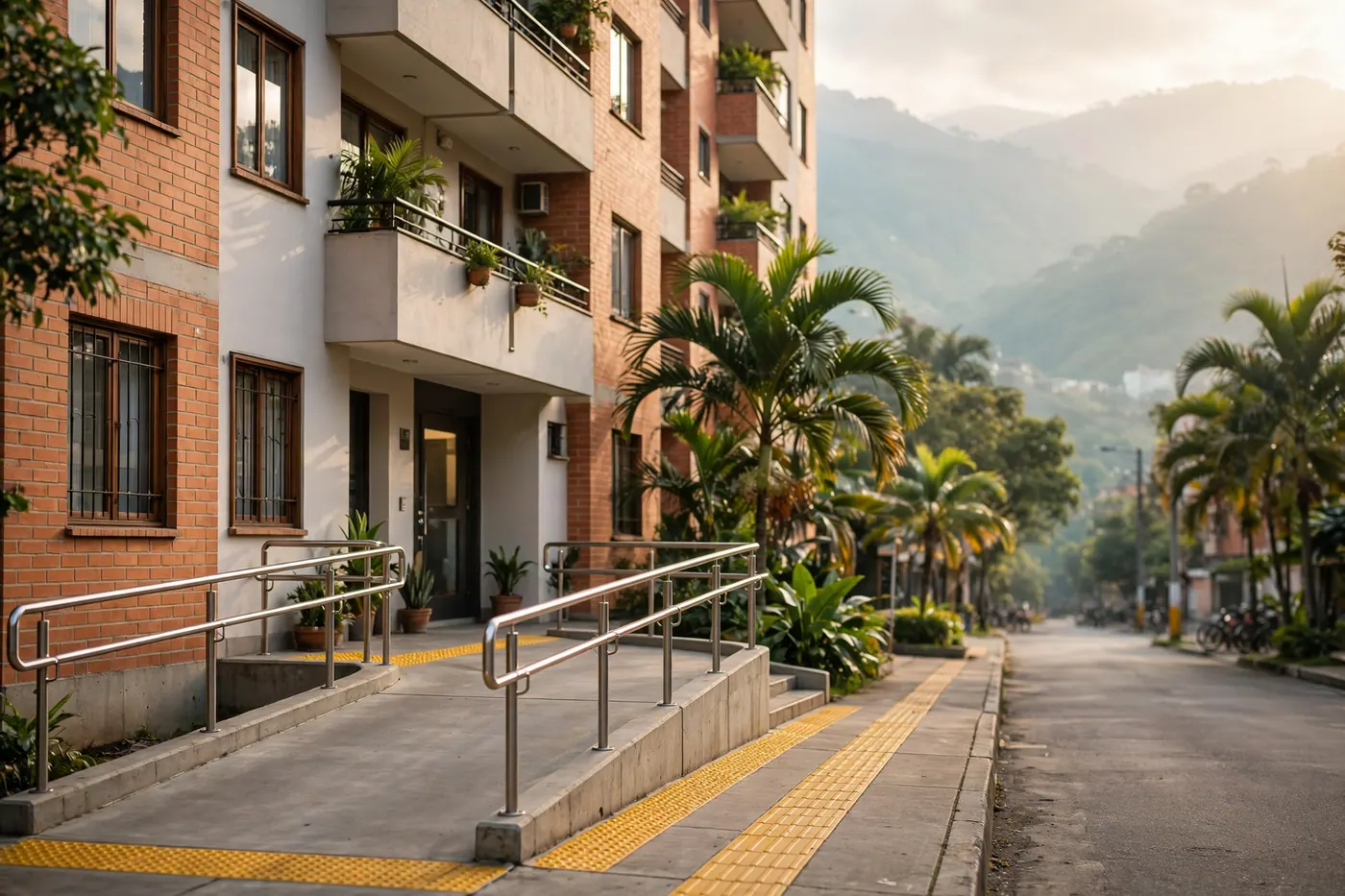
When browsing online listings, Colombian real estate portals often mark a property as "accessible" simply because the building has an elevator. That label can be dangerously misleading. Many mid-century residential towers feature three to five decorative concrete steps between the sidewalk gate and the elevator vestibule, without any ramp.
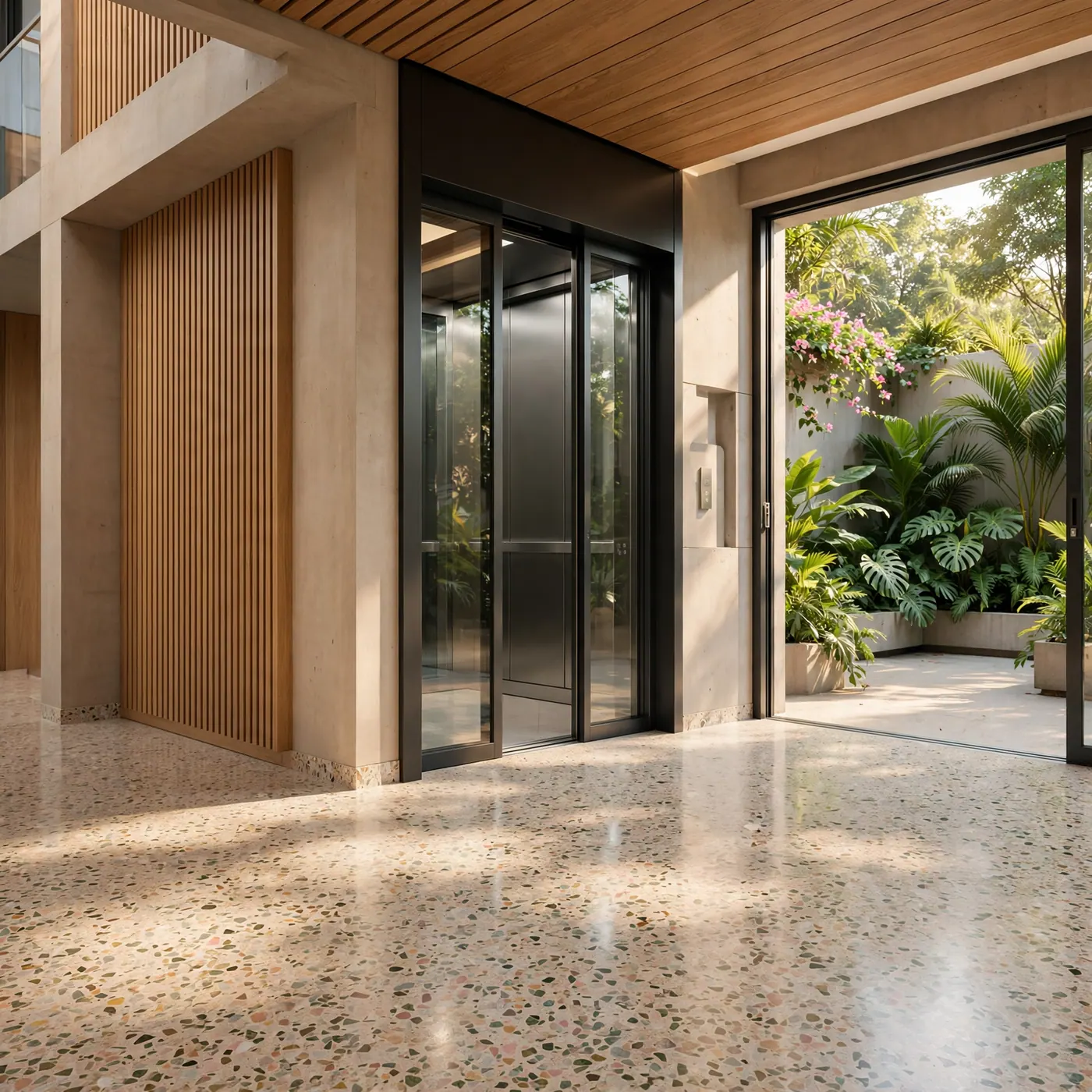
- 1. Verify Street-to-Elevator Continuity: Insist on a video walkthrough showing the continuous path from the street curb, through the pedestrian security gate (portería), across the lobby, and directly into the elevator cab.
- 2. Elevator Cabin Dimensions: Modern residential high-rises generally have elevators compliant with standard dimensions, but older six-story buildings may feature narrow rectangular cars that cannot accommodate a full-size motorized chair.
- 3. Interior Doorway Clearances: Standard Colombian interior door frames for bedrooms and bathrooms are often built between 65 cm and 70 cm wide. Power wheelchair users typically require minimum clearances of 80 cm. Ask the landlord or agent to measure bathroom thresholds directly.
- 4. Bathroom Configuration: Traditional Colombian apartments often place a raised 5-to-10-centimeter tile curb around shower enclosures to contain water runoff. Removing this curb requires minor masonry work that must be negotiated before signing.
- 5. Portería Support: Most Estrato 4, 5, and 6 buildings feature 24-hour concierge staff (vigilantes). Having a staffed reception desk ensures reliable assistance with heavy entry doors, package delivery, and building emergency response.
Under Colombian Propiedad Horizontal law (Ley 675 de 2001) and constitutional precedents enforcing Ley 361 de 1997, residential condominium assemblies cannot arbitrarily use majority votes to veto accessibility modifications needed by residents with disabilities. If a tenant or owner requires an entrance ramp, the homeowners association must reasonably accommodate structural adjustments.
Renting as an LGBTQ+ Couple: Contracts, Co-Signers & Ley 820
Leasing residential property in Colombia is governed by Ley 820 de 2003 (Régimen de Arrendamiento de Vivienda Urbana). The statute establishes equal protection for all tenants and prohibits arbitrary exclusions. Foreign same-sex couples enjoy identical contractual rights to opposite-sex couples when signing a lease. You can enter a contract as co-tenants (coarrendatarios), creating joint legal responsibility without needing to prove familial relationship or marital status.
The primary hurdle in Colombia is rarely overt discrimination; rather, it is local underwriting stringency. Traditional real estate agencies (inmobiliarias) require tenants to clear third-party insurance underwriters (such as Seguros Bolívar, Sura, or El Libertador). These companies typically demand a local Colombian co-signer (fiador con finca raíz) who owns unencumbered real estate in the same municipality.
Foreigners without local family often bypass this requirement by purchasing a tenant bond (fianza) or negotiating directly with private landlords. Understanding standard Colombian property legal checks will help you spot red flags early. Under Ley 820 de 2003, landlords cannot legally demand arbitrary cash damage deposits for standard urban residential leases. If a landlord requests several months of cash up front, it is often safer to suggest an escrow arrangement or use verified platforms.
Civic Resources, Transit Accessibility & Community Centers
Medellín provides dedicated institutional networks designed to protect vulnerable residents and foster inclusive urban living.
Centro para la Diversidad Sexual e Identidades de Género: Operated by the Alcaldía de Medellín's Gerencia de Diversidades Sexuales, this municipal facility provides free legal counsel, psychological support, and social programming. The center is located at Carrera 48 #57-21, Sector Villanueva, Comuna 10 (La Candelaria). It serves as an essential public resource if you experience administrative mistreatment or require guidance on local legal rights.
Metro de Medellín Accessibility: The city's elevated rail system is one of Latin America's cleanest and most accessible transit operations. Approximately 96% of fixed rail stations are equipped with elevators, mechanical platform lifts, or sloped ramp entrances. Tactile paving runs throughout the station platforms, and trains feature designated wheelchair anchor bays. Long-term residents with documented permanent disabilities can register at Metro Customer Service Points (PAC) to activate the Personas con Discapacidad (PcD) profile on their Tarjeta Cívica transit card.
Emergency and Support Lines: For immediate social protection, Medellín operates the municipal 123 Social line, which connects individuals directly to human rights ombudsmen and emergency medical dispatchers.
Finding Inclusive Housing Without Friction
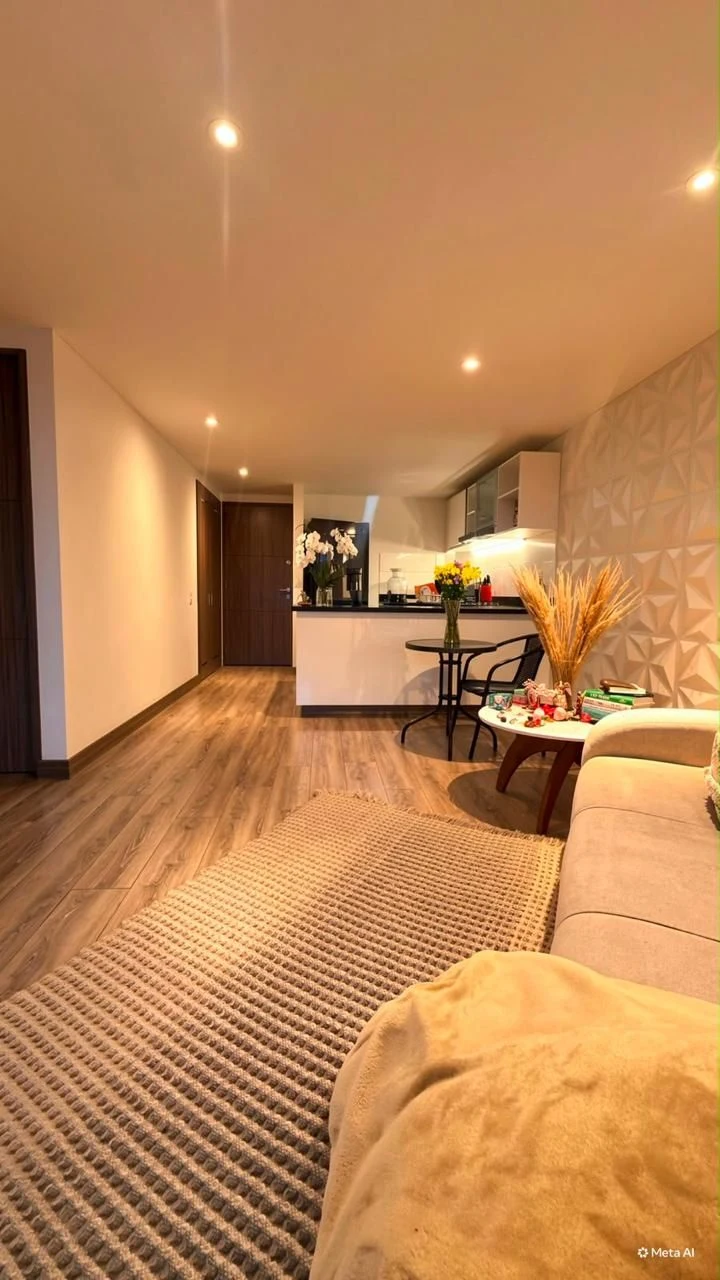
Searching for housing in Medellín becomes significantly smoother when you clarify your requirements early. When messaging prospective landlords, state your structural access needs clearly before scheduling a viewing. Asking for a continuous video of the building entrance saves hours of travel across the valley.
Colombia Move currently lists 141 active housing ads (septiembre 2026), including 45 apartment listings. Typical long-term furnished and unfurnished rents in well-connected Estrato 4 to 6 sectors generally span between COP 2,500,000 and COP 6,500,000 per month depending on square footage, modern elevator amenities, and neighborhood walkability. Working directly with open-minded owners allows you to establish mutual trust, negotiate transparent lease terms, and build a comfortable home in this dynamic city.
Frequently Asked Questions
❓ Is Medellín wheelchair-friendly for everyday expat living?
Yes, but accessibility depends heavily on the neighborhood. Flat areas like Laureles and Conquistadores offer accessible sidewalks and level streets, while hillside areas like upper El Poblado have steep slopes and uneven surfaces. The Metro rail system offers roughly 96% station elevator accessibility as of 2026.
❓ Can same-sex couples legally sign a joint apartment lease in Colombia?
Yes. Same-sex couples have equal lease rights under Ley 820 de 2003, still vigente in 2026. Both partners can sign jointly as co-tenants without a legal distinction from heterosexual couples.
❓ Are residential buildings in Medellín legally required to have wheelchair ramps?
Yes. Ley 361 de 1997 and Constitutional Court rulings, still vigente in 2026, stop assemblies from blocking reasonable ramps. Many older buildings have not yet completed those physical retrofits.
❓ Where is Medellín's municipal LGBTQ+ community center located?
The Centro para la Diversidad Sexual e Identidades de Género is at Carrera 48 #57-21 in Villanueva, Comuna 10 (La Candelaria). It provides municipal legal, psychological, and social assistance as of 2026.
❓ How do foreign residents get a preferential accessibility Metro card?
Take a Cédula de Extranjería and disability documentation to a Metro PAC desk. Staff can add the Personas con Discapacidad (PcD) profile on a Tarjeta Cívica; confirm current 2026 PAC rules on site.
❓ What should disabled renters check during an apartment viewing in Medellín?
Check the street-to-elevator path first. Then measure bathroom doorways for about 75–80 cm of clearance, and see whether the shower has a raised curb that a wheelchair cannot cross.
Comments
Loading comments...
Checking sign-in status...