
Best Neighborhoods for Young Professionals in Medellín and Bogotá
Deciding between Medellín and Bogotá? We break down the top walkable, coworking-rich neighborhoods for career-focused expats and young professionals.
IDIOMA DEL ARTÍCULO
Showing original language
Choosing where to establish yourself as a remote worker, founder, or corporate professional in Colombia usually comes down to an intense debate between two cities: the perpetual spring, mountain-framed efficiency of Medellín versus the sprawling, cosmopolitan ambition of Bogotá. Both urban powerhouses boast distinct business networks, creative epicenters, and digital infrastructures, yet day-to-day life inside their key districts feels completely different.
I have spent years navigating both cities—splitting lease contracts between Laureles’s circular avenues and the brick high-rises of Chapinero Alto. While Medellín sells an easier, outdoorsy pace of life, Bogotá delivers unmatched career breadth, cultural depth, and serious corporate headquarters. Here is an honest, street-level breakdown of the top neighborhoods across both metropolises for ambitious young professionals looking for walkability, dependable fiber-optic internet, safe residential streets, and vibrant social hubs.
Key Decision Criteria: What Matters Most to Career-Driven Renters
Before touring apartments or committing to a three-month lease, every professional newcomer needs to understand three fundamental elements of urban living in Colombia:
- The Estrato System: Residential properties are officially stratified from Estrato 1 through 6. For young professionals, Estratos 4 and 5 represent the practical sweet spot. Estrato 4 properties pay unsubsidized, baseline public utility tariffs. Estrato 5 and 6 properties are categorized as upper-middle and luxury tiers, carrying mandatory surcharges on electricity, water, and gas that subsidize lower-income sectors. Estrato 6 delivers upscale finishes and 24-hour doormen, but monthly utility bills are noticeably steeper.
- Transit vs. Congestion: Medellín possesses Colombia’s only rail-based urban backbone (the electric Metro system), making cross-valley transit predictable. Bogotá lacks an active rail metro—its first elevated line is still under heavy construction—meaning daily mobility hinges on the dedicated TransMilenio bus rapid transit corridors, Carrera 7 dual buses, an expansive network of protected Ciclorrutas (bike lanes), or hailing app-based rideshares.
- Coworking Density and Coffee Shop Culture: If you rely on steady 200–500 Mbps connections for video conferencing, you will need a neighborhood with modern residential fiber cabling (Claro, Tigo, or Movistar) and proximity to dedicated shared workspaces and laptop-friendly cafes.
Top Neighborhoods in Medellín for Young Professionals
Medellín’s appeal lies in its compact urban basin, outdoor leisure opportunities, and consistent warm weather. For young professionals seeking an alternative to the crowded party strips, three areas dominate.
Laureles (Comuna 11)
Laureles is consistently celebrated for its pedestrian-first layout. Organized around circular green spaces—specifically Primer Parque and Segundo Parque—and the leafy thoroughfare of Avenida Nutibara, this Estrato 4 and 5 district combines traditional Antioquian neighborhood warmth with contemporary digital nomad infrastructure.
You can start your morning answering emails over pour-overs at local specialty roasters, walk to a nearby gym or coworking space along tree-canopied sidewalks, and spend the evening enjoying craft beer or international dining without dodging steep hills. Laureles also provides convenient walking access to the Medellín Metro Line B via Estadio and Suramericana stations, making trips to the city center or connections to Line A at San Antonio station straightforward.
El Poblado: Manila and Astorga (Comuna 14)
While the upper reaches of El Poblado around Parque Lleras and Provenza are famous for high-energy nightlife and tourist crowds, its lower residential pockets—especially Barrio Manila and Astorga—cater directly to founders, tech workers, and multinational corporate staff. These flat, lower pockets sit within comfortable walking distance of the Poblado Metro station on Line A.
Manila retains low-rise brick charm packed with design studios, specialty brunch spots, and intimate cocktail bars. The downside? Monthly rents are among the highest in the metropolitan area, and the steep topography further up the mountain makes car ownership or constant rideshare booking almost mandatory if you live above Avenida El Poblado.
Envigado
Directly bordering Medellín to the south, Envigado is technically an independent municipality with its own civic administration, property registries, and municipal police forces. It preserves the unhurried atmosphere of an authentic Antioquian town, centered around the historic Parque Principal Marceliano Vélez and the thriving culinary cluster of Calle de la Buena Mesa.
Envigado’s Estrato 4 and 5 residential towers attract professionals who want quiet residential evenings, clean tree-lined streets, and modern supermarkets without completely disconnecting from the valley’s tech scene. Commuters can reach Line A metro stations (such as Envigado station along the river corridor) via integrated feeder buses.

Top Neighborhoods in Bogotá for Young Professionals
Bogotá is Colombia’s political, financial, and cultural engine. While the weather is cooler and peak-hour traffic can be grueling, the sheer volume of multinational corporate offices, venture capital funds, and culinary innovations makes it an irresistible landing spot for career growth.
Chapinero Alto and Quinta Camacho (Localidad 02)
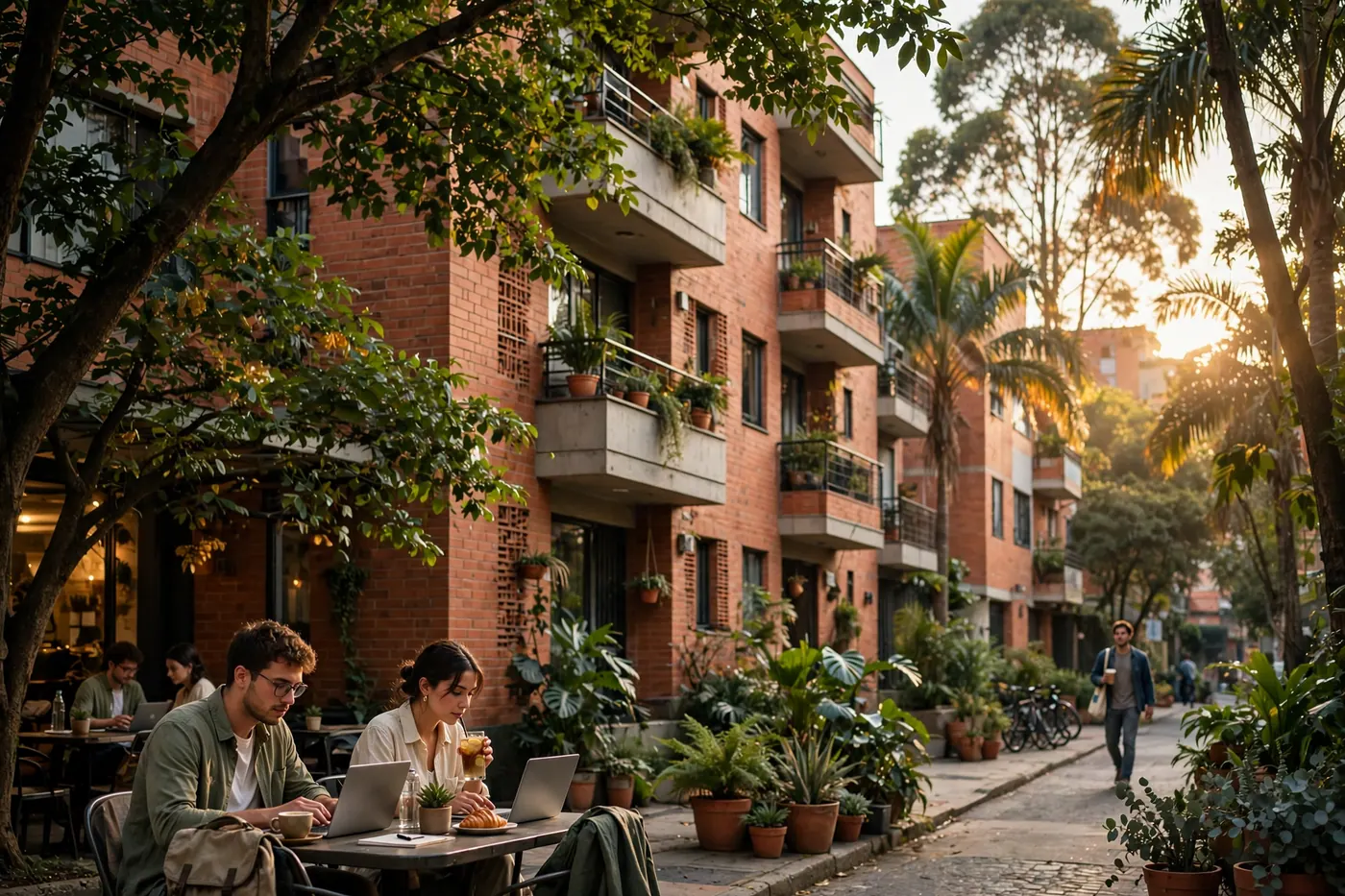
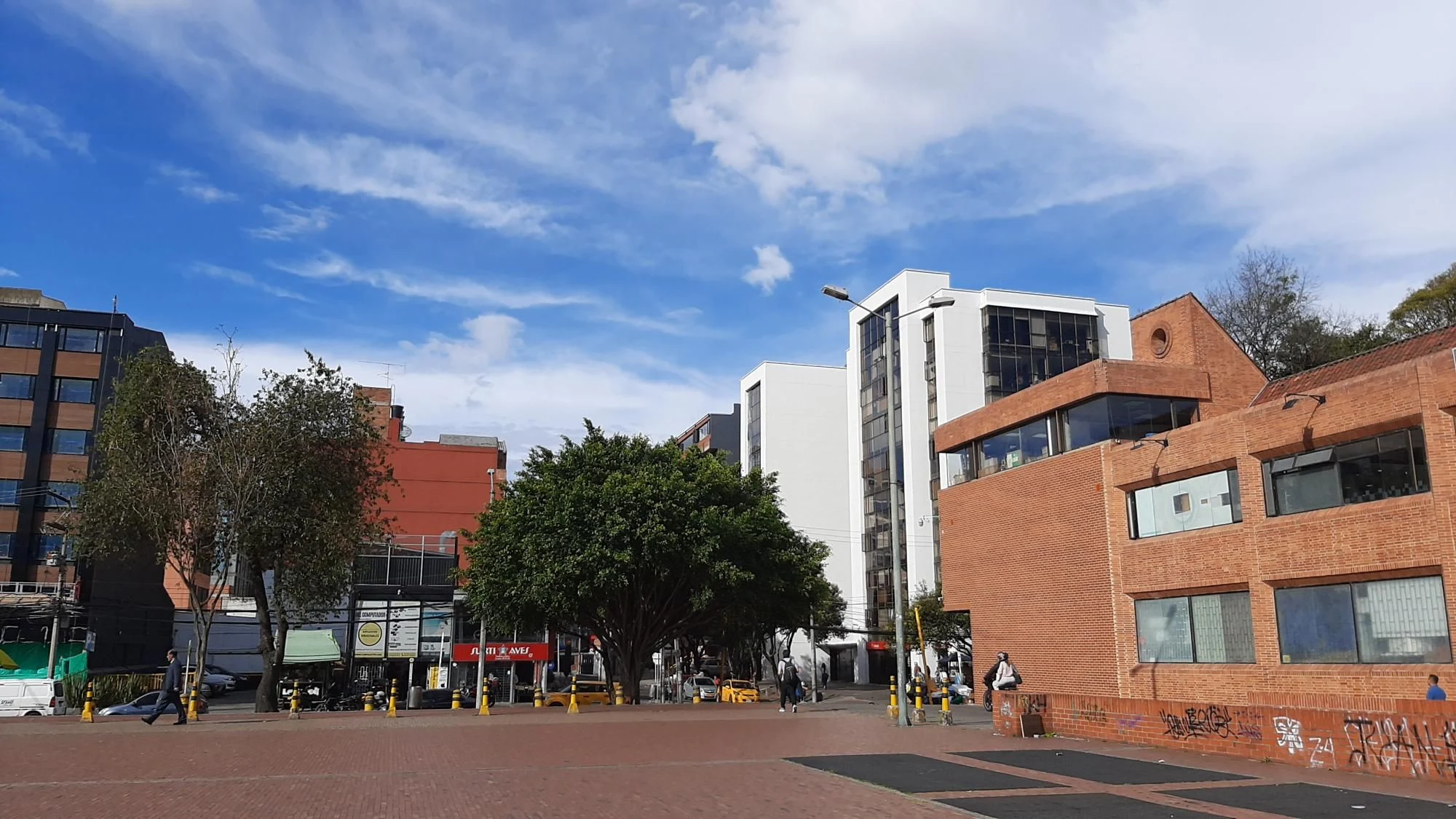
Chapinero is the creative heartbeat of Bogotá. Located along the eastern hills between Calle 53 and Calle 72, Chapinero Alto is packed with independent graphic design agencies, craft coffee bars, bilingual coworking hubs, and steep cobblestone alleys lined with red-brick apartment buildings.
Just west across Carrera 7 lies Quinta Camacho, an elegant sector defined by mid-century Tudor-style brick manors converted into creative agency offices, upscale bistros, and open-air gastropubs. Young corporate analysts working in the Calle 72 financial district can comfortably walk or bike to work via Carrera 7, avoiding Bogotá's notorious morning gridlock entirely.
Chicó, Parque de la 93, and El Virrey
For corporate executives, diplomats, and senior consultants, the area spanning Chicó Norte, El Virrey, and the perimeter of Parque de la 93 provides Bogotá's most polished urban environment. This Estrato 6 corridor features manicured linear parks, international embassies, corporate headquarters, and high-end residential towers with strict private security teams.
Running through the center of the sector is Parque El Virrey, a lush green corridor where professionals jog, walk dogs, and decompress. Housing here comes at a premium, but you gain pristine sidewalks, quiet nights, and immediate access to top-tier dining.
Usaquén: Santa Bárbara and Cedritos (Localidad 01)
At the northern end of Bogotá, Usaquén blends colonial charm with modern residential convenience. Its historic core, centered around Plaza de Usaquén, is famous for its vibrant Sunday artisan market, candlelit cocktail lounges, and French-style bakeries housed in whitewashed colonial architecture.
Surrounding the historic plaza are modern residential pockets like Santa Bárbara and Cedritos (Estratos 4 and 5). Cedritos is a favorite for budget-conscious remote workers seeking larger, newer square footage, secure apartment compounds, and accessible grocery stores. The trade-off is distance: traveling from Cedritos to the financial core around Calle 72 during morning rush hour can easily exceed 45 minutes by TransMilenio or taxi.
Cost of Living and Rental Reality Check
Renting residential real estate in Colombia requires navigating distinct lease mechanisms. In both cities, typical unfurnished 1-to-2 bedroom apartments in desirable Estrato 4 and 5 sectors generally range between COP $2,200,000 and $4,500,000 per month. Fully furnished units leased on flexible monthly contracts in prime corridors like El Poblado or Chicó frequently start closer to COP $4,500,000 to $6,500,000+, depending on building amenities, private gym facilities, and included high-speed utilities.
According to active listings on Colombia Move (September 2026), the housing section currently has 141 active ads drawing about 27,926 views, while furnished short-term stays remain thin: only 2 temporal listings against 348 views, so demand still outruns that slice of inventory.
Traditionally, local leasing agencies enforce Law 820 of 2003 regulations, demanding one or two local property guarantors (fiadores with unencumbered Colombian real estate) or backing by an institutional lease insurance firm (aseguradora / póliza de arrendamiento). As a newcomer without Colombian credit history, you can overcome this by negotiating directly with independent property owners, using specialized digital lease underwriting services that verify overseas income, or arranging mid-term sublets.
Lifestyle & Infrastructure Comparison: Medellín vs. Bogotá
| Feature | Medellín (Laureles / Envigado) | Bogotá (Chapinero / Usaquén) |
|---|---|---|
| Climate | Subtropical highland: warm days (24–28°C / 75–82°F), mild evenings. | Cool Andean mountain: brisk days (14–19°C / 57–66°F), chilly nights requiring layers. |
| Public Transit | Predictable rail-based Metro Lines A & B, Metrocable gondolas, clean and punctual. | TransMilenio BRT system, SITP buses, and dedicated protected Ciclorrutas. |
| Walkability | Flat and highly walkable in Laureles and downtown Envigado; very steep in upper Poblado. | Excellent along the Carrera 7 / 11 / 15 corridors; flat from Calle 30 to Calle 140. |
| Professional Scene | Startup founders, digital creators, growth marketing, tech remote staff. | Corporate banking, international NGOs, government headquarters, private equity. |
| Safety Routine | Lively cafe districts; avoid using phones on unlit side streets; use app taxis late at night. | Keep devices out of sight near busy transit corridors; stick to verified rideshares after dark. |
Which City Fits Your Career and Lifestyle?
If your daily happiness depends on walking to open-air cafes in shorts, running outdoors in sunshine, and getting across town on a clean electric train within twenty minutes, Medellín (specifically Laureles or Envigado) is hard to beat.
However, if your professional priorities revolve around climbing corporate ladders, attending high-profile industry summits, experiencing Michelin-caliber gastronomy, and diving into South America's most dynamic theater, music, and art scenes, Bogotá (Chapinero Alto or Quinta Camacho) offers an unmatched cosmopolitan platform. Whichever metropolis you choose, focus on securing an apartment in an Estrato 4 or 5 sector with verified 24/7 portería security and fiber-optic access before committing to a long-term lease.
Frequently Asked Questions
❓ Which city is better for remote workers and young professionals: Medellín or Bogotá?
Medellín offers superior urban walkability, a predictable climate, and an accessible rail Metro system, whereas Bogotá provides significantly higher career networking potential, larger multinational corporate hubs, and unmatched culinary and cultural diversity. Your choice depends on whether you value lifestyle ease or corporate opportunity.
❓ What does "estrato" mean when renting an apartment in Medellín or Bogotá?
Estrato is Colombia’s 1-to-6 housing class that sets utility billing rates, and 4–5 is the usual young-professional sweet spot. Confirm the building’s estrato on the lease and a recent 2026 utility bill, because that number changes electricity, water, and gas more than the advertised rent.
❓ How much should a young professional expect to pay for rent in 2026?
Typical 2026 unfurnished 1–2 bedroom rents in Estrato 4–5 run about COP $2,200,000 to $4,500,000 a month. Furnished monthly units in El Poblado or Chicó often start closer to COP $4,500,000 to $6,000,000, depending on amenities and negotiation.
❓ Can foreigners rent an apartment in Colombia without a local co-signer (fiador)?
Yes. Foreigners can skip a local fiador with furnished monthly sublets, owner deals, or a póliza de arrendamiento. Law 820 of 2003 (still in force in 2026) limits cash depósitos, so many landlords want a guarantor or insurance instead.
❓ Is it safe to walk around Chapinero or Laureles at night?
Chapinero and Laureles stay busy and watched in commercial evening hours, but I would not walk unlit side streets alone late. In 2026 the safer habit is app rideshares after dark, phones off street corners, and buildings with 24-hour portería.
❓ How does public transit compare between Laureles and Chapinero?
Laureles walks to Metro Line B at Estadio and Suramericana; Chapinero uses TransMilenio on Caracas, Carrera 7 buses, and ciclorrutas. Bogotá’s first metro line is still under construction in 2026, so commutes run on buses, taxis, and bikes rather than rail.
Comments
Loading comments...
Checking sign-in status...