
Buying a Used Motorcycle in Colombia: Legal Checks, RUNT & SOAT
A complete practical guide for foreigners buying a secondhand motorcycle in Colombia, covering RUNT biometric registration, SIMIT fine checks, SOAT verification, and legal title transfers.
IDIOMA DEL ARTÍCULO
Showing original language
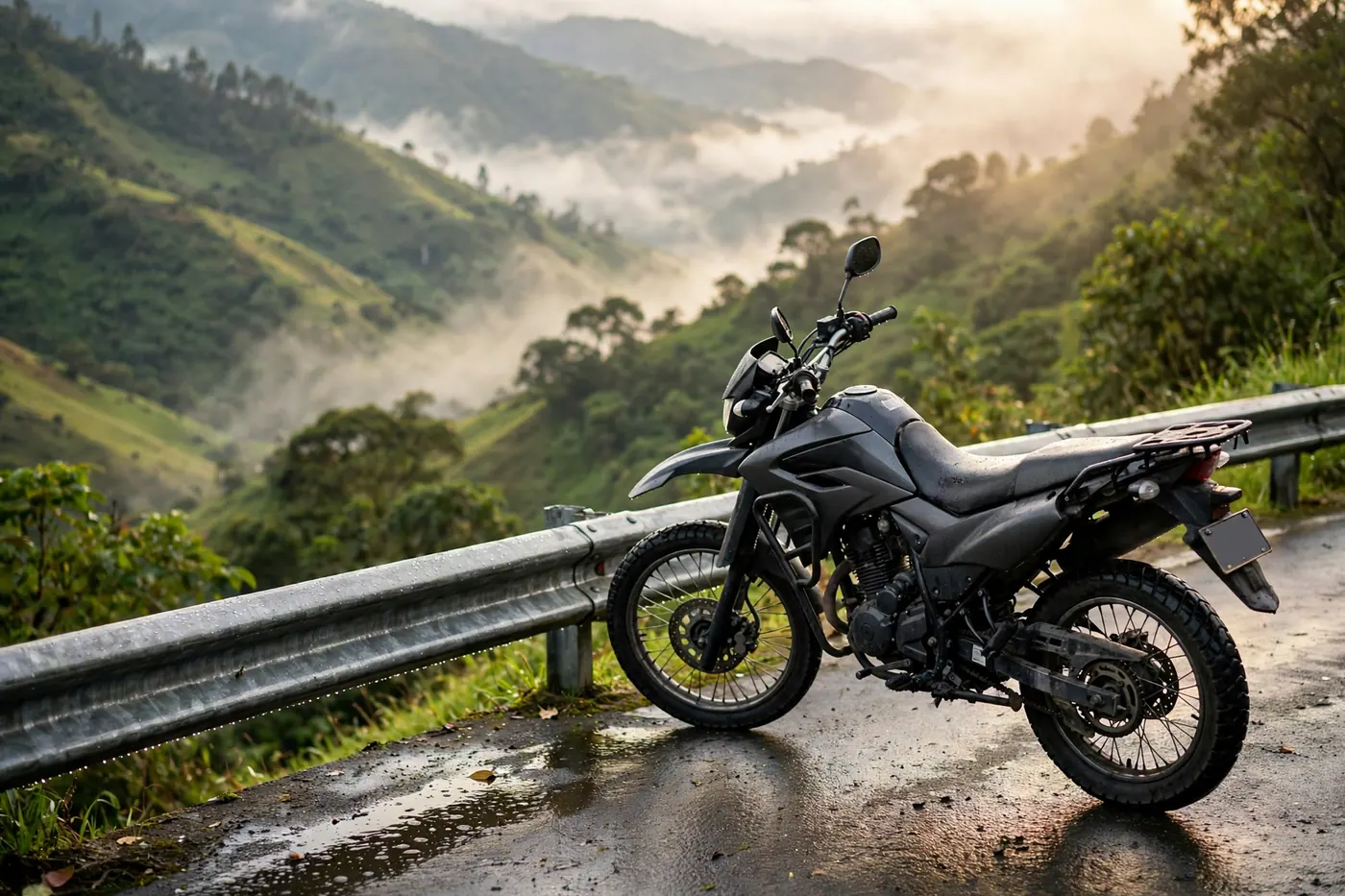
Riding a motorcycle across Colombia is one of the most liberating ways to experience the country. Whether you want to skip the daily grind of Uber, inDrive, and taxis in heavy city traffic or explore mountain villages along winding Andean highways, two wheels offer unmatched autonomy. While some travelers start by leasing or renting a motorcycle in Colombia, anyone staying longer than a few months quickly realizes that purchasing a secondhand bike is vastly more cost-effective.
However, buying a vehicle in Colombia requires careful handling of local bureaucracy. Handing over cash in exchange for a set of keys and a plastic title card is a recipe for disaster. If you do not legally transfer the title through an official transit office (a process known locally as a traspaso), you do not legally own the bike. You could find yourself stranded if the bike gets impounded at a transit checkpoint, or worse, legally responsible for a previous owner's unpaid citations or criminal liability.
Quick Summary: Key Requirements for Buying a Motorcycle
- Foreign Identification: You do not need Colombian citizenship. You can legally purchase and register a bike using a valid foreign passport or a Cédula de Extranjería (CE).
- RUNT Enrollment: Both buyer and seller must register biometrics in the national RUNT database before filing paperwork.
- Clean Legal Slate: Both parties must be free of pending traffic tickets in SIMIT (paz y salvo), and the bike must have no active legal embargos.
- Valid Documents: Mandatory accident insurance (SOAT) and technical inspection (RTM) must be active in the digital registry.
- Official Traspaso: The title transfer must be filed at the local transit office where the license plate is registered or via a unified service agency.
Can Foreigners Legally Own a Motorcycle in Colombia?
Yes. Under Ministry of Transport regulations, foreign citizens can legally purchase, own, and register motor vehicles in Colombia. You do not need to hold a permanent resident visa or Colombian citizenship. Transit authorities accept either a valid foreign passport or a Cédula de Extranjería (resident ID card).
Before you sign a sales contract, your first mandatory step is biometric enrollment in the Registro Único Nacional de Tránsito (RUNT). This process, known as inscripción de persona natural, registers your passport or ID number, fingerprints, photo, and digital signature into the national transit database. You can complete this enrollment in person at any authorized transit agency—such as the Ventanilla Única de Servicios (VUS) in Bogotá or municipal transit service desks like the Secretaría de Movilidad at Centro Administrativo La Alpujarra (Calle 44 # 52 - 165) in Medellín. The procedure takes roughly twenty minutes and requires paying a nominal transit administrative fee.
If you plan to ride your new bike immediately after registration, make sure you understand the rules for driving in Colombia with a foreign license, including legal tourist validity windows and when you are required to obtain a local Colombian driver's license (licencia de conducción).
The Pre-Purchase Due Diligence Checklist
Never hand over a deposit until you have verified the vehicle's legal status online. In Colombia, every piece of paperwork tied to a motorcycle is registered under its six-character license plate. Before inspecting the mechanical condition of the bike, verify these four non-negotiable legal items:
1. Digital RUNT Plate Check (Consulta por Placa)
Ask the seller for the vehicle's license plate number (placa) and the owner's identification number. You can run an instant background check on the official RUNT portal to confirm the registered owner's identity, engine serial number, chassis/VIN number, and whether there are active judicial liens or financial embargos (prendas) placed on the bike. For a deeper look at title histories, review our guide on how to query vehicle ownership history through RUNT.
2. Active SOAT and Mechanical Inspection (RTM)
Every motor vehicle on Colombian public roads must carry an active compulsory road accident insurance policy (SOAT) and an active technical-mechanical certificate (Revisión Técnico-Mecánica, or RTM). Motorcycles are exempt from RTM for the first two years after initial registration, but older bikes require annual inspection at an authorized testing center (CDA). Both policies must be active in the digital RUNT database for transit authorities to approve a title transfer. If either is expired, the seller must renew it before you can file. For a buyer-side authenticity walkthrough, see how to consult digital SOAT and confirm it is genuine. If you ever need roadside medical triage after a crash, keep the numbers in our emergency numbers and crisis guide handy.
3. SIMIT Fine Verification (Paz y Salvo)
Colombia tracks traffic violations through the SIMIT database (Sistema Integrado de Información sobre Multas y Sanciones por Infracciones de Tránsito). A title transfer cannot proceed if there are any outstanding traffic citations tied to the motorcycle's license plate, the seller's ID number, or the buyer's ID number. Enter both identification numbers and the license plate into the SIMIT search tool. Both parties must be completely paz y salvo (free of pending fines) before the transit window will accept the transfer application.
4. Property Taxes and the 125 cc Exemption Rule
Under Colombian national tax legislation (Law 488 of 1998), motorcycles with an engine displacement of 125 cc or less (such as the Yamaha Crypton 115, Bajaj Boxer CT100, or Suzuki GN125) are completely exempt from departmental annual vehicle property taxes (impuesto vehicular). While owners of these lightweight bikes must still pay minor local municipal transit administration charges (such as annual semaforización fees), they do not pay annual departmental road taxes. For motorcycles above 125 cc, all past annual property tax bills must be paid in full with municipal and departmental tax secretariats before transfer.
Physical Inspection: Peritaje and Taking Improntas
Once the digital records pass audit, arrange an in-person diagnostic test, known as a peritaje, at a certified automotive inspection center. A technician will inspect the chassis alignment, suspension, braking system, electrical harnesses, and engine compression. Most importantly, the inspection checks that the physical chassis (VIN) and engine numbers match the title card exactly and have not been altered, ground down, or restamped (regrabado sin autorización).
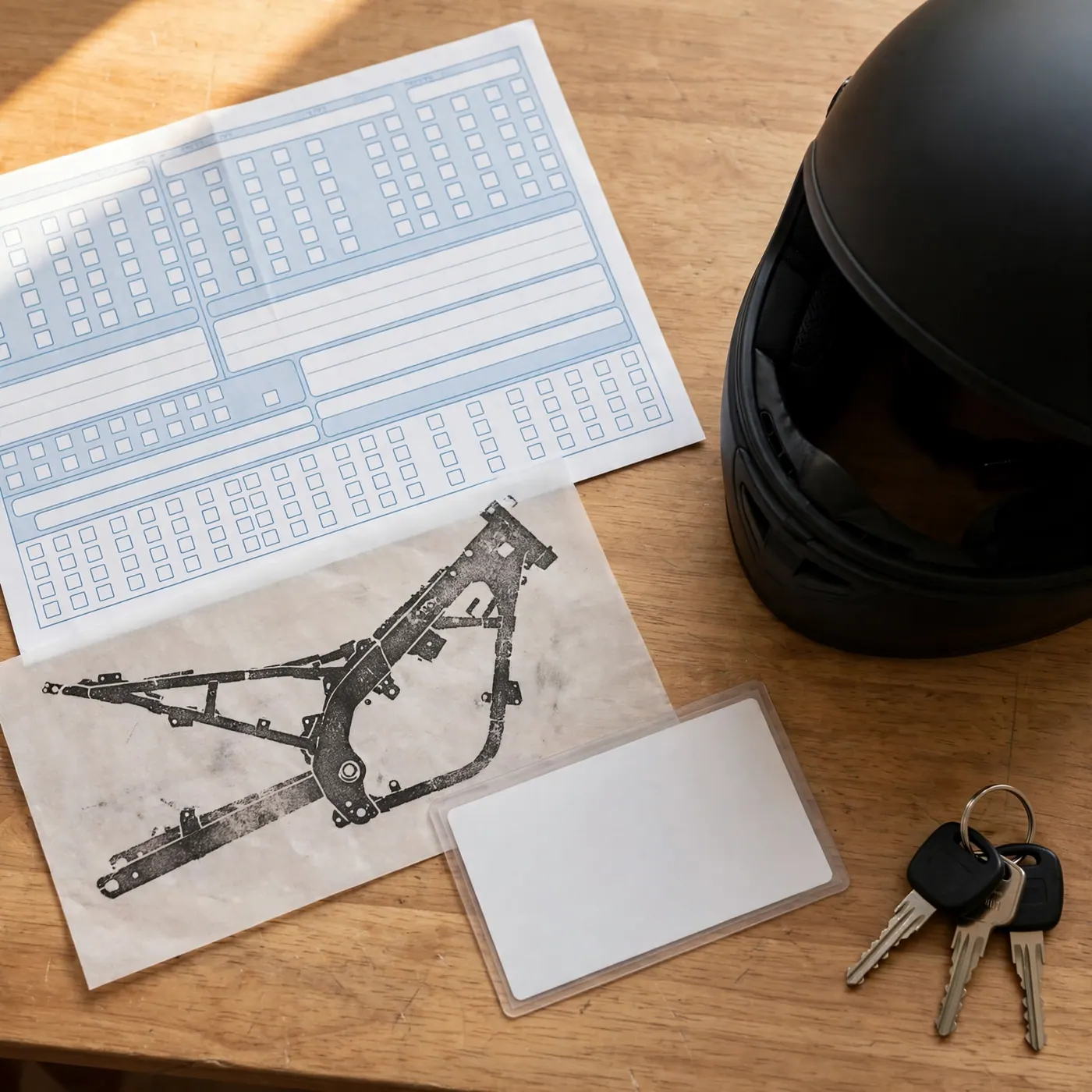
During the inspection or right before signing paperwork, you must take the vehicle's improntas. These are physical carbon-paper rubbings taken with black adhesive tape directly from the raised serial numbers stamped onto the motorcycle's frame and engine block. Transit offices require two physical copies of these tape rubbings pasted directly onto the back of the standardized transfer application form.
The Step-by-Step Traspaso Process
Once you are satisfied with the physical condition and legal records, complete the official title transfer using these steps. Spanish-language readers who want the municipal window sequence in more detail can also use our paso a paso de traspaso de vehículo.
Step 1: Draft the Contrato de Compraventa
Draft a standard Colombian vehicle sales contract (contrato de compraventa de vehículo automotor). This document outlines the full names, identification numbers, and contact details of both buyer and seller, the motorcycle's technical specifications (make, model, color, engine displacement, VIN, engine number), the agreed purchase price, and the distribution of transfer fees. While notarization at a local notary public (Notaría) is not strictly mandatory if both parties present themselves in person at transit, having the signatures notarized provides extra legal protection.
Step 2: Complete the Formulario Único de Solicitud de Trámites
Fill out the standardized national transit form: the Formulario de Solicitud de Trámites del Registro Nacional Automotor. This two-page form requires the signature and fingerprint of both parties, the license plate details, and the physical improntas pasted securely on the designated area on the reverse side.
Step 3: Submit at the Local Transit Office and Pay Fees
Both parties—or an authorized transit facilitator (tramitador) holding a notarized power of attorney—must submit the documentation at the municipal transit secretariat where the motorcycle's folder is registered (the organismo de tránsito de matrícula). In Bogotá, this filing is handled through the Ventanilla Única de Servicios (VUS).
Transfer fees consist of two components:
- Municipal Transit Administrative Fee: In Bogotá, the official 2026 transit transfer fee for a motorcycle at the VUS is $145,500 COP. In other municipalities (such as Medellín, Envigado, or Cali), transit tariffs vary by municipal decree and must be verified directly through each local transit agency. By local market custom, this transit agency fee is typically split 50/50 between buyer and seller.
- National Tax Withholding (Retención en la Fuente): Under Colombian tax rules, every vehicle transfer incurs a 1% withholding tax based on the vehicle's official commercial tax appraisal (avalúo comercial set by the Ministry of Transport). By law, this tax is the responsibility of the seller, although buyers occasionally negotiate different terms.
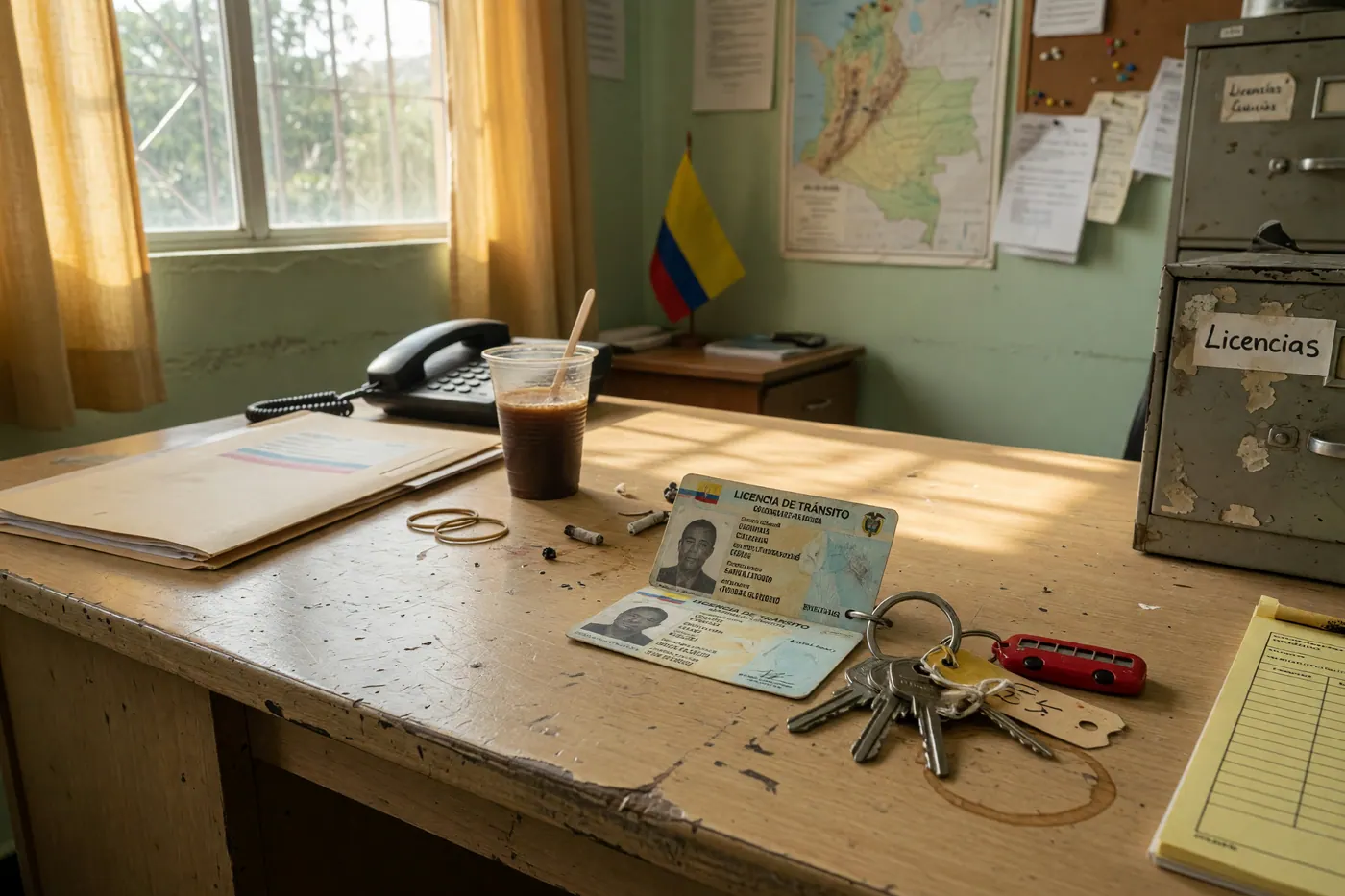
Once submitted, the transit agency audits the file and prints the new Licencia de Tránsito (commonly called the Tarjeta de Propiedad) bearing your name and passport or CE number. Processing typically takes between 3 and 10 business days depending on local agency volume. Never make final full payment for the motorcycle until the transit office accepts the transfer folder or the new title card is generated.
Why You Must Avoid the Open Transfer (Traspaso Abierto) Trap
In informal sales, sellers often offer an "open transfer" (traspaso abierto or traspaso a persona indeterminada). They hand you a signed, blank transfer form with unattached improntas, suggesting you avoid transit fees until you resell the bike later. Do not agree to this.
With an open transfer, you do not legally own the bike. If the registered owner runs up unpaid tax debts, gets divorced, or faces judicial legal judgments, the motorcycle can be embargoed and seized by police while you are riding it. Furthermore, if the registered owner decides to deregister the vehicle through an administrative abandonment decree, your title card becomes permanently void. Always finalize a formal transfer directly into your own name.
Keep reading: If you are also considering four-wheel transport, check out our guide on buying a used car in Colombia: paperwork, RUNT checks, and inspections.
Keep reading: For asking-price signals and inspection red flags, see buying a used motorcycle: papers, checks, and price signals.
Frequently Asked Questions
❓ Can I buy and register a motorcycle in Colombia with only a foreign tourist passport?
Yes, a valid foreign passport is accepted for motorcycle registration after in-person RUNT biometric enrollment. That remains the 2026 transit rule at authorized agencies such as VUS Bogotá.
❓ What is an open transfer (traspaso abierto), and why should I avoid it?
An open transfer is an unrecorded sale that never updates ownership at transit. Avoid it because the bike stays in the seller's name, which can lead to impoundment or liens if their debts catch up with the plate.
❓ How much does a motorcycle title transfer cost in Colombia in 2026?
In Bogotá, the official 2026 municipal transfer fee for a motorcycle at the Ventanilla Única de Servicios is $145,500 COP, plus the 1% commercial appraisal withholding tax. Fees in other cities vary by municipal tariff.
❓ Do all motorcycles pay annual property taxes in Colombia?
No: under Law 488 of 1998, bikes of 125 cc or less are exempt from departmental vehicle property tax. Small municipal transit fees can still apply; confirm the 2026 local tariff before you buy a larger engine.
❓ How can I verify that a used motorcycle has no hidden traffic fines or liens?
Check the plate on the official RUNT portal for embargos, SOAT, and the technical inspection. Then look up both IDs on SIMIT so unpaid citations do not block the 2026 traspaso filing.
❓ Who pays the transfer fees when buying a used motorcycle?
Municipal transit fees are customarily split 50/50, while the seller pays the 1% retención en la fuente. Confirm that split in the 2026 compraventa before you sign.

Comments
Loading comments...
Checking sign-in status...