
Buying a Used Motorcycle in Colombia: Papers, Checks, and Price Signals
A practical buyer's checklist for used motorcycles in Colombia: the papers to verify, what to inspect, how to read the price, and how to finish the traspaso safely.
IDIOMA DEL ARTÍCULO
Showing original language
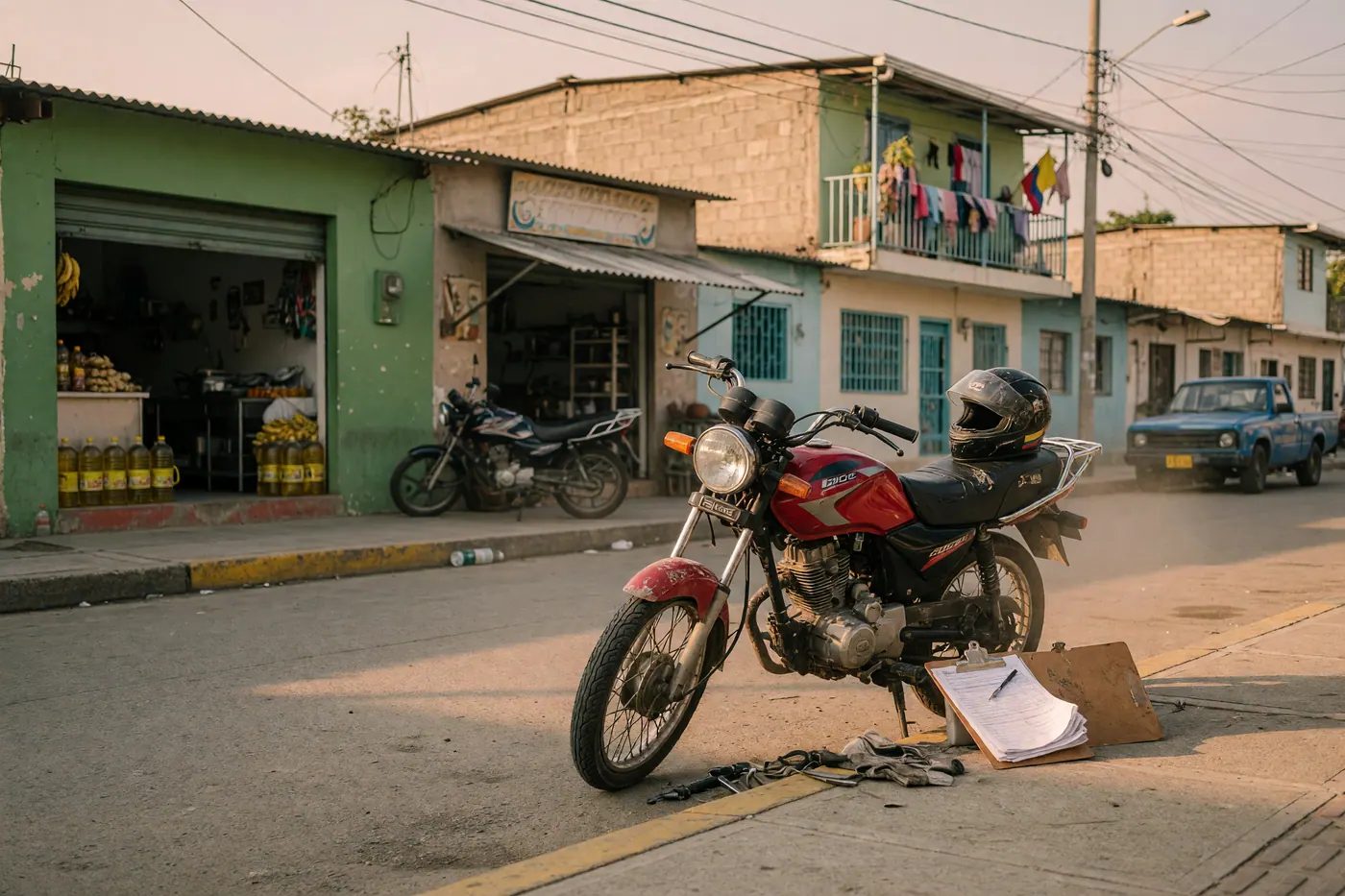
A friend bought a used Bajaj here for what looked like a steal, then watched the deal unravel because the bike still carried unpaid fines. That's the whole game with used motorcycles in Colombia: a price is only good if the bike, the papers, the seller, and the transfer all check out. Miss one and a bargain quietly becomes a problem you inherit.
This is the motorcycle-specific version of buying a vehicle here. For the wider picture on cars, taxes, and the bureaucracy maze, read my full guide to buying a car or motorcycle in Colombia. Below I'm focused on the three checks that protect a moto buyer: the papers, the machine, and the price. It's a checklist, not legal advice.
Check the papers first — this is where deals die
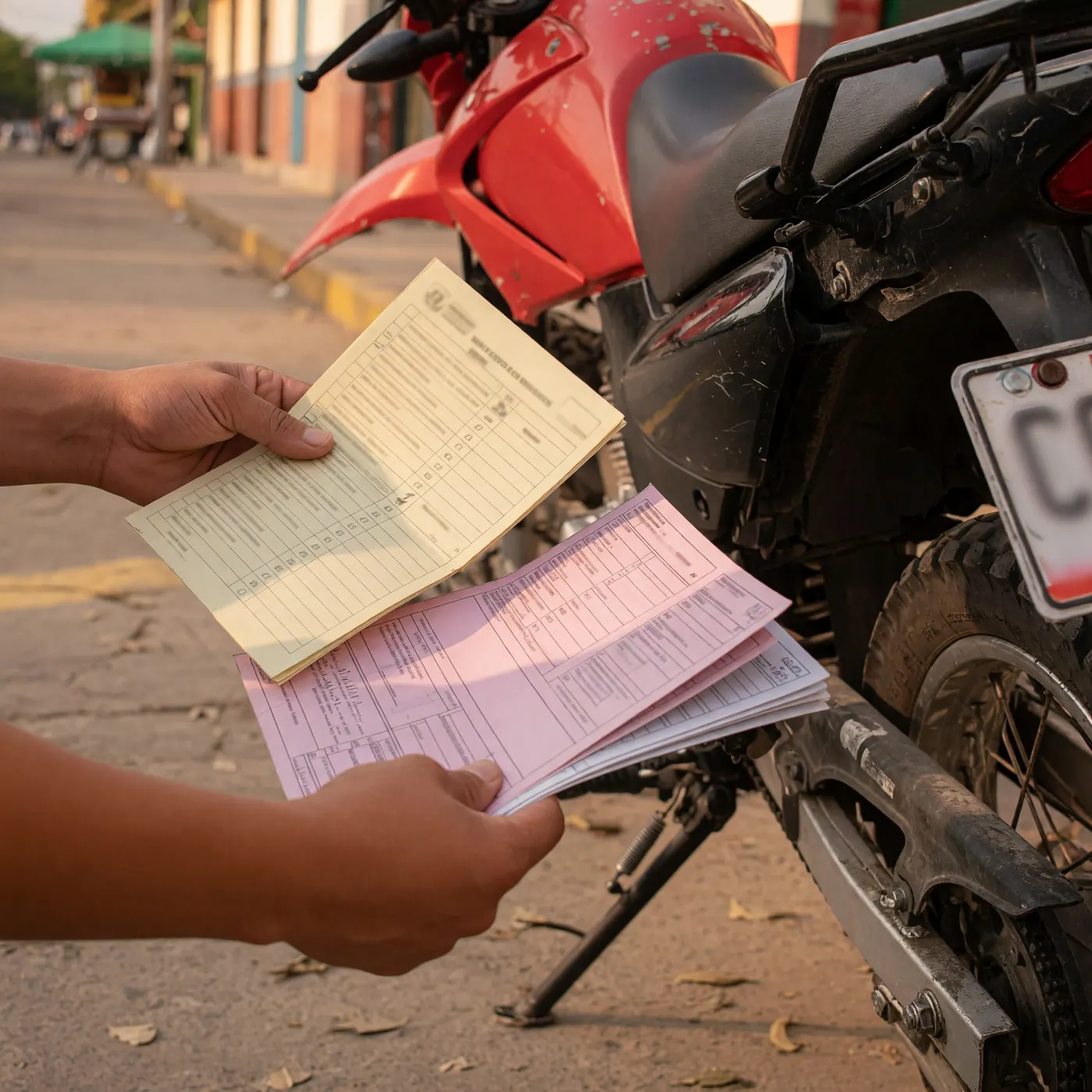
Before you fall for how a bike sounds, run its plate through RUNT, the national vehicle registry. A public RUNT consultation shows the registered vehicle and technical data, SOAT status and dates, the RTM certificate, and any ownership limitations flagged on the record. If the seller won't give you the plate to check, that's your answer.
Then check SIMIT for outstanding fines tied to the vehicle. Unpaid fines can block the paperwork and, in practice, follow the bike — as can liens that appear as limitations in RUNT. These systems aren't always instant or complete, so verify rather than assume.
Here's the paper checklist I'd clear before paying:
- Plate, VIN, and engine numbers match the bike and the seller's papers in RUNT.
- SOAT is active — if it needs renewing, use the current 2026 Superintendencia Financiera table or simulator, not an old quote.
- Revisión técnico-mecánica (RTM) is valid when the bike's age requires it.
- No unpaid fines in SIMIT and no liens or ownership limitations in RUNT.
- The seller's ID matches the registered owner; tax or local obligations can vary by engine size and city, so ask the transit authority.
Inspect the machine like you expect bad news
Papers clean? Look at the bike cold. Ask the seller not to warm it up before you arrive — a cold start hides nothing, and hard starting, smoke, or rattles show up immediately. Bring a flashlight.
- Cold start: fires without endless cranking, no blue or thick smoke.
- Frame and numbers: VIN, chassis, and engine numbers intact, unstamped, and matching the papers.
- Tires, brakes, chain: check tread, brake feel, and a chain that isn't rusted or slack.
- Leaks and lights: no oil weeping at engine or forks; every light and indicator works.
- Service history and a short ride: a maintenance booklet is gold; ride briefly if it's safe and legal.
If you're new to bikes, or the moto is expensive, modified, or imported, pay for a peritaje (independent inspection). It's a small cost against a frame problem you can't see.
Read the price like a local
First, be honest about whether you need a bike at all. If you mostly move around one city, run the math against Uber, InDrive, and taxis before taking on SOAT, RTM, maintenance, and parking.
Once you've decided, price is easy if you know the references. Start with the Fasecolda Guía de Valores, which lists motorcycles by make, line, version, and year. It's a reference value, not a binding price — use it as an anchor, then compare live listings for the exact model and adjust for mileage, condition, accessories, and how soon SOAT and RTM expire.
And the counterintuitive part: a bike priced far below everything comparable is a reason to ask more questions, not an automatic bargain. Watch for:
- Priced well under comparable bikes “because I have to sell today.”
- A seller who dodges the RUNT or SIMIT check, or won't meet near a transit office.
- Mismatched VIN or engine numbers, or an owner name that doesn't line up.
- Expired SOAT or RTM, or fines to “sort out later.”
Pay safely and finish the traspaso
This is the part people rush, and it costs the most. Tie your payment to verified paperwork and a clear transfer — not to a promise. Don't pay in full before the transfer is lined up, and keep written proof.
- Confirm money is actually in your account, not just a screenshot.
- Meet in a safe, public place — ideally at or near the transit office where the traspaso happens.
- Keep the signed bill of sale, ID copies, the form, and the improntas (number rubbings) the process requires.
- Don't accept “open” transfers or undated sale letters; finish the registered traspaso.
Until the transfer is formally registered, the bike legally isn't fully yours — and an unfinished traspaso can leave the prior owner exposed to vehicle-related debts, taxes, fines, accident issues, embargoes, or immobilization. Requirements vary by transit authority, so confirm the current steps and costs with the office where the moto is registered.
Frequently Asked Questions
❓ Can a foreigner buy a used motorcycle in Colombia?
Yes — foreigners commonly buy and register vehicles here. What you'll need for the paperwork (usually a valid ID such as a cédula de extranjería) depends on the transit authority, so confirm the exact requirements with the local office before you pay.
❓ What papers should I check before buying a used moto?
Check the bike in RUNT first: registration, SOAT status, RTM when the bike's age requires it, SIMIT for unpaid fines, and any ownership limitations. Confirm the seller's ID matches the registered owner, and ask the transit authority about tax or local obligations, which vary by engine size and city; for insurance costs, use the official 2026 SOAT table.
❓ How do I know if a used motorcycle price is fair?
Start with Fasecolda's Guía de Valores (accessed 2026) for a reference value by make, line, version, and year, then compare current listings for the same model. Adjust for mileage, condition, accessories, and how soon the SOAT and RTM expire — and treat a price far below the rest as a reason to ask more questions, not a guaranteed deal.
❓ What are the red flags and common scams when buying a moto in Colombia?
Watch for mismatched VIN, chassis, or engine numbers and a seller whose ID doesn't match the registered owner. Other warning signs are expired SOAT or RTM, unpaid fines in SIMIT, vague ownership history, and pressure to pay fast or skip the RUNT check.
❓ Where can I compare used motorcycle listings in Colombia?
Marketplaces and classifieds are the easiest way to gauge asking prices in 2026. Browse the Colombia Move vehicles section alongside other platforms to compare models and conditions — just remember listings show asking prices, not official valuations, so cross-check the value against Fasecolda.

Comments
Loading comments...
Checking sign-in status...