
Villa de Leyva, Colombia: The Complete Visitor's Guide
Villa de Leyva's colonial plaza is one of the largest in the Americas, the surrounding valley hides 110-million-year-old fossils, and the town closes by 9 PM. Here's everything you need to know.
IDIOMA DEL ARTÍCULO
Showing original language
The first thing you notice when the bus pulls into Villa de Leyva is the silence. After four hours on Colombian highway traffic — Bogotá's altitude-throttled drivers, the Tunja bypass, the descent into Boyacá — you step onto cobblestones and the noise drops out. The town is genuinely quiet in a way that Colombian cities rarely are.
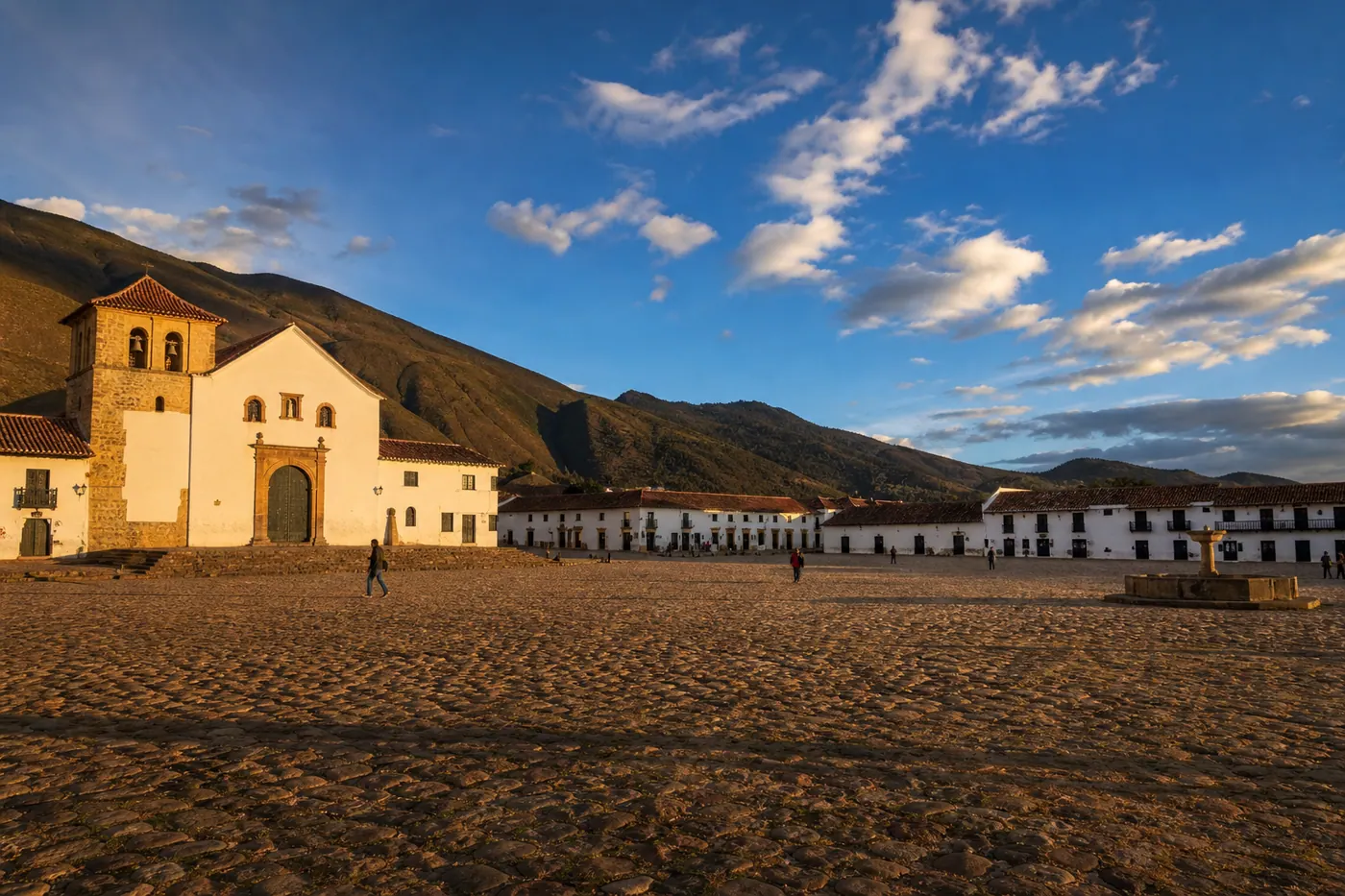
Villa de Leyva is built around one of the largest colonial plazas in the Americas — 14,000 square meters of hand-laid stone, flanked by whitewashed buildings, churches, and mountains that frame the whole thing in the kind of light that makes amateur photographers look professional. It was declared a national monument in 1954, which means construction in the historic center is locked. The skyline looks roughly as it did in 1572.
That's the pitch. Here's the honest part: Villa de Leyva is a tourist town and it prices like one on weekends. Hotels double their rates on Saturdays, the plaza-facing restaurants charge 30-40% more for identical food, and in December or Semana Santa the square actually gets crowded. Come midweek or in a quiet shoulder month and it's one of the best-value, most atmospheric places in the country.
📍 Villa de Leyva at a Glance
- Location: Boyacá department, 185 km north of Bogotá
- Altitude: 2,149 m — cold nights, bring a fleece
- Getting there: Bus from Terminal Salitre, Bogotá (~COP 35,000, 3.5–4 hrs)
- Best time: Dec–Feb or Jun–Aug (dry seasons)
- Daily budget: COP 100,000–300,000 depending on accommodation
- Best for: Weekend escapes, fossils, colonial architecture, remote-work resets
What Makes Villa de Leyva Worth the Trip
Founded in 1572, Villa de Leyva served as a retreat for Spanish colonial officials and clergy. That history shows in the architecture — the Casa Museo Luis Alberto Acuña, the whitewashed convents, the monastery walls that peek above rooflines in the surrounding countryside. Nothing is new here. That's the point.
But what makes Villa de Leyva genuinely surprising is the fossils. The valley was an inland sea 110 million years ago, and the evidence is everywhere. The El Fósil museum houses the skeleton of a Kronosaurus — a 12-meter marine reptile unearthed from a local farm in 1977. Combined with the Museo de Paleontología in town, it's an unexpectedly rich museum circuit for a village of 12,000 people.
Then there's the surrounding landscape: dry tropical scrubland (rare in green Colombia), the striking blue mineral pools at Pozos Azules, páramo hiking at Iguaque, and the Muisca archaeological site at El Infiernito. The variety per square kilometer here is genuinely hard to beat anywhere in the country.
How to Get to Villa de Leyva from Bogotá
Buses to Villa de Leyva leave from Bogotá's Terminal de Transportes del Sur or Terminal Salitre throughout the day. Flota Valle de Tenza and Expreso Los Muiscas are the main operators. The trip takes 3.5 to 4.5 hours depending on traffic (the Bogotá exit is brutal on Friday evenings). Budget COP 30,000–42,000 per person one way.
From Tunja — the departmental capital 40 km away — frequent local buses run to Villa de Leyva for around COP 8,000 in about 45 minutes. If you're already in Boyacá or coming from the Santander direction, Tunja is the smarter gateway. From Medellín, there's no direct service: connect through Bogotá or Tunja.
Driving from Bogotá: take the highway north through Chía toward Tunja (Route 55), then follow signs to Villa de Leyva. Total drive is roughly 2.5-3 hours without traffic. Having a car is the difference between seeing one or six things in the surrounding valley — highly recommended if you're staying more than two nights.
Things to Do in Villa de Leyva
The Plaza Mayor
Start here and don't rush it. At 14,000 square meters, the Plaza Mayor is one of the largest and best-preserved colonial plazas in Latin America. Buy a coffee from a side-street café (not the plaza-front ones — one block back saves 40%), sit on the stone benches, and let it settle. The proportions are cinematic. It's used as a stand-in for colonial-era Mexico City or Cartagena in several Colombian films.
El Fósil and the Paleontology Museums
About 6 km outside town on the road to Santa Sofía, El Fósil houses the near-complete skeleton of a Kronosaurus — entry around COP 8,000. The Museo de Paleontología in the town center provides the geological context. If you're traveling with kids or anyone with a curiosity gene, this is non-negotiable.
Pozos Azules
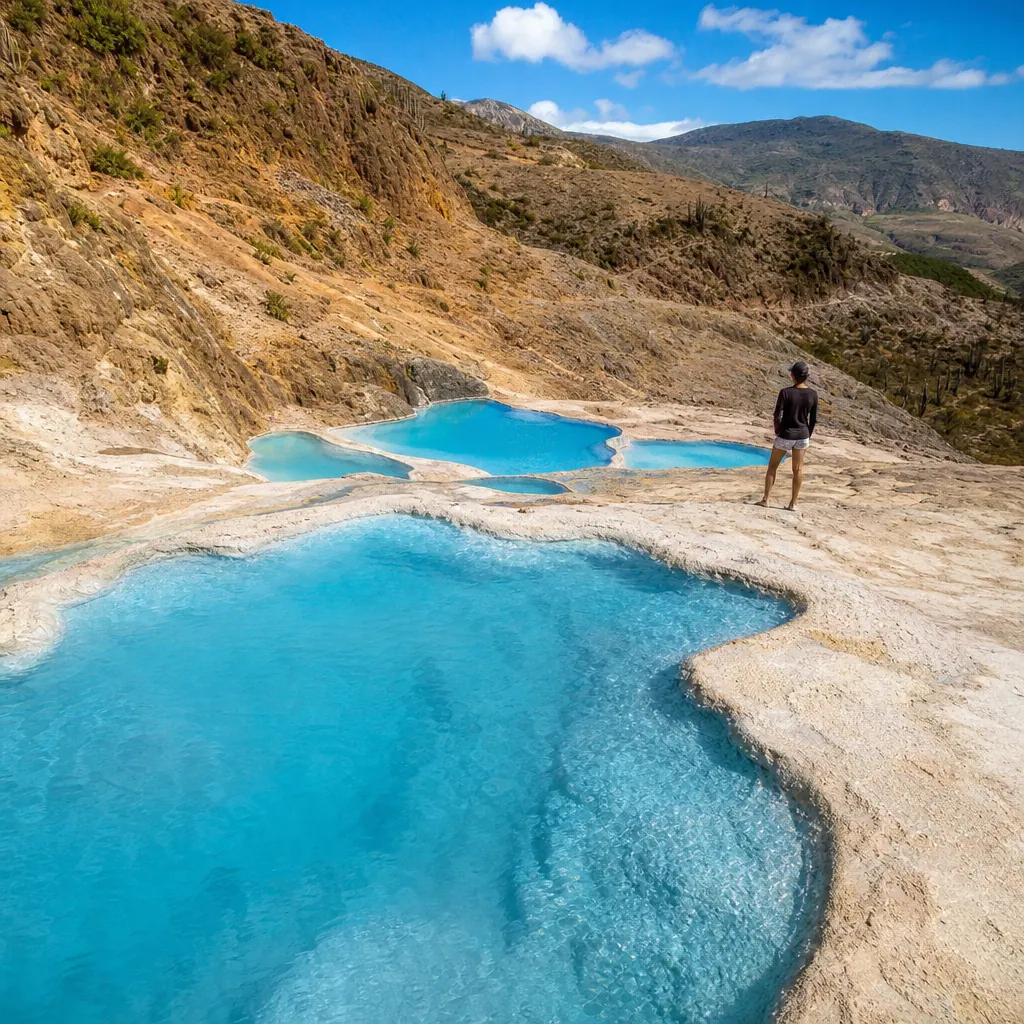
Mineral pools about 3 km from the plaza, reachable by tuk-tuk (COP 5,000) or a pleasant walk. The striking turquoise-blue color comes from dissolved copper minerals. Entry COP 10,000. Not swimmable, but photogenic. Go early on weekends — it fills up by 10 AM.
El Infiernito
A pre-Columbian Muisca astronomical observatory: a double row of standing stone columns used to track solstices and fertility cycles. About 4 km from town, accessible by tuk-tuk. Entry COP 8,000. Less crowded than the fossils, more evocative if you're into pre-Columbian history.
Casa Museo Luis Alberto Acuña
On the main plaza, this museum holds paintings and murals by one of Colombia's most celebrated 20th-century artists. Entry is modest (around COP 5,000) and the courtyard alone is worth it — colonial architecture at its best.
Day Trips from Villa de Leyva
The valley around Villa de Leyva punches well above the town itself.
Raquirá (23 km)
The pottery village of the Boyacá highlands. Every wall is painted in vivid blues, oranges, and yellows — it looks like a children's book illustration and is completely authentic. The craft tradition here predates tourism by centuries. Good for a half-day, not worth a full day on its own.
Monasterio de Santo Ecce Homo (14 km)
A 17th-century Dominican monastery still inhabited by monks, set in the dry valley landscape. The chapel floor incorporates pre-Columbian stones in its mosaic — worth the drive alone. Entry is donation-based.
Iguaque Sanctuary (hike)
A sacred Muisca lagoon at 3,600 meters, surrounded by páramo ecosystem. The 7-8 km round trip takes 3-4 hours. Book in advance with the national parks system (PNN Colombia). Serious altitude gain — pace yourself.
Sutamarchán (21 km)
Known for longaniza — the Boyacá cured sausage that tastes nothing like the bland version in supermarkets. The roadside fondas and meat market are worth a stop if you're driving back through anyway.
Where to Stay in Villa de Leyva
Budget (COP 40,000–80,000 per person/night): Several hostels near the plaza and on side streets — dorm beds, basic private rooms. Expect colonial architecture and variable WiFi. Hostels El Viajero, La Posada de Samay, and similar.
Mid-range (COP 150,000–300,000 per night for a couple): Colonial posadas and guesthouses with private bathrooms and character. 'Colonial' sometimes means stone walls and no heating — ask about blankets. Most are genuinely charming.
High-end (COP 400,000+): Boutique haciendas outside town with fireplaces, private gardens, and working farms. Hacienda El Salitre and similar properties are the kind of places where check-in involves a horse tour of the property.
Monthly rentals: A small but real market for furnished apartments exists, aimed at Bogotá remote workers wanting a slower month. Expect COP 1.5–2.5 million/month for a furnished one-bedroom in or near the historic center. Availability is limited — search via Colombian rental platforms or ask around locally.
🇨🇴 Renting in Villa de Leyva or Boyacá?
Colombia Move has free-to-browse housing listings across Colombia — including furnished monthly rentals in smaller towns and the Boyacá region. No agent fees, no commission.
Browse Monthly Rentals →Where to Eat (and What to Avoid)
One rule: don't eat on the plaza if you care about value. Restaurants with the view charge 30-40% more for identical food. Walk one block in any direction and the same breakfast goes from COP 18,000 to COP 8,000.
Trucha (trout) is the thing to order. The Boyacá highlands are trout country — most restaurants do it pan-fried or with garlic butter, served with rice and patacones, for COP 25,000–35,000. It's usually the freshest item on the menu.
The Mercado Municipal (Calle 13) is the real lunch stop. Casseritas there serve the three-course Colombian set meal — sopa, seco, and jugo — for COP 12,000–15,000. Best from 12–2 PM.
Merengón: the plaza vendors sell this meringue dessert stuffed with cream, strawberries, and blackberries for COP 8,000–12,000. If it's your first time, get one. It's better than it sounds.
🛡️ Travel Insurance for Colombian Adventures
Villa de Leyva puts you 45 minutes from the nearest major hospital. SafetyWing covers emergency medical, evacuation, and trip interruption — starting from $56/month for most travelers.
Get SafetyWing Coverage →How Much Does It Cost to Visit Villa de Leyva?
| Category | Budget | Mid-Range |
|---|---|---|
| Accommodation/night | COP 40,000–80,000 | COP 150,000–250,000 |
| Meals (daily) | COP 25,000–40,000 | COP 50,000–80,000 |
| Activities | COP 20,000–30,000 | COP 30,000–60,000 |
| Local transport | COP 10,000–20,000 | COP 25,000–40,000 |
| Total/day | ~COP 95,000–170,000 | ~COP 255,000–430,000 |
Bus from Bogotá: COP 30,000–42,000 each way. Rates at ~COP 4,150/USD (mid-2026).
Could You Live Here for a Month?
More people do this than you'd think. A lot of Bogotá-based remote workers rent a furnished apartment in Villa de Leyva for January or February — the dry season peak — work mornings, explore afternoons. It's a formula that works.
Internet: Claro fiber is available in most central addresses, with realistic speeds of 50–100 Mbps. Not every accommodation has reliable WiFi; ask before committing to any length of stay. There are no proper coworking spaces — you're working from a café or your apartment.
The quiet is real and double-edged: there's no nightlife, limited socializing infrastructure for foreigners, and the town is essentially closed by 9 PM on weekdays. If you need a buzzing social scene, this isn't it. If you need to finish a project, write something, or actually rest, it might be the best call you've made in months.
Cold nights are not optional: at 2,149 meters, Villa de Leyva drops to 5–12°C on clear nights. Stone buildings retain cold more than heat. Pack more layers than you think you need.
Medical context: there's a small hospital and clinics for minor issues. Anything serious means Tunja (45 minutes) or Bogotá. That's not a dealbreaker, but it's worth factoring into any longer stay — and a solid reason to have travel health coverage before you arrive.
📚 Keep Reading
Planning more Bogotá-area adventures? The Best Day Trips from Bogotá covers six more escapes — from the Salt Cathedral at Zipaquirá to the páramo lakes above the city.
Frequently Asked Questions About Villa de Leyva
❓ How far is Villa de Leyva from Bogotá?
Villa de Leyva is about 185 km north of Bogotá by road — 3.5 to 4.5 hours by bus depending on traffic. Bus times on Friday afternoons and before long weekends can stretch to 5+ hours. The midweek drive takes about 2.5-3 hours.
❓ When is the best time to visit Villa de Leyva?
The dry seasons — December through February and June through August — give you clear skies and the best conditions for outdoor activities. Avoid Semana Santa and the last week of December if crowds bother you; prices double and the town fills to capacity.
❓ Is Villa de Leyva safe?
It's generally very safe, especially within the historic center. Apply standard awareness — don't flash expensive equipment in unpopulated areas, be thoughtful about walks outside the center after dark. Crime is not a notable issue in Villa de Leyva.
❓ Do I need cash in Villa de Leyva?
Keep COP 50,000–100,000 in cash for the market, small restaurants, and site entry fees. Most mid-range hotels and larger restaurants accept cards. There are ATMs near the plaza (Bancolombia, Davivienda).
❓ Can you visit Villa de Leyva as a day trip from Bogotá?
Technically yes — but you'd spend 7-8 hours on buses and a few hours in the town. Two nights is the honest minimum. One night gets you the plaza and maybe Pozos Azules; two nights adds El Fósil, Raquirá, and time to actually relax rather than sprint.


Comments
Loading comments...
Checking sign-in status...