
Caño Cristales: Colombia's River of Five Colors (Complete Visitor Guide)
Caño Cristales turns into a living painting between July and October. Here's how to plan your trip — from flights and tour logistics to what the river actually looks like in person.
IDIOMA DEL ARTÍCULO
Showing original language
The first thing that surprises most people about Caño Cristales isn't the colors — it's the logistics. You're planning a trip to what National Geographic once called "the most beautiful river in the world," and you discover there are no roads in. None. You fly, or you don't go.
La Macarena sits in Meta department, a small turboprop flight from Bogotá over rolling savanna that gradually gives way to dense Amazonian jungle. The town is modest — about 20,000 people, one main street, mototaxis weaving around motocargos — and the river is roughly an hour's ride and hike from the center. Between June and November, when the Macarenia clavigera aquatic plants bloom, the water runs vivid shades of red, pink, yellow, and blue that most people assume have been Photoshopped. They haven't. If you want to see real-world options right now, you can browse cars and motorcycles on Colombia Move — posting is completely free.
I visited in September, smack in the middle of peak bloom. The colors were exactly as absurd and real as every photo suggests. But getting there and making the most of it requires knowing a few things upfront: how permits work, which months are actually worth the airfare, what conservation rules apply in practice, and what it's honest to spend. All of that is here.
What to Know First
- Best months: July–October; September often has peak bloom
- Getting there: Fly from Bogotá or Villavicencio (~35 min) — no road access exists
- Cost range: ~$185–350 USD per person for a 2-night trip
- Mandatory guide: Yes — all visitors must hire a registered local guide
- Sunscreen rule: Biodegradable/reef-safe only — enforced at the entry
- Recommended stay: 2–3 nights for a worthwhile trip
What Actually Makes Caño Cristales Turn Colors
The river flows 100 kilometers through the Serranía de la Macarena, an isolated biosphere reserve that sits at an ecological crossroads between the Andes, Orinoco plains, and Amazon basin. This unusual position explains why the Serranía hosts species not found anywhere else — including Macarenia clavigera, the aquatic plant responsible for the river's signature colors.
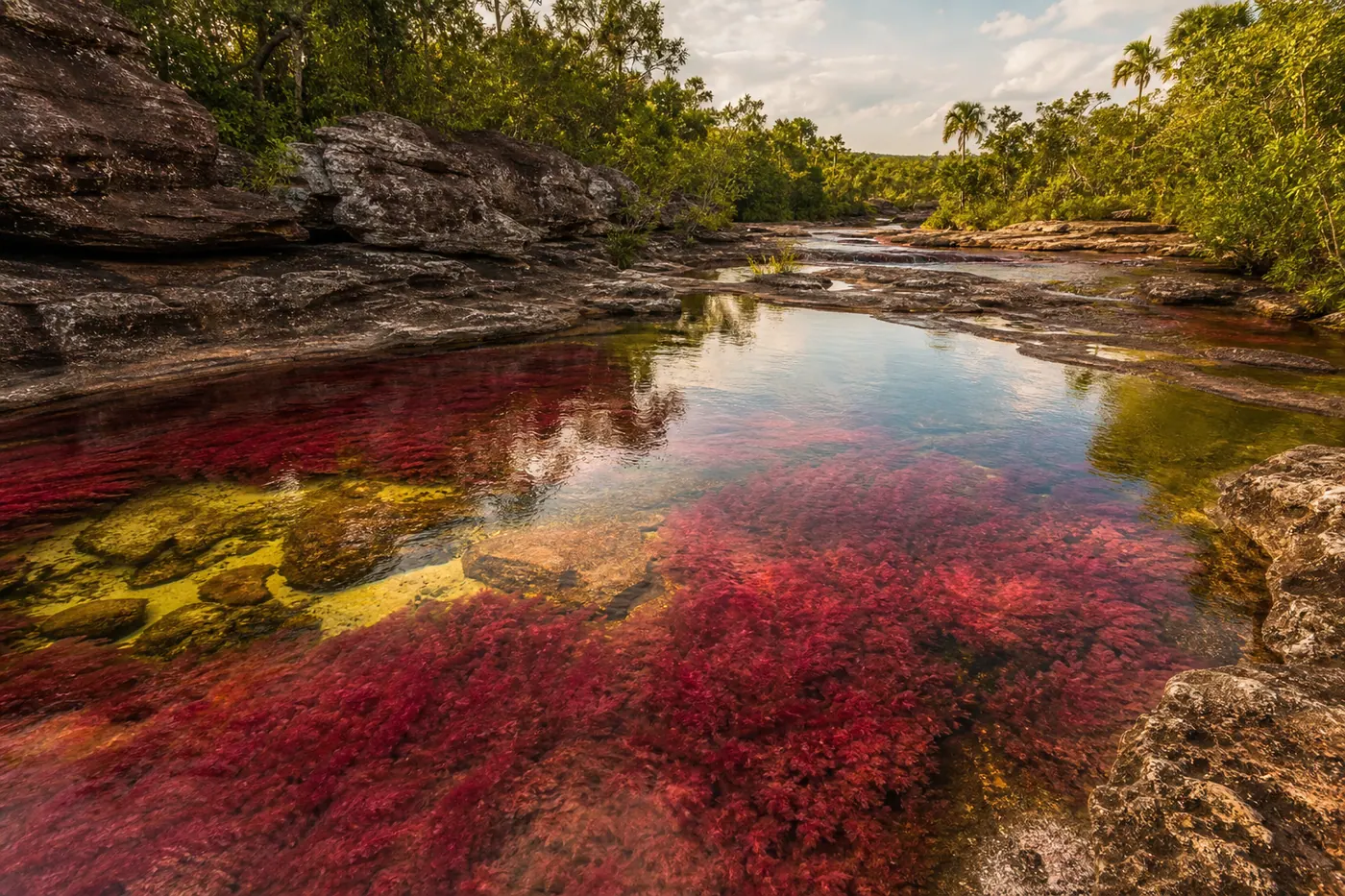
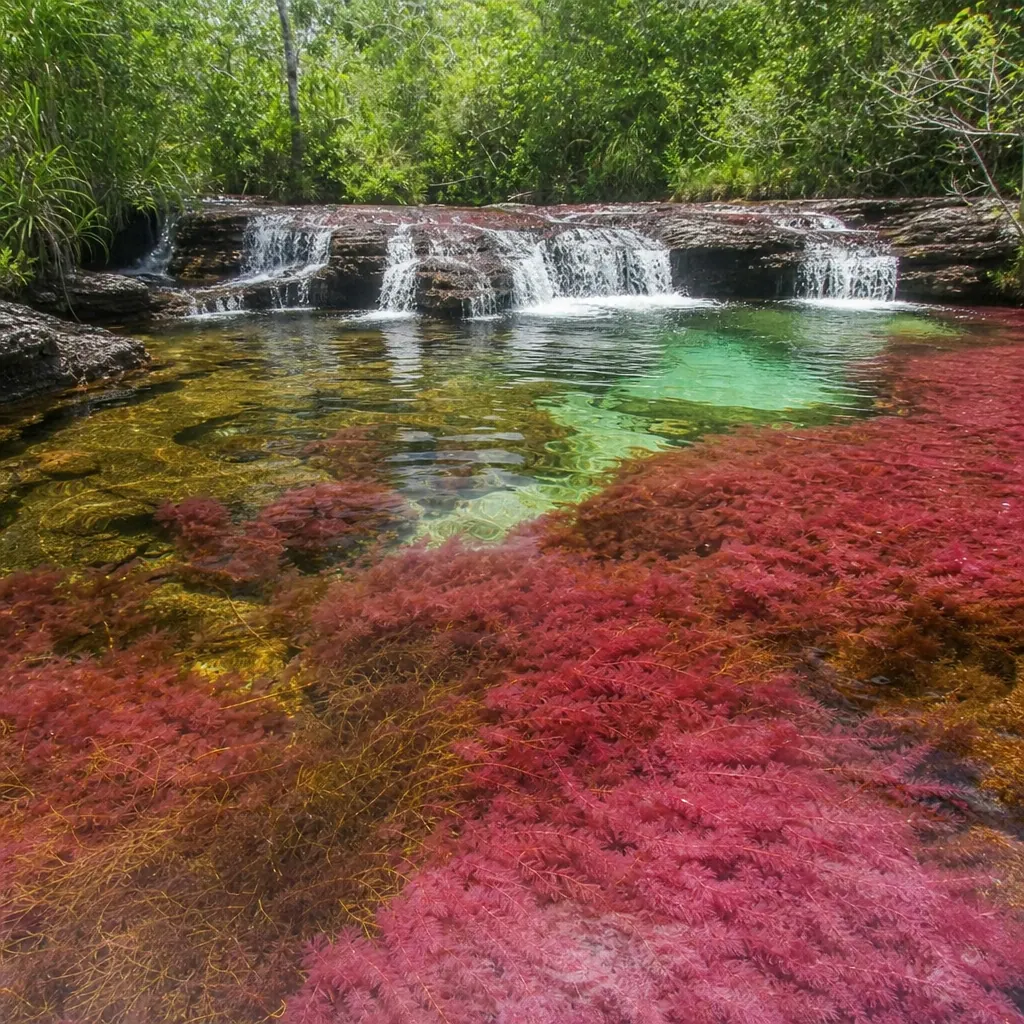
Macarenia blooms into vivid reds and pinks when conditions align: water levels low enough for sunlight to penetrate to the riverbed, but high enough to keep the plants hydrated. This window falls between June and November, with July through October being the most consistent. Pair the red Macarenia with yellow-green moss, dark algae, ochre sand, and clear rushing water, and you get the "five colors" the river is famous for.
Outside the bloom season — roughly December through May — the river is still striking: crystal-clear water carving through sculpted rock pools, excellent for swimming, and largely crowd-free. But the colors won't be there. If the spectacle is why you're going, plan for July through October.
When to Visit (and When the Colors Actually Show Up)
The timing window is tighter than most travel blogs suggest. July through October is the reliable bloom period. September is often cited as the peak by locals and repeat visitors — color intensity tends to be highest as the plants mature through the season. October can also be spectacular and sometimes comes with cheaper flights as high season winds down.
June and November are shoulder months: colors appear but may be patchy. Flights are cheaper and the park is less crowded. Worth considering if your dates have flexibility. December through May — no bloom. The river remains beautiful as a clear-water canyon, and some conservation restrictions on swimming relax slightly. But if photos are the draw, skip this window.
One thing that confuses people: the bloom season doesn't map neatly onto the dry season. La Macarena gets rain year-round. The key variable is water level, not total dryness — too much rain raises the river and blocks sunlight from reaching the plants; too little and the plants desiccate. The bloom window is specific, which is why booking for peak months and not assuming "rainy season = bad" is the right call.
How to Get to La Macarena
No road to La Macarena is safe or passable for civilian tourists. The region's isolation from the national road network is a legacy of the conflict era in Meta, and while security has improved dramatically since the peace process, overland access remains impractical. You fly.
From Bogotá's El Dorado Airport, Satena operates the most frequent prop-plane service to La Macarena's small airstrip. The flight takes about 35–40 minutes. Round-trip fares typically run 280,000–600,000 COP (~$65–140 USD) if booked two to three weeks out. During September and October, seats sell out quickly — especially on weekend departures.
Alternatively, fly from Villavicencio, capital of Meta department, roughly 3 hours by bus from Bogotá (or a 30-minute connection flight). Flights from Villavicencio to La Macarena are shorter and sometimes cheaper. If you're building a longer Meta trip — the Llanos, Caño Cristales, and onward — routing through Villavicencio is the logical base. For domestic flight tips and how to find cheap fares across Colombia, see
Day Trip vs. Multi-Day: What's Worth It
Day trips from Bogotá exist — fly in, guided river tour, fly back the same afternoon. Logistically feasible, but rushed. You're working against fixed flight schedules, the morning light on the river differs from afternoon, and any small delay (weather, capacity limits at the park) can eat into your time. I've talked to people who did it and felt the trip was worth it. I've also talked to people who spent more time in airports than on the river.
Two nights is the realistic minimum for a satisfying trip. You get one full day in the park, a night to decompress and eat in the town, and a buffer for anything that goes sideways with flights. Three nights lets you visit different sections of the river on two separate days, which is genuinely worth it — the lower pools near Cascada Piscinitas feel different from the upper sections near El Raudal Chiquito.
What Most Package Tours Include
- Round-trip flights from Bogotá
- Transport between La Macarena and the park
- Mandatory local guide fee (hired from the official association)
- Accommodation in La Macarena town
- Some meals (varies by package)
Always confirm whether park entry fees (~35,000–50,000 COP/day) are included — some packages leave this out.
What to Expect Inside the Park
The park divides into several sections, and your guide will plan which areas you visit based on your day's permit and current bloom conditions. Tours typically cover two or three sections per day — you won't see everything in a single visit.
Cascada Piscinitas is the most photographed section — a series of cascading pools where the water runs through channels in vivid red and pink. This is the image you've seen. In person, it holds up: the color saturation in peak bloom is genuinely surprising. It can be crowded at midday when multiple tour groups converge, so guides often try to hit it early or late.
Los Pinos has a different feel — tall palms rising from the riverbanks give it an almost prehistoric quality. Less photographed but equally memorable. El Raudal Chiquito (the small rapid) features fast water over wide rock shelves creating natural jacuzzis; swimming is sometimes permitted here when bloom conditions allow your guide to confirm which pools are accessible.
The hiking between sections is gentle to moderate — mostly flat paths over mixed terrain, with some wading through shallow river crossings. Heat is significant. La Macarena sits at low elevation with consistent tropical humidity; temperatures run 25–35°C. Start early when your guide suggests, take the shade breaks seriously, and wear light quick-dry clothing.
Photography tip: bring a dry bag or waterproof case for your camera — you'll wade through sections. The best colors in photos come from midday when sunlight penetrates the water at a direct angle. Golden hour looks beautiful on the jungle canopy but actually reduces color saturation on the river. Most photographers set the rule backwards.
What It Costs: An Honest Breakdown
Here's what to expect for a 2-night independent trip during peak season (July–October):
Cost Breakdown Per Person (2 Nights)
| Round-trip flight | 280,000–600,000 COP (~$65–140) |
| Park entry (2 days) | 70,000–100,000 COP (~$16–23) |
| Local guide (2 days) | 100,000–160,000 COP (~$23–37) |
| Accommodation (2 nights) | 120,000–300,000 COP (~$28–70) |
| Transport in La Macarena | 60,000–100,000 COP (~$14–23) |
| Food (3 days) | 60,000–120,000 COP (~$14–28) |
| Total estimate | ~800,000–1,400,000 COP (~$185–325) |
Organized packages from Bogotá typically run 900,000–1,800,000 COP per person and bundle most of the above. The convenience is real, but independent booking is cheaper if you're comfortable coordinating flights and accommodation separately. One thing worth noting: flight cancellations to La Macarena are more common than on major routes — small planes, jungle weather, short runways. SafetyWing covers trip interruptions and medical evacuation from remote areas, which matters more here than on a standard city trip.
Where to Stay in La Macarena
The town has around 15–20 guesthouses and small hotels now, a real change from a decade ago when accommodation was genuinely sparse. Budget options (fan-cooled, shared bathroom) start around 50,000–70,000 COP per night. Mid-range rooms with air conditioning and private bathroom run 100,000–180,000 COP. Nothing approaches boutique hotel quality — this is a small frontier town, not a resort.
Book early in September and October, full stop. The town's capacity is genuinely limited and peak weekends fill up weeks in advance. Cancellations do happen — flights get delayed and people miss their trips — but don't count on last-minute availability.
The town is calm and safe. The main strip has decent restaurants (local river fish is worth ordering over import-style menus), simple bars with cumbia playing in the evenings, and a few souvenir shops. Cash is essential — the ATM exists but can run out during busy periods. For connectivity, cell service is available from Claro and Movistar but can be unreliable in the jungle sections. An eSIM with rural Colombia coverage helps; Saily works well for data throughout Meta department.
Conservation Rules: These Are Actually Enforced
Caño Cristales looks the way it does because the rules exist and people follow them. Rangers patrol regularly. Don't treat any of this as negotiable.
- No conventional sunscreen. Only biodegradable, reef-safe formulas allowed near the water. Rangers check. Buy it in Bogotá before you go — selection in La Macarena is limited and expensive.
- No swimming in bloom areas. When Macarenia is active, swimming is restricted to specific permitted pools. Your guide marks these. The restricted zones change seasonally.
- No touching the plants. The Macarenia is what creates the color — a single handful pulled from the riverbed represents weeks of growth lost.
- Mandatory registered guide. All visitors must hire from the official guide association. Independent access to the river areas is not permitted, period.
- Daily visitor limits. Park capacity is controlled by PNN. During peak months, your tour operator may need to book access dates in advance.
- No plastic waste. Carry-in, carry-out. Water bottles visible in the river sections will get you removed from the tour.
These restrictions are the reason Caño Cristales still looks the way it does. Other extraordinary Colombian natural sites have been damaged by overtourism — the controls here are why this one hasn't been.
Planning more Colombia adventures?
Subscribe to get new guides on Colombia travel, expat life, and neighborhoods — no spam, just useful content when it publishes.
Or ask the community at colombiamove.com/comunidad if you have specific questions about logistics, guides, or timing.
Keep Reading
Planning more off-the-beaten-path Colombia travel? Santander & Chicamocha: Colombia's Adventure Sports Capital →
Keep Reading
Another unmissable Colombia experience: The Eje Cafetero: Complete Coffee Region Travel Guide →
Frequently Asked Questions
❓ Can I visit Caño Cristales without a tour guide?
No — all visitors must hire a registered local guide from La Macarena's official guide association. This is a park requirement enforced at river entry points, not a suggestion. Independent access to the river areas is not permitted. Most organized packages include the guide fee; if booking independently, add approximately 50,000–80,000 COP per person per day to your budget.
❓ Is Caño Cristales safe to visit?
Yes, for the vast majority of visitors. The Serranía de la Macarena region had serious security concerns during the conflict era, but the Colombian government established substantial security presence in the park area from around 2009 onward. La Macarena town is orderly and calm. Apply standard travel common sense — stay in established tourist areas, keep valuables out of sight, follow your guide's direction in the field. The park itself is well-managed and patrolled.
❓ What is the best month to visit Caño Cristales?
September is most consistently rated as peak bloom by local guides and repeat visitors. October is close behind and sometimes cheaper. July and August are reliable. If you have total flexibility, aim for a midweek visit in September — you get the strongest color window with smaller crowds than weekend trips attract.
❓ How long does it take to hike through the park?
A standard guided day in the park runs 4–6 hours depending on which sections you cover, your pace, and how much time you spend at each pool. The terrain is moderate — mostly flat with some wading sections — but the heat and humidity are serious. Starting by 7–8 AM is standard. Bring more water than you think you need.
❓ Do I need to book park entry in advance?
During peak months (August–October), yes — daily visitor numbers are capped, and weekends in particular can fill up. Most Bogotá-based tour operators handle park access bookings as part of their packages. If booking independently, contact the park authority (PNN Serranía de la Macarena) or a La Macarena-based guide association to secure your entry dates before buying flights.


Comments
Loading comments...
Checking sign-in status...