
Popayán, Colombia: The Honest Visitor's Guide
The White City isn't just pretty — Popayán has Colombia's most elaborate Semana Santa, UNESCO gastronomy recognition, and an Andean vibe that makes most visitors stay longer than planned.
IDIOMA DEL ARTÍCULO
Showing original language
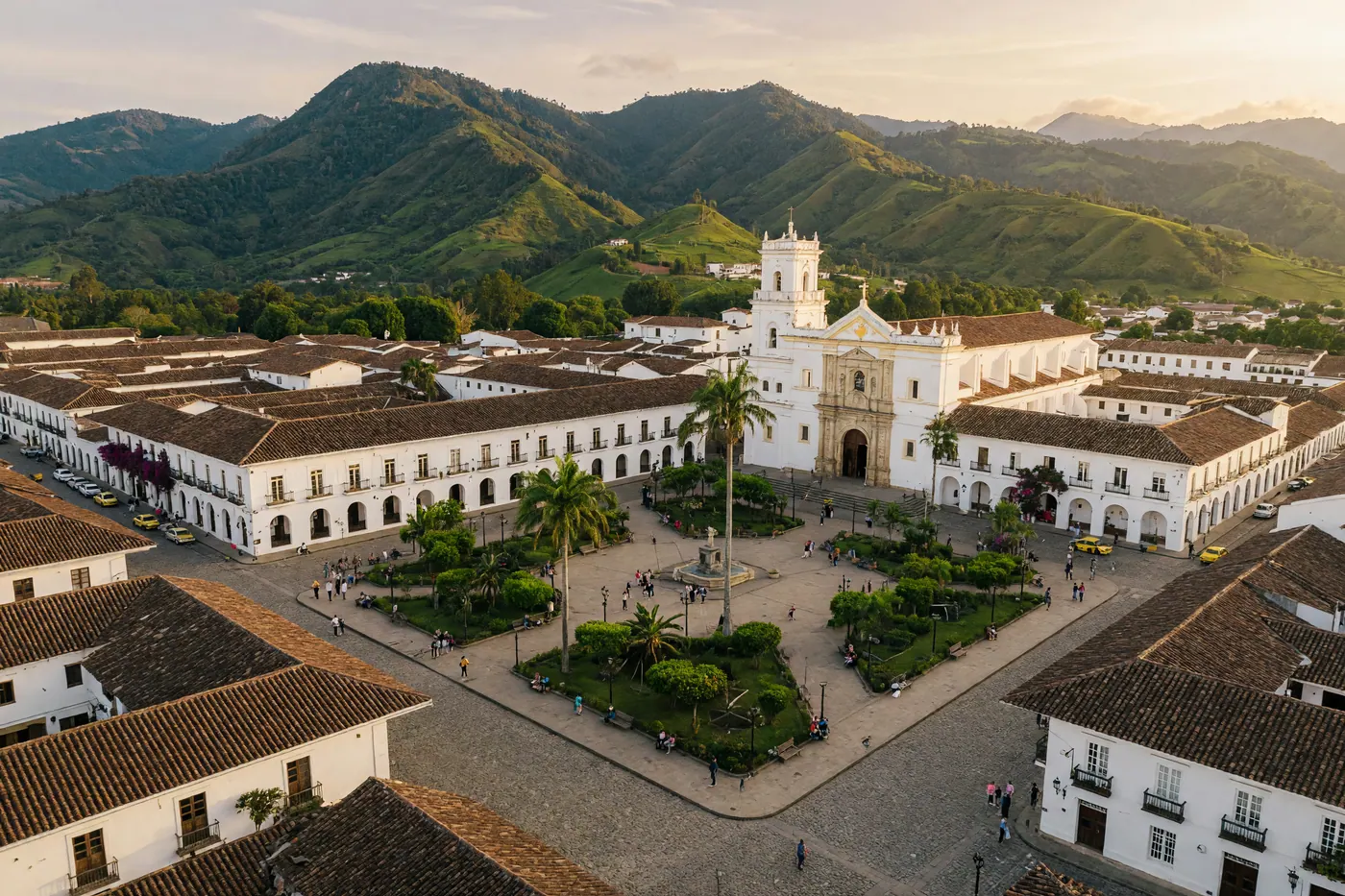
Popayán has one of those reputations that sounds like marketing until you actually arrive. The White City — every colonial building painted bright white by local ordinance — sounds Instagram-contrived until you're standing in the Plaza Mayor at 7am watching mist roll off the Andean ridges and the cathedral dome glowing against the gray sky. Then it just seems inevitable.
This is the real thing. Popayán has been white since the 17th century. The paint isn't for tourists — it's a city ordinance older than most countries. When a devastating 1983 earthquake leveled much of the historic center, reconstruction laws required historical accuracy, and the city came back white again. The result is one of the most cohesive colonial town centers in South America.
It's also significantly undervisited by foreigners. Compared to Cartagena or Medellín, Popayán gets a fraction of international attention — which keeps prices low, crowds thin, and the city refreshingly unperformative.
🇨🇴 What to Know Before You Go
- Elevation: 1,737m — cool mornings and evenings year-round, bring a layer
- UNESCO Creative City of Gastronomy (2005) — Colombia's first, and it shows
- Semana Santa (Holy Week) is the main event — book 6–12 months ahead
- From Cali: 3-hour bus, 25,000–35,000 COP. From Bogotá: 1-hour flight
- Day trip base for Tierradentro, San Agustín, and Silvia's indigenous market
- Cost: roughly 30% cheaper than Medellín for food, rent, and coffee
Why Popayán Is Worth the Trip
Three things set this city apart from the other colonial towns Colombia does well.
Semana Santa (Holy Week) is the first reason most Colombians would mention. Processions have run continuously in Popayán since 1556 — with one exception, the year of the 1983 earthquake. Floats carried by cargueros (volunteers in purple robes and white gloves), thousands of candles, centuries of tradition, and remarkably little tourist infrastructure built up around it. It's genuinely moving even if you're not Catholic. Book accommodation six to twelve months in advance. Seriously.
The food is the second reason. In 2005, UNESCO designated Popayán Colombia's first Creative City of Gastronomy. Not Bogotá, not Cartagena — Popayán, a city most foreigners can barely find on a map. That designation stuck because the living ecosystem of street vendors, market cooks, and home kitchens kept the city's food culture intact for 300 years without self-consciously preserving it. More on this below.
The third reason is simple: it costs less. Roughly 30% less than Medellín for rent, food, and daily life. An almuerzo corriente (lunch set) runs 10,000–14,000 COP. A good apartment in the historic center costs 900,000–1,200,000 COP per month. Coffee grown in Cauca department — some of Colombia's best — sells here at local prices.
Getting to Popayán
By air: Guillermo León Valencia Airport (PPN) has daily flights from Bogotá — about one hour, usually 80,000–180,000 COP one-way on Avianca or LATAM. Flights from Cali exist but the bus is often faster door-to-door given how close Cali is. The airport is small, uncrowded, and a 10-minute taxi ride from the city center.
By bus from Cali: This is what most travelers do. Terminal del Norte in Cali to Terminal de Transportes de Popayán — about 3 hours, 25,000–35,000 COP. Bolivariano and Flota Magdalena run reliable services throughout the day. The road through the mountains is genuinely beautiful; get a window seat and stay awake for it.
From Bogotá by bus: 12+ hours south through the central Andes. Only worth it if you're connecting south to San Agustín or Tierradentro as a multi-stop journey, or you're on a very tight budget.
📖 Keep Reading
Bus Travel in Colombia: Routes, Companies & Safety Tips — everything you need to know about long-distance buses, booking platforms, and overnight travel across Colombia.
What to Do in Popayán
The historic center is compact enough to walk in half a day. The logical starting point is Plaza Mayor de Popayán, the central square flanked by the Cathedral Basilica, the Governor's Palace, and a handful of cafés. Everything radiates from here.
Morro de Tulcán — a hill about ten minutes' walk from the plaza — is topped by an equestrian statue of city founder Sebastián de Belalcázar. The views over the white rooftops are worth the climb, especially early morning when Andean mist still sits in the lower streets. The hill itself is an indigenous pyramid.
Puente del Humilladero, the iconic two-arch stone bridge from 1873, photographs best from the riverside path below. The Torre del Reloj (clock tower, 1737) serves as the city's main orientation landmark. Casa Mosquera houses a national museum in the birthplace of Tomás Cipriano de Mosquera — the first Colombian president elected by popular vote. Five of Colombia's early presidents were from Popayán; the city punches well above its weight in national history.
Museo Negret showcases the contemporary sculptures of Popayán-born artist Edgar Negret, housed in a renovated colonial building. It's small and good. One honest caveat about nightlife: the large university student population (Universidad del Cauca, founded 1827) creates a bar scene around Calle 4 and the campus area. It's not Medellín, but it's not dead either. Weekdays are quiet; weekends get livelier.
Popayán's Food Scene
The UNESCO designation wasn't honorary. It recognized a living food system that had remained intact for centuries — not recreated for tourists, just genuinely persistent.
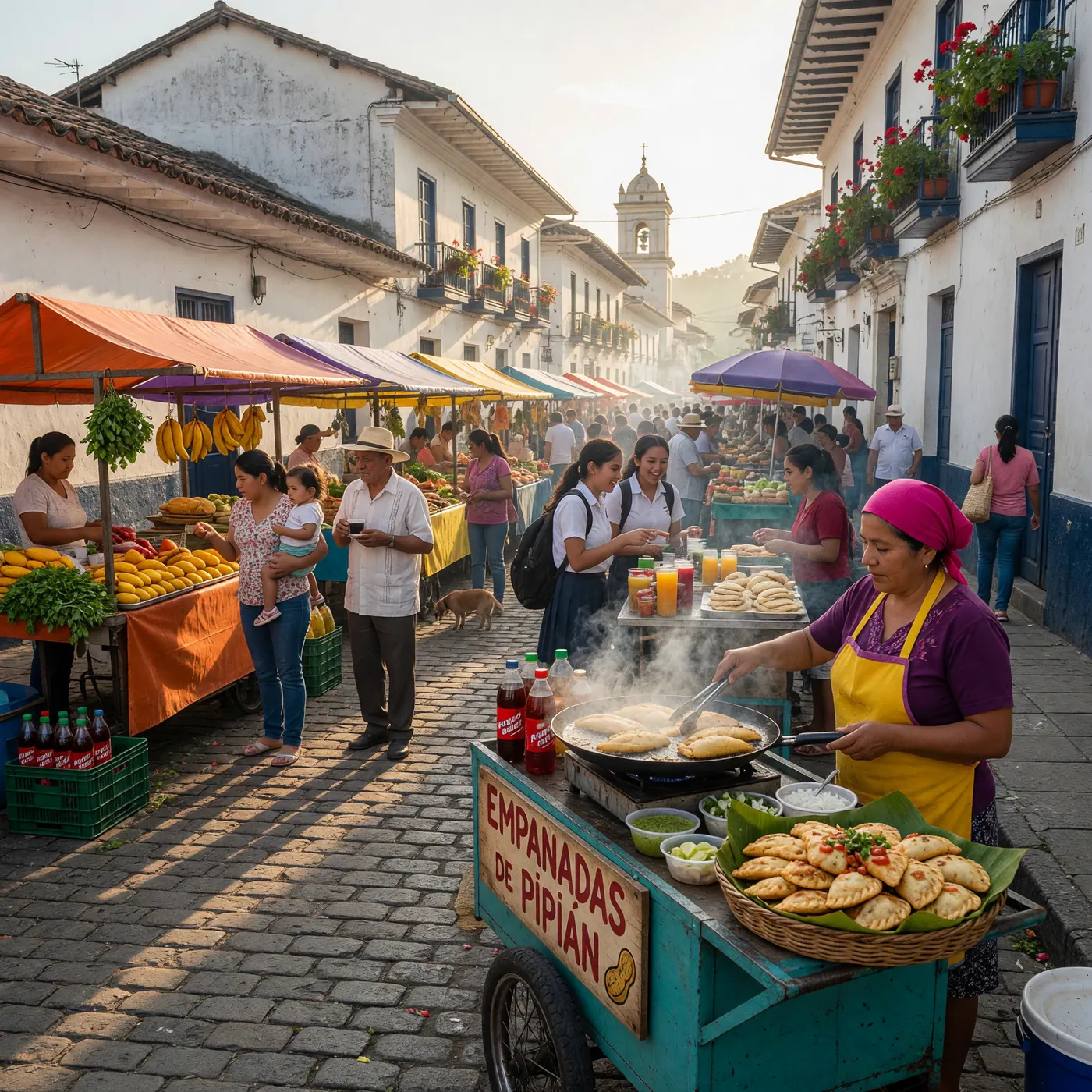
Empanadas de pipián are the city's signature snack. The filling is papas criollas (small yellow Andean potatoes) with pipián sauce — roasted peanuts ground with guajillo chili and spices. You'll find vendors on every corner near Plaza Mayor, but the ones working from a simple fryer on the sidewalk at 8am are usually the best. 1,500–2,000 COP each. Order four.
Champús is the other essential: a cold drink made from corn dough, lulo, pineapple, naranjilla, and panela. Thick, slightly tart, and very Colombian. Order it from a market vendor rather than a restaurant — the sit-down versions are diluted. Mercado Bolívar (the central market) is the right place for both champús and a proper almuerzo corriente lunch for 12,000 COP.
Pipián the dish — not just the sauce — usually comes with pork or roasted potatoes. Pipián de cuy (guinea pig) is the traditional version if you want to go that far. The best food discovery in Popayán tends to be accidental: a woman selling from a cart outside a church, a market stall that doesn't have a sign. The city rewards wandering.
Day Trips From Popayán
Popayán's location in the Andes makes it one of the better bases for exploring southern Colombia. The main options:
| Destination | Distance | Why Go | Stay Overnight? |
|---|---|---|---|
| Tierradentro | 3–4 hrs | Pre-Columbian burial tombs, UNESCO | Yes (1–2 nights) |
| San Agustín | ~5 hrs | Ancient carved stone statues, UNESCO | Yes (2–3 nights) |
| Silvia market | 1.5 hrs | Guambiano indigenous market (Tuesdays) | No (day trip) |
| Coconuco hot springs | 45 min | Geothermal pools at 3,000m altitude | No (day trip) |
| Puracé volcano | 1.5 hrs | Active volcano, crater rim hike at 4,646m | No (day trip) |
Tierradentro is genuinely spectacular and genuinely remote — pre-Columbian underground burial tombs (hypogea) decorated with geometric red and black wall paintings, carved between 600–900 AD. UNESCO World Heritage Site, rarely crowded. The journey involves a bus from Popayán terminal to La Plata, then a chiva (open-sided truck) to San Andrés de Pisimbalá. Plan 1–2 nights; the journey itself is part of the experience.
San Agustín is the other major archaeological site — over 500 carved stone statues, many serving as guardian figures over ancient burial mounds, set in green mountain valleys. Also UNESCO. Give it 2–3 days minimum to see the multiple park clusters properly.
Silvia's Tuesday market is the most accessible day trip. The Guambiano (Misak) indigenous community sells produce, crafts, and food in traditional blue and purple textiles. It's the most authentically indigenous market most visitors will encounter in Colombia. Leave Popayán by 7am to catch it at full activity.
🛡️ Traveling Through Cauca? Get Covered
Cauca's rural areas have security considerations. SafetyWing Nomad Insurance covers emergency medical, evacuation, and trip interruption — starting at $45/month for most nationalities. Worth it for Tierradentro and San Agustín trips especially.
Get SafetyWing Coverage →Where to Stay
The colonial center is the obvious choice — and also the most affordable. Hotels and guesthouses occupy renovated colonial houses with courtyard gardens, usually $25–50 USD per night for mid-range options. Hostels run cheaper. During Semana Santa, prices triple and sell out a year in advance. Not an exaggeration.
If you're considering Popayán as a longer base — a month or more — the calculus is genuinely attractive. The university environment keeps intellectual life active, the food is excellent and cheap, fiber internet reaches most of the center, and the expat community is essentially zero. You integrate into Colombian city life rather than an expat bubble. That's a feature if you want it, a bug if you don't.
What to avoid: stay within the ring of main avenues that defines the historic center. Popayán's peripheral neighborhoods have the security issues common to a mid-size city in Cauca department. The tourist core is consistently safe.
Safety in Popayán and Cauca
Popayán city is safe for visitors and has been for years. The department of Cauca — particularly rural areas in the south and toward the Pacific coast — has ongoing armed conflict. This matters less than it sounds for typical tourist routes: Tierradentro, San Agustín, and Silvia are all accessible with certified local operators running regular services. Check current conditions before any rural travel in Cauca, use tour operators rather than going it alone on unfamiliar roads, and stay on the main tourist circuits.
Frequently Asked Questions
❓ Is Popayán worth visiting?
Yes — especially if you've already done Medellín and Cartagena and want something less processed. The food culture, colonial architecture, and Semana Santa are each strong enough reasons on their own. The combination is unusually good.
❓ When is the best time to visit Popayán?
For Semana Santa (Easter week): March or April, but book 6–12 months ahead. For weather, June to August is the driest period. Avoid major Colombian holiday weekends if you don't want crowds — the city fills with domestic tourists.
❓ How do I get from Cali to Popayán?
Bus from Terminal del Norte in Cali: about 3 hours, 25,000–35,000 COP. Multiple companies run this route throughout the day; Bolivariano is reliable. Flying is an option (30 minutes) but rarely faster door-to-door.
❓ Is Tierradentro worth the trip from Popayán?
If you have the time, absolutely. It's one of the least-visited UNESCO sites in the Americas, the underground tombs are extraordinary, and the journey itself through the Cauca mountains is memorable. Budget two days rather than one — the archaeological site takes a full day to explore properly.
❓ Is Popayán good for long-term stays?
More than most people realize. Very affordable, good food, university city atmosphere, fiber internet in the center, and the Andes scenery is reliably beautiful. The lack of an expat community is either a selling point or a dealbreaker depending on what you're looking for.
💬 Have a Question About Popayán?
Ask the community at colombiamove.com/comunidad — travelers and expats who've done the Tierradentro and Silvia routes regularly post there.



Comments
Loading comments...
Checking sign-in status...