
Things to Do in Cartagena, Colombia: The Honest Visitor's Guide
What to actually do in Cartagena, Colombia — from wandering Getsemaní at dusk to day trips that are genuinely worth it. No tourist traps.
IDIOMA DEL ARTÍCULO
Showing original language
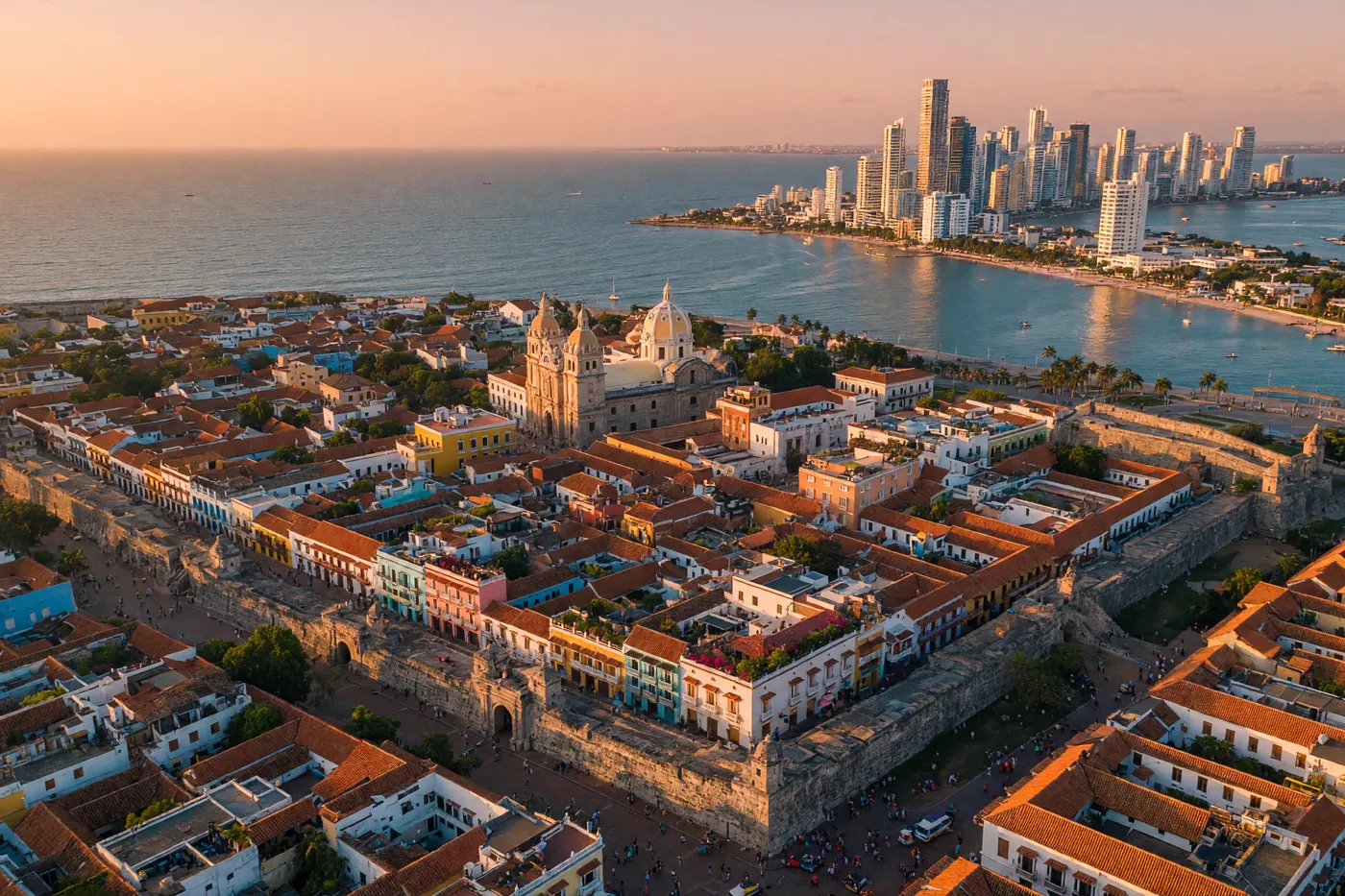
Cartagena sells itself perfectly. The walled city photographs beautifully, the Spanish colonial architecture glows at sunset, and the Caribbean energy makes everything feel more alive than it should when the heat index starts flirting with 35°C. It's also, genuinely, one of the most visited cities in Colombia — the history, the food, and the proximity to actual Caribbean beaches make it hard to dismiss.
But there's a version of Cartagena that costs a lot of money for a mediocre experience: overpriced restaurants aimed at cruise passengers, boat tours that dump you on a crowded beach for two hours, and horse carriage rides through streets you could walk for free. Most visitors encounter both versions in the same trip.
This guide skips the tourist-trap version. The one where you walk Las Murallas at dusk with a beer from a street vendor (3,000 COP), eat whole fried fish at a plastic table in Getsemaní, and leave wondering why you didn't stay longer. Here's what to actually do with your time in Cartagena.
Quick Answer: Things to Do in Cartagena
- Walk Las Murallas (the city walls) at golden hour — free and genuinely stunning
- Spend an afternoon in Getsemaní: street art, fondas, and the city's best nightlife
- Visit Castillo de San Felipe de Barajas (~40,000 COP entry) — go early or late to avoid the midday heat
- Day trip to Islas del Rosario for clear Caribbean water and snorkeling (boats leave ~8am)
- Budget 3–4 days minimum; most visitors wish they'd stayed longer
Walk Las Murallas and the Walled City
The multi-kilometer fortified wall circuit around Cartagena's old city is the obvious starting point, and it earns the reputation. Las Murallas were completed in 1796 after nearly two centuries of construction — the Spanish built them in response to repeated pirate raids, which tells you something about how valuable this port was. The whole historic center is UNESCO-listed, and unlike a lot of UNESCO sites, the label is visually justified. The best time to walk the wall circuit is the last hour before sunset, when the light on the Caribbean-facing sections turns everything amber and the water goes flat and dark.
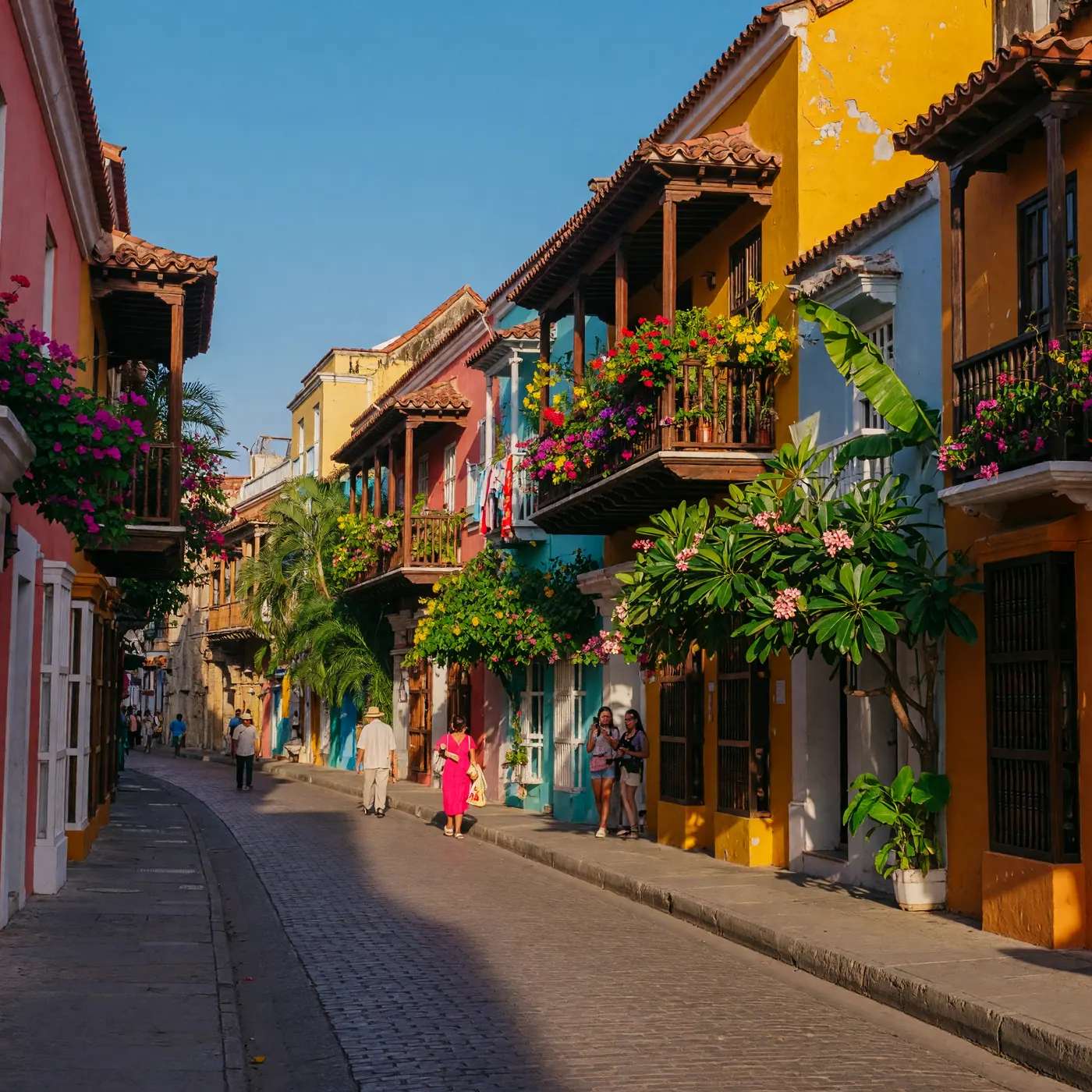
Inside the walled city, the streets are dense with competing noise: street vendors, vallenato bleeding from open windows, tour guides in colonial costumes, horses on cobblestone. Plaza de Bolívar is the logical center — the cathedral faces it, a few of the better coffee shops are nearby, and it's walkable to Plaza de los Coches and Plaza de la Aduana in either direction. The squares themselves are worth the 10-minute loop even if you just pass through.
The thing that wears on you in the walled city is tourist saturation during peak hours. Cruise ship days are the worst — thousands of people in the same six square blocks for the same eight hours. The fix is simple: go early morning or late afternoon. By 9am on a weekday, the streets feel genuinely calm and you'll understand why people keep coming back.
Spend Time in Getsemaní
If the walled city is Cartagena's postcard, Getsemaní is its personality. The neighborhood sits just outside the old city walls and spent most of the 20th century as the working-class barrio that wealthier areas quietly looked down on. That history now shows up as something genuine: street murals covering entire building facades, local fondas serving sancocho for lunch, and a nightlife scene that starts at midnight and runs until 5am.
The Corazón de Getsemaní mural on Calle Guerrero is the most photographed in the neighborhood — worth a stop, but the real discovery is walking the surrounding blocks. Every other wall has something on it, and the quality varies from commissioned art to whatever someone painted in a night. Spend an afternoon around Plaza de la Trinidad and you'll get more authentic Cartagena than most visitors find in three days inside the walled city.
At night, the plaza fills up, bars spill onto sidewalks, and the music is genuinely good. Worth noting: Getsemaní has gotten significantly safer over the past decade — but stay aware of your surroundings after midnight, same as anywhere else in a Latin American city with active nightlife.
Castillo de San Felipe de Barajas
The official fortifications authority dates Castillo de San Felipe de Barajas to 1657, with later colonial expansions. It is one of Cartagena's most important Spanish military works and a genuinely massive structure. The network of tunnels beneath it was engineered to amplify sound so defenders could hear approaching enemies through vibration in the stone, which your guide will demonstrate by whispering into a tunnel and having it carry 40 meters.
As of the 2026 tariff, full entry is COP 38,000; Colombian nationals with ID pay COP 33,000. You can walk the fort without a guide and still understand the scale of the thing from the upper ramparts, but a guide who knows the fort's military history — particularly the 1741 siege where Spanish colonial defenders repelled a British fleet of 186 ships — makes the visit significantly better. The fort is on the eastern edge of the old city, about 15 minutes on foot from the walled center.
One thing worth knowing: the fort is almost entirely exposed. No shade, direct Caribbean sun. Go at 8am or after 4pm. The midday version is the same experience, just significantly more unpleasant.
Day Trips Worth Taking
Islas del Rosario — This archipelago of roughly 30 coral islands sits about 1.5 hours by boat southwest of Cartagena. The snorkeling is legitimately good, the water is clear Caribbean turquoise, and some islands have reasonable beach facilities. Day trips from the Muelle de los Pegasos run around 80,000–120,000 COP per person depending on what's included. Snorkel gear and lunch are usually sold separately.
Book directly at the dock rather than through a hotel — same boats, lower prices. Boats typically leave between 8–9am and return by 4pm. Weekday departures are noticeably less crowded than weekends; avoid Colombian holiday weekends entirely if possible.
Playa Blanca (Barú Peninsula) — This is the beach on every Cartagena promotional photo, and it's legitimately beautiful: white sand, clear shallow water, excellent for swimming. It's also accessible by both boat and bus, and the experience varies enormously by timing. Weekends in high season (December–March) mean vendor saturation and crowds. A quiet weekday in May can feel like a different place entirely. It's worth going if you time it right; don't build your whole trip around it.
For longer stays, Mompox — the colonial town on the Río Magdalena — is one of the least-visited UNESCO sites in South America. It takes 5–6 hours from Cartagena but the experience is completely different: no cruise ships, almost no tourist infrastructure, and 16th-century architecture in a river town that floods seasonally. Worth the effort if you have the time.
Where to Eat in Cartagena
Cartagena has excellent food at every price point, which isn't something you can say about every Colombian city. The costeño cuisine is genuinely distinct from what you eat in Medellín or Bogotá — more seafood, more coconut, more plantain in every form.
La Cevichería in the walled city is the most famous restaurant in Cartagena and the one you'll line up for — deservedly. Their Colombian ceviche is marinated in lime, ají, and costeño cheese rather than the Peruvian style, and it's among the best I've had in the country. Budget around 80,000–120,000 COP per person.
For a budget lunch, Getsemaní has several local fondas serving fish of the day with rice cooked in coconut, patacones, and a fresh juice for 18,000–25,000 COP. Walk around until something smells right — the neighborhood is full of them.
Street food at night in Getsemaní is worth seeking out. Arepa con huevo — fried corn dough with an egg inside — from a cart outside Plaza de la Trinidad costs around 4,000–5,000 COP and is one of the better bites in the city.
One unusual option: Interno, a restaurant inside an actual prison staffed by inmates. The Colombian government-approved program has been running for years. The Caribbean food is genuinely good, the experience is more thought-provoking than gimmicky, and the seating is supervised. Reserve in advance.
What to Skip (Or Approach Carefully)
Horse carriage rides run around 120,000 COP per hour. The horses are often in poor condition in the heat, and you're not seeing anything you couldn't walk to yourself. Many tour operators push these. The money is better spent on food or a boat trip.
Party catamarans are loud music boat tours that are a legitimate Cartagena industry. They're exactly what they sound like. They're fine if that's the experience you're after — just don't confuse them with a scenic Caribbean sailing experience.
Most combo 'pirate island' packages combine a mediocre beach, a lunch you didn't choose, and several hours of slow boat travel. Compare specifically what's included before paying for any bundled tour.
Restaurants on the main walled-city squares follow a consistent pattern: food quality drops sharply, prices go up, and portions shrink. A few blocks off any main square in any direction, the same meal costs 30–40% less and is usually better. The only exception is if a specific restaurant — like La Cevichería — has a genuine reputation on its own merit.
Getting Around and Practical Tips
Cartagena is mostly walkable between the walled city, Getsemaní, and Bocagrande — it's maybe 2 km end to end. Taxis work well and are cheap (8,000–12,000 COP for short trips); a travel eSIM is worth buying before you arrive so you have data for maps and InDrive, which has solid coverage in Cartagena.
When to go: December–March is high season — dry, busy, expensive, and the period when Cartagena shows its best face. April–May and September–October are shoulder seasons with lower prices and occasional rain. June–August is genuinely hot and humid, but accommodation prices drop significantly and the tourist crowds thin out considerably.
Budget: Cartagena costs more than Medellín or Bogotá. A comfortable mid-range day (decent accommodation near the walled city, two restaurant meals, one entry fee) runs $70–100 USD. Budget travelers doing Getsemaní hostels and street food can manage on $35–45/day. For longer trips, a good travel insurance plan like SafetyWing covers medical emergencies and trip interruptions at a fraction of what you'd pay for a one-off policy.
📍 Keep Reading
Thinking about staying longer? Our Cartagena living guide covers neighborhoods, real rent costs, and who the city is (and isn't) for. Comparing coastal options? Here's our take on Medellín vs Cartagena for expats and the full Cartagena neighborhood guide.
Frequently Asked Questions
❓ Is the Walled City of Cartagena worth visiting?
Yes — it's genuinely one of the most impressive colonial cities in the Americas. The key is visiting at the right time (early morning or late afternoon) and avoiding the overpriced tourist restaurants on the main squares. The architecture alone justifies the trip.
❓ How many days do you need in Cartagena?
Three to four days lets you explore the walled city, visit Getsemaní, do one day trip, and eat well without rushing. Two-day visits leave most people wishing they'd booked more time. If you're thinking about longer stays, read our Cartagena expat living guide.
❓ Is Cartagena safe for tourists?
The main tourist areas — the walled city, Getsemaní during the day, and Bocagrande — are generally safe for tourists. The same street-awareness rules that apply anywhere in Colombia apply here: don't flash expensive jewelry or electronics, stay aware at night, and avoid walking alone in unfamiliar areas after midnight. See our Colombia safety guide for foreigners for more detail.
❓ What's the best beach near Cartagena?
The best beaches are on the Barú Peninsula (Playa Blanca) and in the Islas del Rosario, both about 1–1.5 hours by boat. The urban beaches near the walled city and in Bocagrande are significantly inferior — murky water, vendor saturation, and not worth it unless you just want to sit near the water. Go by boat to Barú or the Rosarios if you want a real Caribbean beach day.
More Colombia Travel Guides
Get practical Colombia content in your inbox — city guides, expat tips, and real cost-of-living data. No filler, no spam.

Comments
Loading comments...
Checking sign-in status...