
Best Day Trips from Bogotá: Escapes Worth the Drive
From the underground Salt Cathedral to El Dorado's original crater lake, Bogotá's surroundings have more variety than most visitors realize. Here's what's worth the drive.
IDIOMA DEL ARTÍCULO
Showing original language
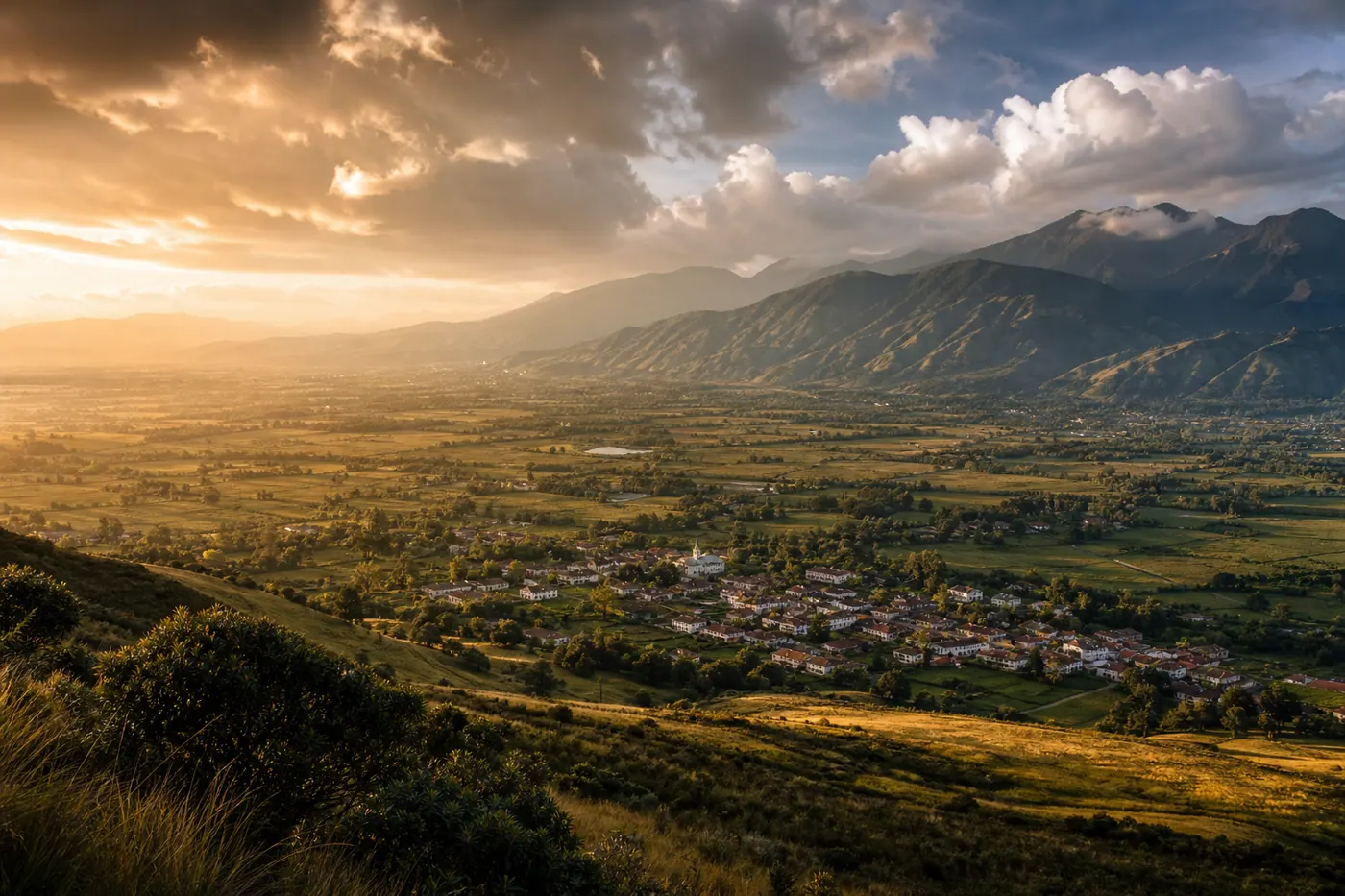
Bogotá has a way of compressing you. The altitude, the traffic, the grey skies — after a few weeks, even people who genuinely like the city start craving a reset. The good news: you're sitting on one of the most underrated road-trip launching pads in South America. Within two hours of the city center, you can be soaking in hot springs, standing on the rim of the original El Dorado crater lake, or pulling yourself up 200-meter sandstone pillars above a river valley.
Most of these trips don't require a rental car, though having one opens up more options. Several are reachable by public van or direct bus — and they're dramatically cheaper than comparable day trips in Europe or North America. The altitude works in your favor here: distances feel shorter than they are because the scenery never stops. If you want to see real-world options right now, you can browse apartments and houses on Colombia Move — posting is completely free.
Here are the six day trips I'd put on a Bogotá shortlist — one for each main type of person. All are real, I've done most of them, and I'll give you the honest catch for each one.
Quick Answer: Best Day Trips from Bogotá
- Easiest (no car): Zipaquirá Salt Cathedral — 1 hour, buses from Portal Norte every 20 min
- Best history: Laguna de Guatavita — 1.5 hours, El Dorado origin story, stunning crater lake
- Best adventure: Suesca rock climbing — 1 hour north, 200+ sandstone routes
- Best relaxation: Termales del Choachí — 1 hour east, mountain hot springs
- Best nature: Chingaza National Park — 2 hours, páramo frailejones and Andean wildlife
- Best colonial town: Villa de Leyva — 3.5 hours (better as an overnight)
Zipaquirá and the Salt Cathedral — The Easy Win
If you only have one day trip in you and want zero planning friction, Zipaquirá is the answer. It's 48 kilometers north of Bogotá, buses leave constantly from Portal Norte TransMilenio station (COP 8,000–12,000 one way), and the Salt Cathedral — a fully functioning underground church carved inside an active salt mine — is unlike anything else in Colombia.
The cathedral is massive. The main nave descends 180 meters underground, past 14 stations of the cross carved into the salt walls, ending in a domed hall that seats 8,000 people and holds Sunday mass. Entry costs around COP 90,000 ($22) and includes a guided tour. The town of Zipaquirá itself is pleasant — a clean colonial plaza, decent restaurants, and easy to wander for a couple of hours after the mine without it feeling like a theme park.
Get there early (catch the 9 AM bus from Portal Norte) to beat the tour groups that arrive from 10 AM. Weekday visits are noticeably calmer. Budget 3–4 hours total including town time.
Laguna de Guatavita — The Real El Dorado
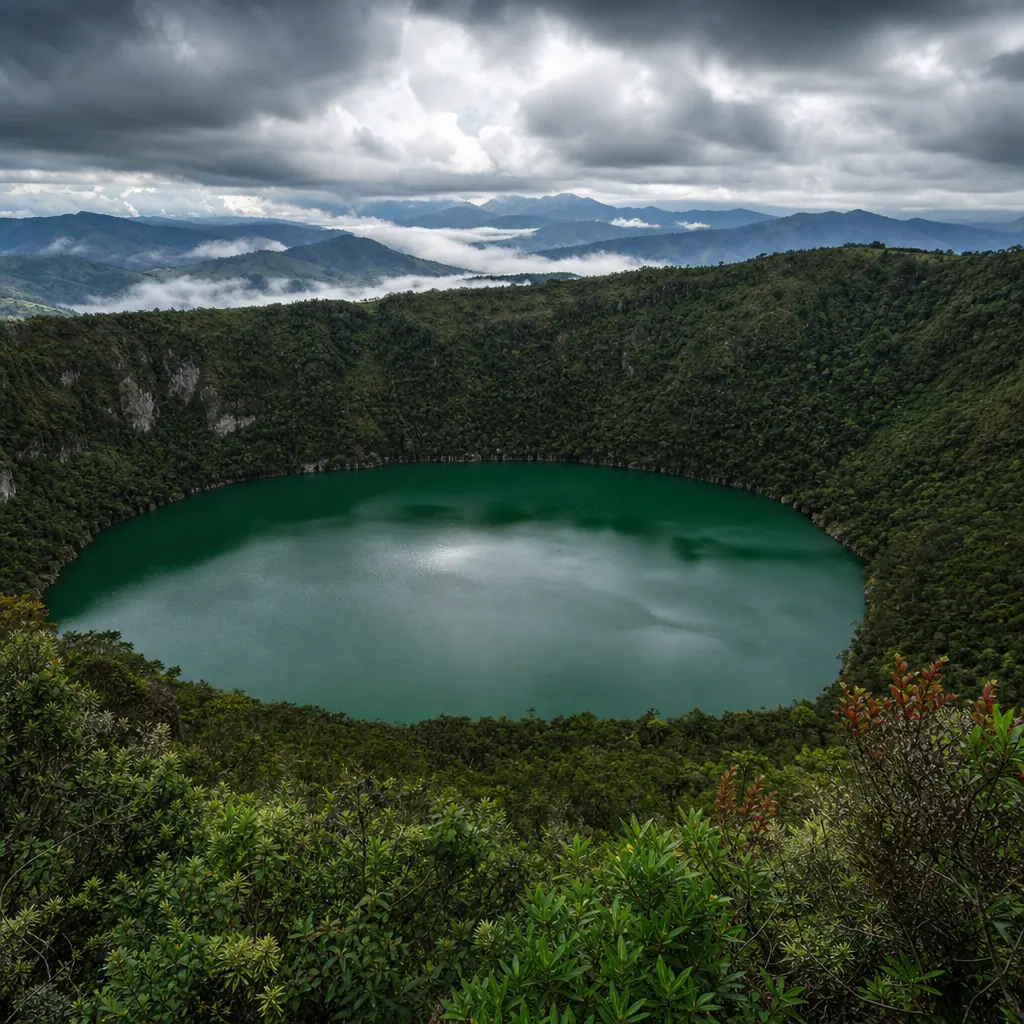
Laguna de Guatavita is a near-perfect circular lake inside a volcanic crater, 75 kilometers northeast of Bogotá. The Muisca people used it for ritual ceremonies where a gold-dusted chief would wade into the water as an offering. This is the original El Dorado story — Spanish conquistadors tried to drain the lake multiple times, found some gold, and sparked 400 years of obsession.
What you get today is a well-maintained hike: 45 minutes up and around the crater rim through páramo ecosystem — frailejones, dwarf bamboo, mossy cloud forest — with a view of the emerald lake below. The trail is not hard, but it's steep in places and gets muddy in the rainy season. Entry is COP 20,000–25,000 ($5–6) for foreigners.
The catch: you can't go down to the water. You see it only from the rim. If you're expecting to swim, you'll be frustrated. But on a clear morning, the contrast between the green crater walls and the dark lake is one of the better natural views near Bogotá.
Getting there without a car means a bus to Guasca or Sesquilé and a local collectivo — doable but slow. Most people hire a private driver or book a day tour (COP 80,000–120,000 round trip including entry). Worth it for the simplicity.
Suesca — The Rock Climbing Town Nobody Told You About
Nobody outside the Colombian climbing community talks about Suesca, which is the entire point. It's a town of 14,000 people, 70 kilometers north of Bogotá, with more than 200 sandstone climbing routes carved into rock walls that run for nearly 2 kilometers along the Río Bogotá valley. The routes range from beginner-friendly to technical, and local outfitters rent gear and offer guided sessions.
You don't need climbing experience to make it worth the trip. Even if you don't climb, Suesca is a good excuse to sit in the sun, eat a bandeja in the town square, and do absolutely nothing productive. After Bogotá's pace, that's its own kind of service. A day of guided climbing with rental gear runs COP 80,000–120,000 per person.
Buses to Suesca leave from Terminal de Transportes del Norte in Bogotá, a straightforward route. The drive takes under an hour on the main road to Tunja. If you're going in a group, this is one of the easiest trips to do without a car.
Termales del Choachí — The Thermal Reset
East of Bogotá, through a mountain pass that drops 1,200 meters in about 40 minutes, is the Choachí valley — warm, green, and studded with hot spring complexes. Termales del Choachí is the most established: multiple pools at different temperatures, a decent restaurant, and a small hotel if you decide to stay the night.
The drive alone earns its place. The road from La Calera takes you through alpine páramo before the descent reveals a lush valley that looks nothing like the cold savanna you left behind. Entry runs COP 50,000–70,000 ($12–17) depending on the day. Go on a weekday to have the pools mostly to yourself — Bogotá residents pack it on Sundays, which is fine but a different atmosphere. Honestly, a rainy Tuesday in Bogotá is the perfect trigger for this trip.
Villa de Leyva — Worth the Drive, Better as an Overnight
Villa de Leyva is the most famous day trip from Bogotá and also the one most likely to leave you wishing you'd stayed the night. It's 160 kilometers north in Boyacá — that's 3.5 hours by car on a good day, 4.5 hours with Friday traffic leaving Bogotá. Buses from Terminal del Norte are available but don't give you the flexibility to stop at the fossil sites and winery on the way.
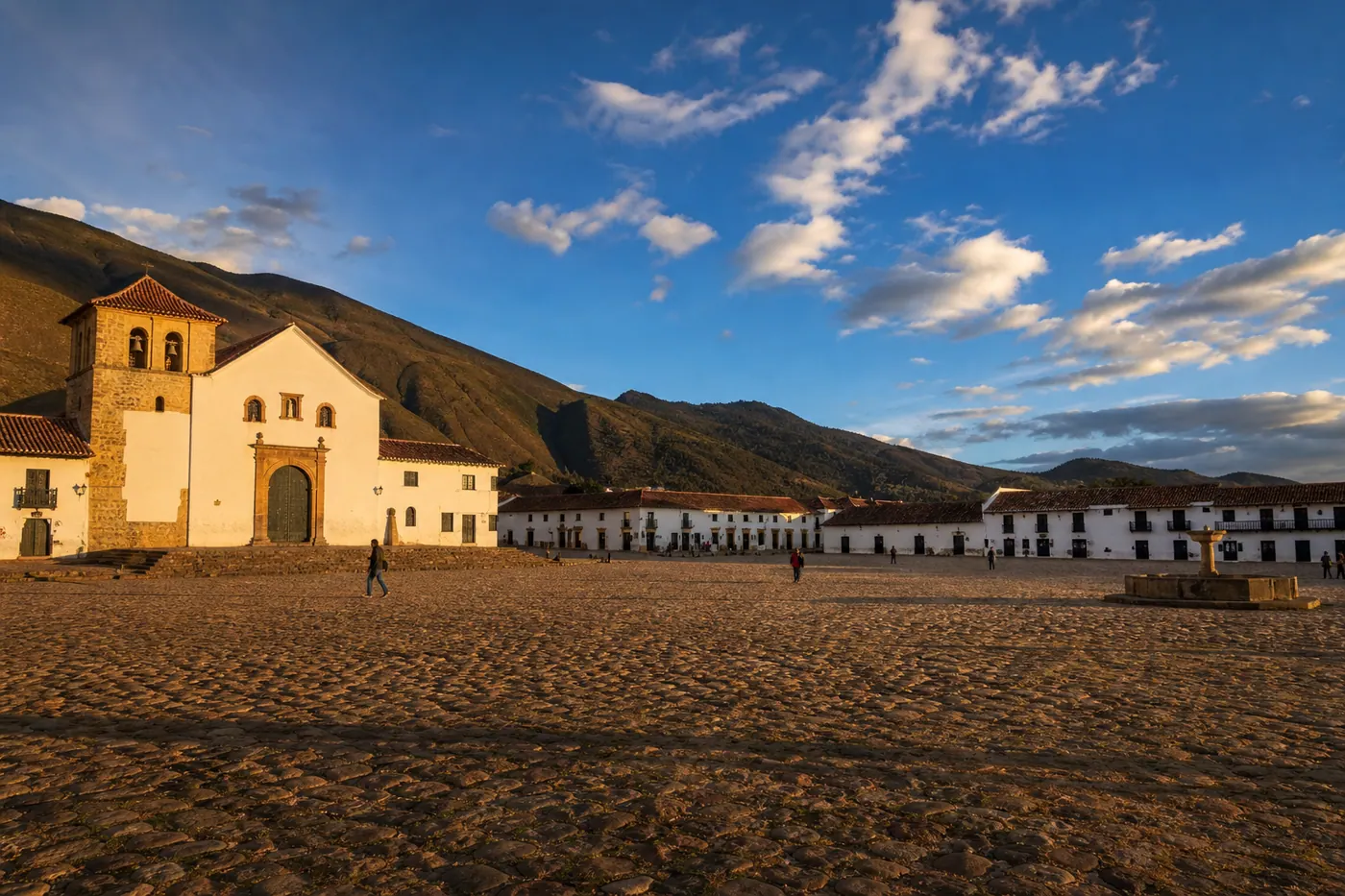
That said, the town itself is worth it. The central plaza is one of the largest cobblestoned colonial squares in South America, lined with white-walled buildings. The surrounding area has prehistoric fossil sites (the Paleontological Museum is genuinely good), a working vineyard, and pre-Columbian ruins at El Infiernito. The only annoying thing is everyone else also knows about it — weekends get crowded.
My honest suggestion: leave Bogotá by 6 AM to beat traffic, spend one night at a guesthouse near the plaza (COP 100,000–200,000 for a decent room), and return the following day. The overnight converts a rushed trip into an actual experience and the extra night is cheap enough to justify it.
📖 Keep Reading
Villa de Leyva & Boyacá: The Complete Guide — what to see, where to eat, and how long to stay in Colombia's most photogenic colonial region.
Chingaza National Park — Cloud Forest and Frailejones
Chingaza sits two hours east of Bogotá and supplies most of the capital's drinking water — which means the Colombian government has kept it remarkably intact. The park runs above 3,000 meters, protecting páramo wetlands and cloud forest that feel genuinely wild despite being less than 90 minutes from 8 million people.
The draw is the frailejón — a stubby, ancient-looking plant that covers the high páramo in dense stands. They look like they belong on another planet. The park also has glacial lagoons, Andean condors (occasional sightings), spectacled bears (rarer still), and the kind of silence that's almost impossible to find this close to a major city.
Entry requires a permit (COP 35,000–50,000, book in advance through Parques Nacionales online), and you'll generally need your own transport or a guided tour — there's no reliable public bus into the park. Tours from Bogotá typically pick up from Usaquén or La Calera and run COP 120,000–180,000 per person.
| Destination | Distance | Drive | Entry (foreigner) | Car needed? |
|---|---|---|---|---|
| Zipaquirá Salt Cathedral | 48 km | ~1 hr | COP 90,000 (~$22) | No — bus available |
| Laguna de Guatavita | 75 km | ~1.5 hrs | COP 20,000–25,000 | Recommended |
| Suesca (climbing) | 70 km | ~1 hr | Free (gear rental extra) | No — bus available |
| Termales del Choachí | 40 km | ~1 hr | COP 50,000–70,000 | Recommended |
| Chingaza NP | 75 km | ~2 hrs | COP 35,000–50,000 | Yes or guided tour |
| Villa de Leyva | 160 km | ~3.5 hrs | Free (town) | Recommended |
Getting There Without a Car
Half these trips don't require a rental car. Zipaquirá is the easiest: TransMilenio to Portal Norte, then a direct bus or shared van (salida every 15–20 minutes). Suesca and Villa de Leyva also have direct bus connections from Terminal del Norte, though Villa de Leyva's 3.5-hour ride limits your flexibility to stop en route.
For Laguna de Guatavita and Termales del Choachí, the common approach is hiring a private driver or booking a day-tour operator — COP 80,000–150,000 per person, usually including entry fees. Chingaza is essentially car-only unless you book a guided group departure from Usaquén. If you're planning regular road trips from Bogotá, renting through a Colombian company like Localiza or Hertz and keeping it for the weekend often works out cheaper than multiple tour bookings.
📖 Keep Reading
Bus Travel in Colombia: Routes, Prices & What to Expect — the full breakdown on long-distance and regional buses, including which terminals to use in Bogotá.
What to Bring
Bogotá's altitude means two things: the sun is stronger than it looks, and temperature drops happen fast. At Chingaza or Laguna de Guatavita, what's 18°C at noon can feel like 8°C when a cloud rolls in. Pack for both extremes.
- Layers — a fleece or light jacket is non-negotiable at anything above 2,800m
- Rain jacket — Andean afternoon rain isn't a possibility, it's basically scheduled
- Sunscreen — UV levels at altitude are deceptively high
- Good walking shoes or trail runners (not sandals for Chingaza or Guatavita)
- Water and snacks — options outside the main sites are limited
- A portable power bank for maps and photos on mountain roads
- Travel insurance if you're doing anything adventurous — SafetyWing covers Colombia day trips well
For gear: a solid anti-theft backpack keeps valuables safe in the tourist spots around Zipaquirá, and a portable power bank means you won't lose GPS in the middle of a mountain pass. For health coverage during activities, SafetyWing is what most long-term Colombia expats use for day-to-day travel insurance.
Frequently Asked Questions
❓ Is Villa de Leyva actually doable as a day trip from Bogotá?
Technically yes, but it's tight. The round trip is 7 hours of driving on a good day — you'd have 4–5 hours in the town. If that's enough for you, go for it. But most people who've done it as a day trip say they wished they'd stayed over. The guesthouses around the plaza run COP 100,000–200,000 and the morning atmosphere before the tour buses arrive is worth the extra spend.
❓ What's the easiest day trip from Bogotá for first-time visitors?
Zipaquirá, without question. Direct buses from Portal Norte every 15–20 minutes, the Salt Cathedral entry is straightforward, no car needed, and the underground space is genuinely impressive. Budget half a day — 3–4 hours total with time in the town.
❓ Do I need a rental car for day trips from Bogotá?
Not for Zipaquirá or Suesca — both have reliable bus connections. For Laguna de Guatavita and Termales del Choachí, a day tour or private driver (COP 80,000–150,000) covers it without a car. Chingaza is effectively car-only unless you book a guided departure. Villa de Leyva has buses but a car gives you the freedom to stop at fossil sites and the vineyard on the way.
❓ Is it safe to drive outside Bogotá for day trips?
The main routes around the Sabana de Bogotá — to Zipaquirá, Guatavita, Suesca, La Calera — are fine by day. Stick to paved main roads, avoid rural back roads after dark, and check conditions before heading to Chingaza in the rainy season. Our Colombia safety guide for expats has updated context on driving outside major cities.
❓ When is the best time for day trips from Bogotá?
December–February and July–August are dry season — clearer skies, better mountain views, less mud on trails. March–May and October–November are rainy, which doesn't ruin Zipaquirá or Termales del Choachí (indoor/pool activities), but makes Chingaza and Guatavita muddier and mistier. See our guide to the best time to visit Colombia for city-by-city seasonal breakdowns.
Have a favorite day trip from Bogotá that didn't make this list? Ask or share it at colombiamove.com/comunidad — it's where Bogotá-based expats and locals compare notes on exactly this kind of thing.
Comments
Loading comments...
Checking sign-in status...