
Setting Up Utilities in Colombia: Water, Gas, Electricity & Internet
Colombia's utility setup trips up most new arrivals — accounts tied to properties, payments scattered across apps and corner stores, and costs that vary wildly by estrato. Here's the complete breakdown.
IDIOMA DEL ARTÍCULO
Showing original language
When I moved into my first apartment in Medellín, nobody warned me about the agua bill. I got to the new place, filled a glass from the tap, and only later realized I had no idea whose name the account was in, whether the water had been disconnected at some point, or how I'd even pay it when the first bill arrived. Colombia's utilities work differently than most countries — accounts don't always follow you as a tenant, payment methods are scattered across apps and corner stores, and each city has its own set of providers with their own quirks.
Whether you're renting your first apartment in Bogotá or just moved into a house in Cartagena, this guide walks you through the four main servicios públicos every resident needs to understand: water (acueducto), gas, electricity, and internet. Plus how to actually pay them without standing in line for an hour. If you want to see real-world options right now, you can browse apartments and houses on Colombia Move — posting is completely free.
What you need to know first
- Utilities in Colombia are often tied to the property — confirm accounts are active before you sign a lease
- Your estrato (1–6) determines your rate: lower estrato = lower bills, estrato 5–6 = surcharge
- Typical 2BR monthly total: water 40–80K COP · gas 20–50K COP · electricity 60–150K COP · internet 50–80K COP
- Pay online via PSE, Nequi, Bancolombia, Daviplata — or in cash at Efecty/Baloto
- Most cities have fiber optic internet — installation usually free with a 12-month contract
How Utilities Work in Colombia (It's Different Than You Think)
In most countries, you sign up for utilities in your name and they follow you when you move. In Colombia, it's messier. Accounts for water, gas, and electricity are typically registered to the property or the previous owner — which means when you move in, bills might still be arriving under someone else's name for months. This isn't inherently a problem, but it does mean you need to ask specific questions before signing a lease.
Many landlords keep utilities in their own name, especially for furnished apartments (arriendos amoblados). If utilities are separate, clarify whether you're expected to transfer the accounts or just pay the bills as they arrive. Either way, get it in writing. The landlord's word about 'servicios incluidos' has caused more disputes than almost anything else in Colombian rentals.
One thing that does travel with you: your estrato. Colombia's tiered classification system puts every address into one of six strata, with estrato 1 paying subsidized rates and estrato 5–6 paying a surcharge that cross-subsidizes lower tiers. Read the full breakdown in our guide to Colombia's estrato system, but the short version: an estrato 3 apartment costs significantly less in utility bills than an identical estrato 5 unit in the same building — sometimes half as much.
Water (Acueducto)
Water is usually the cheapest service and one of the most reliable across major cities. Providers vary by city:
- Medellín / Antioquia: EPM (Empresas Públicas de Medellín) — consistently one of the best-run utilities in Latin America
- Bogotá: Aguas Bogotá / EAAB (Empresa de Acueducto y Alcantarillado de Bogotá)
- Cali: Emcali
- Cartagena / Atlantic coast: Aguas de Cartagena / Veolia
- Barranquilla: Triple A
Typical cost for a 2-bedroom apartment at estrato 3–4: 35,000–70,000 COP/month ($8–17 USD). At estrato 6 in a large unit, you could see 150,000+ COP. Bills arrive monthly, and most providers have an online portal or app where you can check your balance without waiting for a paper bill.
If you need to register an account in your own name, visit the provider's nearest punto de atención with your pasaporte or cédula de extranjería and the property address. EPM in Medellín lets you do much of this online, which saves a trip.
Gas (Natural Gas)
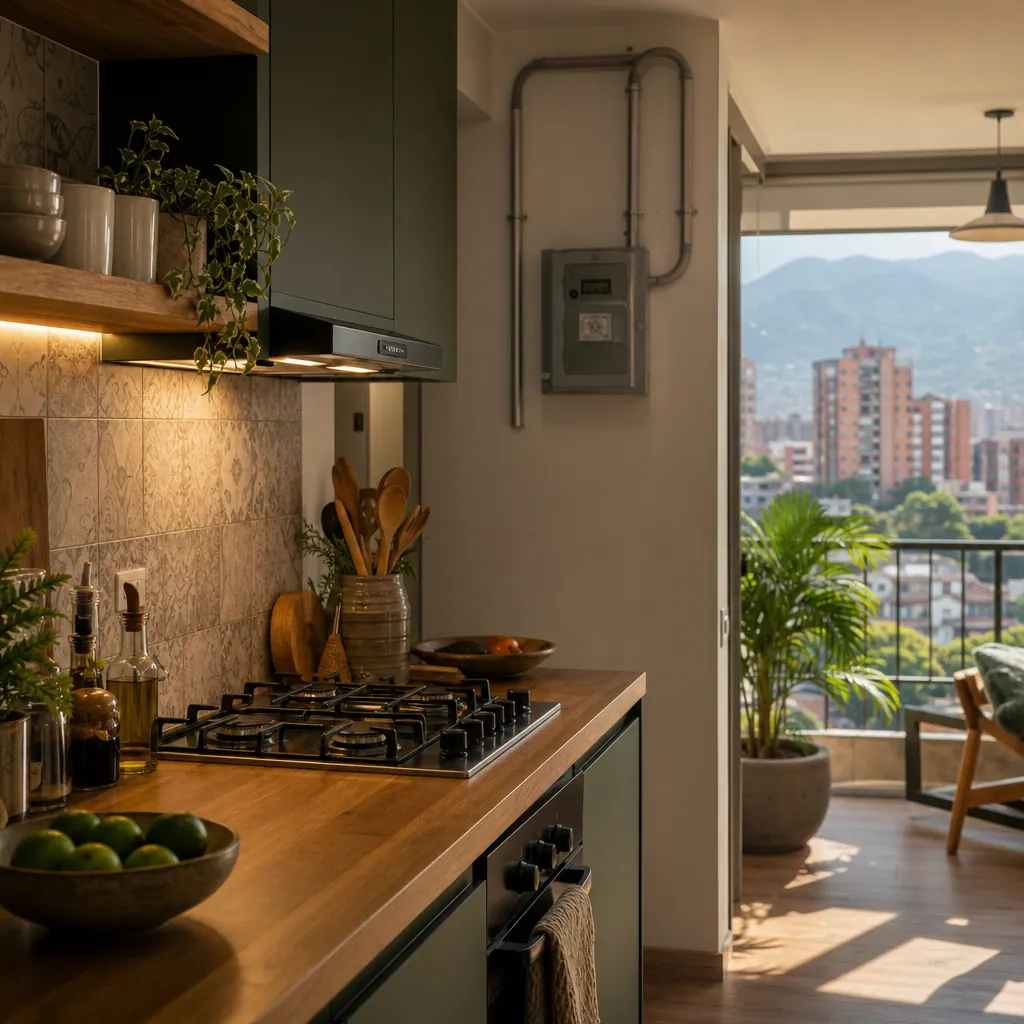
Not every apartment has gas. Many newer buildings are fully electric — induction stoves, electric water heaters. Before assuming you have gas, check for a gasodoméstico (wall-mounted gas water heater) or a gas stove. If you don't see either, you're probably all-electric and can skip this section.
Major gas providers by region:
- Medellín / Antioquia: Surtigas or EPM Gas
- Bogotá / Cundinamarca: Vanti (formerly Gas Natural Fenosa)
- Atlantic coast: Surtigas
- Eje Cafetero / other regions: Alcanos de Colombia, Promigás
Typical cost: 20,000–50,000 COP/month depending on cooking frequency and whether you heat water with gas. Bills arrive monthly. One thing I'd warn you about: if gas was cut for non-payment before you moved in, reconnection requires a technician visit and can take 3–5 business days. Ask your landlord to confirm the gas is active — and test it yourself — before signing anything.
Electricity
Electricity is typically your biggest variable utility cost, especially if you use air conditioning. Providers:
- Medellín / Antioquia: EPM
- Bogotá / Cundinamarca: Codensa (now operating as EDP)
- Cali: Emcali
- Atlantic coast (Cartagena, Barranquilla): Air-e (formerly Electricaribe) — historically the most unreliable; budget for power interruptions in this region
What you'll actually pay depends almost entirely on air conditioning:
| Situation | Monthly (COP) | Monthly (USD) |
|---|---|---|
| 1BR no AC, estrato 3 | 50,000–80,000 | $12–20 |
| 2BR with occasional AC, estrato 3–4 | 100,000–160,000 | $25–40 |
| 2BR heavy AC use, estrato 4–5 | 200,000–400,000 | $50–100 |
The AC issue is real and worth factoring in when choosing a city. In Bogotá, at 2,600 meters, you'll never need it — electricity bills there are often the lowest. In Medellín, a good fan handles most of the year. In Cartagena or Barranquilla, AC isn't optional from April through November, and that's where electricity bills get expensive fast.
Internet in Colombia
Colombia has solid internet infrastructure in major cities, with fiber optic (fibra óptica) available in most urban neighborhoods. Speeds of 50–300 Mbps are common, and pricing is reasonable by global standards. Most landlords do not include internet in rent, so you'll be setting this up yourself.
Main providers:
- Claro: Largest coverage nationwide, reliable in most cities
- Movistar (Telefónica): Strong in Bogotá and major urban centers
- Tigo: Competitive pricing, solid coverage in mid-size cities
- ETB: Bogotá-only, but excellent fiber speeds for the price
- Uff Móvil / WOM: Newer players, worth comparing for price
Typical fiber internet prices: 50,000–90,000 COP/month ($12–22 USD) for plans from 50–500 Mbps. Claro and Movistar frequently run promotions with free installation and 12-month contracts — ask what's available in your building before committing. Some buildings already have a provider pre-installed in the wiring, which means you may not have a choice.
For rural areas or fincas outside city coverage, Starlink is now available in Colombia and works well. Plan cost runs about 200,000–250,000 COP/month (~$50–62 USD), which is steep by Colombian standards. The hardware is around 1.8M COP upfront. For properties in the mountains or along the coast with no fiber option, it's worth it — remote workers on fincas near Salento or Jardín are already using it.
How to Pay Your Utilities in Colombia
This is where Colombia surprises a lot of foreigners. You won't reliably receive paper bills. Showing up to the utility office to pay is slow and often unnecessary. Here's how residents actually handle it:
Online:
- PSE (Pagos Seguros en Línea): Colombia's universal online payment gateway. Go to any utility's website, select PSE at checkout, and pay via your Colombian bank
- Bancolombia app: Under 'Pagar servicios' you can pay most utilities directly — just enter the account number or scan the barcode
- Nequi / Daviplata: Both have a 'Pagar facturas' section covering water, gas, electricity, and internet. Works with just a Colombian phone number, no full bank account needed
Cash (if you prefer):
- Efecty: Thousands of locations nationwide, accepts virtually all utility payments
- Via Baloto: Similar network, good backup option
- Supermercados: Chains like Éxito and Jumbo often have payment kiosks near the entrance
The Tu Boleta app is useful for centralizing bills — you can scan any bill's barcode and pay across providers from one place. Most providers also offer automatic billing (débito automático) linked to your bank account or credit card, which is highly recommended once you're settled in.
If you're still getting set up with Colombian banking, check our guide to the best banking apps for Colombia — Nequi and Daviplata both work for utility payments without a full bank account.
What to Sort Out When You Move In
Most utility problems are preventable if you spend twenty minutes on day one:
- Ask your landlord: are water, gas, and electricity in their name or yours? Confirm all three are currently active.
- Get the account numbers or last bill for each service — you'll need these to pay or transfer accounts.
- Test the gas stove and water heater on your first day. Report anything that doesn't work immediately, before it becomes a 'pre-existing condition.'
- Photograph the electricity meter reading on arrival. This protects you from inheriting unpaid debt from the previous tenant.
- Sign up for internet separately — most landlords don't include it. Choose based on your building's existing wiring or city options above.
- Register on each provider's website or app so you receive digital bills and can pay online without hunting for account numbers.
If the previous tenant left unpaid utility bills, the debt legally belongs to them — not the property. But utility companies sometimes cut service to the address anyway. If you arrive and a service is cut, call the provider, explain you're a new tenant, and ask what's needed to restore service. In most cases, you can get reconnected in 24–48 hours once the situation is clarified.
📖 Keep Reading
Before you sign a lease, know what to look for — Colombian rental contracts have some traps that trip up even experienced expats.
Colombia Rental Contract Red Flags: What to Watch For Before You Sign →
Frequently Asked Questions
❓ Are utilities usually included in rent in Colombia?
Sometimes, but verify carefully. Furnished apartments often include water and gas in the rent — but 'servicios incluidos' doesn't always mean all services. Electricity and internet are frequently excluded even when other services are included. Get specific confirmation in writing about which services are covered.
❓ How much are utilities total per month in Colombia?
For a 2-bedroom apartment at estrato 3–4, expect roughly 200,000–400,000 COP/month total (about $50–100 USD), depending on AC usage and internet plan. Bogotá skews cheaper on electricity (no AC needed). Coastal cities like Cartagena or Barranquilla skew much higher due to year-round AC.
❓ Can I pay utilities without a Colombian bank account?
Yes. Efecty and Via Baloto accept cash for most utility payments — you just need the account number or barcode from the bill. Long-term, Nequi (which only requires a Colombian phone number) makes online payment much easier and is free to set up.
❓ What if my utility service gets cut?
Contact the provider's customer service app or hotline immediately. For non-payment cuts, pay the overdue amount and reconnection typically happens within 24–72 hours. For gas specifically, a technician must visit to reconnect — allow 3–5 business days and be present at the property.
❓ Is Starlink available in Colombia?
Yes. Starlink has been available in Colombia since 2023 and works across most of the country. It's mainly practical for rural properties, fincas, and coastal areas without fiber coverage. Monthly plan: ~200,000–250,000 COP. Hardware upfront: ~1.8M COP. Urban residents with good fiber access don't need it.
🏠 Looking for your next apartment in Colombia?
Browse free listings on Colombia Move — bilingual, no commission, WhatsApp-native contact. Filter by city, neighborhood, price, and furnished status.
Browse Apartments for Rent →
Comments
Loading comments...
Checking sign-in status...