
How to Buy Used Furniture in Colombia Without Delivery Surprises
Buying second-hand furniture in Colombia is a great way to save money, but getting it into your apartment is a completely different challenge. Here is how to navigate local moving rules, acarreo costs, and delivery scams without losing your deposit.
IDIOMA DEL ARTÍCULO
Showing original language
Buying second-hand furniture in Colombia is an excellent way to furnish your apartment on a budget. You can find incredible deals on Facebook Marketplace or local expat groups, from custom-built dining tables to gently used appliances. But while you might already know how to safely buy secondhand baby gear or small electronics, a massive L-shaped sofa introduces a whole new set of logistical headaches.
Honestly, the biggest frustration isn’t finding good furniture—it’s the sheer bureaucracy of getting it past your new building’s security desk. Between strict moving hours, elevator protection rules, and the wild west of informal delivery drivers, closing the deal is only half the battle. Here is exactly how to coordinate the purchase and transport of used furniture in Colombia without getting scammed or stranded on the sidewalk.
Step 1: Measure the “Critical Path” (The Colombian Apartment Reality)
I cannot stress this enough: do not buy a piece of furniture until you have measured every single inch of the route it will take to get into your apartment. Standard furniture sizes from North America or Europe often do not fit in older Colombian apartment buildings.
You aren’t just measuring your living room. You need to measure the “critical path.” This includes the width of the building’s main gate, the exact dimensions of the elevator doors, the interior height of the elevator cabin, and the angle of the stairwell landings. Many modern apartment buildings in cities like Medellín and Bogotá have surprisingly compact elevators designed strictly for passengers, not cargo.
If a piece of furniture does not fit in the elevator or up the stairs, you are left with a “cargue por balcón”—hoisting the item up the exterior of the building via the balcony. I would honestly skip buying any item that requires this unless it is absolutely essential. It is highly risky, expensive, and must be performed by certified, insured moving professionals.
Step 2: Understand Propiedad Horizontal (PH) Rules
In Colombia, your building’s administration (administración) and security desk (portería) run the show. If you live in an apartment complex, you are subject to the rules of Propiedad Horizontal (PH).
First, you must notify the administration in writing before any large item is moved in or out. The seller must do the same at their building. If the seller owes money to their building, the guards might try to stop the furniture from leaving. Under Ley 675 de 2001 (Régimen de Propiedad Horizontal), building admins cannot legally seize or hold personal belongings hostage for unpaid administration fees. However, they absolutely can—and will—strictly enforce the building’s manual de convivencia regarding moving schedules.
Moving hours are heavily regulated. In Bogotá, for example, Decreto Distrital 495 de 2002 legally restricts moving activities to the hours of 6:00 AM to 6:00 PM. Many buildings take this further, banning deliveries on Sundays, holidays, or Saturday afternoons. Always check your building’s specific rules before paying a driver.
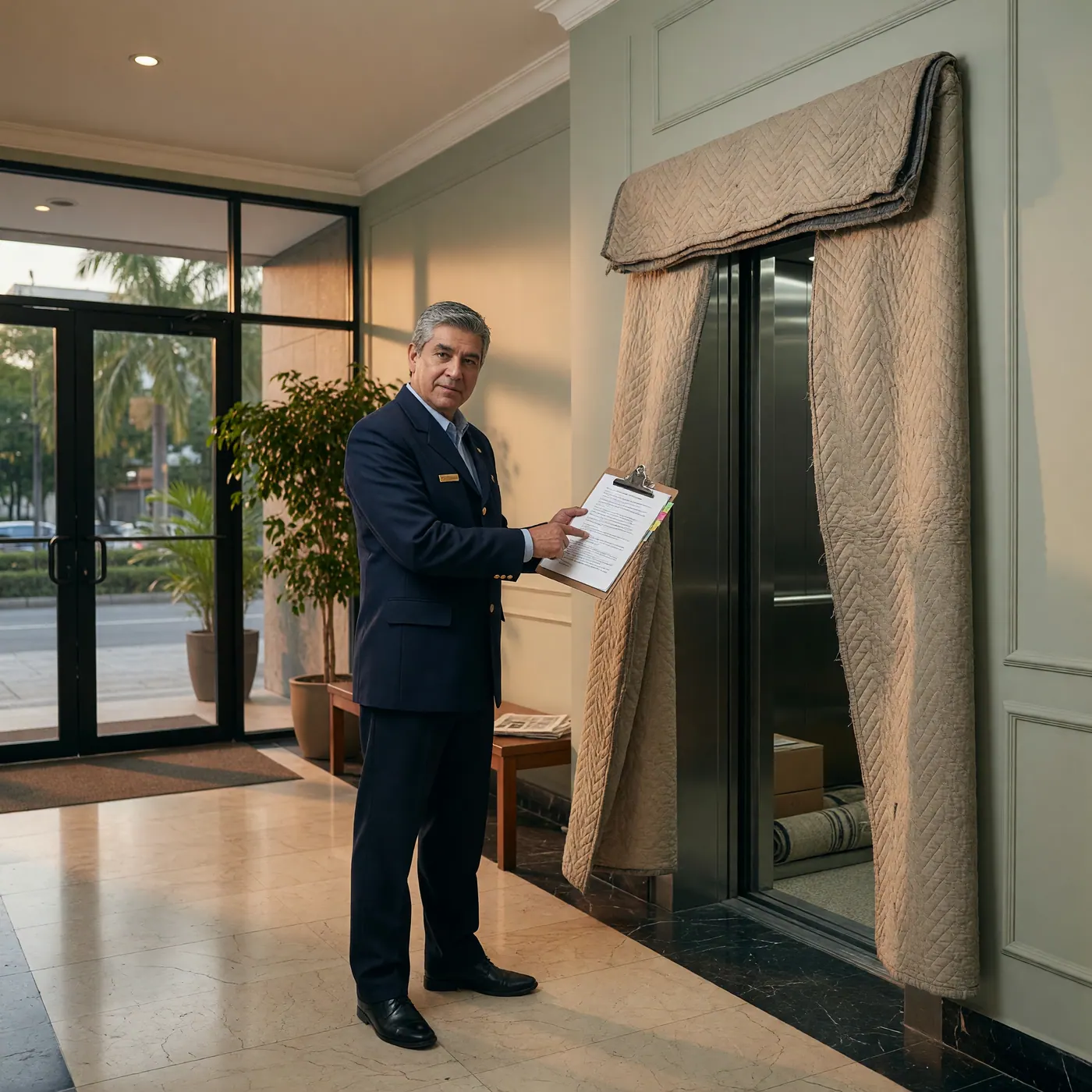
Finally, you will likely need to protect the elevator. Elevators in Colombian apartment buildings must be protected with thick cotton blankets (cobijas de algodón) to prevent damage to the mirrors and walls. If your driver doesn’t bring them, the portero will stop your delivery at the front door.
Step 3: Hiring the Right Transport (Acarreo vs. Mudanza)
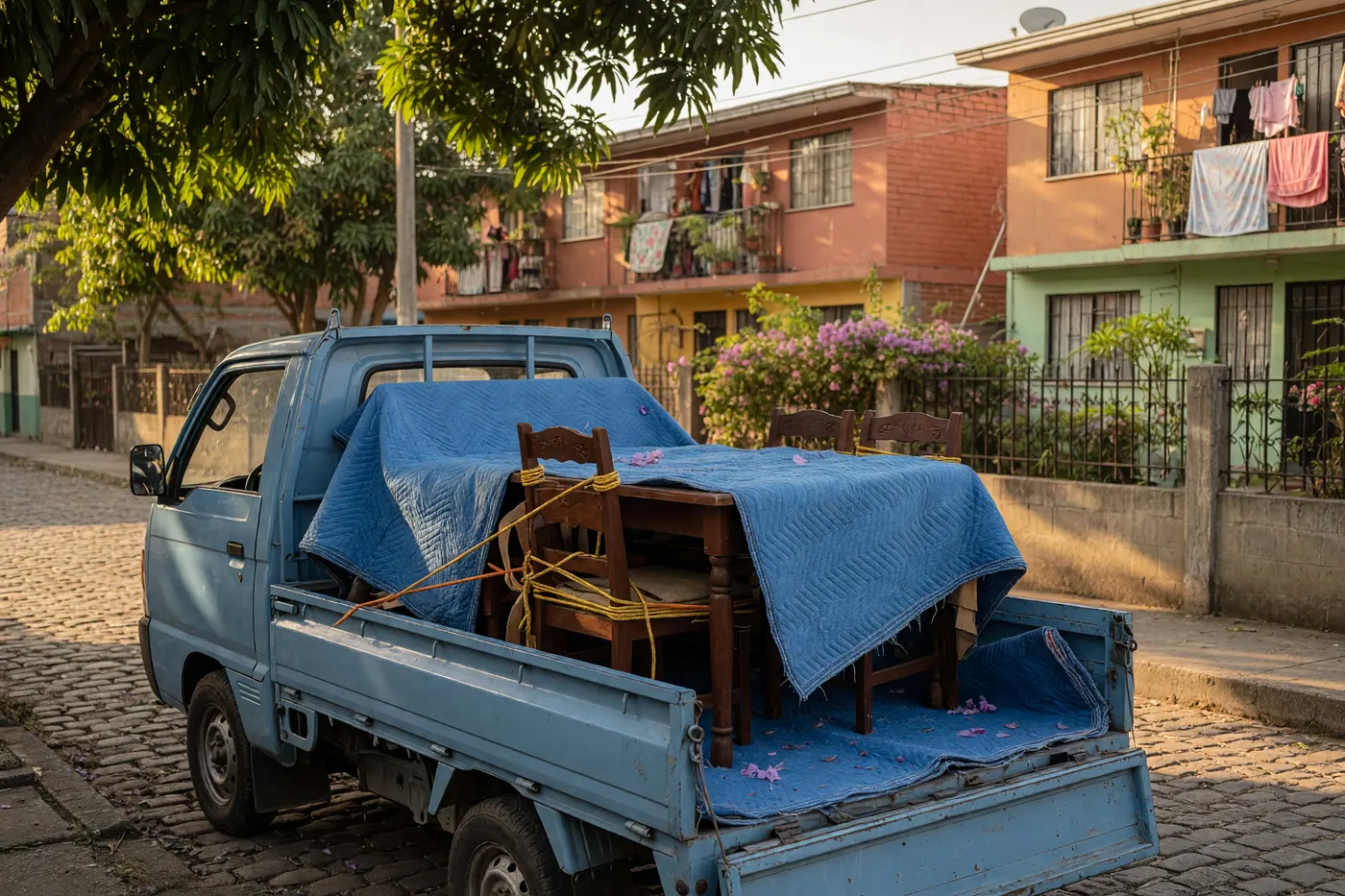
If you just bought a used dining table, you don’t need a full moving company—you need an acarreo. In Colombia, an acarreo is a small, local transport service for single items or tiny loads, whereas a mudanza or trasteo refers to moving an entire household.
Pricing depends heavily on the vehicle size and the labor involved. Small local moves using a utility truck (commonly a camioneta tipo LUV) typically start around $90,000 COP in major cities. For larger local moves using specialized trucks, an NHR truck starts around $230,000 COP, and an NPR Turbo truck starts around $280,000 COP. If you happen to buy a specialty piece from another city, national shared moving services (like Medellín to Bogotá) for small loads start around $890,000 COP.
Finding a reliable driver can be tough. According to active marketplace supply signals on Colombia Move (July 2026), there is currently a high supply gap score (62) for local moving services (mudanzas), meaning reliable independent drivers are in high demand and book up quickly. Secure your transport before you finalize the furniture purchase.
Step 4: Avoiding Marketplace Delivery Scams
The used furniture market is unfortunately a prime target for scammers, especially on platforms like Facebook Marketplace. The most common tactic is the “holding deposit” scam, where a seller demands a 50% deposit via Nequi to “hold” the item because they allegedly have other interested buyers. Once you transfer the money, they block you.
Another frequent scam involves fake bank transfer receipts. Scammers will send highly realistic, doctored screenshots of transfers from Bancolombia, Daviplata, or Nequi, accompanied by fake SMS notifications. To protect yourself, never release an item or pay for one until the money is definitively sitting in your actual bank account. If you want to avoid traditional banking pitfalls entirely, read our guide on using Wanderwallet and Bre-B for secure transactions.
When hiring a driver, you also need to manage the handoff carefully. If you are paying a driver to pick up the item without you being there, you are taking a risk on the item’s condition. I highly recommend reading our delivery proof guide to learn how buyers and sellers avoid pickup disputes by requiring the driver to send timestamped photos before the item is loaded.
Frequently Asked Questions
❓ What is the difference between an acarreo and a mudanza in Colombia?
An acarreo is a small, local transport service typically used for moving a single item, while a mudanza is a full-scale moving service for an entire household. Acarreos are usually cheaper and use smaller utility trucks.
❓ How much does a local furniture delivery (acarreo) cost in Colombia?
Local acarreos using a small utility truck typically start around $90,000 COP in major cities, while larger trucks range from $230,000 to $280,000 COP depending on access. Prices increase if the driver has to navigate stairs.
❓ Can a building administrator stop me from moving furniture in or out?
Under Ley 675 de 2001, building administrations cannot legally seize your personal belongings, but they can strictly enforce the building’s rules regarding moving hours and advance notifications. Always get written permission beforehand.
❓ What are the standard hours allowed for moving furniture in Colombian apartments?
In major cities like Bogotá, local decrees restrict moving activities to between 6:00 AM and 6:00 PM, Sunday to Sunday, though individual buildings often impose stricter limits. Many completely ban moving on Sundays or holidays.
❓ How do I avoid delivery scams when buying used furniture online in Colombia?
Never pay a holding fee before physically inspecting the furniture, and reject any seller who sends suspicious bank transfer screenshots or insists on using their own unverified driver. Always verify funds directly in your banking app.
❓ What should I do if a piece of furniture does not fit in the elevator or stairs?
You will need to coordinate a specialized “cargue por balcón” to hoist the item up the exterior of the building, which must be performed by insured professionals. This is an expensive and risky process that requires administration approval.

Comments
Loading comments...
Checking sign-in status...