
How to Get Your Documents Apostilled for Colombia
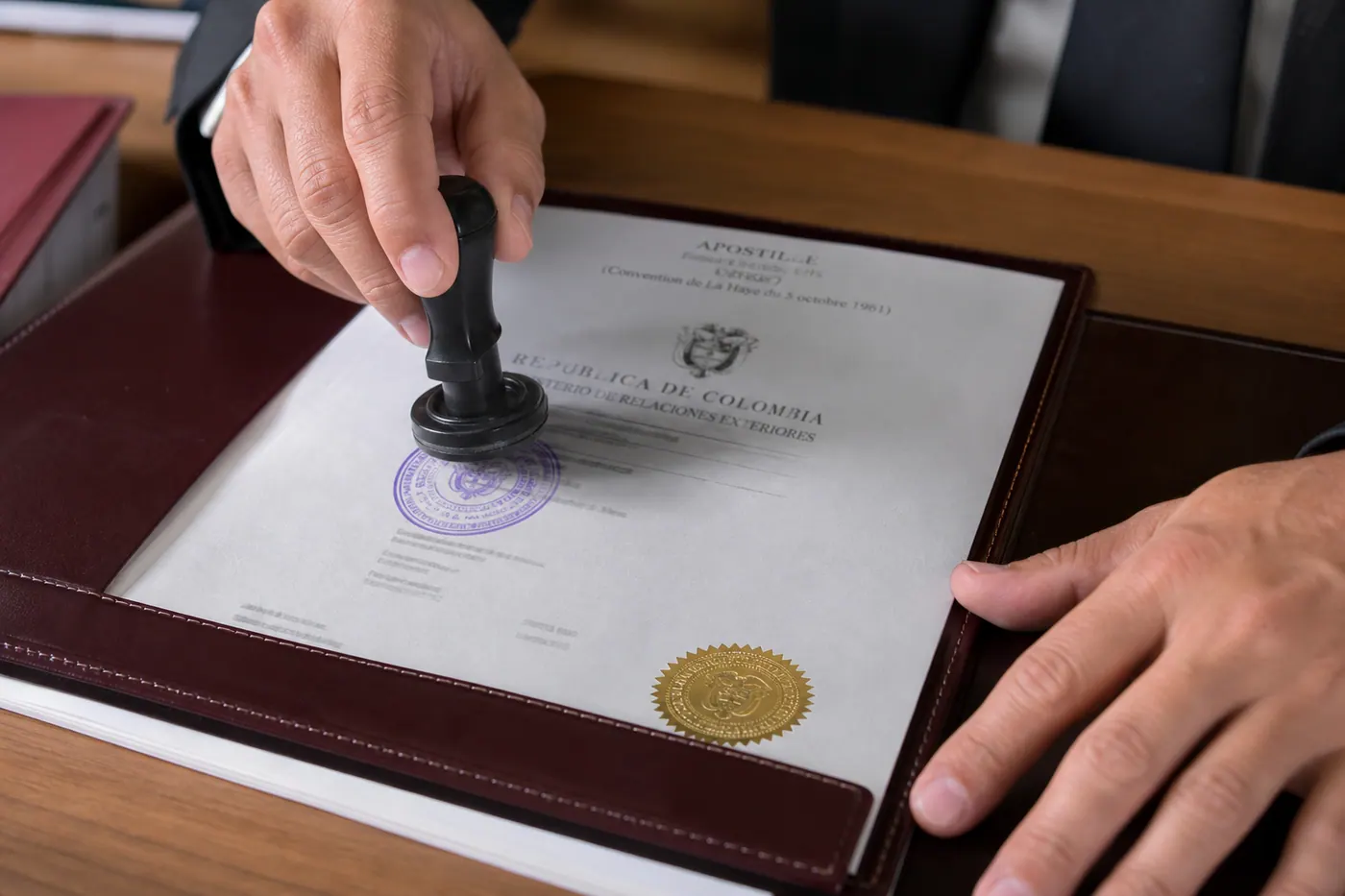
Need a document apostilled for Colombia? Whether it's for a visa application, civil marriage, or property purchase, here's exactly what to do — and what catches people off guard.
IDIOMA DEL ARTÍCULO
Showing original language
The first time I saw "apostillado" on a Colombian visa checklist, I stared at it for a full ten seconds. I knew what a notary was. I knew what a certified copy was. Apostille? That was new territory.
After several visa applications, a Colombian marriage registration, and more Cancillería waiting rooms than I care to remember, I now know exactly how this works. The frustrating part isn't the process itself — it's that the official guidance from both Colombian embassies and home-country authorities tends to be vague, outdated, or written in legalese that doesn't help you actually get anything done.
This guide covers everything practical: what an apostille is, when you'll need one in Colombia, how to get it from the US, UK, Canada, and the EU, and what to do after you have it.
What to know first
- An apostille is an official stamp that makes foreign documents legally valid in Colombia under the Hague Convention.
- You get it from a government authority in your home country — not from Colombia.
- Colombia requires apostilles for most visa applications, civil marriages, property purchases, and business registration with foreign capital.
- Apostilled documents usually also need a certified Spanish translation (called a traducción oficial) to be accepted at Colombian offices.
- Budget 2–10 weeks and USD $15–$100 per document depending on your country and how fast you need it.
What Is an Apostille — And Why Does Colombia Ask for One?
Colombia joined the Hague Convention Abolishing the Requirement of Legalisation for Foreign Public Documents in 2000. That's the treaty that created the apostille system. The idea was to replace the old multi-step embassy legalization nightmare with a single standardized stamp.
An apostille is a certificate attached to (or printed on the back of) a foreign official document. It confirms that the signature on the document is genuine and that the person who signed it was authorized to do so. Note what it does NOT certify: the contents of the document. An apostille on a fake birth certificate doesn't make it real — it just says the issuing office's signature looks legitimate. But for Colombia's purposes, that's what they need.
One thing that trips people up constantly: an apostille is not a notarization. A Colombian notaría notarizes documents prepared in Colombia for use in Colombia. An apostille certifies a foreign document for use abroad. Completely different systems. If someone at a Colombian government office tells you to "get it notarized," ask them to clarify — they likely mean apostilled.
When You'll Actually Need an Apostille in Colombia
You won't need apostilles for most day-to-day life in Colombia. Renting an apartment, opening a bank account, getting a SIM card — none of that requires one. But the moment you interact with the government on anything official, they tend to appear.
The most common situations:
- Residency and work visas: Virtually every residency visa category — digital nomad (M-10), marriage/spouse visa, pensionado visa, investment visa — requires apostilled supporting documents.
- Civil marriage in Colombia: The Colombian civil registry (notaría) requires that foreign documents like birth certificates, single-status certificates, and divorce decrees be apostilled.
- Buying property as a foreign entity or with foreign financing: Not always required for a straightforward personal purchase, but often needed when foreign corporate entities or international transfers are involved.
- Starting a business with foreign capital: The Cámara de Comercio frequently requires apostilled identification and authorization documents when foreign investors are involved.
- Enrolling in Colombian universities: Many graduate programs require apostilled diplomas and transcripts from foreign institutions.
- Adoption: International adoption involves an extensive document chain, all requiring apostilles.
If you're not sure whether a specific document needs an apostille, the safest move is to call the Colombian government office handling your case directly — Cancillería, the Cámara de Comercio, or your visa attorney. Don't rely on advice from Facebook groups or articles written two years ago; requirements shift.
How to Get an Apostille from the United States
The US doesn't have a single national apostille office — the process splits based on what type of document you have.
Federal documents (FBI background check, federal court records)
Go to the US Department of State Office of Authentications. You can submit by mail or through an approved courier service. Cost: $20 per document. Timeline: 4–12 weeks by mail, or 5 business days if you use the walk-in service at the Washington DC office (appointments required). For the FBI check specifically, you need to request the Identity History Summary from the FBI first (another 3–5 days), then forward it to the State Department for apostille.
State documents (birth certificate, marriage certificate, divorce decree)
These go to the Secretary of State of the state that issued the document. Each state has slightly different procedures — fees are typically $5–$20 per document, and turnaround ranges from same-day walk-in to four weeks depending on the state.
A few things people miss that cost them weeks:
- The document must be a certified copy issued by the state vital records office — not a photocopy or a county-clerk copy. If you have an older birth certificate issued by a county, you may need to request a fresh state-issued one first.
- Some states now offer e-apostilles (digital). Colombia accepts these for some visa categories but not all — verify with Cancillería before going paperless.
- Expedited processing is usually available for an extra $20–$50 and is worth every peso when you're against a visa deadline.
UK, Canada, Australia, and the EU
The process is similar in principle but the issuing authority varies.
UK: The FCDO Legalisation Office handles UK apostilles. Standard service runs £30–35 per document with a 15–20 business day turnaround. Premium services cut this to 3–5 days for £75+. You can submit by post or use a commercial agent.
Canada: Canada joined the Hague Apostille Convention in January 2024 — finally. Prior to that, Canadians had to use full consular legalization, which was a multi-month ordeal. Now, Global Affairs Canada handles federal documents and provincial authorities handle provincial ones. The system is still being rolled out, so double-check current processing times before applying.
Australia: The Department of Foreign Affairs and Trade (DFAT) handles apostilles. Submit in person to a DFAT office or by post. Cost: AUD $55 per document, processed in 1–15 business days.
EU countries: All EU member states are Hague members, so apostille requests are straightforward — but the issuing authority varies by country. Germany: district courts (Amtsgericht). France: the Parquet du TGI. Spain: the Ministry of Justice. Most EU countries process in 1–5 business days, faster than the equivalent US timeline.
After the Apostille: Translation Requirements
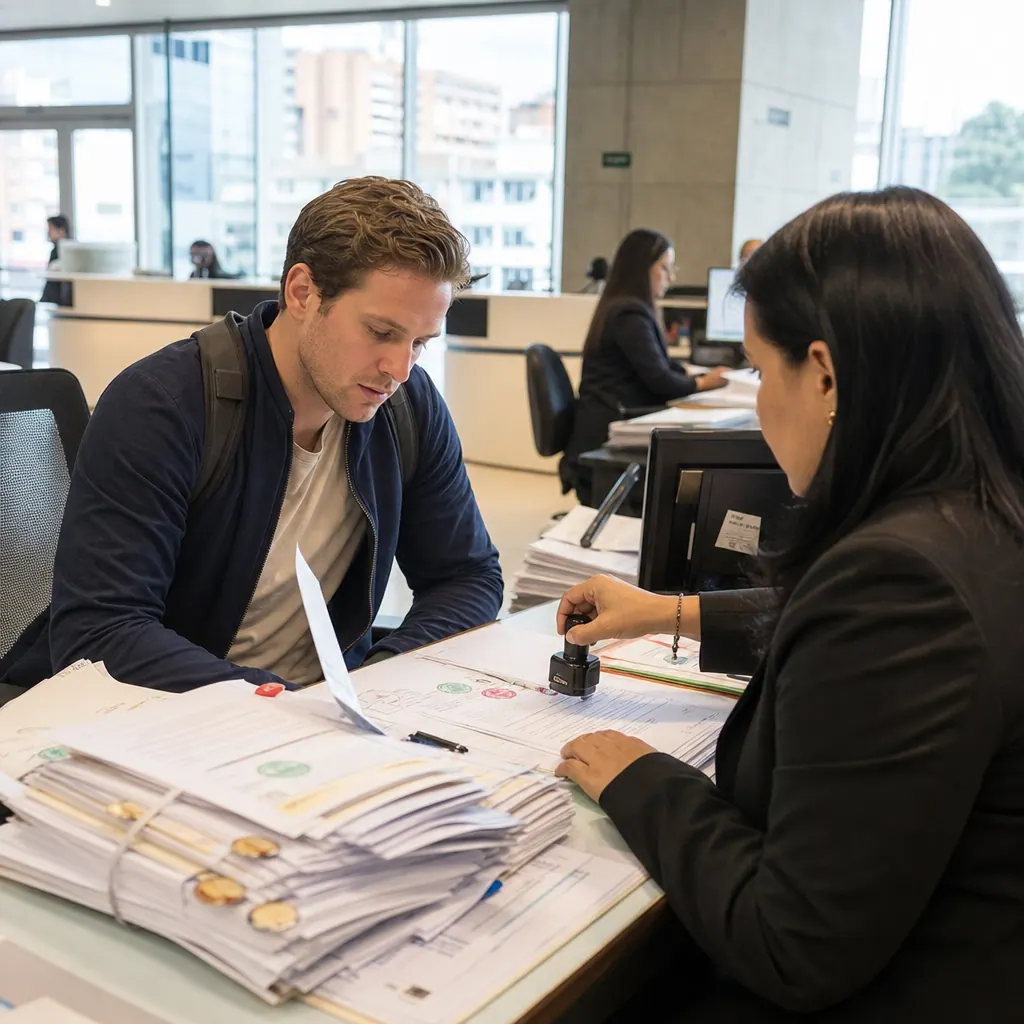
Getting the apostille is step one. Step two is translation — and this is what catches people off guard, usually right before a visa deadline.
Colombia requires that foreign documents submitted to government offices be translated into Spanish by an intérprete oficial or traductor oficial — a certified translator registered with the Colombian Ministry of Foreign Affairs. A translation by a bilingual friend or a general translation agency won't be accepted, even if it's technically perfect.
You have two practical options:
- Translate before you leave: Some countries have certified translators who produce versions accepted by Colombian authorities. Faster logistics-wise, but typically more expensive than doing it in Colombia.
- Translate in Colombia after arrival: This is usually cheaper and equally valid. Colombian certified translators typically charge COP 80,000–200,000 per page ($20–50 USD) depending on complexity, with 1–3 business day turnaround. You'll find them clustered around major notarías and near the Cancillería offices in Bogotá, Medellín, and other cities.
One thing to clarify: Colombia does NOT require you to apostille the translation itself — only the original foreign document. So if you get your FBI background check apostilled in the US and then have it translated by a certified translator in Bogotá, the translation simply accompanies the apostilled original. No additional apostille needed on the Spanish version.
Practical Tips That Save You Time and Headaches
Order extra certified copies before you leave home. Getting a US birth certificate replacement when you're already in Colombia means international shipping, 3–6 week waits, and often delays a visa application at the worst possible time. Order 3–4 certified copies upfront — they're cheap and you'll be glad you have them.
Watch expiry windows. Some Colombian government offices require apostilled documents issued within the last six months, particularly criminal background checks. An FBI Identity History Summary can take 5+ weeks from request to apostille, so factor that into your overall timeline.
Ask the specific office what they need. Requirements vary by visa type and update without notice. Don't rely on a year-old blog post (including this one — verify with Cancillería directly if your appointment is months away). A five-minute call to the consulate or a message to your visa attorney can save weeks.
Common Documents That Require Apostille for Colombia
| Document | Typical Use | Who Issues the Apostille (US) |
|---|---|---|
| Birth certificate | Residency visa, marriage, adoption | Secretary of State (birth state) |
| FBI background check | Most residency visas | US Dept of State (federal) |
| Marriage certificate | Spouse visa, civil marriage in Colombia | Secretary of State (issuing state) |
| Divorce decree | Marriage in Colombia, some visas | Secretary of State (issuing state) |
| University diploma / transcripts | Work visa, university enrollment | Secretary of State (university location) |
| Power of attorney | Property transactions, legal representation | Secretary of State (notarized state) |
Keep Reading: Once your documents are in order, the next step is figuring out which visa path makes sense. See Resident Visa Colombia: Paths, Timelines and Common Mistakes for a breakdown of every residency category.
One more practical note: if you're in the middle of a long visa application window, international health coverage can lapse or get complicated. A few expats I know use SafetyWing as a bridge policy while residency paperwork is pending — it's not a replacement for Colombian EPS but it covers emergencies during the gap.
❓ Can I get an apostille for my documents inside Colombia?
Only if the document was issued in Colombia. A Colombian Cancillería office can apostille Colombian documents for use in other Hague countries. But if you need to apostille a US birth certificate, you have to do that from the US — the Colombian authority has no jurisdiction over foreign documents.
❓ What if my country isn't in the Hague Convention?
You'll need full "legalization" instead — a longer process that typically involves authentication by your country's foreign ministry, then certification at the Colombian consulate in your country, then a final stamp from Colombia's Cancillería in Bogotá. Several major countries are not Hague members (some Middle Eastern nations, for example), so check the Hague Conference member list before assuming the apostille route is available to you.
❓ How long is an apostille valid for use in Colombia?
The apostille certificate itself doesn't have an expiry date — it's a permanent certification of a signature. However, Colombia often requires that the underlying document be recently issued. For criminal background checks, many visa categories require reports issued within the last six months. Check the specific requirement for your visa type, not just general apostille rules.
❓ Do I need to apostille documents to open a bank account in Colombia?
No — standard bank account opening (even as a foreigner) typically just requires your passport and sometimes a visa with the right category. Apostilles come into play for more complex legal transactions, not routine account setup. Check our guide to opening a bank account in Colombia for what you actually need.
Keep Reading: How to Open a Bank Account in Colombia as a Foreigner — what documents you actually need and which banks work best for expats.
❓ Can one apostilled document be used at multiple Colombian government offices?
Generally yes — you can present the same apostilled document to multiple offices. The issue is that some offices keep the original. Always have extra certified copies on hand, and if an office asks to keep the document, request a receipt. If you're submitting for a visa and a civil marriage simultaneously, you'll need two separate apostilled copies of documents like your birth certificate.
Planning a move to Colombia? Subscribe to the Colombia Move blog — we publish practical guides like this every few days, covering everything from visas to neighborhoods to daily life. No fluff, no newsletter spam.






Comments
Loading comments...
Checking sign-in status...