
How to Open a Bank Account in Colombia as a Foreigner
Bancolombia, BBVA, or Davivienda — here's which banks actually work for foreigners, what documents to bring, and what to do when a branch turns you away.
IDIOMA DEL ARTÍCULO
Showing original language
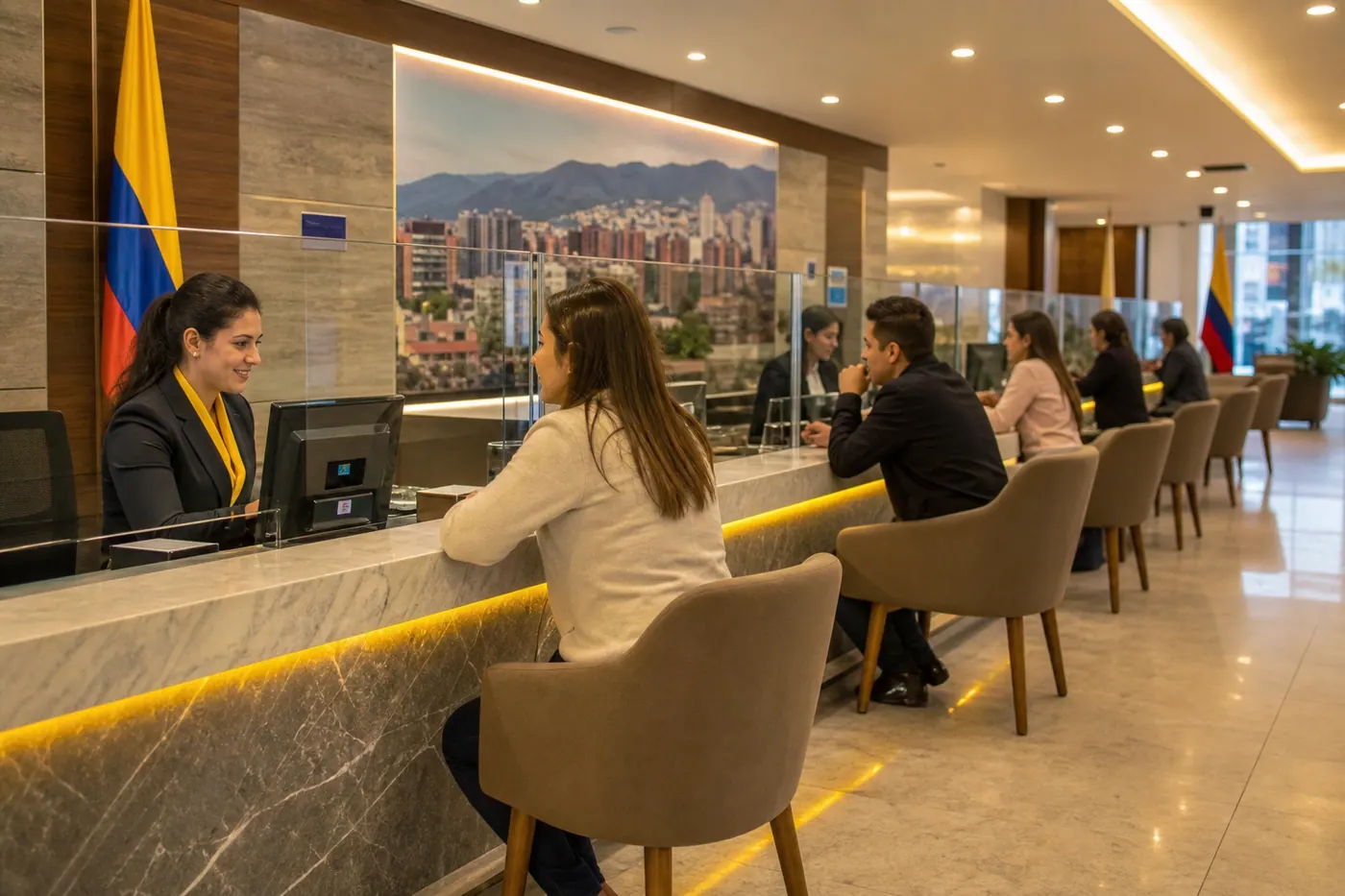
The first time I walked into a Bancolombia branch with my cédula de extranjería and a printed lease agreement, the teller spent twenty minutes on the phone before telling me the account manager was "de vacaciones." I came back three days later, waited an hour, and left with an active bank account. It has genuinely made my life easier ever since.
Opening a bank account in Colombia as a foreigner is doable — but it's not the frictionless digital experience you might expect. Requirements vary branch to branch, some banks will turn you away without explaining why, and a "digital bank" here means something very different than it does in Europe or North America. If you want to see real-world options right now, you can browse apartments and houses on Colombia Move — posting is completely free.
Here's what actually works, which banks to try first, and what to do when you hit a wall.
What to know first
- Most traditional banks require a cédula de extranjería, not just a passport
- Bancolombia and BBVA tend to be the most foreigner-friendly options
- You'll need proof of address and some form of economic activity in Colombia
- Budget 1–3 visits and about one week for the full process
- Nequi and Daviplata work with a passport and are faster — but carry lower transaction limits
Do You Actually Need a Colombian Bank Account?
Honestly, not always. If you're here for two or three months as a digital nomad, Wise plus Nequi covers most of your needs without ever setting foot in a branch. Wise handles international transfers, Nequi handles local payments including most utility bills and transfers to other Colombians, and you can top up cash at any Efecty or Baloto near you.
But if you're staying a year or more, the calculus shifts. Colombian employers are legally required to pay payroll contributions and salary into a local account. Landlords increasingly prefer PSE or Transfiya over cash — and some will walk away from a rental deal if you can't demonstrate a Colombian bank account. Certain government processes, including some DIAN filings and social security enrollment, go smoother when there's a local account behind them.
There's also a basic arithmetic argument: keeping several months of living expenses in a COP account saves the 1–3% conversion spread you'd otherwise pay every time you wire in from abroad. Over a year, that's real money.
What Documents You'll Actually Need
Requirements vary between banks and, frustratingly, between branches of the same bank. That said, here's the standard ask:
| Document | Required? | Notes |
|---|---|---|
| Cédula de extranjería | ✅ Essential | Physical card required — not just a photocopy or the receipt |
| Valid Colombian visa | ✅ Essential | M, R, V-work, pensionado, digital nomad all accepted |
| Proof of address | ✅ Essential | Lease contract, utility bill, or building admin letter |
| Proof of income / activity | ⚠️ Usually required | Employment letter, client contracts, pension proof, or RUT if freelancing |
| RUT from DIAN | ⚠️ If self-employed | Freelancers and business owners usually need this; employees often skip it |
| Foreign bank statements | ❓ Sometimes asked | 3 months' statements — mainly for premium accounts or large initial deposits |
One important note on the cédula: you technically might find a branch willing to start your file with the radicado receipt while your card is being processed, but most won't. Get the physical card before you try to open an account — it saves at least one wasted visit.
If you're self-employed or freelancing and haven't gotten your RUT yet, do that first — it unlocks options with every bank. Read the full walkthrough at Cómo Sacar tu RUT en la DIAN.
Which Banks Are Actually Worth Trying
Not all branches of the same bank will give you the same answer. I've heard of people turned away at one Bancolombia branch and approved at the next one a kilometer down the road. That said, here's how the main options stack up for foreigners:
Bancolombia
The largest bank in Colombia and the safest bet for foreigners. They have branches everywhere, their advisors are used to dealing with non-standard documents, and the Bancolombia app is the most full-featured of the Colombian banks. The downside: some branches are slow and bureaucratic, and customer service can be genuinely exhausting. Pro tip — try a branch in an expat-heavy neighborhood like El Poblado in Medellín or Chapinero or Usaquén in Bogotá rather than a packed downtown branch where advisors move fast and improvise less.
BBVA Colombia
Often smoother for foreigners than the domestic banks, probably because it's an international bank and staff have more experience with foreign document situations. If Bancolombia gives you trouble, BBVA is my second recommendation. Their app is solid and their online banking works without requiring a Colombian IP address — useful if you travel frequently.
Davivienda
Popular with locals but more inconsistent for expats. Some visa types (especially M and R visas) get a smooth reception; others don't. Worth trying if the first two don't pan out, but I wouldn't start here.
Nequi and Daviplata
Worth separating from the "full bank account" category. Both are digital wallets that work with just a Colombian phone number — no cédula required, just a valid passport or ID. Daily transaction limits sit around COP 3,000,000 (roughly $700), which is fine for coffee and groceries but not for paying rent. Think of them as a working bridge while your real account gets sorted, not a long-term replacement.

Opening a Bancolombia Account: Step by Step
Here's how it typically goes in practice:
- Gather your documents first. Cédula de extranjería, visa (make sure it's active), lease contract or utility bill, and proof of income. Make physical copies — they keep them.
- Go to a branch in person. You cannot fully open a foreigner account online at any of the major banks. Some let you start the process digitally but still require an in-person signature visit.
- Ask specifically for a cuenta de ahorros (savings account). This is the standard starting point. A cuenta corriente (checking account) requires more documentation and is usually unnecessary for individuals.
- Wait to see an asesor comercial — not a teller. Tellers (cajeros) cannot open accounts. The asesor is the advisor behind the desk. Budget 30–60 minutes of waiting, especially at busier branches.
- Fill out the declaración de origen de fondos form honestly. They'll ask where your money comes from and why you need a Colombian account. Be specific: "income from remote work with international clients" or "pension from the United States."
- Activation typically happens the same day or within 24–48 hours. Your physical debit card arrives by mail in about a week, or you can request to pick it up at the branch. Online banking access is usually same-day.
The whole thing can take one visit or three. If the first advisor seems uncertain, don't argue — come back at a different time, or try a different branch. The branch manager has discretion, and a different day sometimes gets you a different outcome.
Keep Reading
How to Receive Money in Colombia as an Expat
Wise, SWIFT wires, and what the declaración de cambio means for your income — once you have a local account, this is the next piece.
What to Do If You Get Rejected
It happens more often than banks will admit. Common reasons include a visa type they're unfamiliar with, proof of address that doesn't have your name on it (common if you're subletting informally), or a branch manager who simply doesn't want the compliance paperwork.
If you're rejected: try a different branch of the same bank — ideally in a neighborhood with more expat foot traffic. Then try BBVA or Davivienda. If you're self-employed and don't have a RUT yet, getting one often unlocks options that were previously off the table.
One thing that reliably doesn't work: asking why they rejected you. You won't get a straight answer. Colombia's banking system doesn't have a standardized rejection explanation process the way US banks do. Accept it and move to the next option.
A Few Things That Catch People Off Guard
Once your account is open, there are some features of Colombian banking that aren't obvious:
- Cuatro x Mil (4x1000): Colombia charges a 0.4% tax on most cash withdrawals and transfers out of the banking system. It's automatically deducted — don't be startled when your transfer lands slightly short.
- Transfiya vs PSE: Transfiya is Colombia's instant transfer system (like COP-denominated Venmo). PSE is the traditional electronic transfer, slightly slower but more widely accepted. Both work fine for paying rent or splitting bills.
- COP-only accounts: Colombian personal bank accounts are peso-denominated. You can't hold USD or EUR in a Bancolombia savings account. For foreign currency storage inside Colombia, you'd need a specialized account (FDTA) — which most expats don't need.
- International transfers in: Foreign income coming into your Colombian account requires a declaración de cambio filed through the bank's international transfer desk. It sounds scarier than it is — for amounts under $10,000, it's basically a form the bank fills out automatically when you receive a SWIFT transfer.
If you're sending money internationally, Charles Schwab is worth knowing about — it reimburses ATM fees worldwide and has no foreign transaction fee, which is useful if you split time between Colombia and abroad.
For receiving international transfers specifically — from clients, family, or employers — Remitly is one of the more reliable options for keeping fees low and exchange rates predictable.
Keep Reading
How to Send Money Out of Colombia as an Expat
The flip side — once you're set up with a local account, here's how to move money back out without losing too much to fees and exchange rates.
Frequently Asked Questions
❓ Can I open a bank account in Colombia with just a passport?
At traditional banks — Bancolombia, BBVA, Davivienda — you generally can't. They require a cédula de extranjería, which means you need an active visa first. The exception is digital wallets: Nequi and Daviplata both work with just a passport and a Colombian phone number, though their transaction limits are lower than a full bank account.
❓ Which Colombian bank is easiest for foreigners?
Bancolombia is the most consistent choice for expats — not because it's the friendliest, but because it has the most branches and advisors with experience handling non-standard documents. BBVA Colombia is often smoother because it's an international bank. The honest answer is that experience varies more by branch than by bank, so if one branch turns you away, try another.
❓ Do I need a RUT to open a Colombian bank account?
Not always. If you're employed by a Colombian company or receiving a foreign pension, most banks won't ask for a RUT. If you're self-employed, freelancing, or running a business, having a RUT registered with DIAN makes the process significantly easier — and you'll need it anyway for invoicing and taxes, so it's worth getting early.
❓ How long does it take to get a Colombian bank account?
From walking into a branch to having an active account: typically 1–5 business days. Physical debit card in the mail: add another 5–10 days, or pick it up at the branch. Online banking access is usually activated same-day or next-day once the account is confirmed.
❓ Can I receive foreign income directly into my Colombian bank account?
Yes, via a SWIFT wire transfer — but it requires a declaración de cambio, which is essentially a declaration of where the money is coming from. For regular transfers under $10,000, most banks file this automatically on your behalf. For larger amounts or recurring foreign income, it's worth asking the bank's international transfers desk about the paperwork upfront.
💬 Questions about Colombian banking?
The community at Colombia Move covers banking, taxes, and financial setup for expats and returnees. Real answers from people who've been through it.
Ask the community →
Comments
Loading comments...
Checking sign-in status...