
Colombia's Climate by Region: What Expats Need to Know Before Choosing Where to Live
Colombia doesn't have winter or summer — altitude determines your temperature, permanently. Here's what the weather actually feels like in Medellín, Bogotá, Cali, and the coast.
IDIOMA DEL ARTÍCULO
Showing original language
My first week in Bogotá, I packed for 'Colombia' — light shirts, sandals, one pair of shorts. Rookie mistake. At 2,625 meters above sea level, the capital averages around 14°C and drizzles frequently. I wore my one thin jacket every single day for two weeks and still spent most evenings cold. Meanwhile, a friend in Medellín was messaging me photos from a rooftop café in a T-shirt.
Here's what most expats don't figure out until they've already booked flights: Colombia doesn't have seasons the way Europe or North America does. Because the country straddles the equator, temperature stays consistent year-round within each elevation band. You're not picking a time of year to visit — you're picking a permanent climate zone. That's a fundamentally different way to think about it. If you want to see real-world options right now, you can browse apartments and houses on Colombia Move — posting is completely free.
Whether you're deciding where to live, planning a multi-city trip, or just trying to figure out what to pack, this guide breaks down Colombia's climate zone by zone — with the practical detail that tourism brochures skip.
What to know first
- Colombia has no traditional winter or summer — only wet (rainy) and dry seasons
- Temperature is set by altitude: higher elevation = cooler, every day of the year
- Medellín (1,495m): ~22°C year-round — the famous "eternal spring," no AC or heating needed
- Bogotá (2,625m): ~14°C year-round — permanently cool, always bring a jacket
- Caribbean coast (sea level): ~31–33°C year-round — hot, humid, and relentless
- Two rainy seasons hit most cities: roughly April–May and October–November
How Colombia's Climate Actually Works
Colombia sits almost exactly on the equator, which means the sun hits at roughly the same angle year-round. There's no axial tilt bringing you a warm summer after a cold winter. Day length barely changes — you get about 12 hours of light every day, 365 days a year. What this means in practice: the temperature you experience in a given place is essentially fixed. You're not timing your arrival — you're choosing your altitude.
The rule of thumb is roughly this: every 300 meters of elevation drops the average temperature by about 2°C permanently. Medellín at 1,495m averages 22°C. Bogotá at 2,625m averages 14°C. Barranquilla at sea level hits 31–33°C. These numbers barely change month to month.
What does change is rainfall. Most of Colombia follows a bimodal pattern — two wet seasons and two dry seasons per year, driven by the intertropical convergence zone moving north and south. For most major cities, the main rainy months land around April–May and October–November. December through February and July through August tend to be the drier, sunnier months. Knowing this matters when you're scheduling a move or planning regional travel.
Climate Zone by Zone
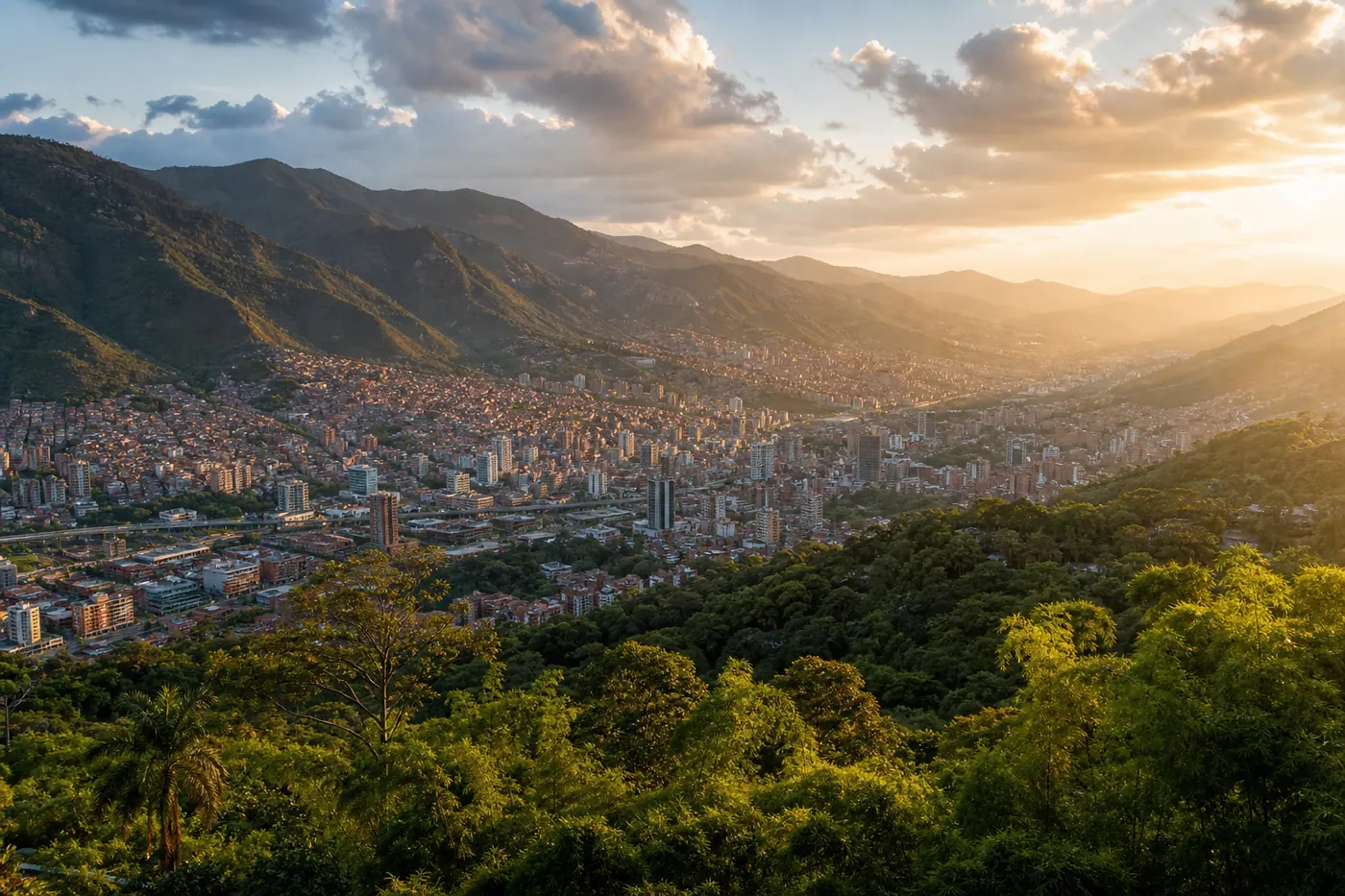
Medellín — The Eternal Spring (1,495m | ~22°C)
The 'eternal spring' reputation is completely accurate. Daytime temperatures sit around 22–24°C almost every day of the year; evenings cool down to 16–18°C. You don't need air conditioning. You don't need heating. You can wear a T-shirt to lunch and want a light layer by 8pm, and that pattern holds in January the same as in August.
The rainy seasons — April–May and October–November — mean afternoon downpours that usually last an hour and then clear. It's not dramatic: the sky opens up around 3pm, dumps for 90 minutes, and then it's over. Carry a small umbrella in those months and you'll barely notice. The rest of the year is consistently warm, sunny, and comfortable in a way that becomes quietly addictive.
Microclimates matter more than most people expect. Bello, to the north of the valley, sits lower and runs noticeably hotter. The upper neighborhoods around Las Palmas are cooler by a few degrees. Sabaneta and Envigado feel nearly identical to central Medellín. For the full breakdown on where to actually live, the Medellín neighborhood guide has the detail.
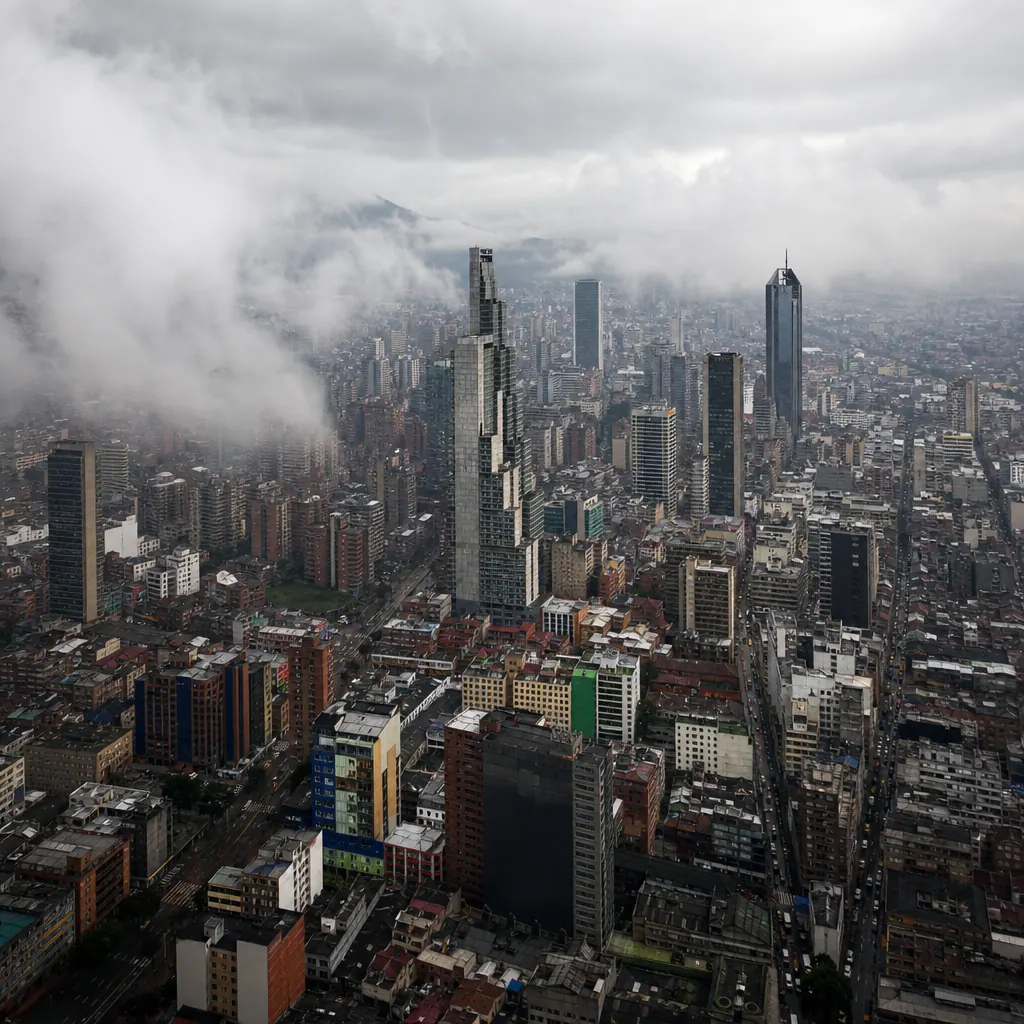
Bogotá — Permanently Cool (2,625m | ~14°C)
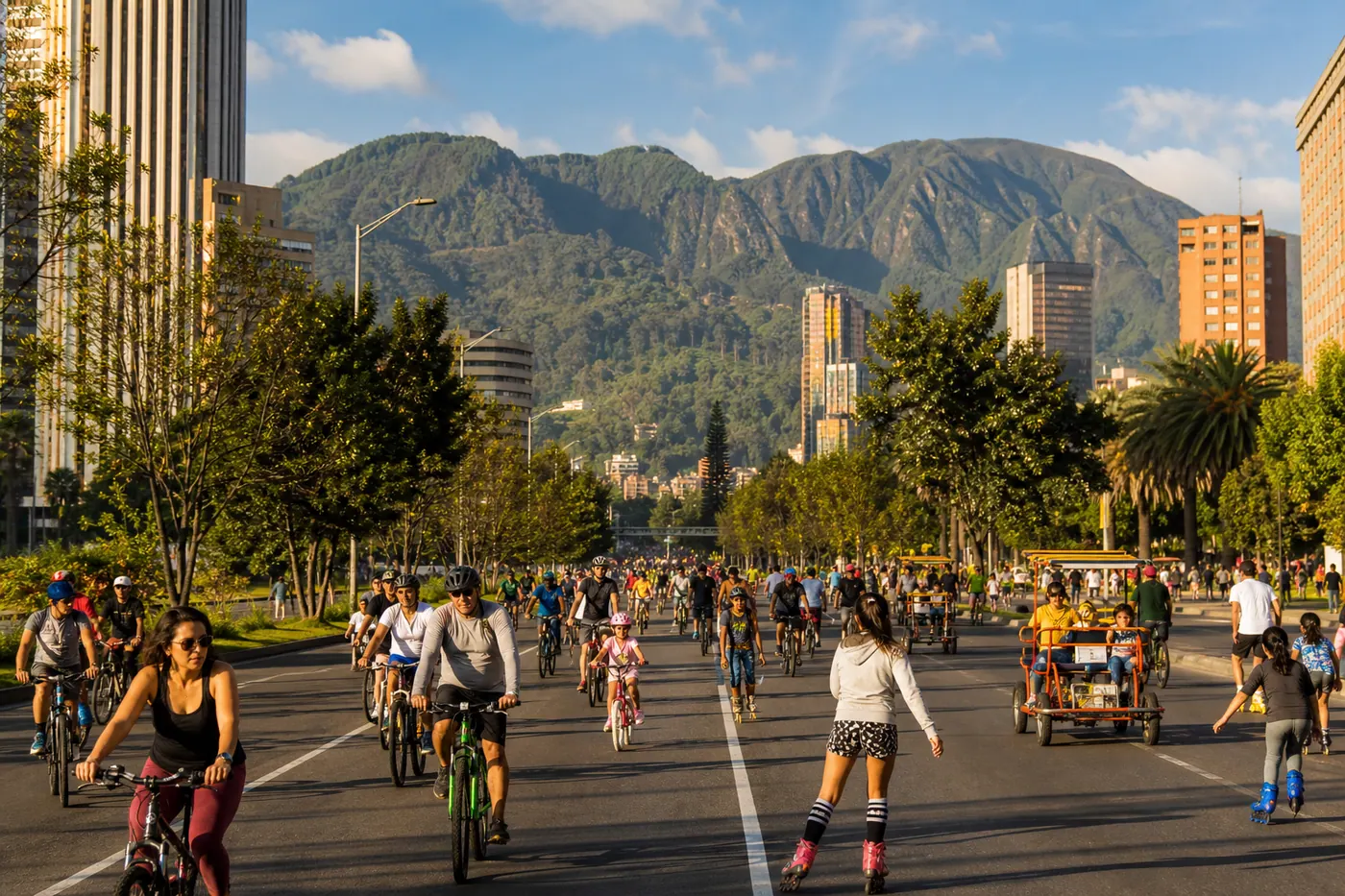
Nobody chooses Bogotá for the weather. The capital averages around 14°C year-round, frequently overcast, with rainy seasons in March–April and October–November that can feel relentless. Eleven degrees at night with no central heating (rare in Colombian apartments) starts to feel genuinely uncomfortable if you're not dressed for it.
That said: some expats love it. The climate creates a focused energy — no tropical lethargy, no sweating through your shirt by 9am. If you come from London, Berlin, or the Pacific Northwest, Bogotá's weather feels familiar. The trade-off is that if sunshine is a genuine mental health factor for you, Bogotá will grind you down over a wet November. Know yourself before you commit.
Budget for real layers. A proper jacket (not just a hoodie), waterproof shoes, and actual warm mid-layers. Indoor spaces blast AC despite the outdoor temperature — Colombians are inexplicably devoted to aggressive air conditioning even in cold cities.
Cali — Warm and Tropical (995m | ~26–29°C)
Cali sits significantly lower than Medellín, which means it's noticeably warmer and more humid. Days regularly hit 27–30°C, with a more tropical, sticky feel to the air. There's still no real seasonal swing — just warm and then warm-plus-afternoon-rain during the April–May and October–November wet periods.
It's genuinely the right choice for expats who find Medellín 'a bit cool' — a real complaint I've heard from people who grew up in hot climates and miss the heat. Cali's weather rewards the heat-tolerant. The salsa culture, the food scene, and the cost of living make it worth a serious look — just know you'll want a working fan or AC in your apartment.
Caribbean Coast — Barranquilla, Cartagena, Santa Marta (0–50m | ~30–33°C)
The Colombian Caribbean coast is what most people imagine when they hear 'tropical South America.' Permanently hot — 31–33°C most of the year — and humid enough that mornings feel like walking into a warm shower. The one exception is December through February, when trade winds from the northeast bring some relief. Locals call these 'the good months.' They're not wrong.
Cartagena and Barranquilla are the more intense end of the coast — walled city heat and urban density with minimal natural cooling. Santa Marta benefits from the Sierra Nevada nearby; occasional mountain air pushes into the city and makes evenings more bearable. It's also the closest coastal city to Tayrona National Park, which adds an escape valve that Cartagena doesn't have.
Coast living is genuinely love-it-or-hate-it. The expats who stay love the beach lifestyle, the vibrant Caribbean culture, and the food. The ones who leave do so because they can't handle sweating through their shirts before noon. The neighborhood guide to Barranquilla and Cartagena expat guide cover the specifics of where to base yourself in each.
Pacific Coast — Colombia's Rainiest Region
Colombia's Pacific coast — Nuquí, Bahía Solano, Quibdó — is one of the wettest places on earth. Quibdó, capital of Chocó, receives around 8,000–10,000mm of rainfall per year. It rains most days, the landscape is extraordinary, and biodiversity is off the charts. It's not an expat living destination. Go for a week to see humpback whales, dive in the Pacific, or hike through untouched jungle — then come back to the Andes.
Climate Comparison at a Glance
| City | Altitude | Avg Temp | Rainy Season | Best For |
|---|---|---|---|---|
| Medellín | 1,495m | 22°C | Apr–May, Oct–Nov | Almost everyone — the default pick |
| Bogotá | 2,625m | 14°C | Mar–Apr, Oct–Nov | City/career focused; people who don't need sun |
| Cali | 995m | 27°C | Apr–May, Oct–Nov | Warm climate seekers; Medellín felt too cool |
| Barranquilla | 18m | 31°C | Jul–Aug, Nov–Dec | Caribbean culture lovers; heat-tolerant types |
| Santa Marta | 5m | 30°C | Sep–Nov | Beach life with mountain access nearby |
| Pereira | 1,411m | 23°C | Similar to Medellín | Budget alternative to Medellín in the coffee region |
| Bucaramanga | 959m | 24°C | Apr–Jun, Oct–Nov | Warm, lower cost of living, underrated city |
What to Pack Based on Where You're Living
Climate determines your wardrobe more than anything else. Here's the honest version:
- Medellín / Pereira / coffee region: T-shirts, light pants, one medium-weight jacket for evenings and rainy-season downpours. You will never need a heavy coat. A compact umbrella in April–May and October–November. Walking shoes.
- Bogotá: A real jacket (fleece or softshell minimum), waterproof shoes, sweaters you can layer. Don't underestimate the cold at night. At least one warm outer layer you'd actually wear in 10°C weather.
- Caribbean coast: Light tropical clothing only. A rain jacket for the brief wet months. Anything extra will stay folded in your bag. Sunscreen, hat, and a good fan for your apartment.
- Pacific coast trips: Waterproof everything. Accept you will get wet. Embrace it.
- Everywhere: Indoor spaces — malls, offices, restaurants — blast air conditioning regardless of the outdoor temperature. Even on the coast, carry a light layer for prolonged indoor time. Colombians are aggressively committed to cold AC.
For a complete packing breakdown including electronics, documents, and medication, the Colombia packing list covers it all.
The Microclimate Surprise
One thing that genuinely catches people off guard: within a single city or metropolitan area, elevation changes create noticeable climate variation. In Medellín, going from El Poblado (1,480m) to the upper neighborhoods above Las Palmas (around 2,000m+) drops your ambient temperature by several degrees. Bello, at the north of the valley, is consistently a few degrees warmer than downtown. Sabaneta to the south feels nearly identical to the center.
Bogotá's northern neighborhoods — Usaquén, Chía — feel slightly warmer and sunnier than the historic downtown. The Cerros Orientales just east of the city drop steeply in temperature within a 15-minute drive.
The broader point: when choosing between two neighborhoods in the same city, climate variation is minor enough that other factors (rent, walkability, community) should drive the decision. When choosing between cities, climate becomes one of the most important variables — arguably the most important one for quality of life over the long term.
📖 Keep Reading
Choosing a city goes beyond just climate — budget, community, and lifestyle all factor in.
Medellín vs Bogotá vs Cali vs Pereira: How to Actually Choose →
One thing worth sorting before you move
Regardless of which climate zone you pick, international health insurance is a must-sort-first item. SafetyWing covers you across Colombian cities and during trips between regions — starting around $45/month for most travelers.
Frequently Asked Questions
❓ Does Colombia have winter?
No — not in the traditional sense. Colombia sits on the equator, so there's no axial tilt driving temperature changes through the year. What exists instead are wet and dry seasons: roughly April–May and October–November bring more rain to most cities, while December–February and July–August tend to be drier and sunnier. Temperature itself stays consistent year-round within each elevation zone.
❓ What months are the rainy season in Medellín?
The main rainy months are April–May and October–November. During these periods, expect afternoon downpours that typically last one to two hours and then clear. Mornings are almost always sunny. It's not monsoon-level — just bring an umbrella and plan outdoor activities for mornings. The rest of the year is reliably warm and dry.
❓ Is Bogotá always cold?
Pretty much, yes. Bogotá sits at 2,625 meters and averages around 14°C year-round, with frequent overcast skies. It never gets truly freezing — there's no snow in the city — but evenings at 10–11°C in an apartment with no central heating can feel genuinely cold. Most locals and long-term expats wear jackets year-round. If you need consistent sunshine and warmth, Bogotá will frustrate you.
❓ Where in Colombia has the best climate year-round?
Medellín wins this for the vast majority of people. The ~22°C year-round average with low humidity, consistent sunshine, and no need for heating or AC is genuinely hard to beat. Pereira and the coffee region offer something similar at a lower cost. For people who prefer warmer temperatures, Cali comes in second. 'Best' climate is ultimately personal — some people genuinely prefer Bogotá's cool energy or the Caribbean coast's heat.
❓ Is Medellín humid?
Not by tropical standards. Medellín's average humidity sits around 65–70%, which is noticeable compared to dry climates but far more comfortable than the Caribbean coast (regularly 85%+) or the Pacific coast. Most people adapted to temperate or subtropical climates barely register it. The altitude helps considerably — the thinner air at 1,500m feels lighter than sea-level humidity at the same temperature.



Comments
Loading comments...
Checking sign-in status...