
Starlink Satellite Internet in Colombia: Finca Setup and Speed Review
Escaping the city for a rural Colombian finca no longer means sacrificing fast internet. Here is a practical review of Starlink pricing, setup, power protection, and real-world speeds across rural Colombia in 2026.
IDIOMA DEL ARTÍCULO
Showing original language
For years, moving to a rural finca or casa campestre in Antioquia, Cundinamarca, or the Coffee Axis meant accepting a severe connectivity compromise. Traditional options were limited to unreliable 4G cellular routers with low data caps or legacy geostationary satellite services that delivered painful 600ms+ latency—making professional video calls nearly impossible. The arrival of Starlink’s Low Earth Orbit (LEO) satellite service in Colombia has entirely transformed remote work in the countryside.
Whether you are buying a mountain property, renting a country estate, or managing a boutique eco-lodge, satellite connectivity allows you to maintain high-speed internet anywhere with an open view of the sky. In this practical guide, we break down current 2026 plan pricing in Colombia, hardware options, rural setup realities, power protection strategies, and real-world performance during tropical downpours.
Starlink Subscription Plans and Hardware Pricing in Colombia (2026)
Starlink operates in Colombia as a fully licensed telecommunications provider authorized by the Ministry of Information and Communications Technologies (MinTIC). Unlike international roaming accounts billed in US Dollars, local subscriptions are billed directly in Colombian Pesos (COP) with local taxes included.
As of August 2026, the primary service tiers available for residential and rural users in Colombia include:
- Residencial Lite: ~COP 150,000 per month. Designed for basic household connectivity and light remote work. Bandwidth is de-prioritized during congestion.
- Residencial Standard: ~COP 250,000 per month. The fixed residential option for homes and fincas, with typical rural performance discussed below.
- Itinerante (Roam): A mobile option for users moving between locations, with month-to-month pausing available. Check the live Starlink checkout for the current price and data terms.
The standard Gen 3 hardware kit carries a base MSRP of approximately COP 1,599,000, though periodic promotional discounts and the compact Starlink Mini hardware tier can lower entry costs to roughly COP 599,000–800,000 depending on current offers and contract terms. The kit includes the electronic phased-array dish antenna, mounting base, Gen 3 Wi-Fi router, and power cables.
Ordering, Shipping, and Customs Mechanics in Colombia
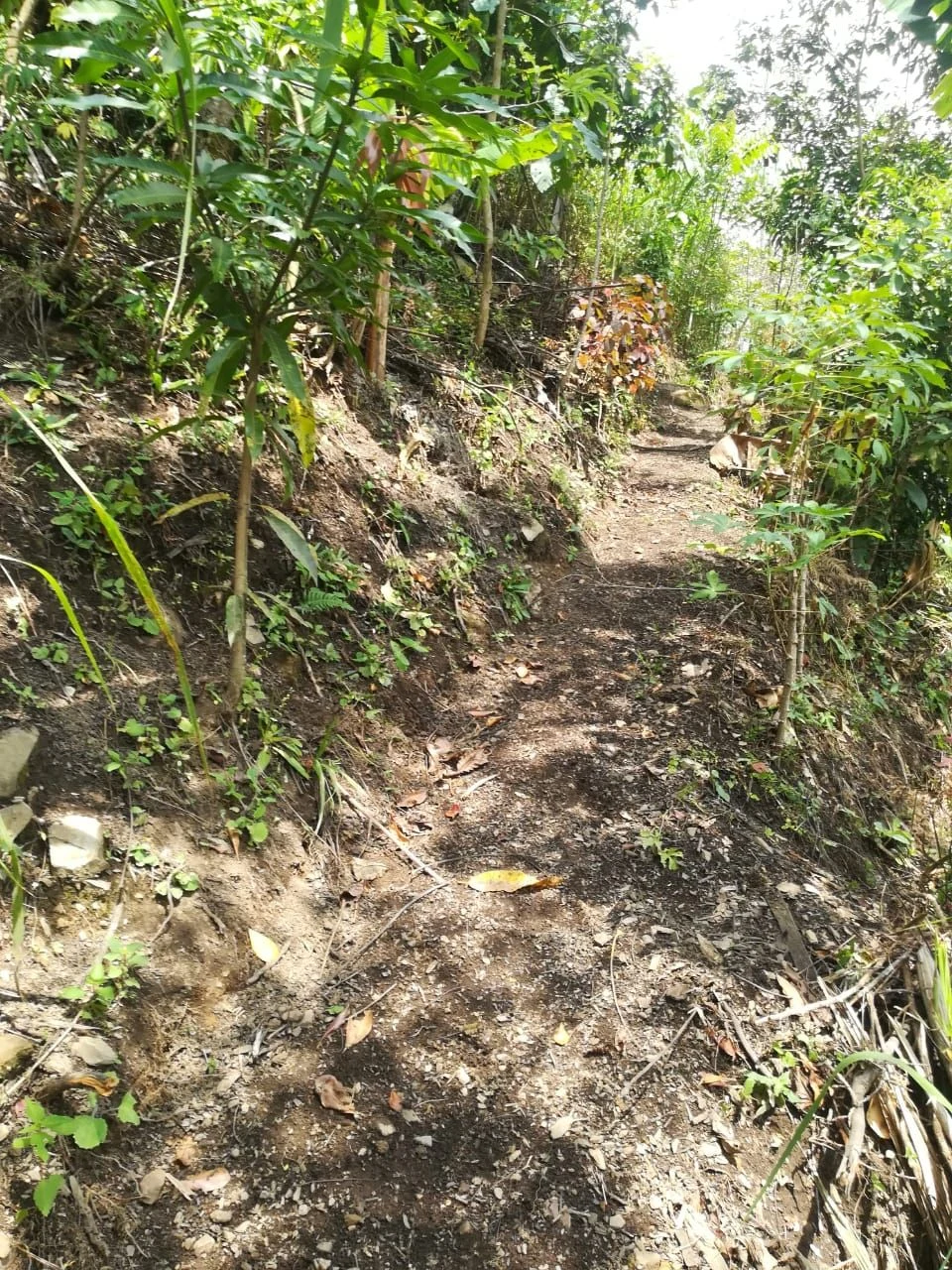
Ordering directly from the official website ensures your hardware arrives pre-linked to your Colombian account. Courier delivery across major departments—such as Antioquia, Cundinamarca, Caldas, Quindío, Risaralda, and Boyacá—generally takes 5 to 12 business days.
However, rural logistics in Colombia require practical planning. If your property is located deep along an unpaved mountain road (vereda), national delivery services like Coordinadora, Servientrega, or DHL may not deliver directly to your gate. In these cases, packages can be held at the courier’s nearest municipal depot (cabecera municipal) for pickup. If you are importing specialized mounting accessories or third-party adapters from abroad, review customs clearance rules to prevent shipping delays, much like handling a package held in customs by DIAN.
Finca Setup and Rooftop Mounting Realities
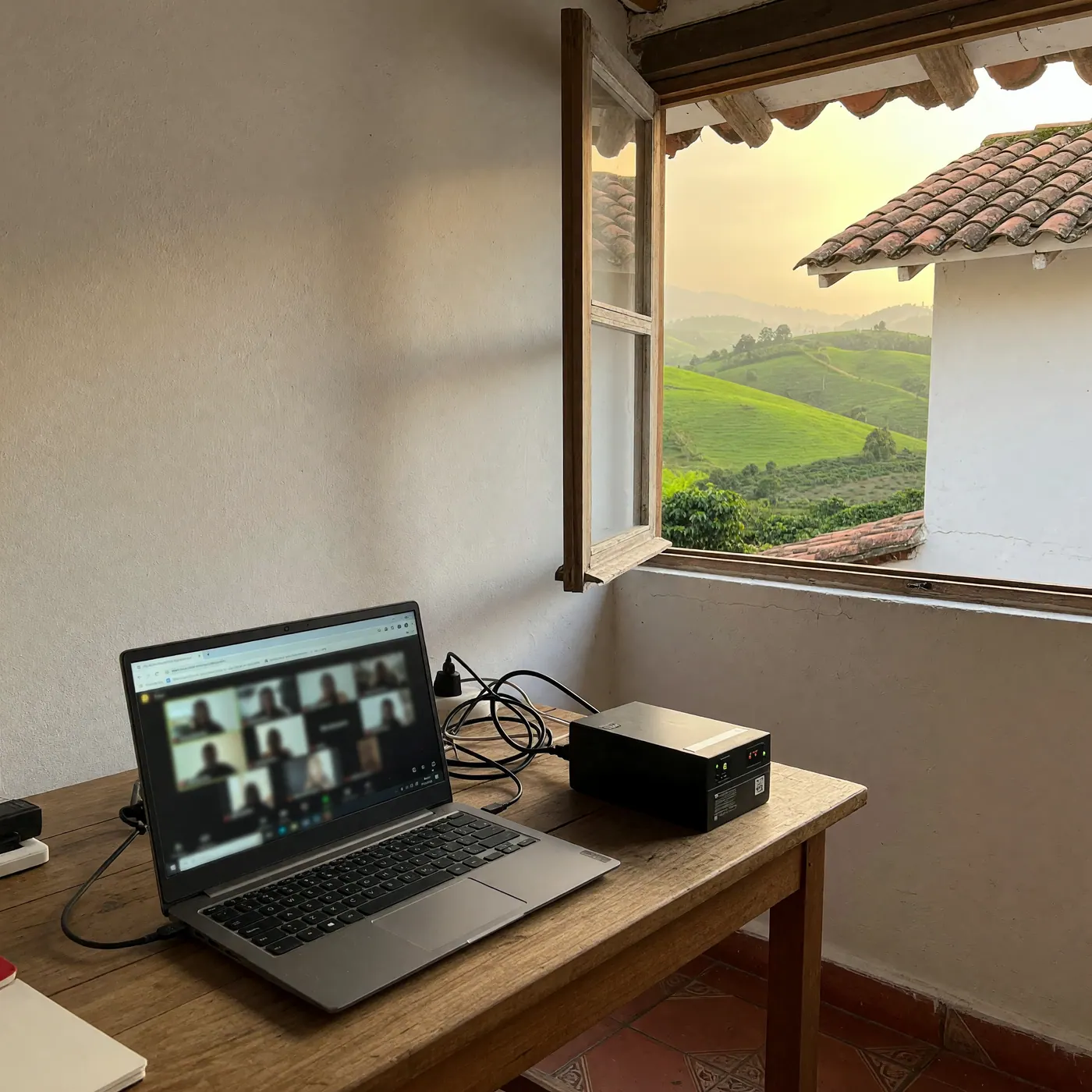
Installing a satellite dish on a traditional Colombian country house presents distinct structural challenges compared to suburban timber-frame homes. Colombian fincas predominantly feature heavy clay roof tiles (teja de barro), corrugated zinc sheets, or solid reinforced concrete slabs.
Overcoming Obstructions
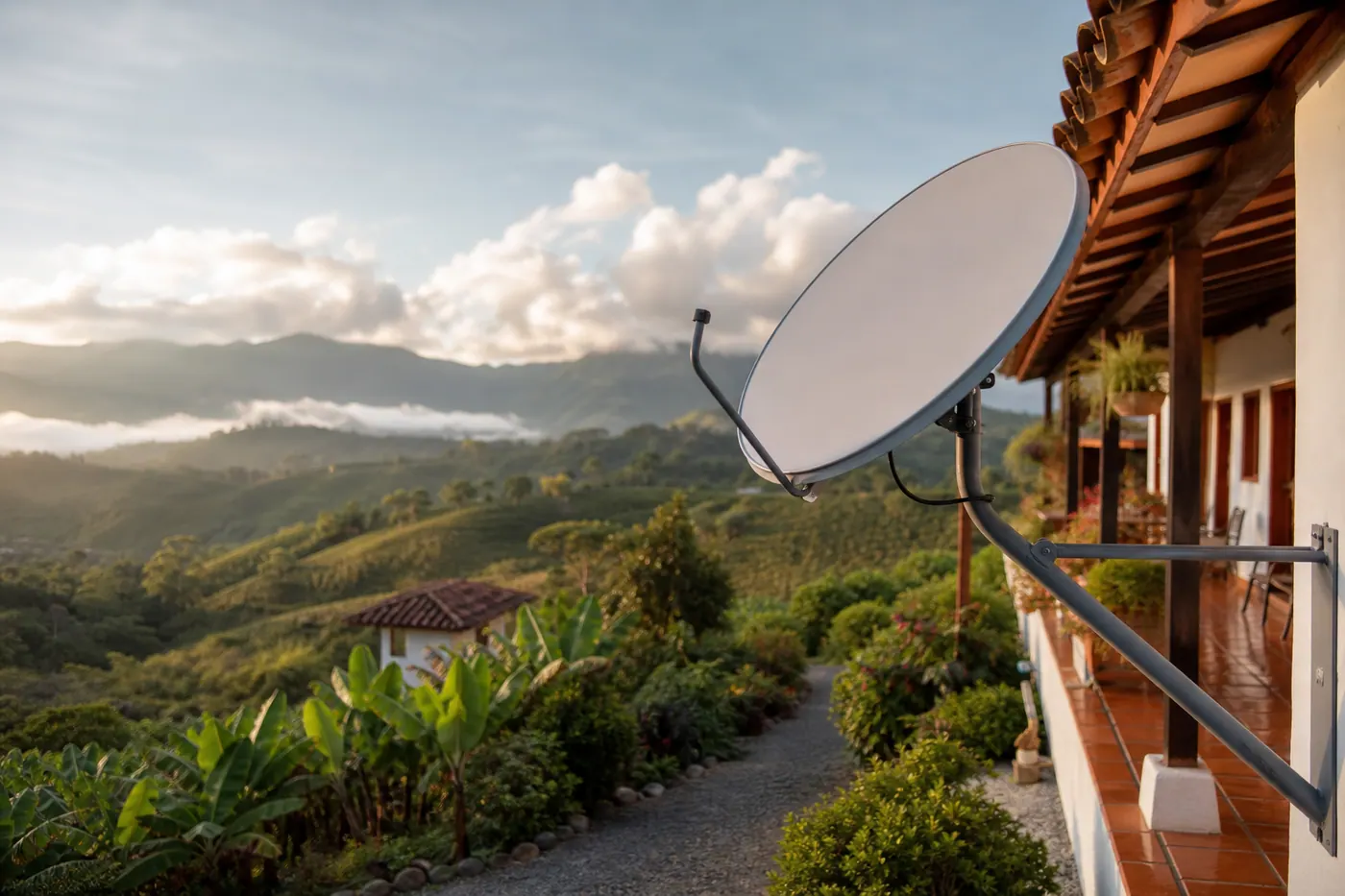
Starlink requires a broad, unobstructed field of view toward the sky. In subtropical mountain valleys, dense foliage, tall eucalyptus trees, and native bamboo groves (guadua) are the primary causes of micro-outages. Before drilling or permanently mounting hardware, use the Starlink mobile app’s obstruction scanner at roof height.
Mounting Methods for Colombian Roofs
Never screw a standard mounting bracket directly into fragile teja de barro tiles, as this will crack the clay and trigger severe rainwater leaks during winter storms. Recommended mounting solutions include:
- Ridge Clamp or Non-Penetrating Mounts: Weighted ballast mounts that rest securely over roof ridges without drilling.
- Eave Brackets (Soportes de Pared): Heavy-duty steel brackets bolted through exterior brick or concrete columns under the eave, extending the mast clear of the roofline.
- Freestanding Ground Pole: Concrete-anchored steel pipe placed in an open garden area away from tall tree canopies.
Power Protection: Surge Suppressors and UPS Systems
The single greatest threat to your internet hardware in rural Colombia is not satellite signal loss—it is electrical grid instability. Rural power lines across the Andes experience voltage drops, sudden blackouts, and high-energy power surges triggered by tropical lightning strikes.
Plugging your dish directly into a standard wall outlet can result in damaged power supply units or constant router reboots. To protect your investment and maintain connectivity through brief drops, install two essential components:
- Pure Sine Wave Uninterruptible Power Supply (UPS / No-Break): Size the UPS for the measured load of your dish and router, plus enough runtime for your generator or solar backup to start.
- Dedicated Surge Protector (Supresor de Picos): Use a properly grounded protector suited to sensitive electronics, and have a local electrician assess grounding where lightning exposure is high.
Real-World Speed, Latency, and Tropical Rain Performance
Current rural Colombia reporting shows Starlink download speeds around 100–220+ Mbps, with upload speeds often around 15–30 Mbps. Crucially for remote professionals, Low Earth Orbit latency ranges between 30 ms and 65 ms. This low delay supports synchronous Zoom, Microsoft Teams, and Google Meet calls, as well as remote desktop and VPN operation.
Understanding Tropical Rain Fade
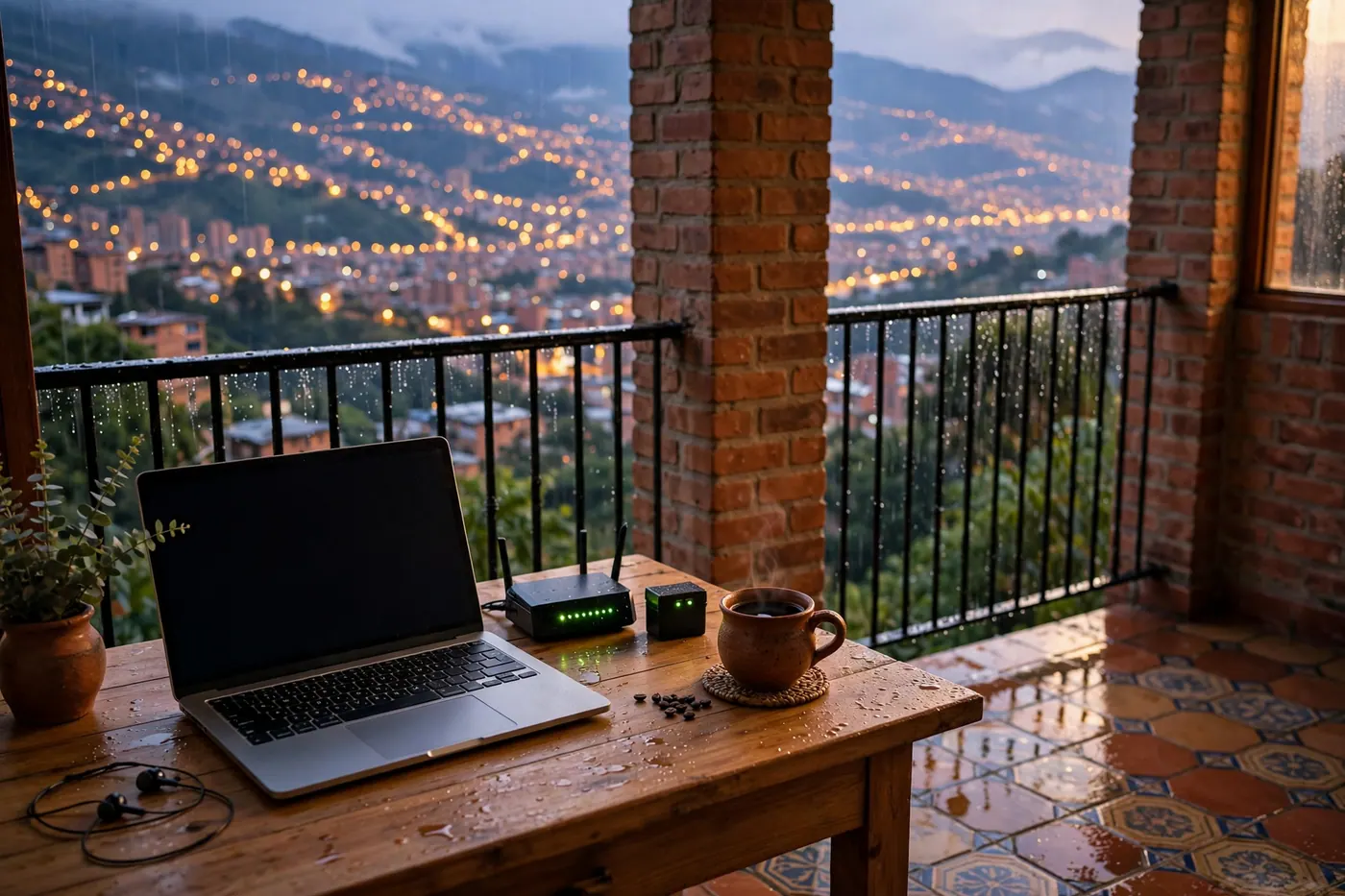
A common concern among expats is how tropical cloudbursts (aguaceros) affect satellite reception. Standard rainfall and light fog generally have little impact on signal quality. However, during intense equatorial storms accompanied by dense cloud accumulation, high-frequency signals can experience brief attenuation known as rain fade. Expect occasional degradation or a short dropout until the heaviest part of the squall passes; I would still keep a cellular hotspot ready for a job interview or a call you absolutely cannot lose.
The honest downside is that Starlink solves the last-mile problem, not every infrastructure problem. A blocked sky, an unprotected power circuit, or poor indoor Wi-Fi placement can still ruin the experience. Run Ethernet where thick brick or concrete walls weaken the router signal, and test the complete setup before trusting it as your only work connection.
Keep Reading: Before committing to a rural home, check how foreign remote workers document income for a Colombian rental application and review the POT questions that matter when buying rural property.
There is also real rural inventory to compare: according to active Colombia Move listings dated August 16, 2026, the marketplace had 15 finca listings, 10 lot listings, and 8 country-home listings. Those counts do not prove that a property has good internet—ask for an obstruction scan, a speed test, and the backup-power setup before signing.
Frequently Asked Questions
❓ How much does Starlink cost per month in Colombia?
As of August 2026, Residencial Lite costs approximately COP 150,000 per month and standard Residencial approximately COP 250,000, billed locally in COP with taxes included. Hardware is separate, and current checkout promotions can change the upfront cost.
❓ Can you reliably work from home and take Zoom calls on Starlink in rural Colombia?
Yes, a clear-sky installation can support professional remote work. Reported latency of 30–65 ms and downloads around 100–220+ Mbps are sufficient for video meetings, cloud tools, and VPNs, but keep a backup for critical calls.
❓ Does heavy rain or tropical storms disconnect Starlink in Colombia?
Intense tropical cloudbursts can briefly degrade or interrupt the signal. Light-to-moderate rain usually has less effect, but the heaviest part of an aguacero can cause rain fade for several minutes.
❓ Do I need a voltage regulator or UPS for Starlink at a Colombian finca?
Yes, a surge protector and pure sine-wave UPS are critical protection for a rural setup. They reduce the risk from voltage spikes, brownouts, blackouts, and lightning-related surges; proper electrical grounding matters too.
❓ How long does delivery take to rural addresses in Colombia?
Delivery generally takes 5 to 12 business days, based on the August 2026 brief. A remote finca may not receive doorstep delivery, so confirm whether you must collect the package at the nearest municipal courier depot.
❓ Can I pause my Starlink subscription when I am not at my finca?
The Itinerante (Roam) plan allows month-to-month pausing. Standard Residential service follows different cancellation and reactivation terms, and reactivation can depend on capacity in that service cell, so check the current account terms before leaving.
Comments
Loading comments...
Checking sign-in status...