
Understanding the POT (Plan de Ordenamiento Territorial) Before Buying Property in Colombia
Don't buy property in Colombia blindly. Learn how to navigate municipal zoning laws, request a land use concept, and avoid illegal short-term rental traps.
IDIOMA DEL ARTÍCULO
Showing original language
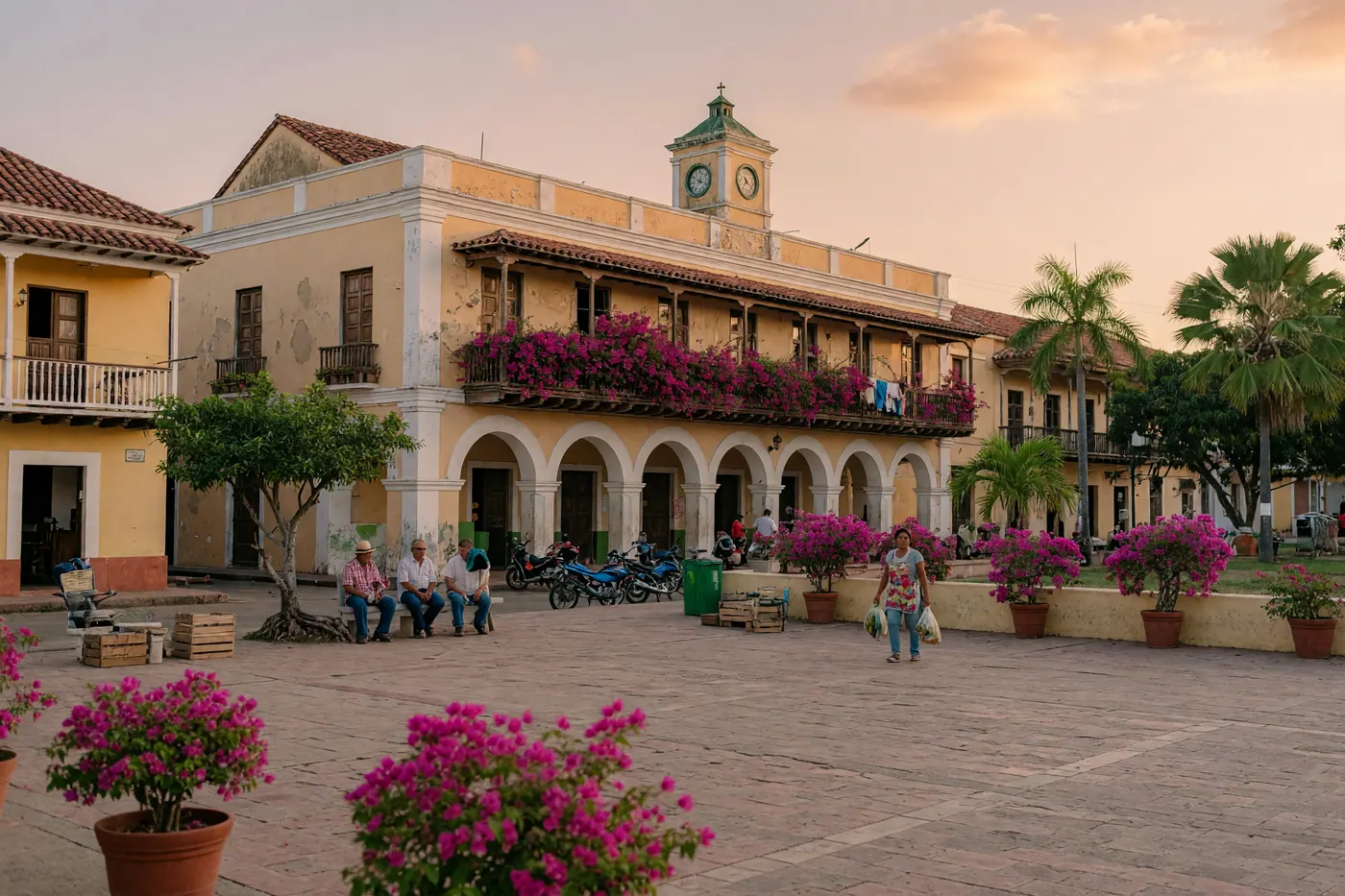
I have seen countless expats fall in love with a beautiful colonial house in Colombia, buy it in cash, and then discover they cannot legally rent it out on Airbnb or add a second floor. The culprit is almost always the same: they skipped checking the local zoning laws.
Quick Answer: The Plan de Ordenamiento Territorial (POT) is a Colombian municipality's master zoning plan. Before buying real estate, you must verify the property's POT designation to ensure your intended use—especially short-term rentals or commercial activities—is legally permitted, avoiding police fines and forced closures. If you want to see real-world options right now, you can browse apartments and houses on Colombia Move — posting is completely free.
According to active marketplace signals on Colombia Move (July 2026), our housing (vivienda) section has generated over 21,450 recent buyer views, yet the supply of dedicated short-term rentals (temporal) shows a massive gap, with only 1 active listing against 208 specific demand views. This intense demand pushes many foreign investors to buy residential properties intending to convert them into short-term rentals. If you are one of them, understanding the POT is your only shield against buying a non-compliant, unusable asset.
POT vs. PBOT vs. EOT: The Planning Tiers
The primary law governing urban planning and zoning in Colombia is Ley 388 de 1997. Under this law, every municipality must have a master plan that dictates zoning, soil usage, and urban development. However, you will hear different acronyms depending on where you are buying.
Territorial plans are officially categorized by municipal population:
| Zoning Plan Type | Municipal Population | Acronym |
|---|---|---|
| Plan de Ordenamiento Territorial | Over 100,000 residents | POT |
| Plan Básico de Ordenamiento Territorial | 30,000 to 100,000 residents | PBOT |
| Esquema de Ordenamiento Territorial | Under 30,000 residents | EOT |
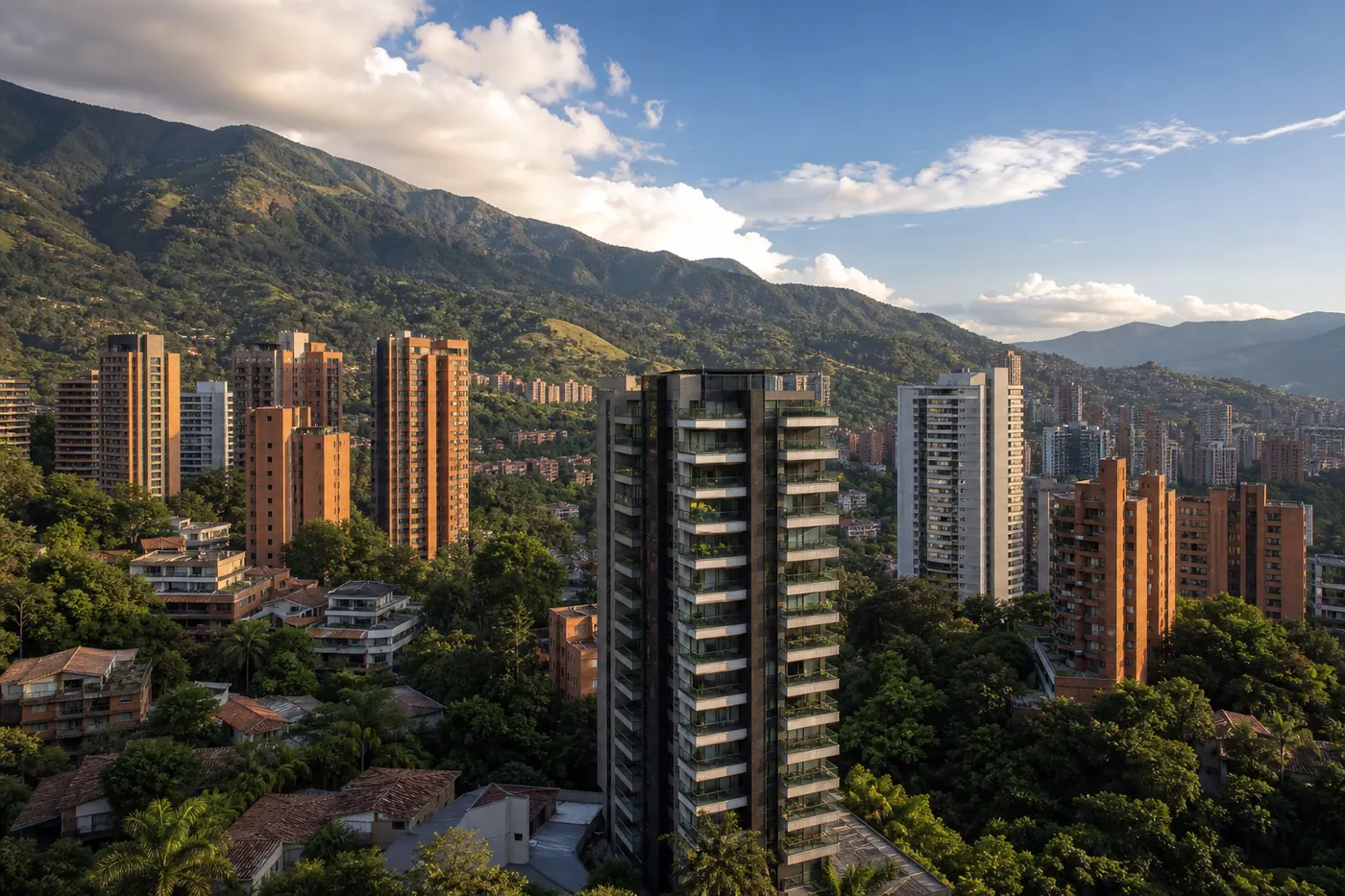
Whether you are looking at a high-rise in Medellín (POT) or a rural finca in a small coffee town (EOT), the legal function is the same. These plans are designed as 12-year frameworks spanning three mayoral administrations. They are not permanent, but they dictate exactly what you can build and operate today.
Short-Term Rentals & The "Double-Green-Light" Trap

If you are buying property to run an Airbnb, pay close attention. Under Ley 2068 de 2020 (the General Tourism Law), any short-term rental (less than 30 days) requires an active Registro Nacional de Turismo (RNT). To get that RNT, you need a double green light.
First, the local municipal POT must explicitly permit tourist lodging in your specific zone. If the city has zoned your street strictly for residential family use, you will be denied an RNT.
Second, if the property is part of a building or gated community regulated by Propiedad Horizontal (PH), the building's official bylaws (Reglamento de Propiedad Horizontal) must explicitly authorize tourist lodging. If the PH regulation is silent on the matter or prohibits it, an RNT cannot legally be used, even if the city's POT allows it. You need both approvals.
Honestly, skip any property where the seller promises "the HOA doesn't mind Airbnb" if it isn't written into the official PH bylaws. Verbal agreements hold zero legal weight.
Step-by-Step: Requesting a "Concepto de Uso de Suelo"
Do not rely on the seller's word about what you can do with a property. The only way to know for sure is to request a Concepto de Uso de Suelo (Land Use Concept).
This is an official, informational document processed by either a Curaduría Urbana (a private entity authorized to issue urban licenses in large cities) or the municipal Secretaría de Planeación in smaller towns. It dictates exactly what economic and residential activities are allowed on a specific lot.
- Check the Spatial Maps Online: Before paying for a formal document, use the IGAC's Colombia OT portal. This is the official national database where citizens can view spatial territorial files and historical POT documents for any municipality.
- Gather Your Documents: You will need a copy of your ID, the property's cadastral reference number, and a Certificado de Libertad y Tradición that is less than 30 days old.
- Submit to the Curaduría: Take these documents to the local Curaduría Urbana. Remember, a Concepto de Uso de Suelo is an informational dictamen. It is not a building permit and does not grant development rights. You must still obtain a formal Licencia de Construcción before knocking down walls.
Keep Reading: How to Buy Property in Colombia as a Foreigner
The Real Cost and Timeline for Zoning Verification
Getting this document is cheap and relatively fast, making it a no-brainer step in your due diligence process. Under Decreto 1077 of 2015, the official national fee for a Concepto de Uso de Suelo in municipalities with curadurías is fixed at 1.67 UVT.
Cost and Timeline at a Glance (2026)
- Base Curaduría Fee: 1.67 UVT ($87,464 COP based on the 2026 UVT of $52,374 COP).
- Estimated Total (with local taxes/IVA): Typically between $84,000 and $94,000 COP (roughly $27 to $29 USD at current exchange rates).
- Processing Time: Up to 15 business days (días hábiles).
Do not sign a purchase agreement or hand over a massive deposit until those 15 business days have passed and you have the Concepto de Uso de Suelo in your hands.
The Consequences of Ignoring Zoning Laws
Operating an Airbnb or a commercial business in a zone where the POT does not authorize it is a direct violation of the National Police Code (Ley 1801 de 2016).
If a neighbor complains and the Inspección de Policía arrives, the penalties are severe. Under Articles 87 and 92, operating outside of your permitted land use can result in a "Multa General Tipo 4" (a heavy financial penalty) and the temporary or permanent closure of your establishment.
The POT is your ultimate due diligence tool. Use it to protect your capital, respect local urban planning, and ensure your Colombian investment actually generates the returns you expect.
Frequently Asked Questions
❓ What is the difference between POT, PBOT, and EOT in Colombia?
Municipal planning tiers are determined solely by population size. A POT is for cities with over 100,000 residents, a PBOT covers towns with 30,000 to 100,000, and an EOT is for municipalities under 30,000.
❓ Can a building's rules override the municipal POT for Airbnb rentals?
Yes. Under Ley 2068 de 2020, even if the city's POT permits tourism stays, you cannot legally operate short-term rentals if the building's Reglamento de Propiedad Horizontal explicitly prohibits them.
❓ What is a "Concepto de Uso de Suelo" and does it expire?
It is an official written opinion from a municipal curaduría or planning office stating what activities are allowed on a lot. It does not expire unless the municipality changes its POT or the owner changes the property's activity.
❓ How much does it cost to request a zoning concept from a Curaduría Urbana in 2026?
In 2026, the legally mandated base fee is 1.67 UVT, which equals $87,464 COP. With minor regional administrative fees and IVA, the total usually falls between $84,000 and $94,000 COP.
❓ What happens if I operate an unauthorized rental business against POT zoning laws?
Violating zoning laws breaches the National Police Code (Ley 1801 de 2016). This can lead to a Type 4 general fine and the temporary or permanent closure of your property.


Comments
Loading comments...
Checking sign-in status...