
How to Get a Certificado de Tradición y Libertad Before Buying Property in Colombia
Before buying property in Colombia, checking the title history is mandatory. Here is how to get and read the Certificado de Tradición y Libertad online.
IDIOMA DEL ARTÍCULO
Mostrando idioma original
If you are shopping for an apartment or house in Colombia, you will eventually hit a moment where the seller asks for a deposit to take the property off the market. Before you hand over a single peso or sign a promise to purchase, you need to know exactly who owns the property and if it has any hidden debts.
Enter the Certificado de Tradición y Libertad. This document is the absolute first step in your due diligence. According to active listings on Colombia Move (July 2026), our housing section (vivienda) sees significant buyer interest with over 23,000 recent views, meaning the market moves fast. But no matter how much you love a place, do not rush the paperwork. Honestly, skip any deal where the seller tries to bypass this step. If you want to see real-world options right now, you can browse apartments and houses on Colombia Move — posting is completely free.
If you are just starting out, you might want to read our guide covering 25 questions about buying property in Colombia as a foreigner. Otherwise, here is exactly how to get and read the title certificate.
Quick Answer: A Certificado de Tradición y Libertad is the official title-history document for a registered property in Colombia. It shows past and current owners, mortgages, embargoes, and legal limitations. You can download it online from the official Superintendencia de Notariado y Registro (SNR) portal using the property's matrícula inmobiliaria.
What You Need Before Requesting the Certificate
To request the certificate, you need the matrícula inmobiliaria (real estate registration number) for the property. You cannot just search the official portal by the owner's name, ID number, or the street address.
Ask the seller or real estate agent for the matrícula inmobiliaria. It is a number formatted with a registry office code, a hyphen, and the property number (for example, 50C-123456). If a seller hesitates to give it to you or claims you do not need to see it yet, that is a massive red flag. Walk away until they provide it.
Step-by-Step: How to Download the Certificate Online
The SNR portal offers a straightforward online flow to consult, pay, and download the certificate. Do not use third-party resellers who charge massive markups; go straight to the official source.
- Go to the Official Portal: Visit
certificados.supernotariado.gov.co/certificado(accessed July 2026). - Consult: Select the Oficina de Registro (Registry Office) from the dropdown. This is the first part of your matrícula number. Then, enter the rest of the matrícula inmobiliaria in the next box without hyphens or special characters.
- Pay: You can pay online using PSE (the Colombian bank transfer system) or a credit card. As of February 2, 2026, SNR Resolution RES-2026-001726-6 set the price at $23,000 COP for the electronic certificate (the physical version costs $24,300 COP) — treat any third-party site charging more than that as an unnecessary markup.
- Download: Once paid, download the PDF immediately. The SNR portal terms note that generated PDFs are available in your user history for 30 calendar days, but you should save a copy to your computer right away.
How to Read the Certificate (And Red Flags to Watch For)
Ley 1579 de 2012 defines the certificate as a reproduction of the legal inscriptions in the folio de matrícula inmobiliaria. In plain English, it is a chronological list of anotaciones (annotations) showing everything that has legally happened to the property.
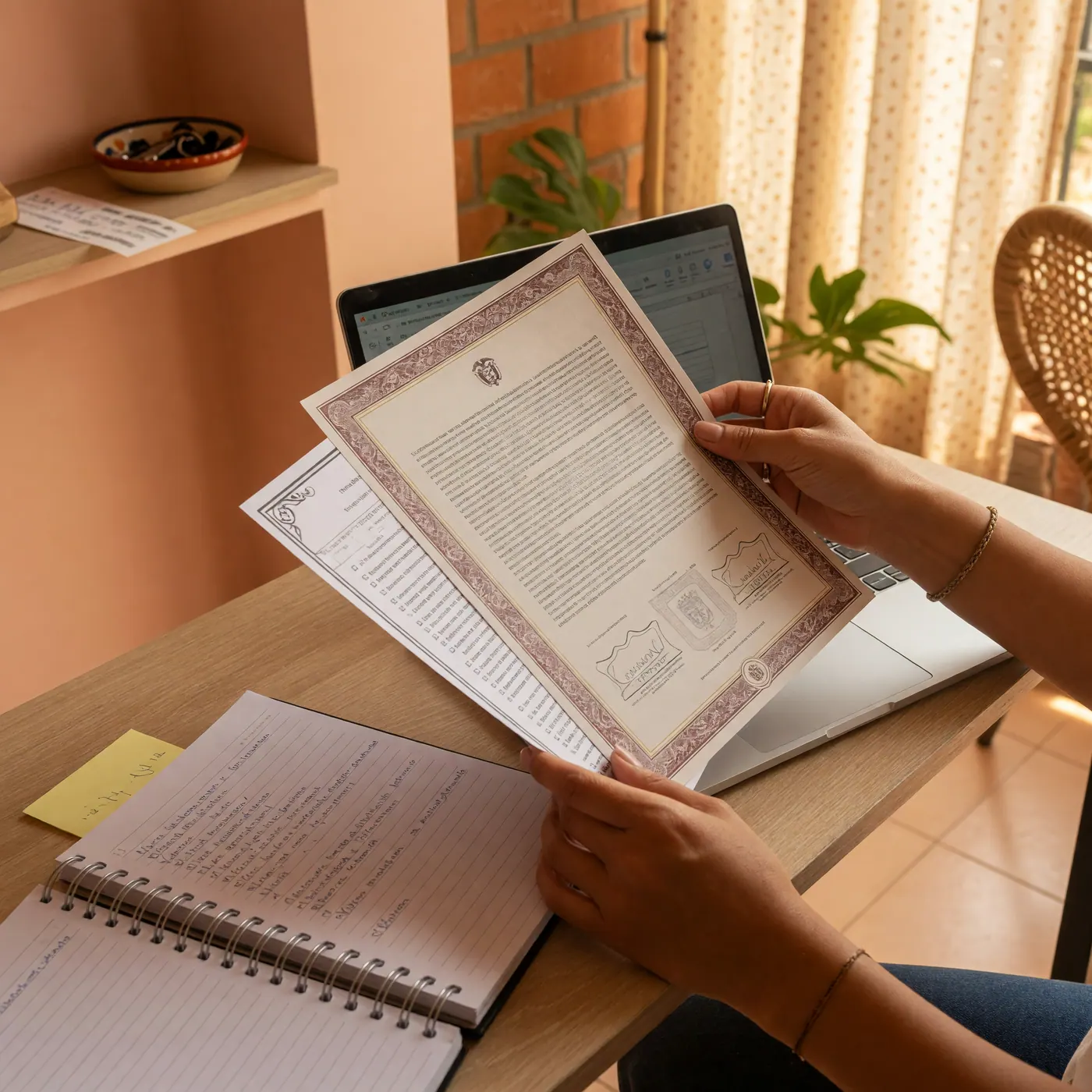
Here is what you need to look for:
- Current Owner: Look at the very last annotation. Does the owner listed there match the exact name and ID of the person selling you the property? If not, they do not have the legal right to sell it to you.
- Gravámenes (Liens) and Medidas Cautelares (Embargoes): Look for mortgages (hipotecas) or embargoes. If these exist, they must be legally canceled before or during your purchase process.
- Limitaciones and Afectaciones: Watch for afectación a vivienda familiar or patrimonio de familia. These are family protections that restrict the sale unless legally lifted by the owners.
- Administrative or Judicial Proceedings: A certificate may show notes if the matrícula is under administrative, judicial, or other legal proceedings.
- Timestamps: The certificate is time-stamped. Ley 1579 says its legal currency is limited to the date and time of request. A certificate from six months ago is useless because an embargo could have been placed yesterday. Pull a fresh one right before signing anything.
When to Call a Colombian Real Estate Lawyer
The certificate helps with your initial title review, but it does not replace a lawyer’s due diligence, a thorough notary review, tax checks, or physical inspections. The SNR controls the certificate issuance, but interpreting a messy one is a job for a professional.
You should absolutely hire a real estate lawyer if:
- You are a foreign buyer unfamiliar with Colombian property laws.
- The property has a complex history of inheritance (sucesión) or falsa tradición (incomplete ownership transfer).
- You are buying rural land, which often has complex restitution or environmental limitations.
- The seller is pressuring you to sign a contract before you have fully reviewed the title.
If you are buying the property as an investment, you might also want to read our guide on how to hire a property manager as a foreign owner once the deal closes.
Pre-Purchase Paperwork Checklist
Before you head to the notary to finalize the deal—you can read more about this step in our guide to Colombia notary basics for buyers—make sure you have the following documents ready to be reviewed by your legal team:
- A fresh, time-stamped Certificado de Tradición y Libertad.
- The Escritura Pública (public deed) from the previous sale.
- Paz y salvo certificates proving property taxes (predial) and administration fees are fully paid.
- Copies of the seller's identification.
Frequently Asked Questions
❓ What is a Certificado de Tradición y Libertad in Colombia?
It is the official title-history certificate for a registered property in Colombia, issued under registry rules still in force in 2026. It provides a chronological record of owners, mortgages, liens, and legal limitations associated with the real estate.
❓ Where do I get the certificate online?
You can download it directly from the official Superintendencia de Notariado y Registro (SNR) portal. You will need to select the correct registry office and input the property's matrícula inmobiliaria.
❓ Do I need the matrícula inmobiliaria to get it?
Yes, you need the matrícula inmobiliaria number to request the document online. You should ask the current owner or real estate agent to provide this number before you make any offers.
❓ How recent should the certificate be before buying?
You should use a fresh, time-stamped certificate pulled immediately before signing a contract or paying a deposit. Under Ley 1579, still vigente in 2026, its legal validity reflects the exact date and time it was requested, meaning an older document might miss recent embargoes.
❓ What red flags should I look for in the certificate?
Watch out for active mortgages, embargoes, limitations like family patrimony, or notes indicating ongoing judicial proceedings. Also, verify that the person selling the property matches the current owner listed in the final annotation.
❓ Does the certificate prove the property is safe to buy?
No, it is an essential first step but not complete due diligence, even under the rules in force in 2026. It does not replace a thorough legal review by a Colombian real estate lawyer, tax checks, or physical inspections.
❓ Should a foreign buyer hire a lawyer?
Yes, foreign buyers should generally hire a local real estate lawyer before signing a promise to purchase or paying a large deposit, especially if the certificate shows unclear annotations or a complex history.





Comments
Loading comments...
Checking sign-in status...