
Colombia Used Purchase Warranty & Returns: A Guide for Marketplace Buyers
Understand your actual legal rights when buying secondhand goods in Colombia. Learn the massive difference between stores and private sellers, and how to protect your cash.
IDIOMA DEL ARTÍCULO
Showing original language
I remember buying a used espresso machine from a guy in Chapinero a few years ago. It looked pristine, but the moment I plugged it in at my apartment, it short-circuited and died. My immediate thought was, “Can I get my money back?” The answer in Colombia depends entirely on who sold it to you.
Quick Answer: Do used goods have a warranty in Colombia?
- From a registered business: Yes. Under Ley 1480 of 2011, professional merchants must provide a default 3-month warranty on used items unless you explicitly waive it in writing.
- From a private seller (C2C): No automatic consumer warranty. Private sales fall under the Civil Code (vicios redhibitorios), which gives you 6 months to file a claim — but enforcing this in court for low-value items is practically impossible.
The Legal Divide: Stores vs. Private Sellers
The biggest mistake foreign buyers make in Colombia is assuming that all secondhand purchases are protected by the same consumer laws. They are not. The legal framework splits sharply based on whether you are buying from a registered business (a comerciante) or a private individual. If you want to see real-world options right now, you can browse apartments and houses on Colombia Move — posting is completely free.
If you buy a used refrigerator from an established secondhand appliance store like those in San Andresito, you are protected by the Colombian Consumer Statute — specifically Article 8 of Ley 1480 de 2011. Under this provision, professional merchants selling used goods must provide a default 3-month warranty on those items. The only way they can legally avoid this obligation is if they explicitly exclude the warranty in writing and you agree to that exclusion before paying. Once you submit a formal warranty claim, the business has a maximum of 15 business days to respond, per Ministerio de Justicia consumer guidelines.
However, if you buy that exact same refrigerator from an expat leaving the country or a local resident on a classifieds site, Ley 1480 does not apply. Private peer-to-peer (C2C) sales between individuals fall strictly under the Colombian Civil Code. There is no automatic return policy, no consumer protection agency (like the SIC) to complain to, and no mandatory 3-month warranty.
What Are Vicios Ocultos (Hidden Defects) under Colombian Law?
Because private sales are governed by the Colombian Civil Code, your only legal protection is the concept of vicios redhibitorios — hidden defects. Articles 1914 and 1915 of the Civil Code define these as pre-existing defects serious enough that a buyer would not have purchased the item at all, or would have paid significantly less, had they been aware of the problem.
To legally claim a hidden defect in Colombia, the issue must meet three strict criteria: it must have existed at the time of the sale, it must make the item completely unfit for its normal use, and it must not have been easily visible to you during a basic inspection. If a seller points out a scratch or a faulty button before you pay, that defect is disclosed and no longer qualifies as hidden.
The legal window to file a civil claim for movable goods — which includes furniture, appliances, and electronics — is 6 months from the date of actual delivery, as established under Article 1923 of the Colombian Civil Code. For real estate, that window extends to one year from delivery.
The Reality Check: Why You Cannot Rely on the Law
Here is the hard truth: while the Civil Code gives you 6 months to claim a hidden defect, enforcing it for everyday marketplace items is a complete dead end.
Pursuing a legal claim for a COP 300,000 blender or a COP 500,000 dining table in Colombian civil courts is financially ruinous. You would spend significantly more on notary fees, legal representation, and administrative costs than the item is worth. Finding an anonymous online seller to serve them legal papers is also nearly impossible in practice.
This creates a high-risk environment, especially for fast-moving items. According to active listings on Colombia Move (July 2026), there are currently 0 active listings for used cameras, computers, and cell phones — a category with consistent buyer demand but no active supply. This gap means good secondhand electronics sell in minutes. Buyers racing to grab a deal before someone else does often skip basic verification. That urgency is exactly why you need to use seller profiles before buying in Colombia to weed out bad actors before you ever meet.
How to Protect Yourself Before You Pay
Since the legal system will not realistically help you get a refund on a faulty used couch or laptop, your defense has to happen before cash leaves your hands. Once you pay a private seller, the transaction is functionally final. Here is how to protect yourself.
Never buy sight-unseen. Always inspect the item in person. If you are looking to buy used appliances in Colombia, plug them in. Test the power, press every button, check the ports, and assess structural integrity. If you are buying items for your family, learn how to run thorough safety checks on secondhand items. If a seller refuses to let you test the item, walk away immediately.
Ask the right questions in writing. Get the seller to state the condition of the item clearly in your WhatsApp chat. While a chat log will not magically get your money back, having written proof that they claimed the item was “in perfect working condition” gives you important leverage if a problem shows up during the handoff.
Draft a simple receipt for high-value items. If you are buying a COP 2,000,000 camera or a high-end laptop from a private seller, write a basic buy-sell agreement (“contrato de compraventa”) stating the item is sold in working order, signed by both parties. It takes five minutes and scares off scammers. For larger transactions, understanding Colombian notary and contract basics is worth reading beforehand.
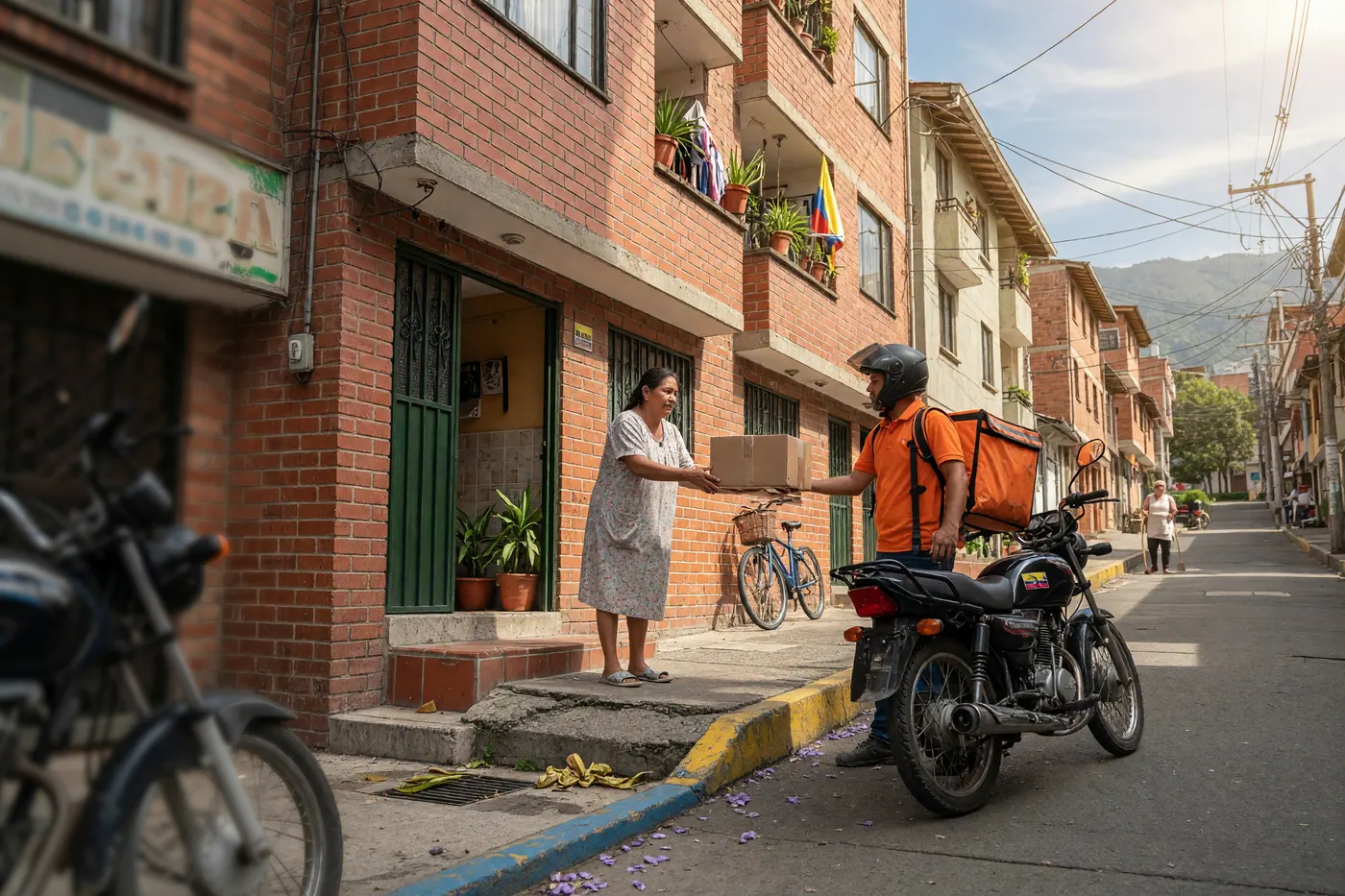
Manage the handoff safely. Meet in a public location or a residential lobby with security cameras. Pay close attention to protecting yourself during the pickup handoff, and never let a seller rush you through the inspection process.
Never pay upfront deposits. Deposit scams are rampant on Colombian classifieds. If a seller demands money via Nequi or Daviplata to hold an item before you have seen it in person, cut contact immediately. Our guide on verifying a Colombian seller before paying a deposit walks through the warning signs step by step.
Disclaimer: This guide is for informational purposes only and does not constitute legal advice. Colombian consumer protection laws and administrative guidelines are subject to change — for specific situations, consult a qualified Colombian attorney.
Frequently Asked Questions
❓ Do used goods have a warranty in Colombia?
Yes, but only if bought from a professional business. Under Ley 1480 of 2011 (in force through 2026), professional sellers must provide a 3-month warranty on used items unless they explicitly exclude it in writing; private individual sales have no such automatic consumer warranty.
❓ Can I return an item bought on Facebook Marketplace in Colombia?
No, there is no automatic right of return for private peer-to-peer sales. Unless you negotiated a specific return window with the seller beforehand, all private secondhand sales are functionally final once payment is made.
❓ What is a vicio oculto under Colombian law?
A vicio oculto is a hidden defect that existed before purchase, was non-obvious, and makes the item unfit for use — defined under Articles 1914 and 1915 of the Colombian Civil Code (confirmed valid as of 2026). Under Article 1923, you have 6 months from delivery to file a civil action for movable goods such as electronics or furniture, though pursuing this in court is rarely practical for low-value items.
❓ How do I legally prove a private seller misrepresented an item?
Save all written communications — WhatsApp chats, listing screenshots, and any statement by the seller that the item was in perfect working condition. If the defect is serious enough to pursue legally, you will also need a technical expert report (peritaje) confirming that the defect existed prior to delivery. All evidence must be gathered and a claim filed within the 6-month prescription window under Article 1923 of the Colombian Civil Code. In practice, a thorough in-person inspection before paying remains the strongest protection.
❓ Should I pay a deposit to hold a used item in Colombia?
No. Deposit scams are common on Colombian classifieds and social media groups. Never send money via Nequi or Daviplata to hold an item before you have inspected it in person — once the transfer goes through, you will likely not get it back.

Comments
Loading comments...
Checking sign-in status...