
Colombia Notary Basics: A Guide for Renters, Buyers, and Expat Paperwork
Demystify the Colombian notaría system. Learn exactly how much notary services cost in 2026, what to bring, and what signature authentication actually protects.
IDIOMA DEL ARTÍCULO
Showing original language
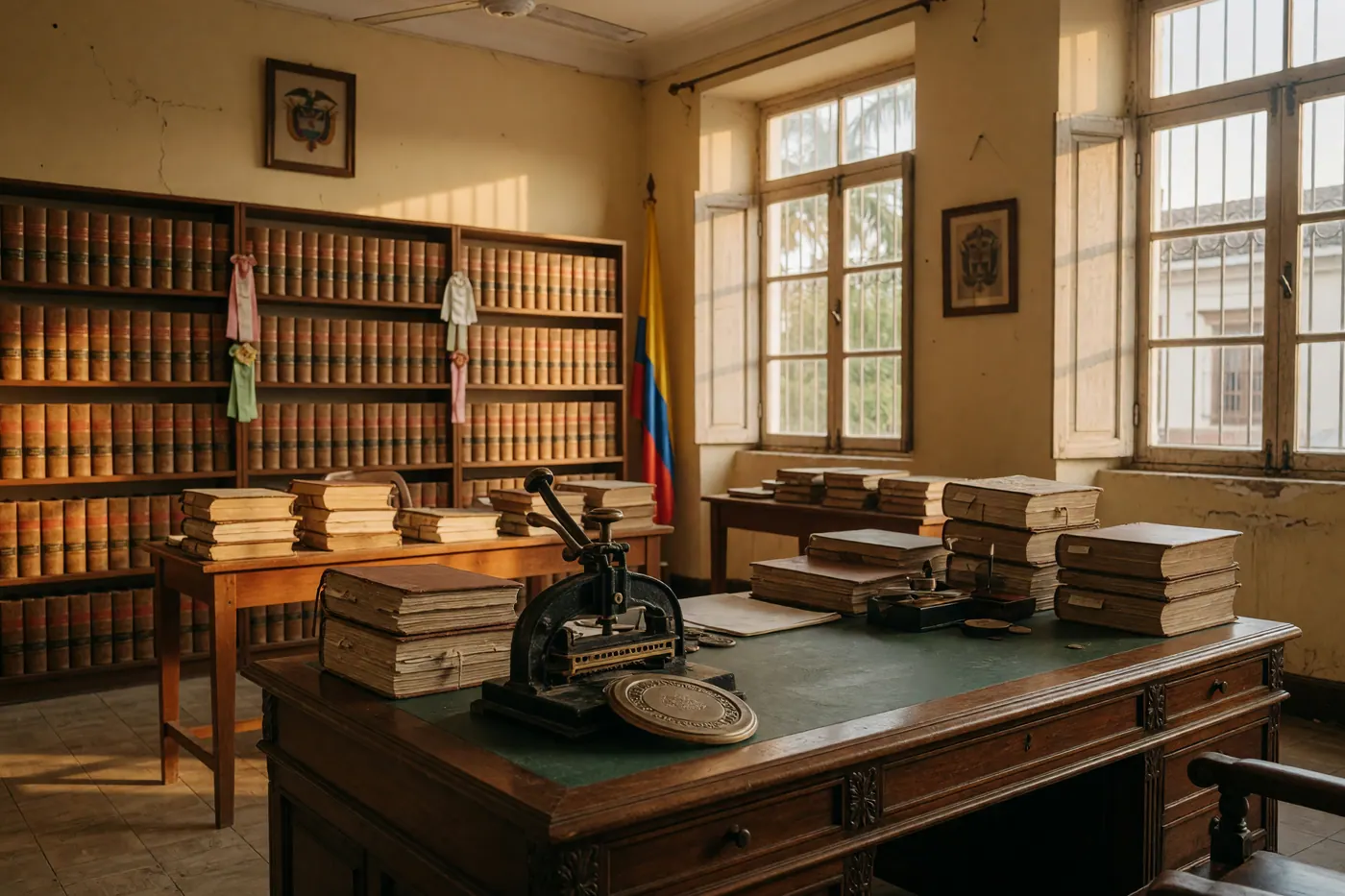
Walking into a Colombian notaría for the first time can feel like stepping into a bureaucratic time machine. Between the towering stacks of bound public deed books, the rhythmic thud of heavy metal stamps, and the glowing biometric fingerprint scanners, it is a uniquely Colombian experience. But if you plan to rent an apartment, buy property, or handle visa paperwork, the notary office is about to become your second home.
A Colombian notary is not just a place to get a quick stamp. It is a central pillar of civil law where state-appointed professionals administer public faith (fe pública). Understanding what they do—and more importantly, what they don't do—is the key to protecting yourself in any transaction. If you want to see real-world options right now, you can browse apartments and houses on Colombia Move — posting is completely free.
According to active marketplace data from Colombia Move (July 2026), there were 32 recent searches for short-term temporal rentals that returned zero results. Demand for owner-direct housing is surging, but safely executing the paperwork is what separates a secure rental from a stressful one. Here is exactly how the notary system works in 2026.
Notary vs. Lawyer: The Crucial Difference
In the US or the UK, a notary public is often an administrative worker who simply witnesses signatures. In Colombia, a notario is a highly qualified, senior legal professional appointed by the government. However, there is a massive misconception among expats about whose side the notary is on.
Notaries are strictly neutral. They do not represent the buyer, the seller, the landlord, or the tenant. They are there to represent the state and ensure the procedural formatting is correct. If you need someone to protect your individual interests, draft custom clauses, or perform a title search on a property, you must hire an independent attorney. Before you even step foot in a notary office, you should review your Colombian rental contract before signing to ensure the terms are actually in your favor.
What Notary Authentication Actually Proves (and What It Doesn't)
The most common service you will use is signature authentication (autenticación de firma). Under Colombian law (Decreto 960 de 1970), authenticating a signature does exactly two things: it proves who signed the document and when they signed it.
That is it. The notary does not read your lease to make sure the rental price is fair. They do not verify if the person renting you the apartment actually owns it. They do not validate the legality, fairness, or enforceability of the contract's clauses. If a landlord includes an illegal penalty clause and you both sign it at the notary, the notary will still stamp it. This is why you must learn to spot rental contract red flags on your own—the official stamp does not magically make a bad contract safe.
Common Notary Tasks for Expats
You will find yourself pulling a ticket at the local notaría for a few specific reasons:
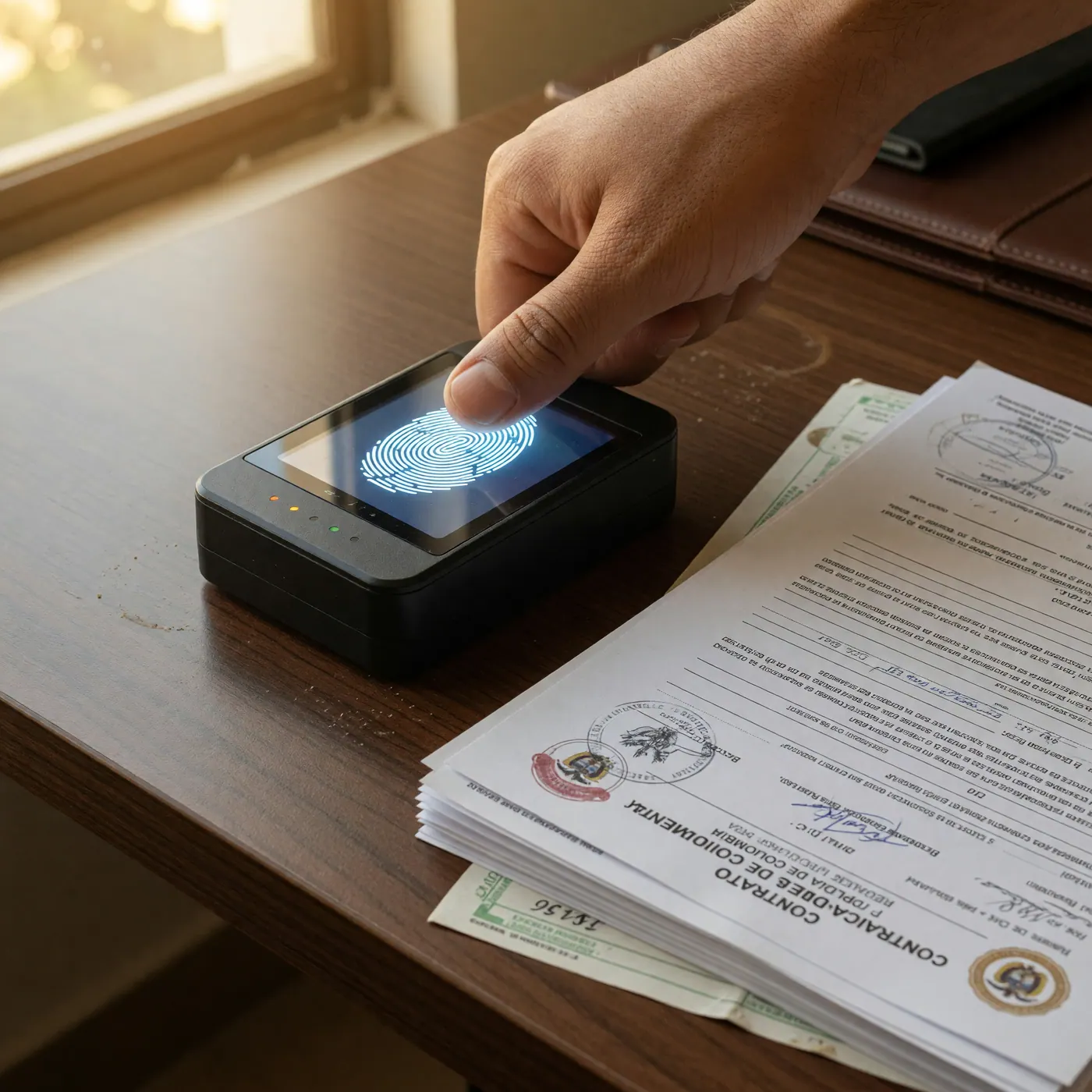
- Lease Agreements (Contratos de Arriendo): Landlords and real estate agencies will almost always require you to sign the lease in person at a notary. This usually involves biometric verification (scanning your fingerprint) to absolutely guarantee your identity.
- Property Purchases: Buying real estate requires a public deed (escritura pública). The transaction moves from a private promise to buy (promesa de compraventa) to the public deed, which is executed at the notary and then must be registered with the Oficina de Registro de Instrumentos Públicos to officially transfer ownership.
- Declaraciones Extrajuicio: These are formal sworn statements made under oath. You might need one to prove economic dependence for a visa, confirm a civil union (unión libre), or attest to a lack of criminal records.
Official 2026 Notary Fees
Notary fees are not arbitrary; they are strictly regulated by the Superintendencia de Notariado y Registro (SNR). The official 2026 base rates were set by Resolution RES-2026-000964-6 on January 20, 2026. Keep in mind that all base fees are subject to a 19% IVA (Value Added Tax), and you may see minor additional paper charges.
| Service (2026) | Base Fee (COP) | Total with 19% IVA |
|---|---|---|
| Signature Authentication | $2,800 | $3,332 |
| Biometric Verification | $4,800 | $5,712 |
| Declaración Extrajuicio | $19,900 | $23,681 |
| Act Without Value (Acto sin cuantía) | $90,600 | $107,814 |
For real estate purchases (which have a defined value), the fees are calculated as a percentage of the property's declared value, usually split 50/50 between the buyer and the seller.
Practical Tips for Your First Notaría Visit
Going to the notary does not have to be an all-day ordeal if you come prepared. First, always bring your original, physical ID. If you are a tourist, bring your physical passport. If you are a resident, bring your physical cédula de extranjería. Digital copies or photos on your phone will be rejected instantly.
Second, bring a debit card or small bills. While most modern offices accept cards, the card machines occasionally go down, and you do not want to lose your place in line over a $5,712 COP fee. Finally, have your documents drafted and printed before you arrive. If you need solid, pre-drafted legal templates to bring with you, explore our premium contract templates to save time.
Frequently Asked Questions
❓ Is a Colombian notary the same as a notary public in the US or UK?
No. In Colombia, a notario is a senior legal professional appointed by the government to draft public deeds and administer public faith—a role defined since Decreto 960 de 1970 and unchanged in 2026. US/UK notaries are typically just administrative signature witnesses with no equivalent authority.
❓ Does notarizing a lease contract protect me from scams?
Only partially. It proves the landlord's identity and signature, but it does not guarantee they actually own the property or that the contract clauses are fair. You still need to do your own due diligence.
❓ How much does it cost to notarize a document in Colombia in 2026?
In 2026, signature authentication costs $2,800 COP base ($3,332 COP with 19% IVA), per Resolution RES-2026-000964-6. Add $4,800 COP ($5,712 COP with IVA) for biometric verification if the landlord or document requires it.
❓ Can I use a digital notary in Colombia?
Yes, digital notary services (notaría digital) are expanding. However, many local landlords, agencies, and banks still strictly require physical, in-person biometric verification and traditional paper stamps.
❓ What is a "declaración extrajuicio" and when do I need one?
It is a formal sworn statement made under oath before a notary. It is commonly required for visa applications, proof of a civil union, or demonstrating economic dependence, costing $19,900 COP (base) in 2026.



Comments
Loading comments...
Checking sign-in status...