
How to Buy Used Appliances in Colombia Without Surprises
A practical buyer's guide to second-hand fridges, washers, and stoves in Colombia — what to test, the voltage trap, and how to handle delivery and payment safely.
IDIOMA DEL ARTÍCULO
Showing original language
The first used fridge I almost bought in Medellín looked perfect in the photos. Clean, modern, a brand I trusted. Then I asked the seller to plug it in before I paid — and it took twenty minutes to do nothing. No hum, no cold, no apology. I walked away, and that one awkward request saved me a couple million pesos and a moving headache.
Buying second-hand appliances in Colombia is one of the smartest moves you can make as a new resident. A decent used fridge, washer, or stove costs a fraction of new, and there's a constant churn of expats leaving and locals upgrading, so the supply is real. But the gap between a great deal and an expensive mistake is almost entirely about what you do before money changes hands.
I've bought (and returned, and resold) enough appliances here to learn the pattern. This is the buyer's version of the playbook: where to look, what to test on each machine, the voltage trap that catches imported goods, and how to handle delivery and payment without getting burned.
What to know first
- Never pay before you see the appliance powered on and working — photos lie, and so do some sellers.
- Check the voltage: Colombia runs on 110V/60Hz with Type A/B plugs, so verify any imported appliance's label first.
- Ask for the factura (receipt), the appliance's age, and the real reason it's being sold.
- Used goods don't automatically come with a warranty — confirm in writing what (if anything) you're getting.
- Settle delivery and payment terms before you commit: who carries it, who pays, and when the money is released.
Where to actually find used appliances
There's no single best place — each channel has a different mix of price, trust, and hassle. I check a few in parallel rather than betting on one.
Facebook Marketplace has the most casual, neighborhood-level supply, and it's where a lot of expats dump everything before a flight. The tradeoff is that it's also where most scams live — Facebook's own Marketplace safety guidance warns about sellers who push you off-platform, send sketchy payment links, or pressure you to ship money before pickup. Mercado Libre Colombia is the other heavyweight, with more structure: its Compra Protegida (buyer protection) can cover you, but only when you keep the whole transaction — communication and payment — inside the platform.
Beyond those, your building's WhatsApp group and local expat groups are gold for appliances, because the seller is often a neighbor you can actually find later. Colombia Move classifieds are worth a look too: listings are free to post, they don't expire into a graveyard of dead prices, and contact is direct over WhatsApp. If you're also planning to offload your own gear someday, the seller-side view in Selling Your Stuff Before Leaving Colombia explains how the other half of this market thinks — useful intel when you're the one negotiating.
The one rule: buy the appliance, not the promise
Every appliance mistake I've seen comes down to trusting a description instead of the machine in front of you. "Funciona perfecto" is not a test result. Before you hand over a peso, run the appliance through its actual job — cold should be cold, a spin cycle should spin, a burner should light. Here's the universal pre-purchase checklist I run no matter what I'm buying:
- See it powered on and doing its job, not just "turning on."
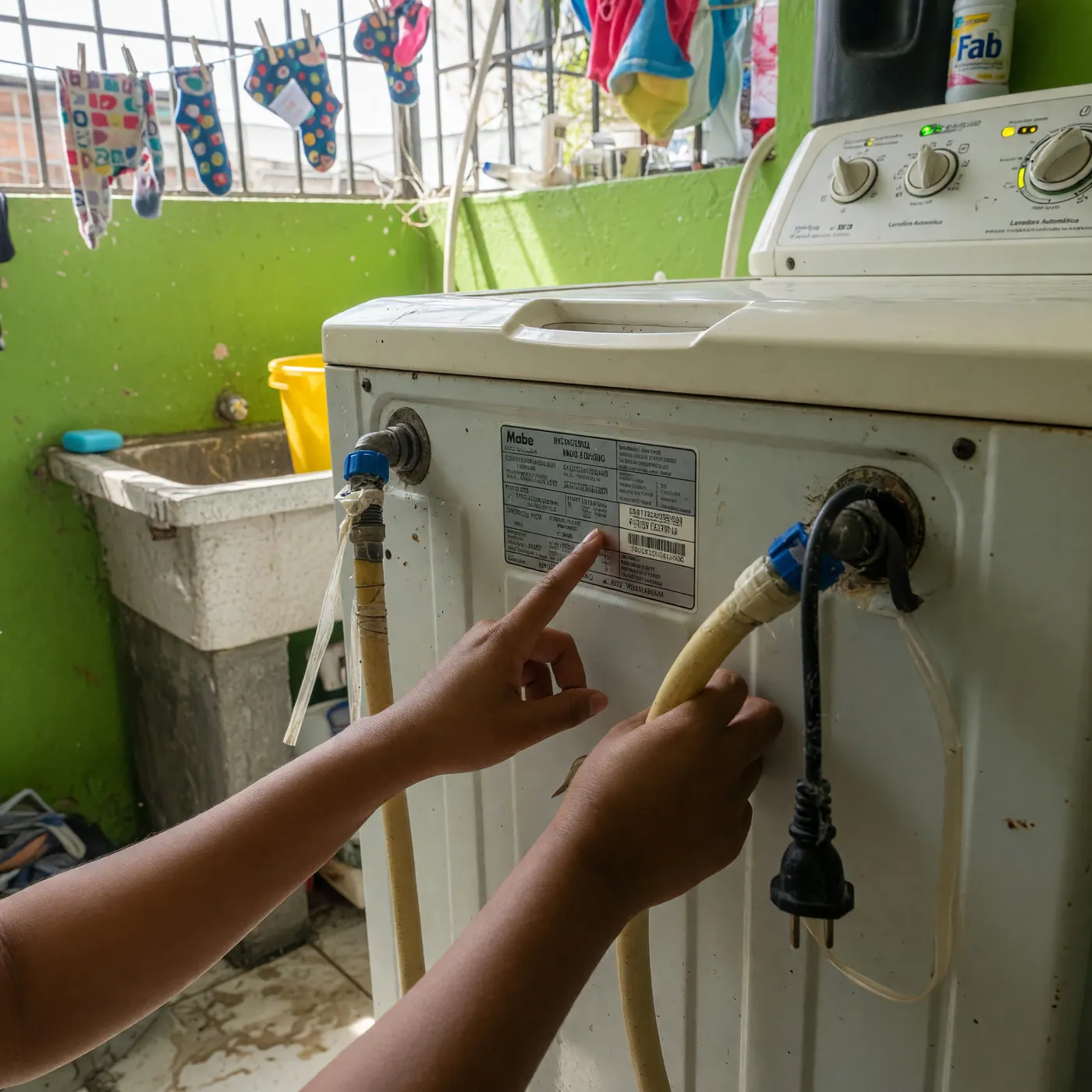
- Read the model/rating plate and confirm the voltage matches Colombia's grid.
- Look for rust, dents, water damage, mold smell, and frayed cables.
- Ask the appliance's age and how long the seller has owned it.
- Get the reason for selling — "moving abroad" is reassuring; "it's been acting up" is a red flag.
- Confirm delivery, who carries it up the stairs, and the payment moment in writing.
What to inspect, appliance by appliance
Each machine fails in its own way. These are the specific things I check before buying the big ones.
Refrigerators
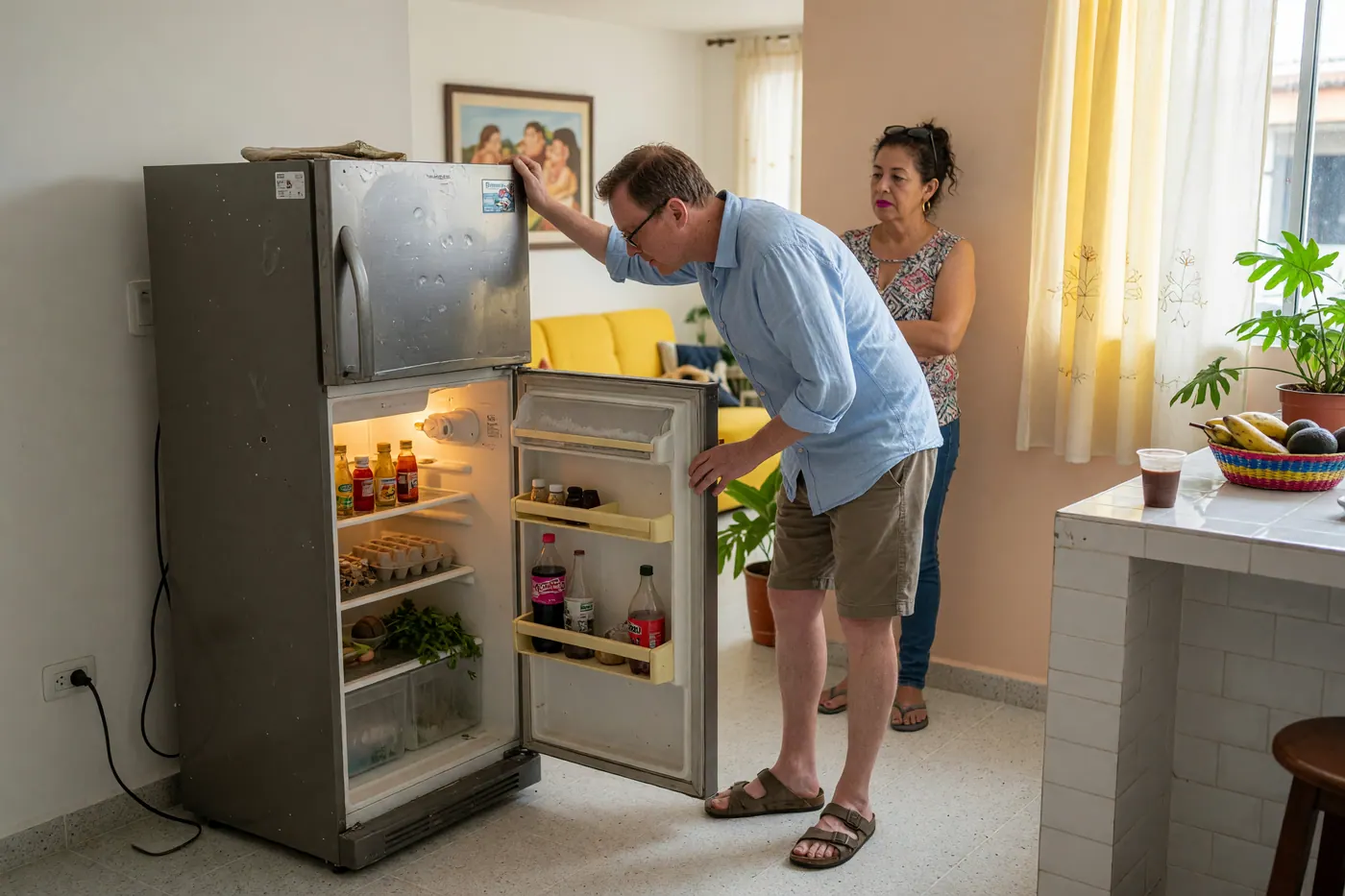
Ask the seller to have it running and cold when you arrive — a fridge that's "unplugged for the move" hides everything. Open it and feel the temperature, listen for steady compressor noise (not banging or constant running), check that the door seals grip a sheet of paper, and look underneath and behind for rust or a puddle. Smell the inside; a sour smell that won't quit is a sign it's been off and rotting for a while.
Washing machines
Run a short cycle if you can — fill, agitate, spin, drain. Watch for excessive shaking, grinding, or a drum that won't spin up. Check the inlet hoses and the rubber door gasket on front-loaders for mold and cracks. A washer that can't complete a cycle in the seller's home will not magically complete one in yours.
Dryers, stoves and ovens
Dryers are less common in Colombian apartments, so when you find one, confirm it actually heats — not just tumbles — and check whether it's electric (and what voltage). For gas stoves, light every burner and watch the flame color (steady blue, not yellow and sputtering); for electric, confirm each element heats and the oven thermostat actually climbs. Gas connections are safety-sensitive, so if anything smells off, walk away.
Microwaves and small appliances
These are cheap enough that testing is the whole game: heat a cup of water in the microwave, run the blender, toast something. Don't overthink price on small stuff — overthink whether it works at all, because nobody honors a return on a 50,000-peso blender.
The voltage trap on imported appliances
This is the one that catches people moving from Europe, Argentina, or Chile. Colombia's household grid runs at 110V, 60Hz, using Type A and Type B plugs (the same as the United States), according to standard international plug and voltage references for Colombia. A washer or microwave built for 220V will not run here without a transformer — and high-power appliances on a transformer are a hassle you don't want.
So before you fall for a deal, find the rating plate (usually a metal sticker on the back or inside the door) and read the voltage. If it says 220–240V only, it's the wrong machine for a standard Colombian outlet. And please don't let anyone talk you into rewiring, swapping plugs, or bypassing the ground pin to "make it fit" — appliances are governed by Colombia's electrical safety code (RETIE) for a reason, and improvised electrical fixes are how fires start. If the appliance was made for Colombia or the US, you're almost always fine.
The questions that separate good sellers from bad ones
How a seller answers these tells you as much as the appliance itself. A confident, specific answer is a good sign; vagueness or irritation is a quiet warning.
- How old is it, and are you the original owner?
- Do you have the factura or any repair history?
- Why are you selling it?
- Can I test it fully — powered on, full cycle — before I pay?
- What's wrong with it that I should know? (Always ask. The honest ones will tell you something small.)
Keep the conversation on the record. I do all my back-and-forth over WhatsApp and screenshot the agreed price, what's included, and the delivery plan, so there's no "I never said that" later. If you're new to how Colombian buyers and sellers use WhatsApp for everything, Should You Include Your WhatsApp Number in a Public Listing? is a good primer on the etiquette and the safety side of it.
Delivery and payment without the drama
A fridge is heavy, your stairwell is narrow, and "I thought you were bringing it" is a real argument people have on moving day. Nail down the logistics before you agree on anything else:
- Who transports it — the seller, a hired carrier, or you with a borrowed truck?
- Stairs or elevator? Will it physically fit through your door and into the elevator?
- Who carries it up, and is that cost baked into the price or extra?
- When exactly does the money move — on inspection at handoff, not before?
On payment, the rule is simple: don't send deposits to strangers. Real buyer protection only exists when you stay inside a platform's protected flow — Mercado Libre is explicit that payments made outside the platform aren't covered. For an in-person Facebook or WhatsApp deal, pay at handoff after you've tested the appliance, and meet in a public, well-lit spot when you can, which is exactly what Facebook's own meeting-in-person tips recommend. If a seller demands a deposit "to hold it" or invents a reason you must pay before seeing it, that's the same playbook covered in How to Avoid Rental Scams in Colombia — different product, identical trap.
Does a used appliance come with a warranty?
Mostly, no — and you should buy as if it doesn't. Colombia's consumer law (Ley 1480 de 2011, the Estatuto del Consumidor) gives strong protections on new purchases, but for used goods whose legal guarantee has already expired, a seller can sell without warranty only if that's clearly disclosed and you accept it. Between two private individuals, you're generally buying "as-is." That's not a reason to panic; it's a reason to do your testing up front, because the machine you accept is the machine you keep.
How to compare listings like a local
The cheapest listing is rarely the best deal, and the most expensive one is usually just optimistic. To find the real market price, look at the cluster — the band where most active listings for that brand and condition sit in your city — rather than anchoring on a single number. Bogotá and Medellín tend to run higher than smaller cities, and "delivery included" can quietly justify a higher price. The map and search view makes this easy: filter by city and category and you can eyeball where prices actually cluster before you message anyone.
The same comparison logic that sellers use to price their gear works in reverse for buyers. How to Price Used Electronics in Colombia walks through reading active-listing bands by condition and city — borrow that method and you'll instantly know whether a fridge is fairly priced or wishful.
Frequently Asked Questions
❓ Is it safe to buy used appliances in Colombia?
Yes, if you test the appliance powered on, verify the seller, and never pay before inspection. Most problems come from trusting photos and sending money early. Meet in a public spot for smaller items and pay at handoff after the machine proves it works.
❓ What voltage do appliances use in Colombia?
Colombia commonly uses 110V at 60Hz with Type A/B plugs, the same as the United States. Always read the appliance's rating plate before buying, especially anything imported from Europe or the Southern Cone, which is often 220–240V and won't run here without a transformer.
❓ Should I pay a deposit before seeing a used fridge or washer?
Usually no. Pay at handoff, after you've tested it, unless you're using a platform's protected payment flow that genuinely covers you. A seller who demands a deposit "to hold it" before you can inspect is using a classic scam setup.
❓ What should I check before buying a used refrigerator?
Confirm it's actually cold, the compressor runs steadily without banging, the door seals grip, and there's no rust, leaks, or lingering sour smell. Ask the age and run it long enough to feel it hold temperature — a fridge that's "unplugged for the move" hides its problems.
❓ How much does delivery cost, and who pays for it?
It's negotiable, so settle it before you commit rather than assuming. Confirm who transports it, whether there are stairs or an elevator, who carries it up, and whether the carrying is bundled into the asking figure or charged on top. Big appliances are heavy and awkward, and surprise handling fees sour a lot of deals.
❓ Does a used appliance come with a warranty in Colombia?
Not always. Under Colombia's consumer law (Ley 1480 de 2011), a used product whose legal guarantee has expired can be sold without warranty only when that's clearly disclosed and you accept it. Between private individuals, assume you're buying as-is and test thoroughly up front.
❓ Where can foreigners find second-hand appliances in Colombia?
Compare a few channels: Colombia Move classifieds, Facebook Marketplace, Mercado Libre, your building's WhatsApp group, and local expat groups. Each has a different mix of price and trust, so checking several at once gives you a real sense of the going rate.

Comments
Loading comments...
Checking sign-in status...