
How to Sell Used Home Appliances in Colombia Without Giving Away the Price
A practical guide to selling your used fridge, washing machine, or stove in Colombia without giving away the price: real pricing, photos that convince, a complete listing, and safe delivery.
IDIOMA DEL ARTÍCULO
Showing original language
A neighbor in the building put her fridge up for sale a month ago. Good brand, it still cooled well, and yet it wasn't selling. When I saw the listing I understood the problem in two seconds: one dark photo, no measurements, no brand, no model, and a price that seemed to come out of nowhere. The fridge was fine. The listing was the thing that was broken.
Selling a used appliance in Colombia is not just uploading a photo and waiting. A fridge, a washing machine or a stove are heavy objects, expensive to transport and hard for the buyer to "test." That creates distrust, and distrust is paid for with haggling. When the listing is missing details, photos and a clear way to prove the appliance works, the buyer assumes the worst and offers you half.
The good news: almost all of that can be fixed before you publish. In this guide I'll show you how to check whether it's worth selling, how to set a price without giving it away, which photos reduce haggling, what the listing should say, and how to handle the test and the handover so nobody backs out. It applies to fridges, washing machines, dryers, stoves, ovens, microwaves and almost any household appliance.
What you need to know first
- The price is set by comparing real listings by city, brand, capacity and condition — not by what it cost new.
- Clear photos (front, model plate, interior and controls switched on) reduce haggling more than any description.
- The listing should state brand, model, capacity, dimensions, years of use, faults and who pays for transport.
- Let the buyer test the appliance running before it leaves: that's what closes the sale.
- Be honest about the condition. Hiding a fault to sell for more almost always backfires on you.
Before publishing: is it really worth selling?
Before taking photos, stand in front of the appliance and inspect it as if you were the buyer. Does it cool, wash, heat well? Does it make strange noises? Is there rust, broken seals, a missing tray? An appliance that works but needs a minor repair can still be sold; one that turns on and off by itself is another story, and then you need to decide whether to sell it "for parts" and say so clearly.
Do a quick inventory of what you have: brand, capacity (liters for a fridge, kilos for a washing machine), years of use, repairs done and whether you still have the receipt or warranty. This information isn't decoration — it's exactly what a serious buyer will ask, and having it ready saves you twenty back-and-forth messages. If you've already been through a move you know how heavy this is; in what to do with furniture and appliances before moving I cover the full logistics when you're selling several things at once.
One thing many people forget: transport. A two-door fridge won't fit in just any car, and carrying it down narrow stairs can cost more than you earn from it. Decide from the start whether the buyer picks it up, whether you deliver it, or whether the transport cost is split. Having this clear before publishing avoids the classic "I thought you were bringing it" that kills last-minute sales.
How to set a price without giving it away
The most common mistake is pricing out of nostalgia: "it cost me two million, I'll let it go for one and a half million." The buyer doesn't care what it cost you new five years ago. They care how much a similar one costs today. So the price is researched, not invented.
Open a classifieds platform and search for your same appliance, filtering by "used" and by your city. On MercadoLibre, for example, there are pages of used appliances by city for Bogotá, Medellín and others, and there you can quickly see the real range. Compare like with like: roughly the same brand, similar capacity, similar condition and the same city. An 18 kg washing machine can't be compared with an 8 kg one, and a Bogotá price doesn't always apply in a smaller city.
What moves the price (up or down)
| Brand and reputation | Brands with good service and available spare parts hold their price better. |
| Age and use | Fewer years and moderate use raise the value; a 10-year-old appliance drops sharply. |
| Real condition | Working perfectly is worth more than "working with a quirk." Be honest about the quirk. |
| Transport included | Offering nearby delivery can justify a slightly higher price. |
| Your urgency | If you need to sell it this week, leave room to negotiate without losing money. |
A practical trick: set the price a bit above your minimum acceptable amount, but within the real market range. That leaves room for the buyer to "win" something in the negotiation and feel good about it, without you ending up giving it away. And avoid suspiciously round prices: a flat one million looks made up; $980,000 looks considered.

Photos that reduce haggling
Photos do 80% of the work. A buyer who sees a complete, clean, well-lit appliance asks fewer questions and haggles less, because they feel they know what they're getting. One who sees a single dark photo assumes you're hiding something — and acts on that in their offer.
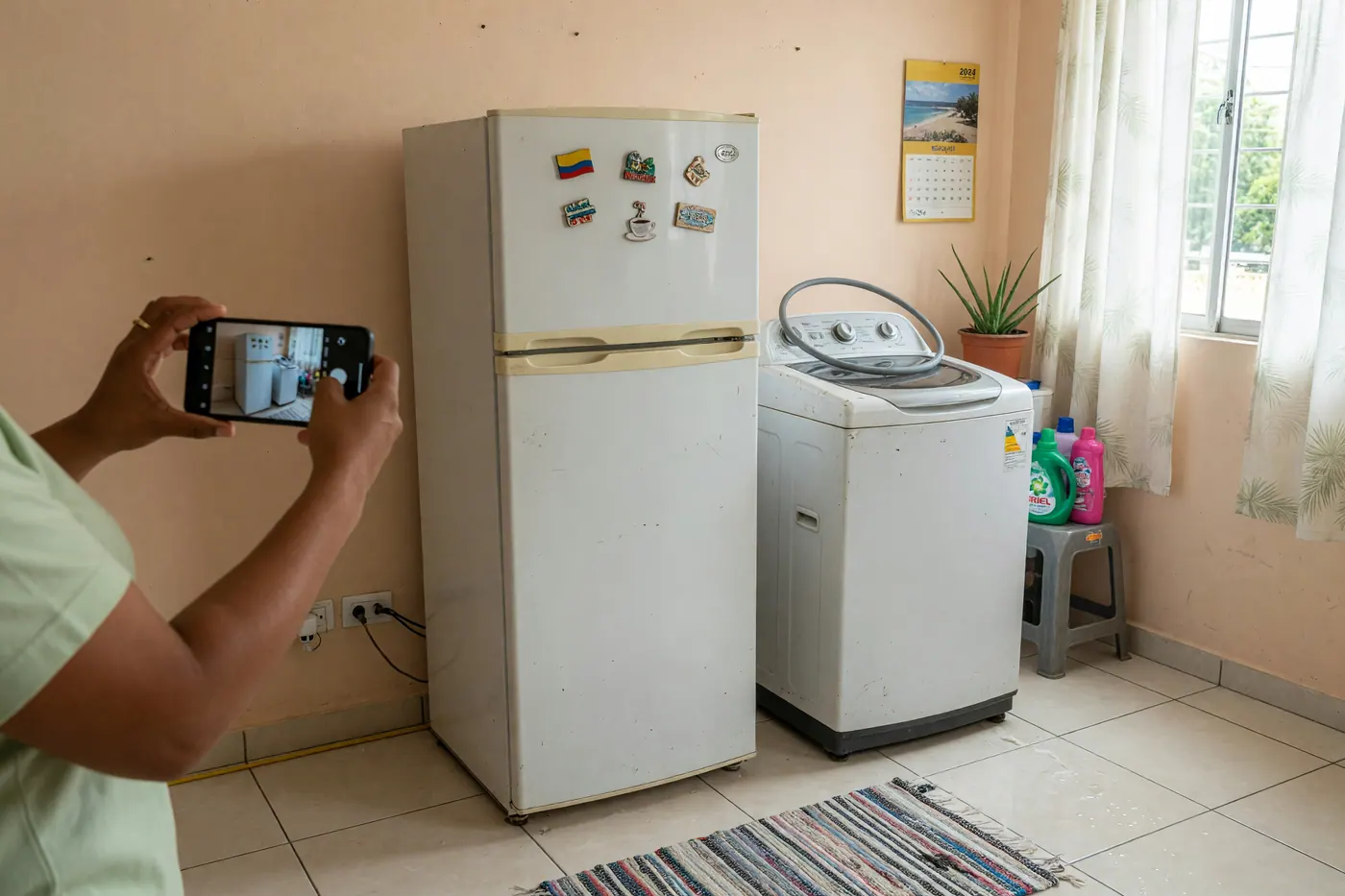
Before shooting, clean the appliance and find good natural light. Then take, at minimum, these shots:
- The full front, straight on, with the whole appliance inside the frame.
- The sides and the back (yes, the back: it shows there's no rust or damage).
- The plate or label with the brand and model, in focus and legible.
- The interior: the inside of the fridge, the washing machine drum, the stove burners.
- The controls switched on or running, to show that it turns on.
- Any visible defect, close up. Showing the scratch builds more trust than hiding it.
Including a photo with the measurements (with a tape measure or next to a known object) avoids the classic problem of the buyer arriving, measuring and finding it won't fit the space. That wasted visit costs both of you time. If you want to go deeper on the visual side, in how to write a listing that actually gets messages I explain how photos and text work together to close the sale.
What the listing should say (checklist of required details)
The title is the first thing seen in a search, so it has to be specific: product + brand + capacity + city. "LG No Frost Fridge 420 Liters Medellín" beats "Fridge in good condition" every day. The description is where you answer questions before they're asked.
Before publishing, check that your listing includes all of this:
- Exact brand and model.
- Capacity: liters (fridge), kilos (washing machine/dryer), number of burners (stove).
- Dimensions: height, width and depth.
- Time of use and repairs done.
- Real condition and visible faults, without covering them up.
- Reason for selling (moving, replacing with a new one, etc. — it builds trust).
- City and approximate neighborhood.
- Whether it can be tested running before pickup.
- Clear price and whether it's negotiable.
- Who pays for transport and how it's picked up.
Avoid "almost new" without proof: that phrase alone convinces no one. Instead of vague adjectives, give concrete facts. "Bought in 2023, used by one person, with receipt" says far more than "flawless." If you have several appliances to sell, first look at where to sell used items in Colombia without paying commission to choose the right platform based on what you have.
Warranty and honesty: a cautious note
Many people believe there are no rules between private individuals, and that needs some nuance. Under the Consumer Statute (Law 1480 of 2011) and as explained by the Superintendence of Industry and Commerce (SIC), used products whose legal warranty has already expired can be sold without warranty, but only if that condition is clearly disclosed and the buyer accepts it. When nothing is clarified, the rule tends to presume a minimum warranty. The legal warranty covers quality, suitability, safety and proper functioning.
In practice, for you as the seller this comes down to a simple rule: tell the truth about the condition and put it in writing. Don't promise it's "perfect" if you can't prove it, and if you sell it "without warranty, as seen and accepted by the buyer," state that in the chat. This is not legal advice and responsibilities vary by case; if you sell regularly or as a business, confirm your obligations with an accountant or directly with the SIC.
Trust, testing and handover
The moment of handover is where many sales fall apart, so it's worth locking it down. Let the buyer test the appliance running before they take it: plug it in, let the fridge cool for a while, let the washing machine start a cycle, let the stove light all the burners. A buyer who sees the appliance working pays without fighting; one you don't let test it gets suspicious and offers less.
To make the handover go smoothly:
- Agree beforehand who disassembles, carries down and loads the appliance — and at what time.
- If possible, collect payment on delivery and, for large amounts, prefer a confirmed transfer before releasing the product.
- Send a simple receipt via WhatsApp: product, price, date and "sold in the condition seen by the buyer."
- If you have to wait for someone, set a specific time and confirm the same day. Endless "I'll come by tomorrow" are not sales.
Where to publish your appliance
Not all platforms work the same way, and being honest about that saves you time. Facebook Marketplace has a lot of traffic and direct contact via WhatsApp, but also many messages that go nowhere, so you need to filter carefully. MercadoLibre gives you reach and buyers used to buying, although sellers face limits and costs depending on the case — it's worth simulating costs before setting the price. Neighborhood or building WhatsApp groups work surprisingly well for large appliances, because the buyer is nearby and transport is short.
Colombia Move is the free, bilingual option designed for Colombia: you publish in classifieds (appliances fall into that category), with no commission, direct contact and space to include all the details, photos and measurements we saw above. I won't promise you'll sell in a day — that depends on the price and condition — but your listing can be seen in full and taken seriously. It's one more option alongside Facebook Marketplace, MercadoLibre and local groups.
Mistakes that lower your price
Avoid this
- Writing "almost new" or "flawless" without data or proof.
- Dark, blurry photos or just one of the front.
- Not listing measurements (and the buyer arrives and it doesn't fit).
- Hiding damage to sell it for more — it almost always backfires on you.
- Not clarifying who pays for transport or how it's picked up.
- Taking hours to reply or not setting a specific time.
Do this
- Specific title with product, brand, capacity and city.
- Six clear photos, including the model plate and the controls switched on.
- Researched price, with a small margin for negotiation.
- Complete honesty about the condition, in writing.
- Proof of operation before pickup.
Selling a used appliance well isn't luck: it's a clear listing, a researched price and a handover without surprises. Do that work before publishing and you'll receive messages from people who genuinely want to buy, not from those who haggle for sport.
📚 Keep reading
Frequently asked questions
❓ How do I price a used appliance?
Compare real listings for the same product, brand, capacity and city on platforms like MercadoLibre or Facebook Marketplace, filtering by "used." Adjust for years of use, condition, whether you include transport and how quickly you need to sell. Forget what it cost new: the buyer only looks at today's price.
❓ Do I have to give a warranty if I sell a used fridge or washing machine?
According to the Consumer Statute (Law 1480 of 2011) and the SIC, a used item whose legal warranty has expired can be sold without warranty only if you clearly disclose that condition and the buyer accepts it; if you clarify nothing, a minimum warranty may be presumed. The prudent approach is to tell the truth about the condition and put it in writing. If you sell regularly or as a business, confirm your obligations with an accountant or with the SIC.
❓ What photos should I upload to sell faster?
At least six: the full front, the sides and the back, the plate with brand and model, the interior, the controls switched on and any defect up close. Good natural light and a clean appliance. Clear photos reduce haggling more than any description.
❓ Is it safe to sell appliances through Facebook or WhatsApp?
Yes, as long as you filter and take precautions. Agree on the handover at a specific place and time, let the buyer test the appliance running, prefer payment on delivery or a confirmed transfer for large amounts, and send a simple receipt via WhatsApp. No platform is foolproof, but with basic filters most sales go well.
❓ Where can I publish my used appliance for free?
You can publish for free on Colombia Move (in the classifieds category, with no commission and direct contact), as well as on Facebook Marketplace, MercadoLibre and local WhatsApp groups. The ideal is to use the same well-made listing — photos, details and a clear price — on more than one channel.





Comments
Loading comments...
Checking sign-in status...