
Should You Include Your WhatsApp Number in a Public Listing?
Putting your WhatsApp number in a Colombian marketplace listing feels logical — until the spam starts. Here's the honest breakdown of when it helps and when it doesn't.
IDIOMA DEL ARTÍCULO
Showing original language
The first time I listed something for sale in Colombia, I did what felt obvious: typed my personal WhatsApp number straight into the description. "Contact me at +57 300..." Within a few hours I had eight messages, which felt great. By the end of the week I'd sold the item — but I'd also been added to three WhatsApp groups I never asked for, received four informal loan pitches, and spent a morning answering questions from someone who eventually said they were "just browsing."
That experience is more or less universal among new sellers in Colombia. WhatsApp is so central to how people communicate here — transactions, appointments, everything — that putting your number in a listing feels less like a choice and more like a given. But it's worth stepping back and thinking about what you're actually trading when you do.
This isn't a "WhatsApp is dangerous" piece. It's a practical breakdown of when including your number helps, when it hurts, and what a slightly smarter approach looks like.
Why WhatsApp Feels Like the Obvious Choice
Colombia has one of the highest WhatsApp adoption rates in Latin America. For most buyers, it's the first tool they reach for — not a phone call (too formal), not email (too slow), not an in-platform message (too much friction when they're already on their phone). If a listing doesn't show a clear path to WhatsApp, some buyers won't bother.
And buyers who reach out via WhatsApp tend to communicate more efficiently than those who submit a form. They send voice notes explaining what they need, photos of the space the item has to fit in, or a quick "¿sigue disponible?" without ceremony. That directness is genuinely useful when you're sorting through inquiries.
The friction-free path matters in a competitive market too. If a buyer is looking at three similar listings and two have a visible contact number, they might default to those — not because the price is better, but because "message" is right there.
The Real Cost of a Public Number in a Listing
Here's what sellers tend to overlook: when you post your personal number in the visible text of a listing, it exists publicly — not just for the duration of the listing, but potentially long after. Platforms cache pages, Google indexes them, scrapers harvest contact data. A number you posted three months ago in a Medellín classifieds listing can end up in a database you never knew existed.
Spam and reseller lists are the most common outcome. Furniture resellers, import product vendors, and informal loan services harvest numbers from classifieds pages. It starts with one or two odd messages and compounds if you sell regularly. The annoyance scales with how often you post.
There's also the time-waster problem. A public number has no intake filter. The person asking "does the price include delivery to Barranquilla" at 11pm costs you nothing to message — but you're the one who pays with attention, sleep, and the ten minutes it takes to figure out they were never going to buy. Multiply that across a dozen inquiries per listing and the math starts to sting.
The subtler issue is profile visibility. When someone saves your number or you message them first, they see your profile photo, your about section, your last seen. For most casual transactions that's fine. But for a private individual listing a room or apartment — especially somewhere you currently live — there's a real argument for keeping the connection between your identity and your home address as minimal as possible.
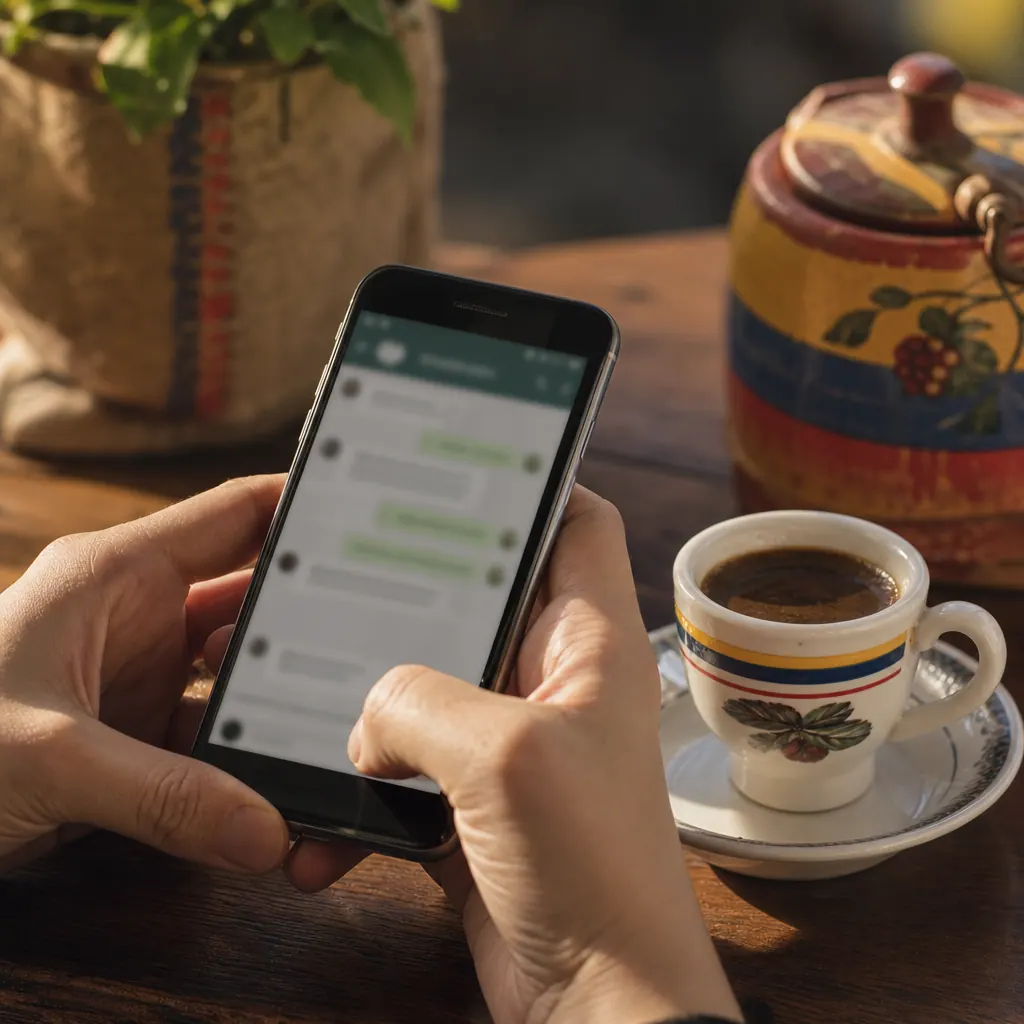
When Including Your Number Actually Makes Sense
There are legitimate cases where a visible number is the right call.
If you have a dedicated sales number — a second SIM used only for marketplace activity — the privacy question is already solved. Business WhatsApp accounts have better tools for high volume too: quick replies, labels, away messages. If you run any kind of ongoing selling operation, this setup just makes sense.
High-value items are another case. Cars, motorcycles, professional equipment — for these, you want buyers who are committed enough to message directly, not just click a form. A visible number signals "I'm a real person, reach me." That can actually help qualify buyers and discourage the purely curious.
And if the platform you're using doesn't have built-in contact routing at all, you don't have a choice. That's increasingly uncommon on modern platforms, but some older Colombian classifieds sites still route everything through email or require a public number by default.
The Smarter Default for Most Private Sellers
Most private sellers don't fit those categories. They're selling a used appliance, a piece of furniture, a car they're no longer using — one or two listings at a time, from their personal phone. For that use case, structured contact makes more practical sense than a public number.
On Colombia Move, when a buyer clicks the contact button on a listing, the message routes through a structured flow. The buyer still reaches you on WhatsApp — that's the destination — but the first touch goes through the platform, which adds just enough friction to filter out the purely passive. Someone who navigates a contact button before messaging is, in practice, more likely to follow through than someone who copied a number from listing text and fired off a one-word question.
Keep Reading
Once the messages start coming in, response speed matters more than most sellers realize. Get practical WhatsApp templates and a buyer-qualifying workflow:
How to Respond Fast to Buyers Without Losing Your Day →There's a secondary benefit: the conversation starts on record. For buyers and sellers both, a thread that begins inside a platform has a small but real layer of accountability. It's not a legal protection, but it's a reference point if something goes wrong.
If you want to skip the number question entirely: post on Colombia Move without including any number in the listing text, and let the contact button do the work. Serious buyers click through. Bots and harvesters scrape visible text — they typically don't navigate a contact form. You can list for free at colombiamove.com/publicar.
The Secondary SIM Option (Worth It If You Sell Regularly)
If you want WhatsApp visibility without the privacy tradeoff, a secondary SIM is cheap in Colombia. Claro, Tigo, and WOM all sell prepaid chips for around COP 5,000–10,000 at any corner tienda. Register a WhatsApp account on it, use it only for marketplace selling, and that's the number that goes into listings.
The downside is managing two phones or swapping SIMs, which gets old fast if you're not doing regular volume. For a one-off sale, it's probably not worth the effort. For someone who sells consistently — electronics upgrades, side-hustle services, furniture between moves — the separation pays for itself in reduced spam and a cleaner inbox.
The other thing I'd add: if you ever get to a point where listing activity is meaningful enough to warrant a business WhatsApp account, the secondary number setup is the natural precursor. The habits you build with a dedicated selling number scale cleanly.
A Word on Scams Targeting Sellers
Most marketplace safety advice focuses on protecting buyers. Sellers face their own version. When you post a public number, you'll get messages from people posing as buyers who want to pay via bank transfer and send a "confirmation link" to click, or who offer to send a courier before payment clears. These schemes specifically target sellers because a visible number signals both that you have something to sell and that you're directly reachable.
Structured contact routing doesn't make these disappear entirely, but it adds friction for anyone systematically harvesting seller data from listing text. And it keeps your number out of the initial layer of scraped data that feeds some of these targeting lists.
Keep Reading
Recognize the specific scam patterns targeting sellers and buyers in Colombia before they hit your inbox:
How to Avoid Marketplace Scams in Colombia →FAQ
❓ Is it safe to put my personal WhatsApp number in a Colombian marketplace listing?
For most casual sales, the practical risk is low. But you'll receive more spam and your personal profile becomes visible to anyone who messages you. If you're listing housing — especially from a property you live in — a secondary number or platform-routed contact is a smarter choice.
❓ Do Colombian buyers prefer WhatsApp to in-platform messaging?
They prefer WhatsApp as the communication tool — but they don't specifically need your personal number visible. Most buyers will use a "contact seller" button that routes to WhatsApp. The destination matters more than the path.
❓ What happens to my number after I delete the listing?
Once it's been visible in the public text of a listing, it exists in caches, Google's index, and potentially scraper databases even after you take the ad down. For one-off sellers this rarely matters. For regular sellers, the exposure compounds over time.
❓ Can I list on Colombia Move without showing my personal number publicly?
Yes. Colombia Move's contact system routes buyers to you without requiring your number in the listing text. Buyers still reach you via WhatsApp — the platform handles the routing. You don't need to display a number at all to be contactable.
❓ What's the best setup for someone who sells regularly?
A dedicated WhatsApp number on a prepaid SIM (COP 5,000–10,000 at any carrier) used only for marketplace activity. Your personal number stays private, spam stays isolated, and your seller conversations are easy to track separately.
What's Your Approach?
Found a WhatsApp setup that keeps the spam manageable without cutting off real buyers? Or switched to platform-routed contact and noticed a difference in the quality of inquiries? Share it in the comments — the more specific the better. And if you have questions about selling in Colombia more broadly, the community at colombiamove.com/comunidad is a good place to ask.


Comments
Loading comments...
Checking sign-in status...