
Buying a Used Phone in Colombia: IMEI Checks, Payments, and Red Flags
Don't hand over cash for a secondhand phone in Colombia until you verify the IMEI, check for account locks, and test the hardware in a safe public place.
IDIOMA DEL ARTÍCULO
Mostrando idioma original
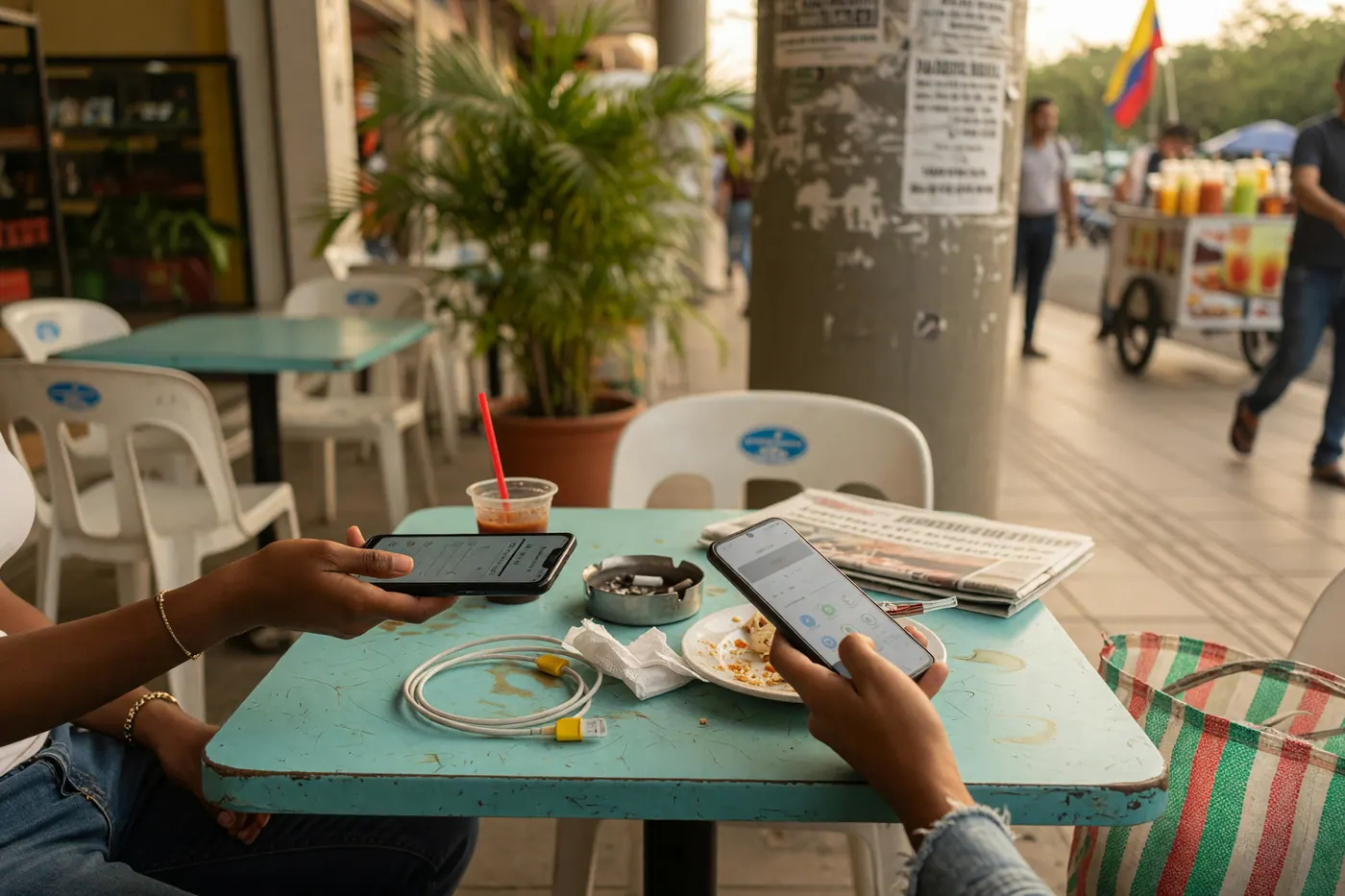
Buying a used phone in Colombia can save you hundreds of dollars, but if you skip the basic checks, you might end up with a high-tech paperweight. I’ve seen expats and locals alike hand over cash for a pristine smartphone, only to find out an hour later that it’s blocked by a Colombian carrier or permanently locked to a stranger’s account.
- IMEI Check: Always dial *#06# and verify the number against Colombia's official IMEI database before paying.
- Account Locks: Never buy a phone unless the seller signs out of their Apple/Google account and resets the device in front of you.
- Payment: Meet in a secure, public place and do not pay the full amount until you have physically inspected the phone and tested your own SIM card.
1. The Non-Negotiable IMEI Check
In Colombia, mobile carriers strictly enforce a national database of reported, lost, or stolen devices. If a phone’s IMEI (International Mobile Equipment Identity) is blacklisted, it simply will not connect to a local network.
Before you even agree to meet, ask the seller for the IMEI. Once you have the phone in your hands, dial *#06# on the keypad to confirm the number on the screen matches the one the seller gave you, as well as the number printed on the SIM tray or original box.
Run that number through the official IMEI Colombia lookup website (imeicolombia.com.co). If it shows up as reported or blocked, walk away immediately. An IMEI check does not guarantee the phone is 100% legally clean forever, but it is your absolute first line of defense. If the phone is an imported model, also checking its homologation status with the CRC (Comisión de Regulación de Comunicaciones) is a smart move—unapproved foreign models may create network activation problems down the line.
2. Account Locks and Factory Resets
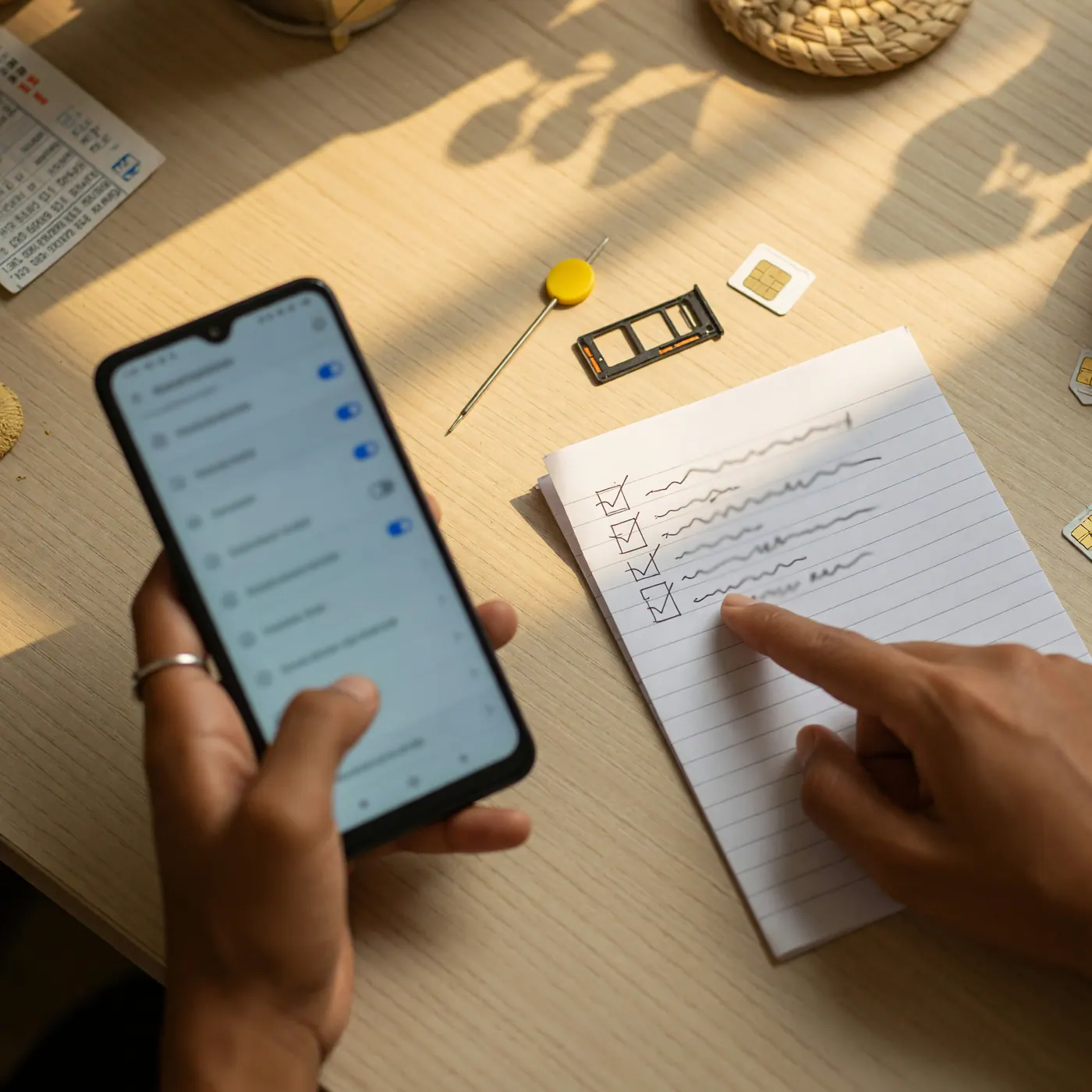
A physically perfect phone is useless if it suffers from a software lock. For iPhones, Activation Lock is the biggest hurdle. If the device is still tied to the previous owner’s Apple Account, you won’t be able to activate it—and Apple will not bypass this for a secondhand buyer.
Androids carry a similar Google account protection. The rule is simple: never accept a phone that is already sitting on the home screen with someone else’s apps. Ask the seller to sign out of their accounts, turn off tracking features, and perform a full factory reset right in front of you. Only hand over the money when the phone restarts to the initial setup screen and you can progress past the Wi-Fi step without it asking for the previous owner’s password.
3. Hardware, Battery, and Network Testing
Once you know the phone isn’t blocked or locked, it’s time to test the hardware. Bring your own SIM card (or be prepared to scan an eSIM QR code) and make a test call. Connect to a local Wi-Fi network and browse a webpage.
For iPhones, check the Battery Health in Settings. A degraded battery isn’t necessarily a dealbreaker, but it is a legitimate bargaining chip. Don’t expect the seller to knock off the exact price of an official Apple replacement, but factor a tired battery into your offer.
Beyond that, run through a quick physical checklist: test the front and rear cameras, play a video to check the speakers, plug it into a charger (bring a portable power bank), and verify that Face ID or Touch ID registers correctly. A cracked screen, a stiff SIM tray, or a charging port that needs persuading are all negotiating points.
4. How to Handle the Meetup and Payment
The logistics of the transaction are just as important as the phone itself. Always meet in a well-lit, secure public place—a busy shopping mall or a coffee shop. Avoid street corners, private apartments, or agreeing to a rushed delivery where a courier drops off a sealed box.
I highly recommend verifying a Colombian seller before paying a deposit. Generally, avoid sending money upfront. If a seller insists on a large deposit to hold the phone, pass on the deal. Full payment should only happen after you’ve completed the physical inspection, confirmed the IMEI consistency, and verified the account unlock.
5. Spotting the Red Flags (and Where to Look Instead)
If a deal feels off, it usually is. A price that is drastically lower than the market average is a massive red flag. The same goes for sellers who refuse to share the IMEI beforehand, or who try to sell you a sealed-box phone without an original purchase invoice.
Take the time to check the seller’s profile before you agree to meet. Look at their listing history, how they respond to questions, and whether they’ve included clear photos of the device powered on.
If you’re struggling to find trustworthy options, you aren’t alone. Colombia Move’s electronics section—specifically cell phones, computers, and tech accessories—shows a notable supply gap, with buyer demand outpacing available inventory. Keep a close eye on the electronics classifieds in Colombia so you can jump on legitimate listings as soon as they appear.
Frequently Asked Questions
❓ How do I check a used phone’s IMEI in Colombia?
Dial *#06# to display the IMEI, compare it to the number on the SIM tray or box, then run it through imeicolombia.com.co before you pay. If the site shows the device as reported or blocked, do not buy it.
❓ Is it safe to buy a used iPhone in Colombia?
Yes, but only after you verify the IMEI, confirm Activation Lock is fully removed, and check battery health in Settings. Never walk away with an iPhone that is still signed into the previous owner’s Apple Account.
❓ What should I test before paying for a secondhand phone?
Test the power, screen responsiveness, front and rear cameras, speakers, charging port, Wi-Fi connection, and your own SIM or eSIM. Ask the seller to run a factory reset in front of you so no old account lock carries over to your setup.
❓ Should I send a deposit for a used phone?
Generally avoid it, or keep it minimal if holding a unit is genuinely necessary. Never send the full amount before you have physically inspected the phone and confirmed it works on a Colombian network.
❓ What is a red-flag price for a used phone in Colombia?
There is no single safe threshold, but pricing far below the market rate combined with pressure to pay fast or a refusal to show the IMEI is a strong warning sign. Walk away from any deal where the seller won’t let you test the device first.
❓ What proof should a seller show?
A trustworthy seller should show a matching IMEI and serial number, a clear chat or ownership trail, and ideally an original purchase invoice. They should also be willing to sign out of all accounts in your presence before you hand over payment.
❓ Can I use a phone imported from another country in Colombia?
Possibly, but check network band compatibility and the device’s homologation status with the CRC before buying. Even an unlocked imported phone can face limited carrier support or activation issues if it was not approved for local networks.

Comments
Loading comments...
Checking sign-in status...