
Renting a Finca Long-Term in Colombia: Leases, Mayordomo Rules & Rural Living
A country lease of six to twelve months is not a weekend booking or an urban apartment lease. Learn how rustic leases work, who employs the mayordomo, and how to check the owner before paying.
IDIOMA DEL ARTÍCULO
Showing original language
A six-month finca stay looks like a weekend rental with a longer calendar. It is not. Once you stay for months, three questions decide whether the experience is calm or expensive: which legal regime governs the lease, who employs the person who lives on the property, and who is responsible for water, septic and fences. If you only want a few nights, start with our weekend finca rental guide. If you want a real country base, read on.
General information only, not legal advice on a specific property. Have a Colombian lawyer review your actual matrícula and contract.
Quick answer: classify the property first. If it is a predio rústico, the Civil Code rules (articles 2036–2044) apply, and Ley 820's CPI rent cap does not. Then put the term, monthly rent, mayordomo's employer, water source and repair split in writing, and confirm the owner on an official registry certificate before paying anything.
Urban housing lease vs. predio rústico
Ley 820 de 2003 regulates leases of urban property used as housing. A listing titled "finca" or "casa campestre" is not automatically outside that law. The test is whether the property is urban housing, so a country house inside urban land can still be an urban lease.
For a true predio rústico, the special rules are Civil Code articles 2036–2044, plus the general lease rules they do not displace. The practical differences:
- Rent increases. Ley 820 article 20 lets an urban-housing landlord raise rent only after 12 months at the same price, by no more than 100% of the previous calendar year's CPI increase, and only with the required notice. That CPI rule is not the default cap for a rustic lease, so negotiate any increase into the contract.
- Payment schedule. If the contract is silent, rustic rent is payable yearly, while urban rent is payable monthly. Insist on a written monthly amount, due date and currency.
- No end date. If no term is fixed, article 2043 requires one year's notice, counted from the anniversary of delivery, unless the parties agree another rule.
- Holdover. After a fixed term ends, tacit rural renewal lasts only long enough to finish work already started and gather pending crops. It is not the three-month urban-style holdover.
- Subletting. You may not assign the lease or sublet unless the landlord expressly allows it.
One more gap worth knowing: a later buyer for value must respect a lease when article 2020 says so, including a lease made by public deed. A private document does not get that same protection. That does not make a private lease void; it is a protection gap you should weigh if the owner might sell. Mortgage creditors are a stated exception.
What goes in the lease and the delivery inventory
Unrecorded condition works against you. If the delivery condition is not written down, you are treated as having received the property in ordinary working condition unless you prove otherwise. On return, you must show that damage was not caused by you, your guests, your dependents or subtenants. So walk the property with the owner and record everything: buildings, fences, tanks, pumps, gates, animals.
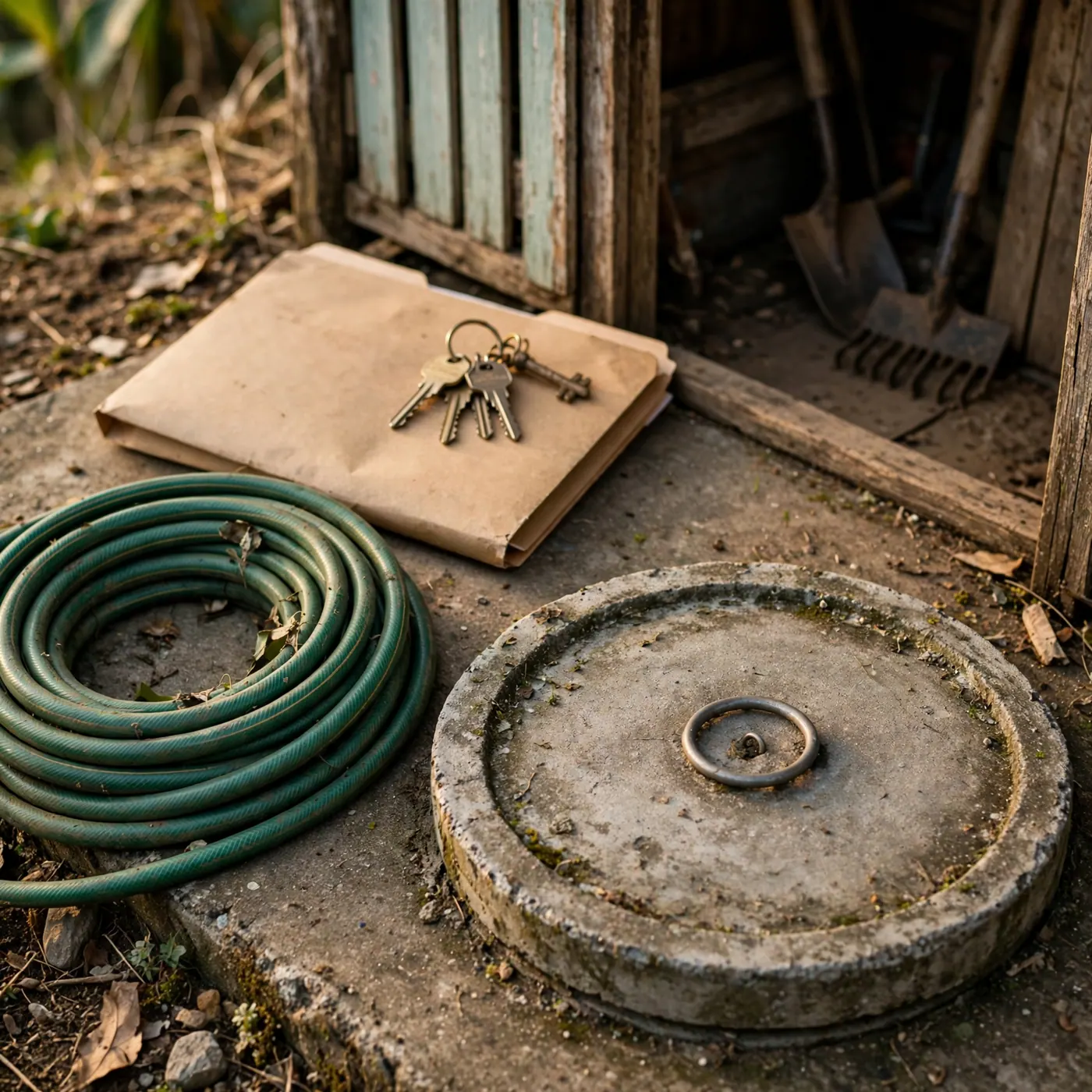
Repairs are the next fight. Locative repairs charged to the tenant are those local custom puts on tenants, plus ordinary deterioration caused by you or your dependents; the Code's examples include fences, drains and ditches. Septic, pump and water-system work is where I would not trust custom. Name who pays and who calls the technician, in the contract.
A few rustic-specific defaults to override or accept consciously:
- Woodland. Without a stipulation, you may use woodland only for cultivation and the benefit of that same property. You cannot cut it to sell timber, firewood or charcoal.
- Livestock. If animals are part of the lease and the contract says nothing else, the tenant keeps the animals' profits and must leave an equal number of the same ages and qualities, or pay the difference.
If you are only caring for a property for free, that is a different contract. See our explainer on the comodato. And if you are weighing renting against buying, our comparison of fincas, lots and country houses near Medellín covers that post's own scope. You can also browse the housing section to see how listings are described.
The mayordomo: who is the employer?
This is where foreigners get surprised. Under the Código Sustantivo del Trabajo, a work contract exists when there is personal service, continued subordination and pay, whatever the paper is called. Personal work is presumed to be a work contract, and the code applies in all of Colombia regardless of nationality.
So the label "caretaker agreement" protects no one. What matters is who pays and directs the work. Three lawful patterns work in practice:
- The owner stays the employer. The lease says so, and you do not give orders or pay wages.
- You hire the caretaker directly. Then you are the employer, with everything that implies. Do it in writing and properly.
- A contractor supplies the worker. The contractor is the employer.
Merely living on a property whose owner already employs the caretaker does not, by itself, make you the employer. Article 34 solidarity is also not an automatic debt of every foreign tenant; it is a fact-specific duty of a beneficiary who contracted out work connected to that beneficiary's ordinary activity, as the Corte Suprema explained in SL4873-2021. My honest advice: do not pay wages in cash "to help" while the owner still calls the person an employee. That muddies who the employer is, and it is the kind of thing that comes back later. The lease should state who employs and pays the mayordomo.
Water, septic and power
Rural water is not as simple as "there is a stream." Using public water generally requires a concession from the environmental authority, except ministry-of-law use. That free use covers drinking, bathing, watering animals and similar washing while the water runs in a natural channel, without a diversion, machine or apparatus. A pipe, pump or household derivation is a concession case, not the free use (Decreto 1076 de 2015 and Decreto-ley 2811 de 1974).
So ask three things before signing: is the supply a concession, a community aqueduct, or only ministry-of-law use? Who holds the concession or operates the system? Who pays and repairs it? Do not assume you must transfer the owner's concession, and do not assume drinking from a stream is always illegal; the derivation exception is what matters.
Then assign septic and pump work in the contract. Equipment for outages and low pressure is a separate question; our water and power backup guide covers that, but it does not settle the legal test above.
Foreign tenant paperwork
Owners or administrators of fincas who rent or lodge foreigners commit a listed infraction under Resolución 2357 de 2020 (numeral 20) if they do not inform in writing within five business days after formal delivery of the property. Migración Colombia's SIRE registration and use are free, and the service page gives up to 3 business days to accept or reject an inscription. You are the person reported, not automatically the person who files. Ask the owner for confirmation, and read our SIRE reporting guide.
One sentence worth underlining: a lease is not a visa. Your immigration status is separate, and renting a finca does not give you a residence permit.
A holiday weekend is not a lease
In 2026, Ley 51 de 1983 moves the paid rest for 11 November to the following Monday, and Banco de la República lists 16 November 2026 as the Cartagena independence bank holiday. A short stay over that long weekend is lodging. It does not create a rustic term, a mayordomo relationship or Ley 820 rights. If that is what you need, browse short-term stays in Cartagena instead.
Check the owner and the property
Deposit fraud is the real risk with country rentals. Before paying anything:
- Order the certificado de tradición y libertad on the official SNR portal, using the registry office and matrícula inmobiliaria, and confirm the domain is certificados.supernotariado.gov.co.
- Match the registered owner to the person asking for money, and never send a deposit to an account that does not match.
- Visit in daylight and inventory buildings, fences, tanks and animals.
- Keep a payment trail, and get the mayordomo arrangement in writing.
Frequently Asked Questions
❓ Does Ley 820 cap the rent on a finca?
The CPI rule in Ley 820 applies to urban housing leases, not automatically to every finca. A rustic lease uses the agreed rent and the Civil Code defaults, so check how the property is classified before relying on any cap, per the statute text accessed November 2026.
❓ What happens if the finca contract has no end date?
Article 2043 of the Civil Code requires one year's notice, counted from the anniversary of delivery, when no term is fixed. The parties may agree a different rule, so write the term and notice period into the contract (source: Código Civil, Senado, accessed November 2026).
❓ Who employs the mayordomo, the owner or the tenant?
The employer is whoever pays and directs the caretaker's personal work, whatever the paper is called. Living on a property whose owner already employs the caretaker does not by itself make you the employer, so have the lease name who is (source: Código Sustantivo del Trabajo, accessed November 2026).
❓ Does article 34 make a foreign tenant liable for the owner's caretaker?
Not automatically. Article 34 solidarity is a contractor rule tied to the beneficiary's ordinary activity, and the Corte Suprema requires a beneficiary–contractor relationship. Your facts matter, so ask a labor lawyer if you direct the caretaker's work.
❓ Does the foreign tenant file SIRE?
The owner or administrator must inform Migración Colombia in writing within five business days after formal delivery of the property. Ask for proof of that report, and remember a lease is not a visa (source: Resolución 2357 de 2020, accessed November 2026).
❓ Is the stream or veredal pipe free to use?
A pump, pipe or household derivation is not the free ministry-of-law use, which excludes diversions, machines and apparatus. Ask who holds the concession or operates the community system, and who pays for repairs (source: Decreto 1076 de 2015, accessed November 2026).
❓ How do I check the landlord before I pay?
Order the certificado de tradición y libertad on the official SNR site, using the registry office and matrícula inmobiliaria, and match the registered owner to the person asking for money. Confirm the domain is certificados.supernotariado.gov.co.


Comments
Loading comments...
Checking sign-in status...