
Renewing Your Colombia Visa Before It Expires: The One-Day-Gap Trap
Many expats assume a salvoconducto protects their residency path during a visa renewal. Under Resolution 5477, a salvoconducto period does not count toward residency continuity — learn what the official rules actually say before your visa expires.
IDIOMA DEL ARTÍCULO
Showing original language
Many expats assume that as long as they apply for their visa “renewal” before expiration, or get a salvoconducto (safe conduct) to stay legally, their path to permanent residency is safe. I used to think the same thing when I first dealt with the immigration system here. But this is a dangerous myth.
There is a high-stakes, under-explained rule in Colombian immigration law that catches foreigners off guard every single month. If you let your current Migrant (M) visa expire before the new one is approved, you might fall into the one-day-gap trap.
Quick Answer:
- There is no “automatic renewal” in Colombia. Every application is a new request.
- Under Resolution 5477 of 2022, a salvoconducto does not count as visa continuity.
- A gap between visas means that period does not count toward your R-visa continuity — even a brief salvoconducto can affect your path to permanent residency.
- Cancillería recommends starting your subsequent visa application at least 1 to 2 months before expiry — earlier for complex cases.
If you need a refresher on the basics of the immigration system before getting into the weeds of renewals, check out our complete Colombia visa guide for 2026.
The Core Rule: How Salvoconducto Time Affects Your Residency Path
The Colombian government is incredibly strict about uninterrupted time. Under Article 9 of Resolution 5477 of 2022, a salvoconducto issued by Migración Colombia does not preserve your visa continuity.
If you are currently holding an M visa and building up your 2, 3, or 5 years toward a Permanent Resident (R) visa, any gap in your visa status means that period does not count toward your R-visa continuity accumulation. A salvoconducto protects you from fines and keeps you regular in Colombia, but it is not a visa and does not preserve your accumulation of time toward R eligibility.
The “One-Day-Gap Trap” Explained
Let’s look at a common scenario. Your M visa expires on a Tuesday. The Ministry of Foreign Affairs approves your new visa on Wednesday. To stay completely legal on Tuesday, you proactively applied for and received a salvoconducto.
You didn’t break the law. You won’t be fined at the airport. But that salvoconducto period does not count toward your R-visa continuity. Depending on how much time you had accumulated toward an R visa, this kind of gap can significantly affect your eligibility timeline. Consult Cancillería about your specific accumulated time if this has happened to you.
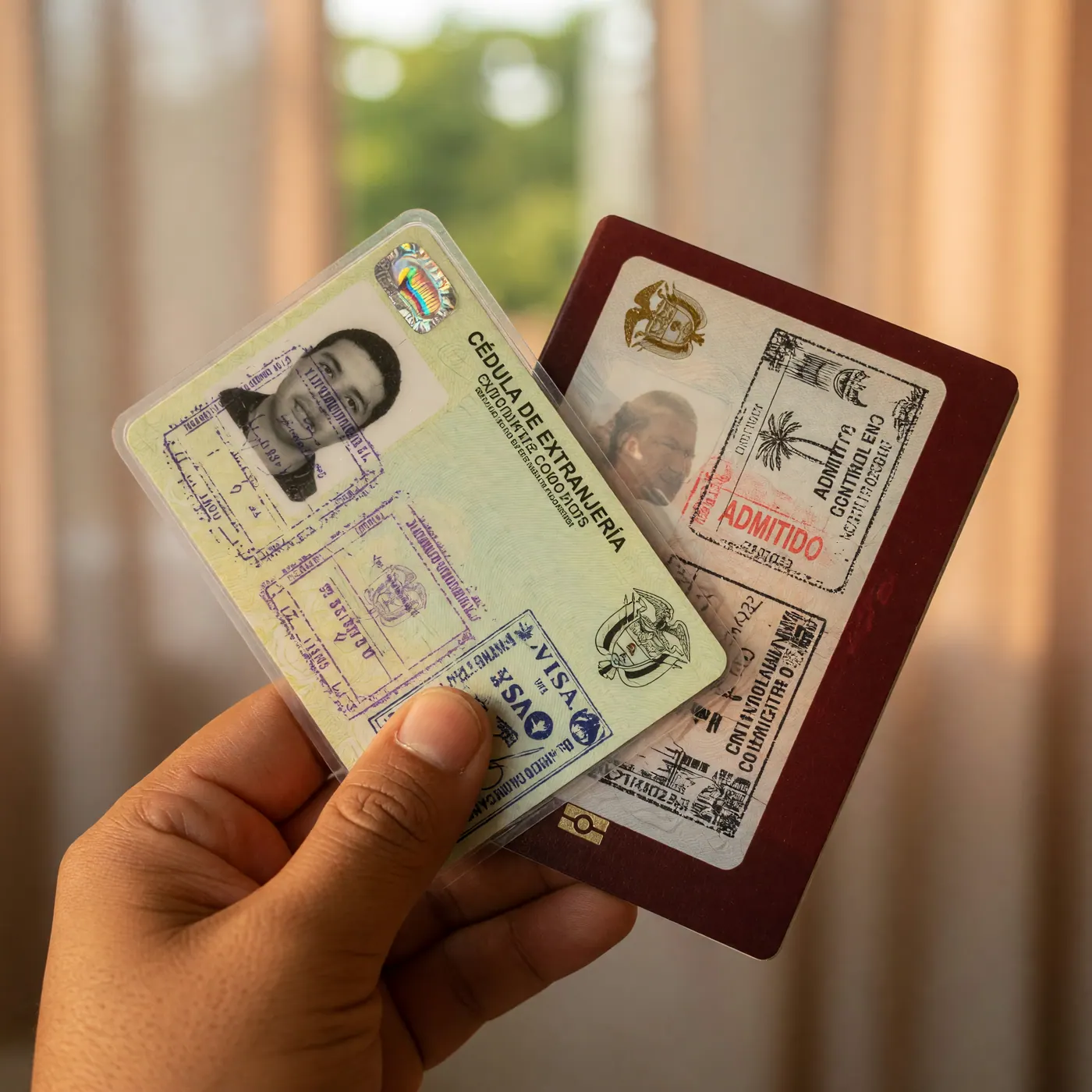
Submitting an Application is Not Enough
I often hear people say, “I submitted my application, so I’m legally covered.” This is entirely false.
Cancillería is clear on this point: filing a visa application does not automatically keep you in valid migratory status while it is being processed. The processing window does not count toward your residency time. If your visa expires while you are waiting for a decision, you need to apply for a salvoconducto (SC-2).
A salvoconducto is a temporary authorization that keeps you regular in Colombia — but it is not a visa and does not continue your residency accumulation. For current fees, check Cancillería’s official costs page (cancilleria.gov.co) at the time of your application, as fees are set annually and subject to change.
The Action Plan: How to Avoid the Trap
The only way to protect your timeline is to ensure your new visa is approved and issued before your current one expires. Here is how you do it:
- Start early — Cancillería recommends at least 1 to 2 months before expiry: Gather your documents well in advance. The visa authority has up to 30 calendar days to issue a decision after you pay the study fee, but requerimientos (requests for more documents) pause that clock.
- Accept the “Subsequent Application” reality: It is not a simple renewal. You must prove you meet all the financial and legal requirements from scratch.
- Get help if needed: Honestly, skip the DIY route if your case is complex or your Spanish isn’t great.
Once your visa status is securely renewed, you will likely be looking to sign a new lease or upgrade your living situation. According to active listings on Colombia Move (June 2026), there are currently 81 active housing (vivienda) listings generating over 13,400 views—showing massive demand for long-term rentals among expats securing their residency.
2026 Update: The R Visa Transfer Deadline
If you managed to get a Permanent Resident (R) visa before October 2022, you might think none of this applies to you. Think again.
Per Resolution 9316 of 2024, older R visa holders must complete a transfer (traspaso) to the current digital visa system. Contact Cancillería or Migración Colombia directly to confirm the current transfer deadline and process — this is a time-sensitive requirement that has been updated since initial publication.
Frequently Asked Questions
❓ Does a salvoconducto preserve my visa continuity for residency?
No. Per Cancillería, a salvoconducto does not count toward continuity for Resident (R) visa accumulated-time calculations (Resolution 5477 of 2022, Article 9). A gap on salvoconducto may affect your path to permanent residency — if you are building time toward an R visa, consult Cancillería about your specific accumulated continuity.
❓ How early should I start my Colombia visa renewal?
Cancillería recommends starting your subsequent visa application at least 1 to 2 months before your current visa expires. The visa authority has up to 30 calendar days to respond once the study fee is paid — and additional document requests (requerimientos) can extend that window. Start early to give yourself a buffer, particularly if your case is complex or documents need apostilles or official translations. (Per current Cancillería guidance, accessed June 2026.)
❓ Does simply submitting my visa application keep me legal?
Filing a visa application does not automatically keep you in valid migratory status in Colombia. If your visa expires during the processing window, you need to apply for a salvoconducto (SC-2) to remain regular in the country. Do not assume submitting an application extends your legal stay — check your immigration status directly with Cancillería or Migración Colombia (see the official visa portal for current 2026 requirements).
❓ How long does a salvoconducto last in Colombia?
Per Cancillería’s FAQ, a permanence salvoconducto can last up to 30 calendar days, with a possible special extension of up to 30 more (accessed June 2026). Contact Migración Colombia to confirm the exact duration and conditions for your specific case.
❓ Can I work in Colombia while my visa is being processed?
Work authorization in Colombia is tied to your visa category, not the salvoconducto itself. A salvoconducto is not a visa and does not create or carry over work authorization from a previous visa (per Resolution 5477 of 2022). Confirm your specific work rights with Cancillería or Migración Colombia — particularly if your previous visa included work permission.
❓ What is the deadline for transferring older Resident (R) visas?
R visa holders must request a transfer every five years per Cancillería. If your R visa was issued before the current digital system (October 2022), check Cancillería for current transfer deadlines — these were updated under Resolutions 9316 and 12509 of 2024. Contact Migración Colombia to confirm the current traspaso process.
❓ What fees should I budget for a visa or salvoconducto?
Check Cancillería’s official costs page (cancilleria.gov.co) for current fees at the time of your application. Fees are set annually, paid in COP, and subject to change. The visa process typically involves a study fee paid upfront and an issuance fee once approved — check the official page for current amounts (do not rely on figures quoted in older articles or social media).


Comments
Loading comments...
Checking sign-in status...