
Import a Car to Colombia as a Foreigner: The Honest Guide
Bringing your car to Colombia is a common expat dream, but strict customs laws make it a bureaucratic nightmare. Here is the honest truth about importing vehicles.
IDIOMA DEL ARTÍCULO
Showing original language
The romantic dream of driving your own car down to Colombia or shipping your trusty SUV from home is a common one among expats. You picture yourself cruising through the Andes, windows down, without a care in the world. But then you hit the cold, hard reality of Colombian customs laws. Honestly, unless you fall into a few very narrow categories, bringing your daily driver from overseas is going to be a bureaucratic nightmare—or flat-out illegal.
Quick Answer: Can I bring my car to Colombia? If you want to see what vehicles are available to buy locally right now, you can browse vehicles on Colombia Move — no import paperwork required.
- Used cars: Strictly banned for permanent import under the Andean Automotive Agreement (unless you are a diplomat).
- New cars: Allowed, but must be 0 km and current model year. Expect to pay 60% to 80% in taxes and duties.
- Classic cars: Allowed if 35+ years old and certified by the Automóvil Club de Colombia.
- Tourists: Can bring a foreign-registered car temporarily for up to 6 months (extendable for another 6 months).
The Cold, Hard Reality of Colombian Customs
If you were hoping to pack up your current vehicle and ship it down, you need to pivot your plans. The DIAN (Dirección de Impuestos y Aduanas Nacionales) strictly enforces a ban on the permanent importation of used passenger vehicles for non-diplomats. This rule is rooted in the Andean Automotive Agreement, designed to protect local manufacturing and regulate the national fleet.
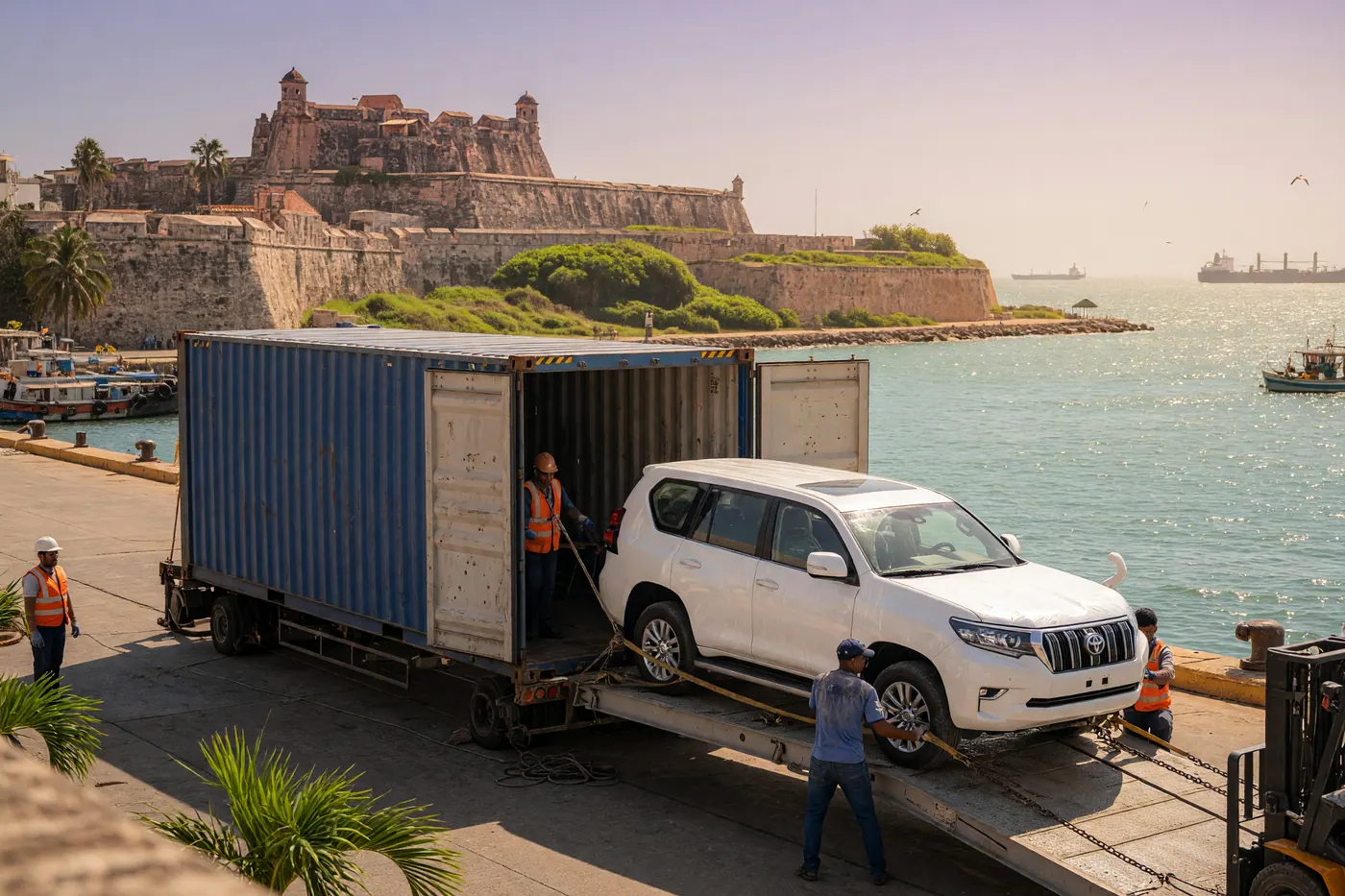
Do not fall for the “household goods” shipping workaround. You cannot stuff a used sedan into a shipping container and claim it as part of your moving boxes. Trying to bypass customs this way will result in immediate vehicle seizure by the DIAN, and you will lose both the car and the steep shipping fees you paid to get it there.
The Only 3 Exceptions for Importing a Car
While the general rule is a hard no, there are three specific scenarios where a foreigner can legally import a vehicle permanently:
- Brand-New Vehicles: You can import a car, but it must be absolutely brand-new. That means 0 km on the odometer, the current model year, and it must comply with Euro 4+ emissions standards.
- Classic Cars: If you are an automotive enthusiast, there is an exception for vintage rides. The vehicle must be at least 35 years old since its manufacture date and must obtain official certification from the Automóvil Club de Colombia (ACC).
- Diplomatic Vehicles: Reserved exclusively for embassy staff and foreign diplomats operating under strict Ministry of Foreign Affairs quotas.

The True Cost of Importing a Brand-New Vehicle
Even if you decide to buy a brand-new car abroad and ship it, prepare your wallet. Standard passenger car imports face a brutal tax breakdown. You will be hit with a 35% import duty, a 19% VAT (IVA), and an 8% to 16% consumption tax (Impoconsumo).
When you add it all up, you are looking at a 60% to 80% markup on the vehicle’s CIF (Cost, Insurance, and Freight) value. Furthermore, shipping freight costs fluctuate depending on your port of origin—shipping from Miami will cost differently than from Houston or New York. By the time the vehicle clears a Colombian import port, you could have easily purchased a quality vehicle locally for less hassle.
Decreto 0595 de 2026 (INPIMHEL): Not a Personal Import Loophole
You may have heard that Colombia's 2026 EV incentives can slash import costs. The reality is more complicated. Decreto 0595 of June 11, 2026 established the INPIMHEL instrument and the RTE-E regime, which provides a 0% tariff and assembly-plant incentives for electric and plug-in hybrid vehicles. However—and this is critical—the decree applies strictly to industrial assembly companies (personas jurídicas) that invest in local CKD/SKD manufacturing operations in Colombia. It is not a loophole for individual expats to import their personal EVs at reduced cost. If you are an individual hoping to bring your own electric car from abroad, this decree does not help you.
In short, there is no current legal pathway for most individual expats to permanently import any used vehicle—EV or otherwise. For a new EV, the full 35% tariff, 19% VAT, and 8%–16% consumption tax still apply to individuals. The most practical route if you want an electric or hybrid vehicle in Colombia is to buy one from a local dealer or through the second-hand market once you are settled here.
Temporary Tourist Imports for Road Trips
What if you just want to drive through Colombia on a Pan-American highway adventure? Foreign-registered tourist vehicles can enter the country temporarily without paying permanent import taxes. Per DIAN rules (S1, Abecé de Importación Temporal), you can obtain a Temporary Import Permit for up to 6 months, extendable for another 6 months if your tourist stay allows. The permit is strictly tied to the duration of your visa or tourist entry stamp—it cannot exceed it. Once you leave Colombia, the vehicle must leave with you.
If you overstay this permit—or if you transition from tourist to resident status—your vehicle's temporary import authorization decays. Per DIAN Concepto 004591 de 2026, a tourist who exceeds 183 days in a consecutive 365-day period loses tourist vehicle import eligibility and must export the car immediately. Failing to do so gives the DIAN the right to seize and permanently confiscate (aprehensión y decomiso) the vehicle under Ley 2586 de 2026. It is not worth the risk.
Keep Reading: Once you transition from tourist to resident, you will also need to swap your foreign driver's license for a Colombian one. Our guide on how to get or renew a Colombian driver's license walks you through every step. Also, see our guide on Colombia tourist entry rules if you're planning a multi-month road trip.
Why Buying Locally is the Only Sensible Route
For the vast majority of expats moving to Colombia, importing a car is simply not worth the headache, the exorbitant taxes, or the risk of seizure. The local market has plenty of options, even if prices run higher than what you might be used to back home.
According to Colombia Move supply data (June 2026), there are currently just 4 active vehicle listings across the entire vehicles section—well below the demand target of 37. Local scarcity is exactly why so many expats initially look into importing, but the math rarely works out in your favor. Instead of fighting customs, your best bet is to read up on how to buy a car or motorcycle in Colombia locally once you have your Cédula de Extranjería. If you're looking for two wheels, we also have a dedicated guide to help you buy a used motorcycle.
Frequently Asked Questions
❓ Can I import my used car to Colombia as a foreigner?
No, the permanent import of used passenger vehicles is strictly prohibited for non-diplomats under the Andean Automotive Agreement. You must buy locally or import a brand-new, 0 km vehicle instead.
❓ What is the minimum age for a classic car import in Colombia?
A vehicle must be at least 35 years old since its manufacture and obtain official certification from the Automóvil Club de Colombia (ACC) to be imported. This is one of the few exceptions to the used car ban.
❓ How much are the import taxes on a new car in Colombia?
As of 2026, standard passenger cars face a 35% import duty, 19% VAT, and an 8% to 16% consumption tax, adding roughly 60% to 80% to the vehicle’s declared CIF value. This makes importing significantly more expensive than buying locally.
❓ Can I bring my car to Colombia temporarily on a tourist visa?
Yes. Per the DIAN (Abecé Importación Temporal, 2026), a Temporary Import Permit lets you bring a foreign-registered vehicle for up to 6 months, extendable for another 6 months, as long as your tourist stay allows. The permit is tied to your visa duration. Once you leave, the vehicle must leave with you.
❓ Does Decreto 0595 de 2026 (INPIMHEL) let me import an electric vehicle tax-free?
No. Decreto 0595 of June 11, 2026 (INPIMHEL) provides 0% tariff benefits only to registered industrial companies that establish local electric and hybrid vehicle assembly plants (CKD/SKD manufacturing)—not to individual expats. If you want an EV in Colombia, you will need to buy one locally from a dealer or second-hand market.
❓ Can I drive my temporarily imported car after getting a Colombian resident visa?
No. Once you obtain a resident visa—or exceed 183 days of stay in any 365-day period—you lose tourist status, and your Temporary Import Permit decays immediately under DIAN Concepto 004591 de 2026. You must export the vehicle right away. Failing to do so can result in permanent confiscation (aprehensión y decomiso) by the DIAN under Ley 2586 de 2026. If you plan to stay long-term, budget to buy a vehicle locally instead.





Comments
Loading comments...
Checking sign-in status...