
Bringing Household Goods to Colombia: Customs Rules for Movers
Relocating to Colombia involves strict DIAN customs rules. Here is how menaje domestico, unaccompanied baggage, taxes, and timelines work.
IDIOMA DEL ARTÍCULO
Showing original language
Deciding whether to pack your life into a 20-foot shipping container or arrive in Colombia with just three oversized suitcases is one of the most critical financial forks in the road for any relocating foreigner or returning resident. While the dream of unlocking a sea container full of your familiar sofa, memory-foam mattress, and trusted kitchen gear is comforting, Colombian customs regulations enforced by DIAN (Direccion de Impuestos y Aduanas Nacionales) are strict, precise, and heavily time-bound.
The DIAN Menaje Domestico Rulebook: Who Qualifies and Key Timelines
Under Colombian customs law (specifically Decreto 1165 de 2019), full household relocations fall under the special regime known as menaje domestico (household effects). This legal category allows qualifying individuals to import their personal furniture, major appliances, and domestic items without paying standard commercial import taxes or obtaining a commercial import license.
However, DIAN enforces clear eligibility requirements that you must prove before your cargo can clear Colombian customs:
- 24-Month Rule: You must prove continuous or discontinuous residence outside Colombia for at least 24 months during the 3 years immediately preceding your arrival date.
- 15% Flat Tax Rate: Household goods imported under menaje domestico are classified under tariff code
98.05.00.00.00and carry a single 15% ad-valorem tax based on the declared customs value. - Strict Shipment Window: Your container must arrive in Colombia no earlier than 1 month before and no later than 4 months after your personal entry date into the country.
- Frequency Limit: The menaje domestico duty regime can be claimed only once every 5 years per family unit.
Eligible items include standard residential furniture, kitchen appliances, desktop and laptop computers, linens, books, decorative items, certified non-heritage artwork, and up to 6 non-motorized sports items (such as bicycles) per household.
Accompanied vs. Unaccompanied Baggage (Equipaje No Acompanado)
Not every mover needs a full ocean container. If you are relocating with personal belongings that exceed airline luggage limits but don't warrant a sea freight shipment, DIAN provides for equipaje no acompanado (unaccompanied baggage) sent via air cargo or express transport.
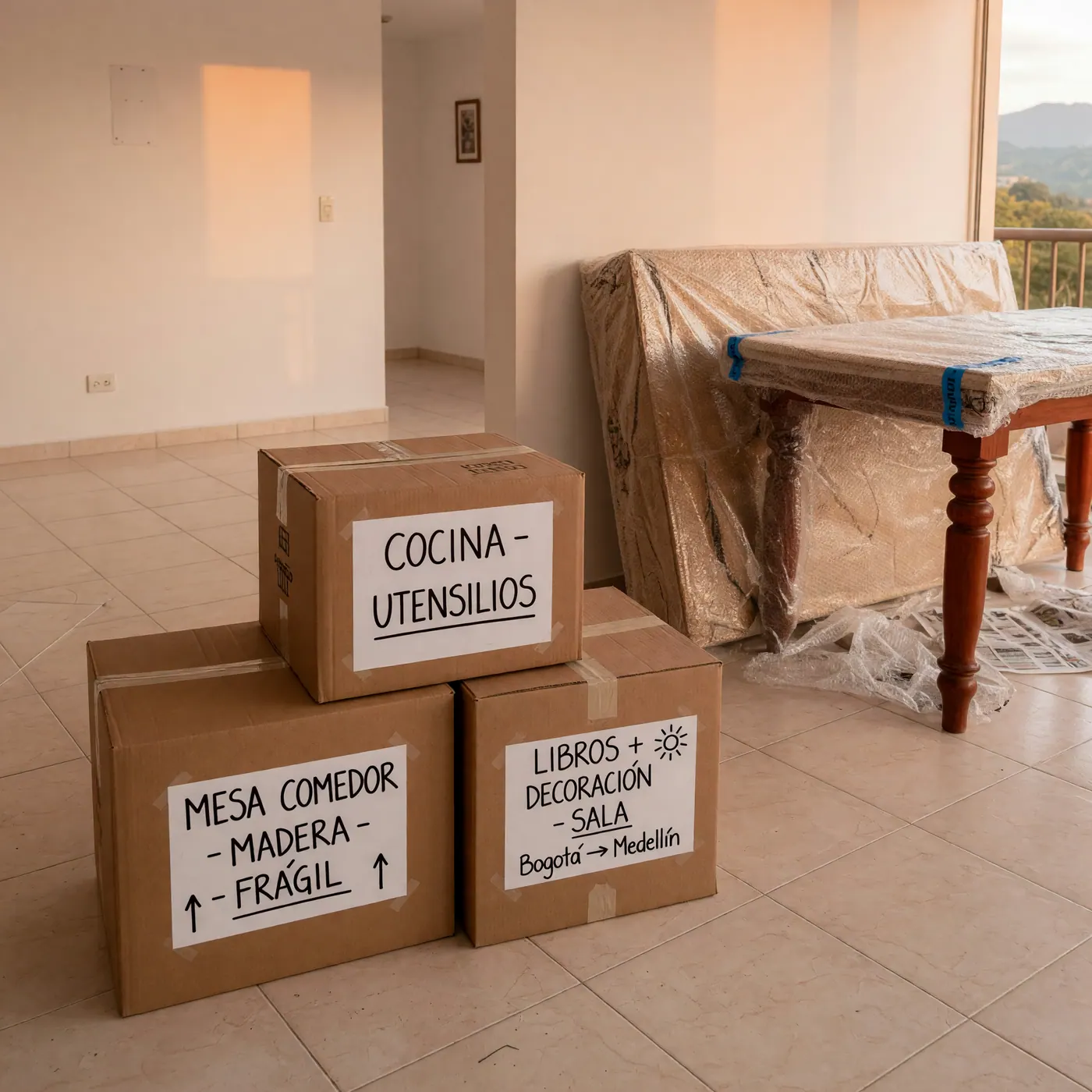
Unlike postal courier parcels handled under standard postal limits, unaccompanied baggage is tied directly to your passport and travel itinerary. It must arrive between 1 month before and 3 months after your arrival in Colombia, and you must have spent at least 5 days abroad prior to travel.
| Customs Regime | Arrival Deadline | Residency Requirement | Tax Structure |
|---|---|---|---|
| Menaje Domestico (Full Household) | 1 mo before to 4 mos after arrival | 24 months abroad (in last 3 yrs) | 15% single tariff (Code 98.05) |
| Equipaje No Acompanado (Unaccompanied) | 1 mo before to 3 mos after arrival | Min 5-day stay abroad | 15% on non-exempt taxable items |
| Courier Parcels (Small Packages) | Anytime (independent of flight) | None | Standard import duties & VAT |
Crucially, if you have unaccompanied baggage or a menaje domestico container arriving separately, you must declare it on DIAN Formulario 530 (Customs Declaration for Travelers) upon your initial flight landing in Colombia. If you miss this step at border control, clearing your goods later becomes more complex and can subject your shipment to higher commercial import duties or administrative impoundment.
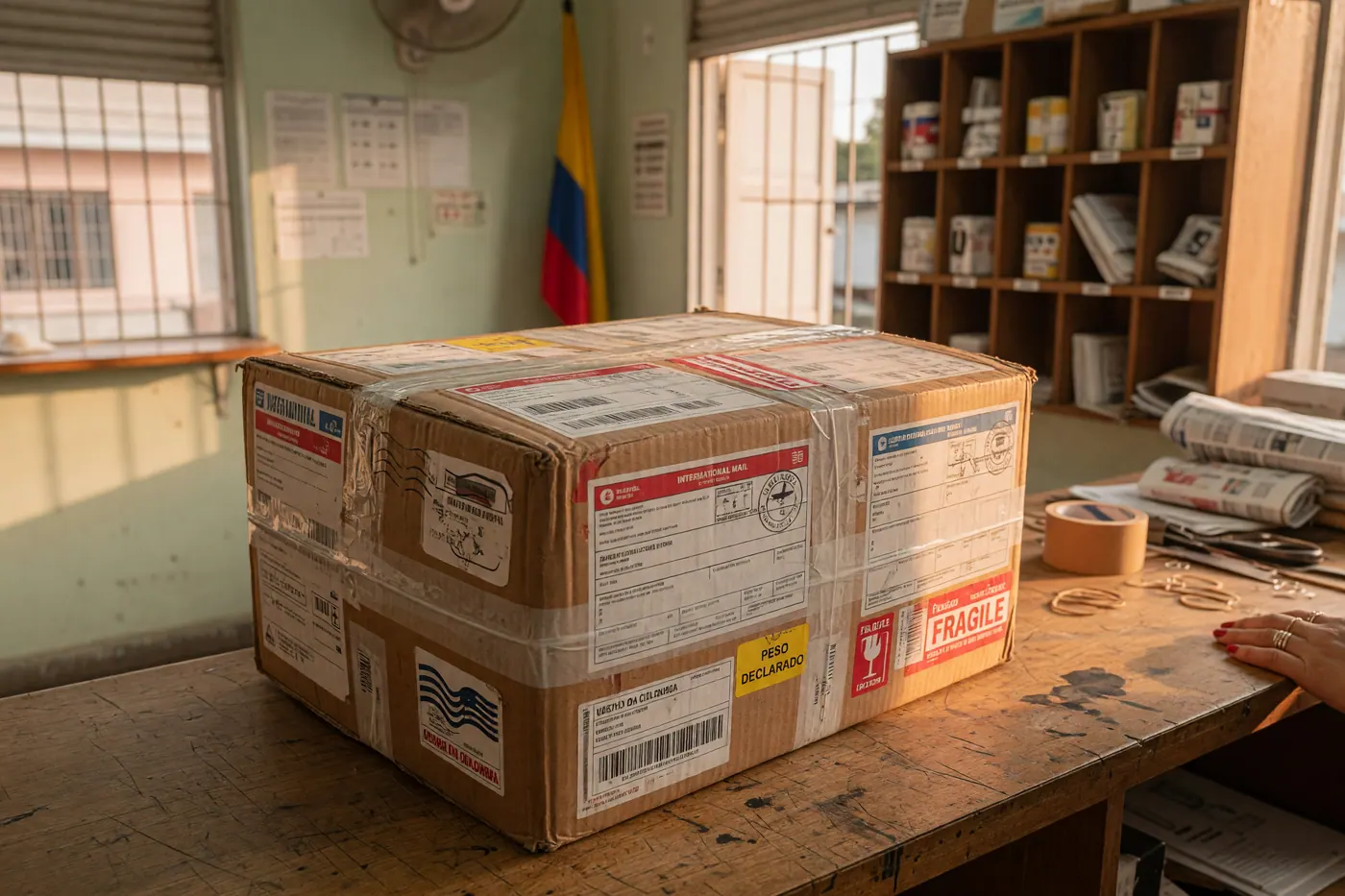
For smaller items or packages shipped later via regular mail, see our practical breakdown on what happens when a package gets held by customs in Colombia.
The Financial Calculation: Container Shipping vs. Buying Locally
Before booking an international freight forwarder, take a hard look at total logistics costs. A full international move isn't just the price of ocean freight. Your real budget includes international packing fees, port handling fees, customs broker fees in Colombia, local storage, 15% DIAN tax on valued items, and secondary transport to your new apartment.
For many expats moving to cities like Medellin, Bogota, or Cali, selling heavy living room furniture abroad and buying local furnishings upon arrival is significantly more economical. Colombian cities feature local craftsmanship and second-hand markets where quality items can be purchased without international logistics friction.
When calculating whether to bring or rebuy, consider these non-monetary factors:
- Elevators and Door Frames: Older Colombian apartments and historic colonial buildings often have narrow stairwells and small elevator cabs. Bulky American sectionals or king-sized headboards frequently fail to clear entryways or require expensive external crane hoisting.
- Electrical Compatibility: Colombia runs on 110V 60Hz electricity, but appliances with high-draw heating elements or specific electronic timing circuits imported from 220V regions may require bulky transformers or fail to function properly.
- Customs Friction: If your documentation experiences administrative delays, container demurrage (daily port storage charges) can accumulate quickly at Colombian container terminals.
If you choose to furnish your place after landing, check out our guide on how to buy used furniture in Colombia with reliable delivery.
What to Ship, What to Sell, and What to Source Locally
Experienced expats usually recommend a hybrid approach. Certain specialized personal items are expensive or difficult to replace in Colombia, whereas general home furnishings are abundant.
Items worth shipping include specialized hobby equipment, professional tools, high-end electronics within allowable personal limits, sentimentally irreplaceable heirlooms, and quality ergonomic office gear. Items better sold before leaving include heavy wooden dining tables, oversized sofas, standard kitchen appliances, and basic cookware.
According to active Colombia Move listings dated August 2026, the mudanzas category has 0 active listings and 0 recent listings, a concrete supply gap for local moving services.
Landing in Colombia: Clearing Customs and Arranging Local Transport
When your menaje domestico container arrives at a Colombian port, a licensed Colombian customs agent (agencia de aduanas) will present your documentation to DIAN. You will need your passport, entry stamps, stamped Formulario 530 from your entry flight, a detailed packing inventory with valuations, and proof of your 24-month residency abroad.
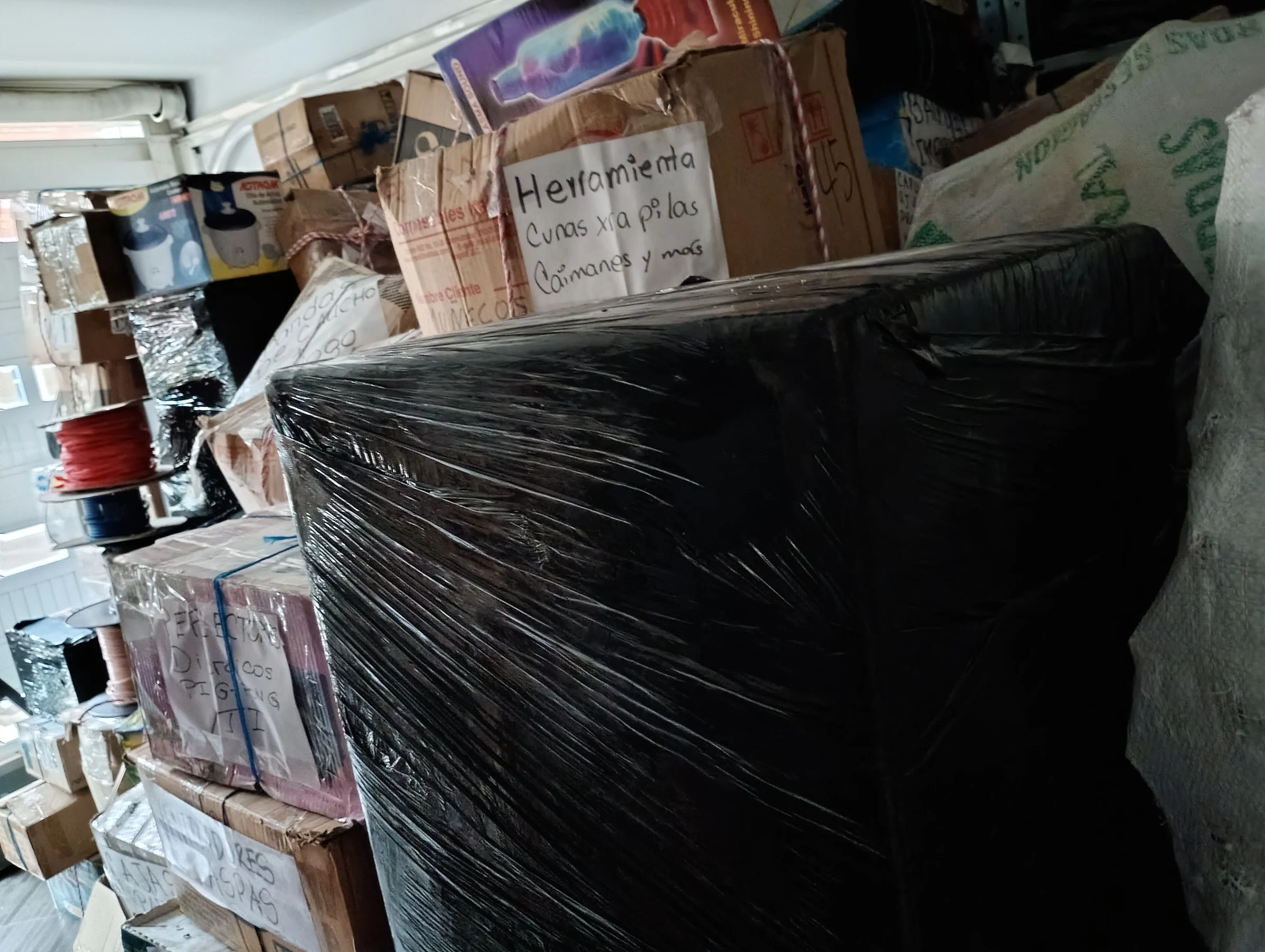
Once cleared, the container is released for land transport. This is where local logistics take over to haul your goods from the port or customs warehouse directly to your residential address.
Frequently Asked Questions
❓ Who qualifies to import household goods under Colombia's menaje domestico regime?
Foreigners and returning Colombians relocating to Colombia qualify if they have lived outside Colombia for at least 24 continuous or discontinuous months during the 3 years immediately preceding their arrival date in the country.
❓ How much tax do you pay on household goods imported to Colombia?
Qualifying menaje domestico shipments pay a single 15% ad-valorem tax under tariff code 98.05.00.00.00 based on the declared customs value, with no import license or commercial registration required.
❓ What is the deadline for my shipment to arrive in Colombia?
For menaje domestico, your container or shipment must arrive at a Colombian port between 1 month before and 4 months after your personal entry date into the country.
❓ What is the difference between menaje domestico and unaccompanied baggage?
Unaccompanied baggage (equipaje no acompanado) applies to smaller air or sea cargo sent within 1 month before or 3 months after travel, while menaje domestico covers full household containers for establishing residence.
❓ What happens if I forget to declare unaccompanied baggage on Formulario 530 at the airport?
Failing to mark unaccompanied baggage on DIAN Formulario 530 upon arrival can result in customs clearance delays, higher commercial import duties, or impoundment of your items.
❓ Is it cheaper to ship furniture to Colombia or buy it after arriving?
Shipping heavy furniture often costs more in freight, 15% taxes, port storage, and customs broker fees than its replacement cost, making it generally smarter to sell bulky items abroad and buy furniture locally upon arrival.



Comments
Loading comments...
Checking sign-in status...