
Moving Intercity in Colombia: Hiring a Trasteo, the Freight Waybill (Remesa), the Electronic Manifiesto, and What Highway Checks Actually Ask For
A practical guide to hiring an intercity trasteo in Colombia: which company can legally haul your things, which freight papers it must issue, and how to verify them on the public RNDC.

IDIOMA DEL ARTÍCULO
Showing original language
Quick answer: if your move crosses from one municipality to another, a paid haul is intercity cargo. The habilitated transport company, not a police station and not you, must issue the remesa and the electronic manifiesto. Ask for those papers before you hand over a deposit.
The scene I see over and over: a newcomer books a truck through a WhatsApp contact, the price is agreed in cash, and only on the highway does anyone wonder what paperwork the driver should be carrying. This guide is about that gap. It covers the freight file behind a legitimate intercity trasteo and how to check it yourself.
Local acarreo or intercity trasteo? The five-digit test
Colombia does not decide this by kilometers. For reporting in the national freight registry (RNDC), Resolution 20263040016075 of 29 April 2026 says a trip is intermunicipal when the first five digits of the DANE DIVIPOLA codes of origin and destination differ. That test still applies inside a metropolitan area. Two neighboring municipalities that feel like one city to you can still count as an intercity trip on paper.
Because I will not guess which city pairs share a code, check the DIVIPOLA codes of your origin and destination municipalities if you are close to a boundary. If both ends are in the same municipality, you want the guide to hiring small-truck acarreos and trasteos, which covers local hire. This article starts where the truck leaves the municipality.
One honest caveat: same-city moves are not automatically free of every RNDC duty, because that resolution compiled earlier rules, including municipal reporting. So do not treat the local label as a license to skip questions.
Who is allowed to charge for the haul
Under Decreto 1079 de 2015, paid movement of goods in public service is public road cargo transport. It is done by a company legally constituted and habilitated for that mode. The general rule is to hire that company rather than a loose truck owner with a nice vehicle and a phone number.
Before paying anything, ask for:
- the company's legal name and NIT;
- written confirmation that it will issue the remesa terrestre de carga and the manifiesto de carga;
- the RNDC radicado for your trip once it is issued.
If a mover gets vague or annoyed at these questions, that is your answer. I would walk away. The downside is real: legitimate companies can be slower to quote and less flexible on dates than the cousin-of-a-friend truck, and you will wait for the paperwork. That wait is the price of a haul that can show its file at a stop.
The two documents that matter: remesa and manifiesto
The RNDC describes a sequence. The company first issues the remesa, the document that represents your load. Then it issues the manifiesto de carga, which covers the merchandise before the authorities and lists the associated remesas. Its authorization number is unique nationwide.
Under Resolution 20263040016075, the company reports the remesa in the RNDC with at least the recipient's name and address, the delivery place, and the nature, value, number, weight, and volume of the goods. That is why a serious company will ask you for a rough inventory and a delivery address. Article 20 of the same resolution derogates Resolution 20223040045515 of 2022 and says it takes effect the day after publication in the Diario Oficial.
For intermunicipal or national public cargo, the driver must carry the manifiesto original for the whole trip, and an original sent electronically has the same effect. Since 21 March 2018 the RNDC has put a QR code on the manifiesto PDF. The driver can show that PDF on paper or on a phone to control authorities.
So the practical demand is simple: ask the company to send you the manifiesto PDF with its QR before departure, and confirm the driver has it.
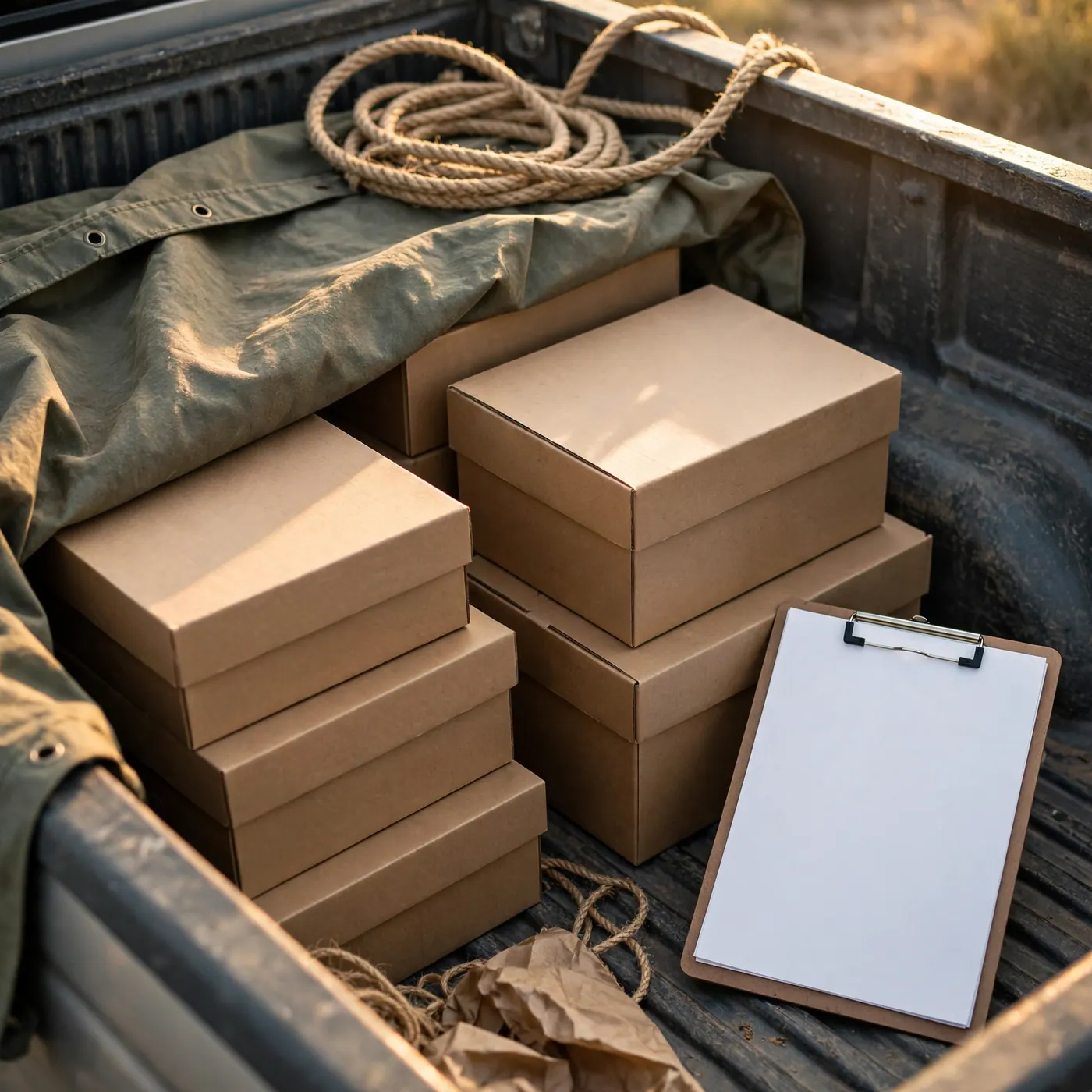
How to verify the company on the RNDC
The RNDC public menu (rndc.mintransporte.gov.co) lets anyone look up companies habilitated by the Ministry of Transport. It also lets you query a manifiesto by plate, driver ID, or radicado, with fields showing SOAT, licence and technical inspection status.
- Look up the company name and NIT among active habilitated companies.
- Ask for the truck's plate and the driver's ID.
- After the company issues the manifiesto, query it by radicado, plate, or driver ID and compare what you see with what you were told.
My rule: refuse a trip the company cannot show in that public query. For questions about the system, the Ministry's citizen channel is (601) 3240800 or servicioalciudadano@mintransporte.gov.co, weekdays 08:00 to 17:00.
What is not a highway pass
You will find articles claiming you need a police "paz y salvo de trasteo" or "declaración de mudanza" to cross a checkpoint. In my research I found no national statute that creates that document. Ley 962 de 2005 supports only the general principle that authorities may demand only permits a law expressly provides, and may not invent extra procedures. It does not mention moving permits, so do not read it as a specific repeal.
The Spanish-language article on the permiso de mudanza y trasteo intermunicipal goes deeper on that myth and on building-administration notices, for readers comfortable in Spanish.
If you are stopped, be polite and comply. Do not argue and do not hide anything. The documents the cargo rules actually name are the freight papers above. An inventory, a lease or a building paz y salvo can help explain what you own, but do not count on them to end a stop.
If you drive your own things in your own vehicle
That is private transport, and the rule differs. If asked, the driver shows the transit authority a sale invoice and/or remisión proving title to the goods, or proof that the load comes from that person's own activity, plus proof that the person owns or possesses the vehicle. A packing list is a sensible extra, but it is not a named legal substitute.
Timing, quotes and one city with a clock
Only Bogotá has a sourced hour limit here. The published text of Decreto Distrital 495 de 2002 restricts circulation in the Distrito Capital of vehicles carrying trasteos between 18:00 and 06:00 the next day. The district legal portal labels its compilation as informational and says validity depends on later law, so reconfirm before you plan a night departure. I am not extending that clock to any other city.
There is also no official household route tariff in the sources I used, so I will not print pesos for any route. Get every quote in writing and make it state:
- the origin and destination addresses, and floors or stairs at each end;
- who packs and who loads, and whether materials are included;
- insurance, if the company offers it, and what it covers;
- who rides in the cab, if anyone;
- what happens if the truck is late or a stop delays the trip.
Keep a simple inventory with photos of valuable items. It is not a highway document, but it settles disputes at unloading.
If you run a moving service yourself, the Spanish guide on publishing moving services to reach clients directly is the place to start.
Frequently Asked Questions
❓ Do I need a police permit to move my household between Colombian cities?
No national police "paz y salvo de trasteo" turned up in the sources I checked. A paid intercity haul still needs the company's remesa and manifiesto, not a station stamp. Ley 962 de 2005 only supports the general rule that authorities cannot demand permits no law provides (verify with the official source, as accessed).
❓ What is the difference between a local acarreo and an intercity trasteo for paperwork?
The RNDC treats a trip as intermunicipal when the first five DANE DIVIPOLA digits of origin and destination differ. That includes some pairs inside one metropolitan area. Same-municipality moves follow the local acarreo route, though they are not automatically free of every RNDC duty (verify with the official source, as accessed).
❓ Who prepares the remesa and the electronic manifiesto?
The habilitated transport company issues both, not you and not the police. It reports the remesa in the RNDC with recipient, delivery place, and the nature, value, number, weight and volume of the goods. The manifiesto lists the remesas and carries a QR on its PDF (verify with the official source, as accessed).
❓ How do I check that the company and truck are registered?
Use the public RNDC menu to look up active habilitated companies, then query the manifiesto by plate, driver ID, or radicado. The query also shows SOAT, licence and technical inspection status. Do this before departure, and refuse a trip the company cannot show there (verify with the official source, as accessed).
❓ What do I show if I drive my own belongings in my own vehicle?
The private-cargo rule asks for proof that you own the goods, such as an invoice or remisión, and that you own or possess the vehicle. A packing list helps explain the load, but it is not a named police permit (verify with the official source, as accessed).
❓ Can the moving truck travel at night?
Only Bogotá has a sourced limit here: Decreto Distrital 495 de 2002 restricts trasteo vehicles from 18:00 to 06:00 in the Distrito Capital. The district portal calls the compilation informational, so reconfirm it. I found no equivalent rule to apply to other cities (verify with the official source, as accessed).
❓ How much does an intercity move cost?
There is no official household route tariff in the sources I used, so get a written quote that lists what is included. Ignore any classified peso figure that does not state its unit, since it may not be a per-trip price (verify with the official source, as accessed).



Comments
Loading comments...
Checking sign-in status...