
Going to the Emergency Room in Colombia: Triage, Payment and What Foreigners Should Expect
Navigating a medical emergency in a foreign country can be intimidating. Here is an essential guide to patient rights, triage levels, payment workflows, and required insurance documentation in Colombian hospitals.
IDIOMA DEL ARTÍCULO
Showing original language
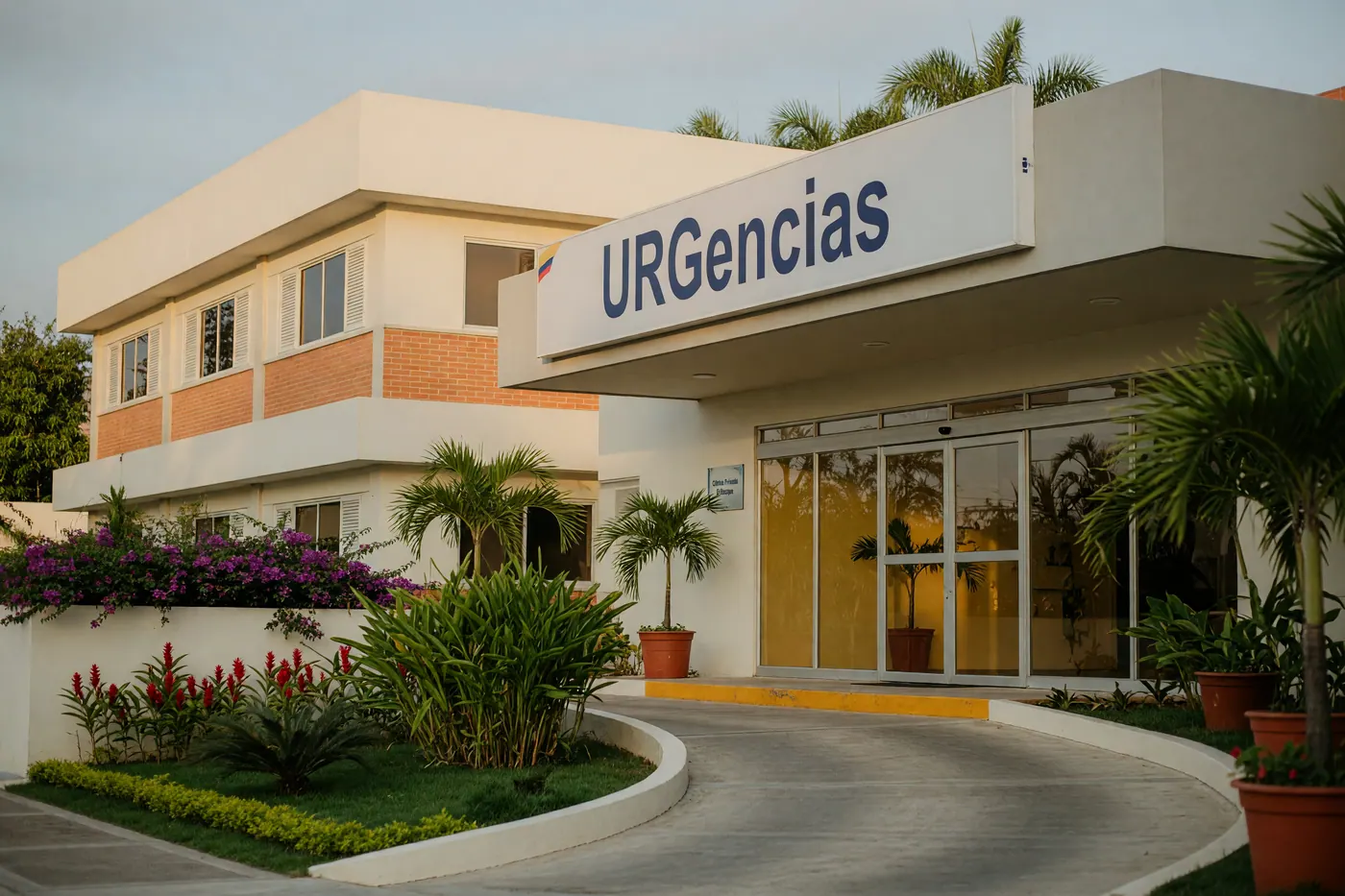
Quick Answer: In Colombia, public and private hospital emergency rooms (urgencias) cannot deny immediate life-saving emergency care to anyone, regardless of citizenship, visa status, or ability to pay upfront (Ley Estatutaria 1751 de 2015). Patient priority is determined strictly by a standardized 5-tier national triage system (Resolución 5596 de 2015). For non-life-threatening conditions, foreigners will generally pay out-of-pocket as a private patient (particular) or present travel insurance, and must request an official epicrisis (medical summary) and factura electrónica (electronic invoice) for subsequent reimbursement.
1. Emergency Patient Rights in Colombia: What the Law Guarantees
When facing an acute health crisis in a new country, administrative uncertainty is the last thing you want to deal with. Fortunately, Colombian health law provides strong statutory protections for anyone requiring urgent medical stabilization.
Under Article 10(b) and Article 14 of Ley Estatutaria 1751 de 2015 (Colombia's Fundamental Health Law), initial emergency care (atención inicial de urgencias) is guaranteed to every individual within national territory. Hospitals and private clinics (clínicas) are explicitly prohibited from demanding financial deposits, credit cards, pre-authorizations, or legal residency documentation prior to conducting emergency medical evaluation and stabilization.
While this law ensures you will not be turned away at the door during a critical medical event, it is crucial to recognize that initial care focuses on stabilization. Once a patient is medically out of immediate danger, standard billing, insurance verification, or transfer processes apply.
2. Understanding Colombia's 5-Tier Triage System
When you arrive at an emergency department in Colombia, you will be directed to the triage desk rather than directly to an examination room. Regulated by the Ministry of Health under Resolución 5596 de 2015, every ER uses a unified 5-tier intake scale to categorize clinical urgency:
| Triage Level | Category & Color | Clinical Definition | Timing |
|---|---|---|---|
| Triage I | Resuscitation (Red) | Immediate life or organ threat (e.g., cardiac arrest, major trauma, severe respiratory failure). | Immediate evaluation |
| Triage II | Emergency (Orange) | Rapid risk of vital deterioration, severe pain, or potential organ loss. | Target < 30 minutes |
| Triage III | Urgent (Yellow) | Physiologically stable patient requiring diagnostic tests, IV fluids, or medication. | Depends on severity and workload |
| Triage IV | Less Urgent (Green) | Minor medical condition without high risk of rapid complication. | May involve an extended wait |
| Triage V | Non-Urgent (Blue) | Chronic or non-acute condition suitable for general outpatient care. | May be redirected to primary care |
If you are categorized as Triage III or IV during peak evening hours at a busy urban center, be prepared for a wait. Emergency departments prioritize clinical severity over arrival time.
3. Calling for Emergency Transport: Dialing 123 and the SEM
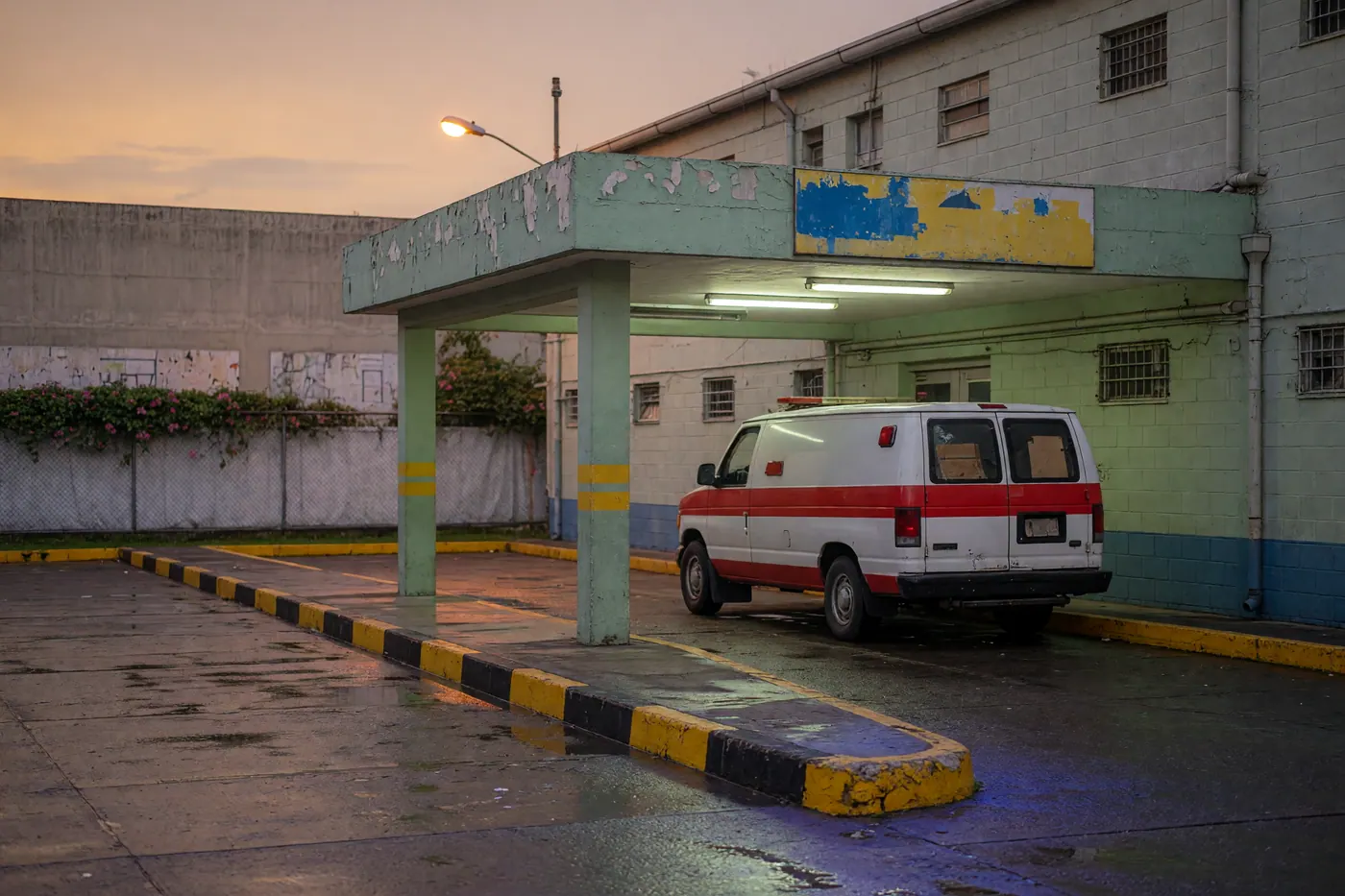
In scenarios where safely traveling to a hospital by taxi or rideshare is not possible, call Colombia’s central emergency number: 123. Operating under Resolución 926 de 2017, this call center connects you directly with the local Sistema de Emergencias Médicas (SEM) and the regional medical dispatch unit (CRUE).
When speaking with the dispatcher, clearly communicate your location, the patient’s state of consciousness, breathing status, and any language limitations. In major metropolitan centers, dispatchers can route an emergency response team to assess and transport the patient to an appropriate facility. For a comprehensive list of localized help lines, review our emergency numbers and crisis guide for Colombia.
4. Public Hospitals vs. Private Clínicas
Colombia's healthcare infrastructure includes public hospitals and private medical centers (clínicas) with different levels of complexity, from basic services to specialized surgical and intensive care.
For non-life-threatening urgent care, foreign residents, digital nomads, and travelers with private coverage may choose a higher-complexity private clinic. Do not assume staff will speak English: use a translation app or bring a bilingual acquaintance when possible. In severe trauma or rural emergencies, go to the nearest appropriate facility for initial stabilization before any transfer is considered.
5. Payment Mechanics, Travel Insurance, and Traffic Accidents (SOAT)
Payment workflows after treatment depend on your insurance coverage and the cause of your injury:
- International Travel Insurance (Pay & Claim): Nomad plans such as Genki or SafetyWing often handle outpatient ER visits on a reimbursement basis. You may need to settle the bill as a private patient (particular) at checkout and submit itemized invoices; confirm the process with your insurer.
- Traffic Accidents (SOAT Coverage): Under ADRES regulations, any medical emergency resulting from a vehicular accident in Colombia is covered by mandatory traffic accident insurance (SOAT) up to 800 daily minimum legal wages (SMDLV) for treatment costs, regardless of who was at fault.
- National EPS Coverage: Foreigners holding a Cédula de Extranjería who are enrolled in an EPS (Entidad Promotora de Salud) present their identification number at intake to process urgent services under the public system.
When preparing your travel documents before arriving in the country, maintaining digital copies of your passport, medical history, and insurance policy details alongside your Check-MIG entry registration ensures you have quick access to essential paperwork during a medical visit.
6. Claiming Reimbursement: Essential Documents to Request
Before leaving the hospital or clinic, collect two official documents from the administrative or billing desk:
- Epicrisis (Medical Discharge Summary): A detailed clinical account signed by the attending physician outlining your symptoms, diagnosis, treatment, medications administered, and discharge recommendations.
- Factura Electrónica (DIAN Electronic Invoice): An itemized invoice reflecting medical fees, consultations, diagnostics, and prescriptions. Ensure the invoice lists your full legal name and passport or Cédula number.
Without an official epicrisis and electronic invoice, an international insurer may reject or delay a reimbursement claim.
According to active Colombia Move marketplace supply signals (August 2026), the housing section currently has 92 active listings. If hospital access matters to your move, compare the actual route and travel time to a suitable facility before signing a lease rather than relying only on a neighborhood description.
Frequently Asked Questions
❓ Can a Colombian emergency room refuse to treat me if I cannot pay upfront?
No. Under Ley Estatutaria 1751 de 2015 (Art. 10b), initial emergency care (atención inicial de urgencias) is legally mandatory for all public and private medical facilities regardless of nationality, visa status, or payment capacity.
❓ What is Triage 3 in Colombia, and how long will I wait to see a doctor?
Triage 3 indicates a stable condition requiring diagnostic testing or medication. Waiting times vary based on clinical severity, facility workload, and hospital complexity; Colombian rules do not set a fixed wait target for Triage III.
❓ Will my international travel insurance pay the hospital directly?
Not necessarily. International travel insurers often use a pay-and-claim process for outpatient emergency visits, while direct billing may sometimes be arranged for inpatient admissions. Confirm the procedure with your insurer as soon as practical.
❓ How does SOAT cover emergency medical costs in a traffic accident?
SOAT provides mandatory coverage up to 800 daily minimum legal wages (SMDLV) for medical and surgical expenses for a road-accident victim in Colombia, under the ADRES framework current in August 2026.
❓ What paperwork must I request from the hospital before leaving?
Request an official epicrisis and a DIAN-compliant factura electrónica bearing your passport or Cédula number. These documents support an insurance claim, though your insurer may request additional records.
❓ Should foreigners go to a public hospital or a private clínica?
Go to the nearest appropriate facility when the situation is serious. For non-life-threatening care, your insurer may direct you to a particular clinic; private facilities do not guarantee English-speaking staff, so keep a translation app available.




Comments
Loading comments...
Checking sign-in status...