
Colombia Beneficiary Visa: Bringing Your Spouse, Partner, and Children in 2026
Relocating to Colombia as a family requires understanding the derivative beneficiary visa rules under Resolution 5477. Here is how to legally attach your spouse, domestic partner, or children to your main visa.
IDIOMA DEL ARTÍCULO
Showing original language
When planning a family move to Colombia, one of the first legal mechanics you need to understand is derivative visa status. If you hold or are applying for a principal Colombian visa—such as a Migrante (M) work visa, retirement visa, or Digital Nomad V visa—your direct family members do not apply for independent visas of their own. Instead, they enter the country under a Visa de Beneficiario (Beneficiary Visa).
While bringing dependents sounds straightforward, Colombia’s immigration framework is governed by Resolution 5477 of 2022 and Cancillería’s current visa guidance. Knowing who qualifies, what rights beneficiaries hold, and how to avoid processing traps can save your family months of stress.
Going through the general visa portal first? Review our Colombia Visa Guide 2026: Every Visa Type, Requirements & How to Apply to ensure your principal visa is eligible for dependents.
1. Who Qualifies as a Beneficiary Under Resolution 5477?
Under Article 3 of Resolution 5477, derivative status is strictly limited to immediate family members who are financially dependent on the principal visa holder. Legally recognized beneficiaries include:
- Spouses: Foreign nationals lawfully married to the principal visa holder.
- Permanent Partners (Unión Marital de Hecho): Unmarried domestic partners who share a legal cohabitation union.
- Children under 25 years old: Unmarried children who depend economically on the primary visa holder.
- Children over 25 with disabilities: Adult children who have certified physical or mental disabilities preventing economic self-sufficiency.
Crucial Rule Change to Note: Under pre-2022 immigration codes, parents of principal visa holders could sometimes be included as beneficiaries. Under Resolution 5477, parents are no longer standard beneficiaries. Unless an extraordinary humanitarian exception applies, parents must qualify for their own independent visas (such as a Rentista or Pensionado visa).
If you are married to a Colombian citizen rather than a foreign visa holder, a different category applies: read our dedicated guide on the Spouse Visa in Colombia (M-Cónyuge).
2. Crucial Restrictions: No Local Work Rights Allowed
The single biggest misunderstanding surrounding the Beneficiary Visa is employment permission. Do not assume a beneficiary may work locally: check the occupation and permissions printed on the issued visa and confirm the current rule with Cancillería before accepting Colombian employment.
Work authorization depends on the permission stated on the issued beneficiary visa and the principal holder’s category. If a spouse plans to accept Colombian employment or invoice local clients, confirm with Cancillería whether an independent visa category is required.
Remote work and Colombian tax or labor obligations depend on the person’s facts. For that situation, get advice from a Colombian immigration lawyer and accountant rather than relying on the visa label alone.
3. Essential Document Checklist & Authentications
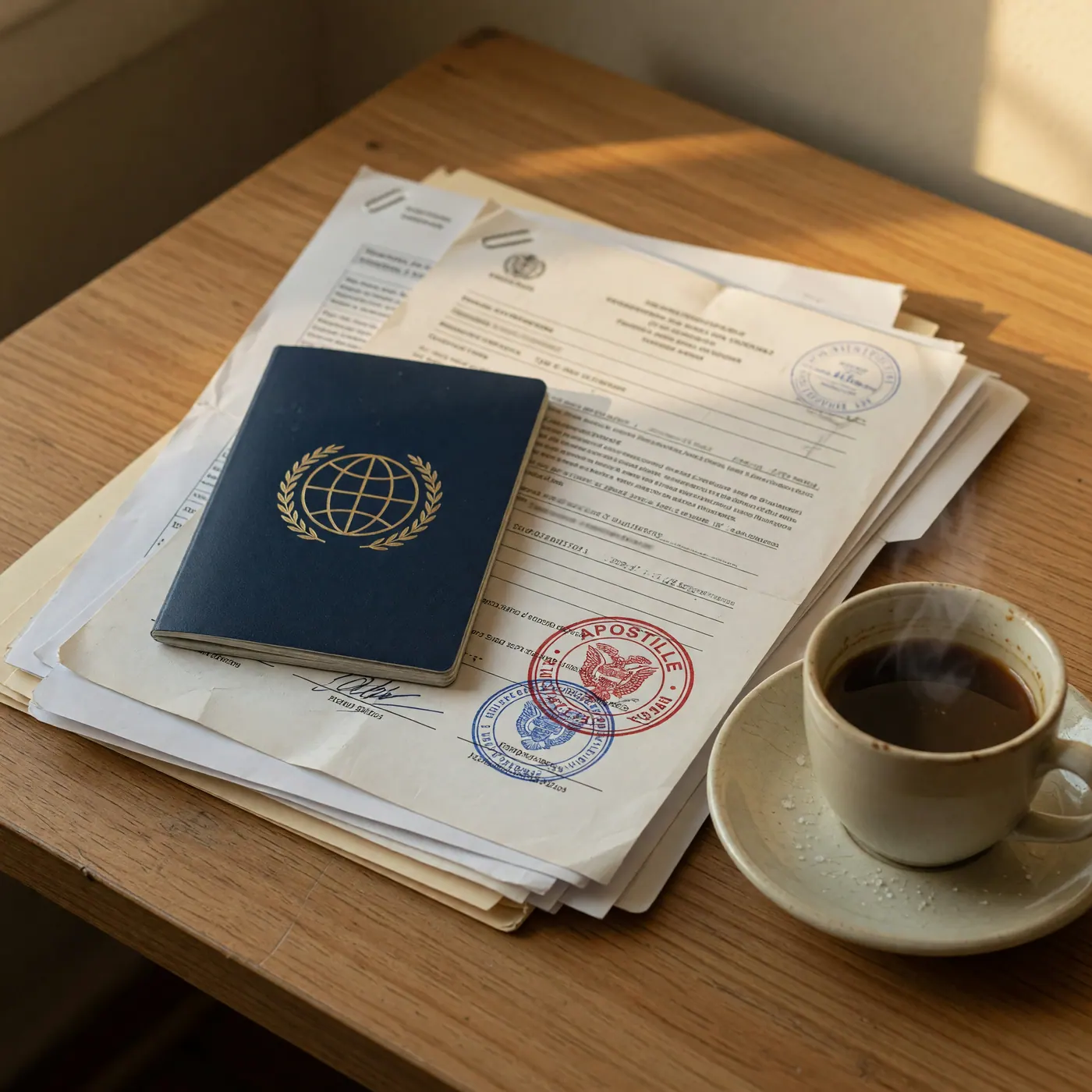
Preparing documents for family members requires strict adherence to international legalizations. Every document issued outside of Colombia must be valid, apostilled (or legalized via embassy channels for non-Hague nations), and officially translated.
| Document Required | Who Provides It? | Specific Rules & Validity |
|---|---|---|
| Civil Registry (Marriage/Birth Certificate) | Home Country Authority | Must be apostilled and officially translated into Spanish. Issued within recent months. |
| Letter of Responsibility (Carta de Responsabilidad) | Principal Visa Holder | Signed document explicitly stating you assume all housing, living, health, and exit costs. |
| Financial Solvency Proof | Principal Visa Holder | 6 months of continuous bank statements showing stable income to support all dependents. |
| Valid Health Insurance | Each Beneficiary | Policy covering all health risks in Colombia for the entire requested visa duration. |
| Unión Marital de Hecho Document | Notary / Court (if unmarried) | Must be a public deed, court ruling, or conciliation act issued within the 3 months before applying. |
Keep in mind that all foreign document translations must be completed by certified official translators (traductores oficiales) recognized in Colombia. For complete details on authenticating civil documents from the US, UK, or Canada, consult our Apostille Documents for Colombia Guide.
4. Step-by-Step Application Process on the Cancillería Portal
Apply online through the official Cancillería visa portal. You can submit the beneficiary application with the principal application or add dependents later, subject to the portal’s current instructions.
- Gather & Scan Documents: Ensure all birth/marriage certificates are apostilled and translated and saved in the format accepted by the current portal.
- Fill Out the Online FUT Form: Select the visa category corresponding to the principal holder (e.g., Beneficiario de Visa M).
- Pay the Study Fee: Pay the study fee shown by the official portal; the COP amount can change with the applicable official rate.
- Await Assessment & Pay Issuance Fee: If approved, pay the issuance fee shown for the beneficiary visa category to receive the electronic visa.
- Register after approval: Beneficiaries over age 7 who reside in Colombia must register and request a Cédula de Extranjería within 15 calendar days. Confirm appointment and biometric instructions with Migración Colombia.
5. What Happens When a Child Turns 25 or the Principal Visa Expires?
Because a beneficiary visa is strictly derivative, its lifespan is legally bound to the primary applicant:
- Principal Visa Expiration: If the principal visa holder’s visa is cancelled, revoked, or expires without renewal, all attached beneficiary visas automatically lose validity on the exact same date.
- The Age 25 Cap: Dependent children automatically lose beneficiary eligibility upon turning 25 years old. To remain legally in Colombia, a child approaching 25 must transition to a Student Visa (V-Estudiante), Digital Nomad Visa, or independent employment visa before their 25th birthday.
- Path to Permanent Residency: An M-category beneficiary may be able to qualify for an R (Residente) visa after five continuous years, subject to Cancillería’s continuity calculation and the applicant’s circumstances. Read more in our Resident Visa Colombia Paths & Timelines Guide.
6. Family Settlement: Health Insurance, Schools, and Housing
Securing visas is only half the relocation journey. Moving a family to cities like Medellín, Bogotá, or Cali requires coordinating healthcare coverage, finding international schools, and securing long-term family housing.
For health coverage after arrival, ask the chosen EPS directly whether and when each family member can enroll as a dependent; this is separate from the health-insurance evidence required for the visa application.
Before signing a family lease, review how to prove your address in Colombia and what to expect when you need to rent without a local codeudor.
According to active Colombia Move listings on August 9, 2026, the housing section had 98 active listings. That gives relocating families a concrete place to compare available housing while asking each owner directly about guarantor, documentation, and lease requirements.
Frequently Asked Questions
❓ Can a beneficiary work legally in Colombia?
It depends on the permissions stated on the issued beneficiary visa and the principal holder’s category. Before taking Colombian employment or invoicing local clients, confirm the current rule with Cancillería and whether an independent visa is required.
❓ Can I bring my parents as beneficiaries under my Colombian visa?
No. Resolution 5477 of 2022 removed parents from standard beneficiary eligibility. Parents must apply for their own independent visas, such as a Rentista or Pensionado visa.
❓ What is the maximum age for children on a beneficiary visa?
Children can remain as beneficiaries up to age 25, provided they remain unmarried and economically dependent on the principal visa holder.
❓ What documents are required for an unmarried domestic partner?
Unmarried partners (unión marital de hecho) must provide a public deed, conciliation act, or court ruling issued within the 3 months before applying.
❓ Do foreign birth and marriage certificates need an apostille?
Yes. All foreign civil documents must be apostilled (or legalized) in their origin country and translated into Spanish by an official certified translator in Colombia.
❓ What happens to the beneficiary visa if the principal visa expires?
The beneficiary visa automatically terminates if the principal visa expires, is revoked, or is cancelled. Dependents lose legal status simultaneously with the primary holder.


Comments
Loading comments...
Checking sign-in status...