
How to Rent in Colombia Without a Codeudor: Guarantors and Rental Insurance
No Colombian co-signer? Compare rental insurance, a fianza, a bank-held CDT, and direct-owner negotiation—with current document requirements and legal cautions.

IDIOMA DEL ARTÍCULO
Showing original language
I have watched a good apartment viewing in Laureles stop at four words: codeudor con finca raíz. The applicant had steady remote income and bank statements, but no Colombian co-signer who owned mortgage-free property. That wall is common—and frustrating—but you can often get around it with the right guarantee and paperwork.
Before you negotiate, compare the full rent and conditions—not just the headline number. Our guide to avoiding overpriced rentals is a useful second tab to keep open.
Codeudor, fiador, and póliza: what each one does
A codeudor signs alongside the tenant and shares responsibility for the lease. A fiador is also a guarantor, although the precise obligations depend on the contract. Agencies and landlords commonly want one or two guarantors with mortgage-free Colombian real estate because they are trying to reduce collection risk; that is a screening preference, not a legal requirement for every lease. For the terminology in Spanish, see our codeudor, fiador, and rental-policy explainer.
A póliza de arrendamiento works differently. An insurer studies the application and, if approved, protects the landlord against risks defined in the policy. Approval depends on the provider, the rent, provable income, documents, and sometimes local financial history. I would never accept “the insurer always approves foreigners” as a serious promise.
Three practical ways to rent without a local co-signer
| Route | Best fit | Main drawback |
|---|---|---|
| Rental insurance | Applicants with clear, verifiable income | Screening and approval are provider-specific |
| Fianza | Foreigners who can document identity and cash flow | Extra provider, paperwork, and fee |
| CDT | Tenants with capital but no local guarantor | Locks up substantial money |
Rental insurance is the most familiar substitute. Local rental guidance reviewed July 17, 2026 describes premiums of roughly 35%–75% of one month's rent when paid annually, or about 2.5%–3% of monthly rent when charged monthly. Confirm the quote, payer, coverage, and calculation basis with the specific insurer. SURA's digital rental-insurance page states that its qualifying digital product covers residential leases from COP 400,000 to COP 1,800,000 without a codeudor when the applicant passes its credit review. That is a product limit, not a promise that you will qualify.
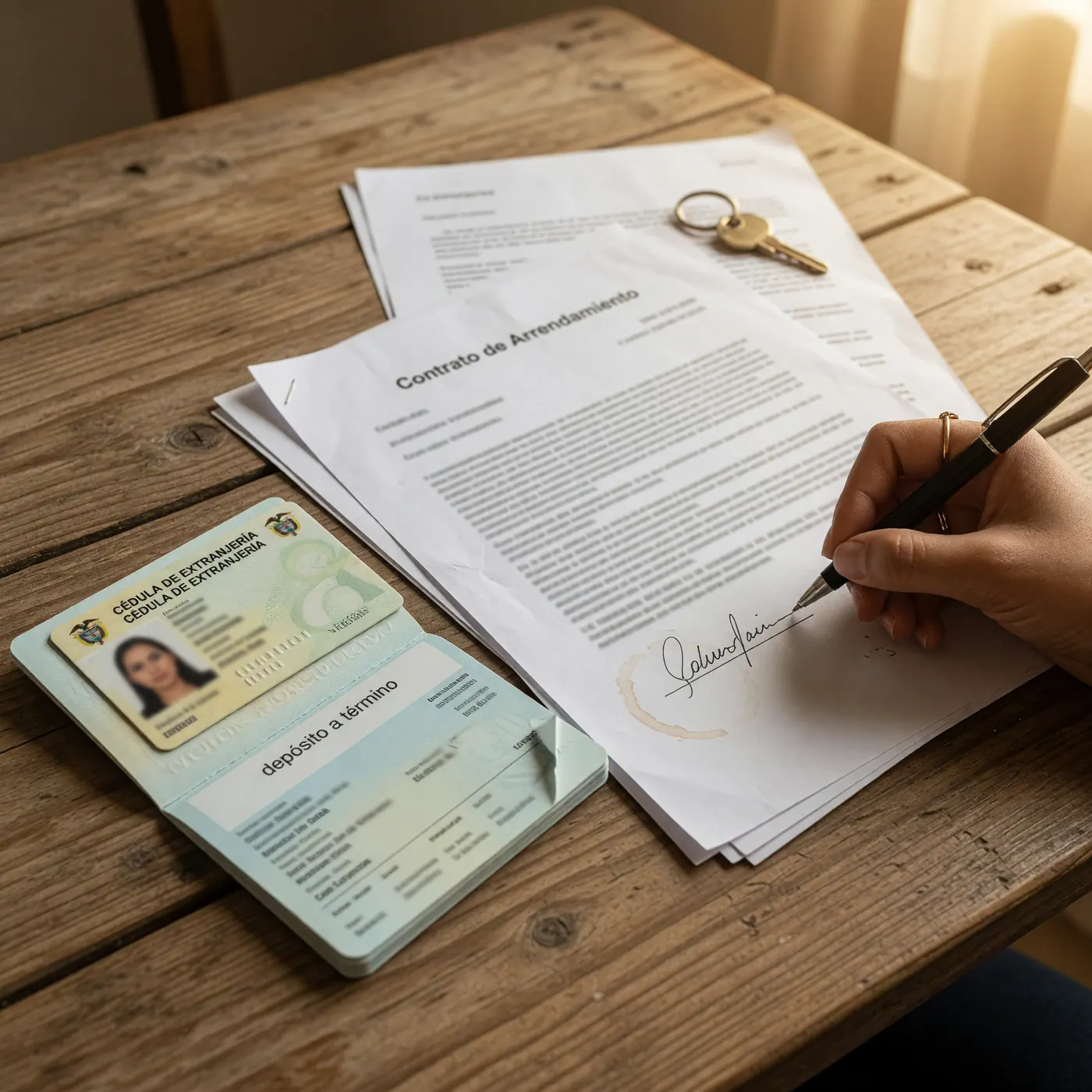
A specialized fianza company can act as the guarantee after reviewing you. As of July 17, 2026, Fianzas de Colombia says foreign applicants may present a valid passport or Cédula de Extranjería plus three months of bank statements. Ask exactly what foreign-income evidence, translations, fees, and processing time apply to your file.
A CDT (Certificado de Depósito a Término) is the capital-heavy route. Local guidance reviewed July 17, 2026 describes opening a CDT at a Colombian bank, then pledging or endorsing it to the rental-insurance company as a counter-guarantee (contragarantía or pignoración). The commonly described amount is roughly five to nine months of rent. This is not a cash deposit paid to the landlord. Honestly, I would treat it as a last resort because the money stays locked; get the amount, term, earnings, control, and release conditions in writing before funding it.
Renting directly from an owner can create flexibility
A direct owner may assess overseas income, remote-work contracts, savings, or references instead of applying an agency's fixed checklist. That flexibility is valuable, but it does not justify vague paperwork. Verify the owner or authorized representative, view the property, read the lease, and get the payment channel and guarantee terms in writing. See the full checklist for renting directly from a Colombian owner.
Pilas with a request for a large cash “security deposit.” Article 16 of Ley 820 de 2003 prohibits a landlord from demanding cash deposits or real-property guarantees to secure an urban residential lease. Article 15 allows a narrow utility-bill guarantee, capped at the cost of two consecutive billing periods and handled under the law’s specific rules. A CDT pledged to an insurer as a counter-guarantee is legally distinct from paying a deposit to the landlord. Have a Colombian lawyer review unusual guarantee language.
According to active Colombia Move marketplace signals generated July 17, 2026, the housing section had 111 active listings and 23,113 measured views. That does not mean every advertiser accepts foreign income or waives a codeudor. It does give you a live comparison pool, so send the same clear application summary to several suitable listings instead of overcommitting to the first balcony you like.
Build one application package before contacting anyone
My practical move is to prepare a tidy PDF folder plus a one-page cover note. Include only documents the reviewer actually needs, and ask who will receive and retain them before you send anything.
Application checklist:
- Valid passport or Cédula de Extranjería
- Three recent bank statements; keep additional months ready if requested
- Employment letter, client contracts, pension evidence, or accountant letter as relevant
- Plain-English or Spanish summary of income, occupants, lease term, and payment method
- References with permission and current contact details
- Translations requested by the actual insurer or guarantee company
Redact unrelated account numbers and transactions, but leave your name, issuer, dates, and the relevant totals visible enough to verify. Never edit balances or manufacture a contract. If rent or utilities will be collected online, ask which channel is used; our explainer on paying bills via PSE covers the local-bank-account limitation.
Questions and red flags before you pay
Ask in writing: Who studies the application? Is a codeudor still required? What does the policy or fianza cover? Who pays the fee? What happens if the study fails? How is a CDT released? Which payments receive receipts? A clear rejection is less dangerous than a vague approval tied to an urgent transfer.
Walk away from pressure to pay before a viewing, refusal to identify the owner or authorized agent, blank spaces in the lease, personal-account transfers with no explanation, or claims of guaranteed insurance approval. Cross-check comparable homes on local portals such as Fincaraíz and Metrocuadrado, then verify the property and counterparty independently.
The honest downside is that a foreign applicant may need several applications and more paperwork. Still, a documented route through insurance, a fianza, or a CDT is better than improvising a risky cash deal. This is practical information, not individual legal advice; have a Colombian lawyer review unusual guarantees.
Frequently Asked Questions
❓ Is a codeudor legally required to rent in Colombia?
No. Ley 820 of 2003 does not require every residential tenant to provide a codeudor. It is a risk-control condition commonly set by owners, agencies, or insurers, so another landlord or guarantee product may accept a different route.
❓ Is it legal for a landlord to ask for a cash deposit for a residential lease?
No, not as a general residential security deposit. Article 16 of Ley 820 de 2003 prohibits cash deposits or real-property guarantees used to secure an urban residential lease. Article 15 has a narrow exception for utility guarantees capped at two consecutive billing periods. A CDT pledged to an insurer is not a direct landlord deposit.
❓ Can rental insurance fully replace a codeudor?
Yes, some rental-insurance products can replace the codeudor if the applicant passes screening. SURA's digital page, checked July 17, 2026, describes this route for qualifying residential rent from COP 400,000 to COP 1,800,000. Approval and coverage are never automatic.
❓ What documents do guarantee companies require from foreigners?
Expect identity and recent income evidence. Fianzas de Colombia said on July 17, 2026 that foreign applicants may use a valid passport or Cédula de Extranjería with three months of bank statements. Another provider may request more months, contracts, references, translations, or local records.
❓ Who pays the rental-insurance premium?
It depends on the agreement and product, so confirm the payer before applying. Local guidance reviewed July 17, 2026 describes roughly 35%–75% of one month's rent annually or about 2.5%–3% of monthly rent when charged monthly, but the insurer's quote controls. Do not assume the owner will absorb it.
❓ What is a CDT, and how does it work as a rental guarantee?
A CDT is a Colombian bank certificate of deposit that may be pledged or endorsed to the rental-insurance company as a counter-guarantee. Local guidance reviewed July 17, 2026 describes locking roughly five to nine months of rent. It is not money handed to the landlord; confirm the term and release conditions before funding it.


Comments
Loading comments...
Checking sign-in status...