
Medical Emergencies in Colombia: What Happens After You Call 123 (Ambulance Dispatch, Triage & Payment Protocols)
A practical protocol guide for expats in Colombia navigating emergency dispatch via Line 123, public versus private ambulances, hospital ER triage categories, and payment guarantees.
IDIOMA DEL ARTÍCULO
Showing original language
Quick Action Protocol for Medical Emergencies
1. Dial 123: Request an ambulance ("Necesito una ambulancia por una emergencia médica").
2. Give Exact Location: State city, neighborhood, and exact intersection/nomenclature (e.g., Carrera 7 # 32-16 in Bogotá).
3. Know Your Triage Rights: Under Colombian law (Ley 1438 de 2011), no hospital—public or private—can refuse initial emergency stabilization care (atención inicial de urgencias), regardless of nationality or payment method (as of 2026).
When facing a sudden health crisis in Colombia, panic often centers on system navigation rather than the medical condition itself. Foreign residents and travelers frequently ask whether dialing 911 works, whether private ambulances are faster, or whether private hospitals will admit patients without a local health insurance plan (EPS). While for complete numbers you can consult our emergency numbers and Código Dorado guide, this guide focuses strictly on operational mechanics: what happens the second you call dispatch, how ambulances are assigned, how emergency rooms triage incoming patients under national regulations, and how billing operates once a patient is stabilized.
1. Emergency Protocol: What to Do in the First 60 Seconds
In any severe medical situation, your immediate goal is establishing clear communication with municipal dispatch. Treat 911 as a foreign habit: the official national emergency number in Colombia is 123.
Do not assume emergency operators speak fluent English. Unless you are calling from a major international hotel with concierge support, you should immediately speak or read a standardized Spanish dispatch statement:
"¡Emergencia médica! Necesito una ambulancia en [City], Barrio [Neighborhood], [Address / Nomenclature]. La persona [no respira / tiene dolor de pecho / sufrió un accidente / está inconsciente]. Soy extranjero, hablo poco español."
In practice as of 2026, dispatch delays occur far more often from address confusion than vehicle scarcity. In Colombian urban planning, always state your exact Calle or Carrera numbers along with building or apartment details, rather than relying solely on landmark names.
2. How Municipal Dispatch Works (The Bogotá NUSE 123 System)
Understanding how municipal dispatch handles medical requests helps manage expectations during high-stress situations. Taking Bogotá’s Single Emergency and Security Number (NUSE 123) as Bogotá’s unified municipal intake example, calls do not route directly to an individual hospital or crew.
When you place a call to Line 123, the process follows a strict regulatory chain:
- Initial Intake: The operator evaluates whether the emergency requires police, fire, or medical attention.
- Medical Regulation Transfer: Medical calls are handed to the city’s medical regulation center, which assigns the ambulance.
- Triage & Unit Assignment: A medical coordinator evaluates patient acuity based on reported symptoms and dispatches the nearest available public or contracted emergency vehicle.
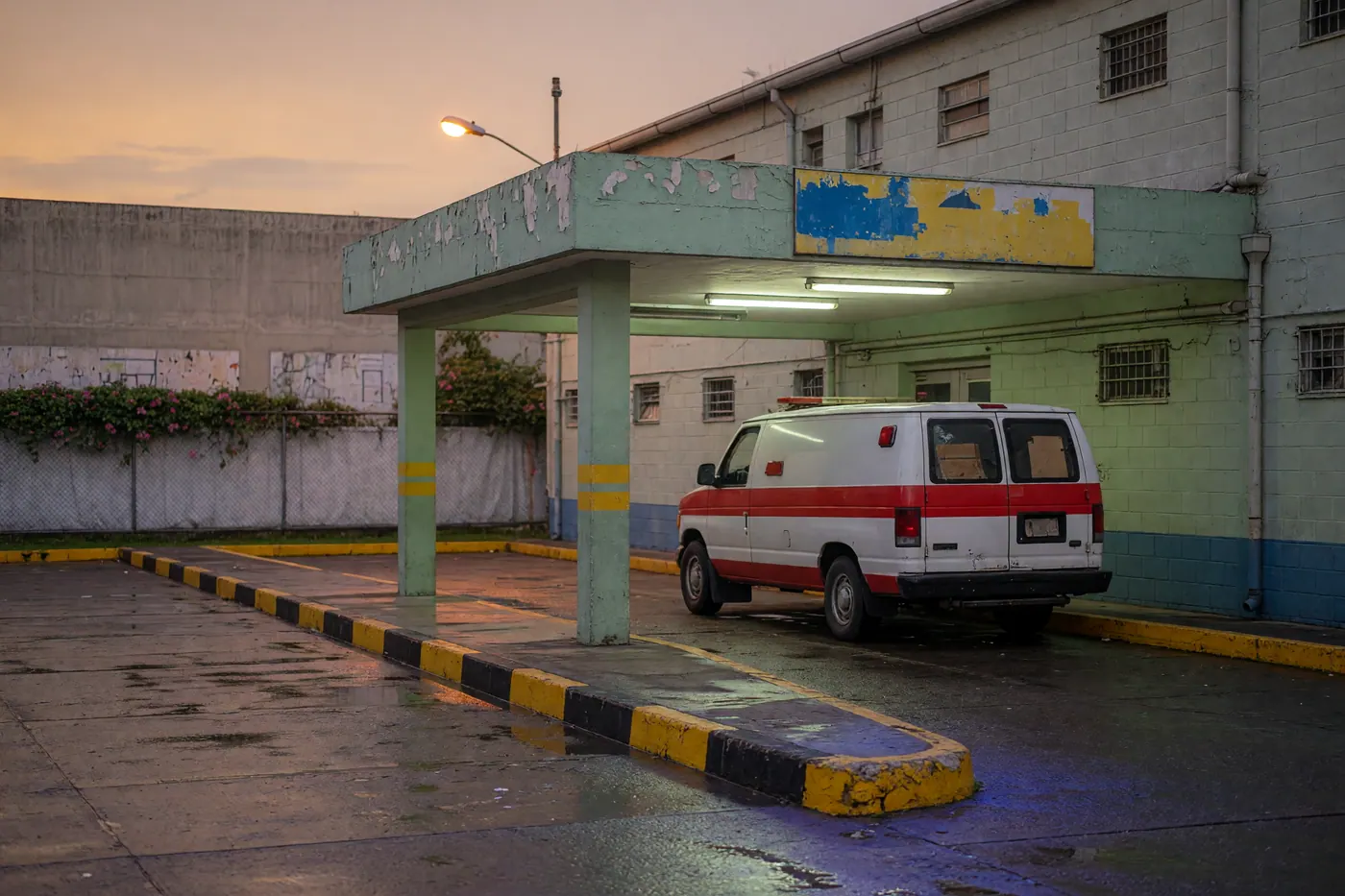
Public municipal ambulances are dispatched based strictly on medical priority, not proximity to a preferred private clinic. If a patient is suffering from cardiac arrest, severe trauma, or airway compromise, dispatch will direct the unit to the nearest high-complexity emergency department capable of immediate stabilization.
3. Public Line 123 vs. Private Ambulance Services (EMI and SURA)
Foreigners often wonder if they should skip public dispatch by calling private ambulance providers. In Colombia, private prepaid medical membership providers—such as EMI (Emergencia Médica Integral) or specialized assistance lines linked to private insurance policies like Seguros SURA—operate as a parallel channel for members, not as a legal substitute for 123. Confirm current coverage cities and phone numbers on each operator’s live site before you need them.
Choosing Your Dispatch Channel
| Factor | Public Dispatch (Line 123) | Private Prepaid / Insurer Assistance |
|---|---|---|
| Best For | Life-threatening trauma, unconsciousness, severe accidents | Stable urgent illness, home doctor visits, direct private transfer |
| Access | Free universal public phone access | Requires active paid subscription or private policy account |
| Destination | Nearest capable emergency room based on acuity | Network-affiliated private clinics covered by policy |
| Operator Language | Primarily Spanish | Spanish; occasional bilingual support options |
If a patient is experiencing a life-threatening crisis, dial 123 immediately. Do not lose vital minutes trying to locate private membership paperwork or specific app hotlines. However, if the patient is conscious and stable—for example, suffering from severe food poisoning, a suspected simple fracture, or high fever—calling a private assistance line allows direct transfer to a private clinic in your insurer's network without congesting public emergency channels.
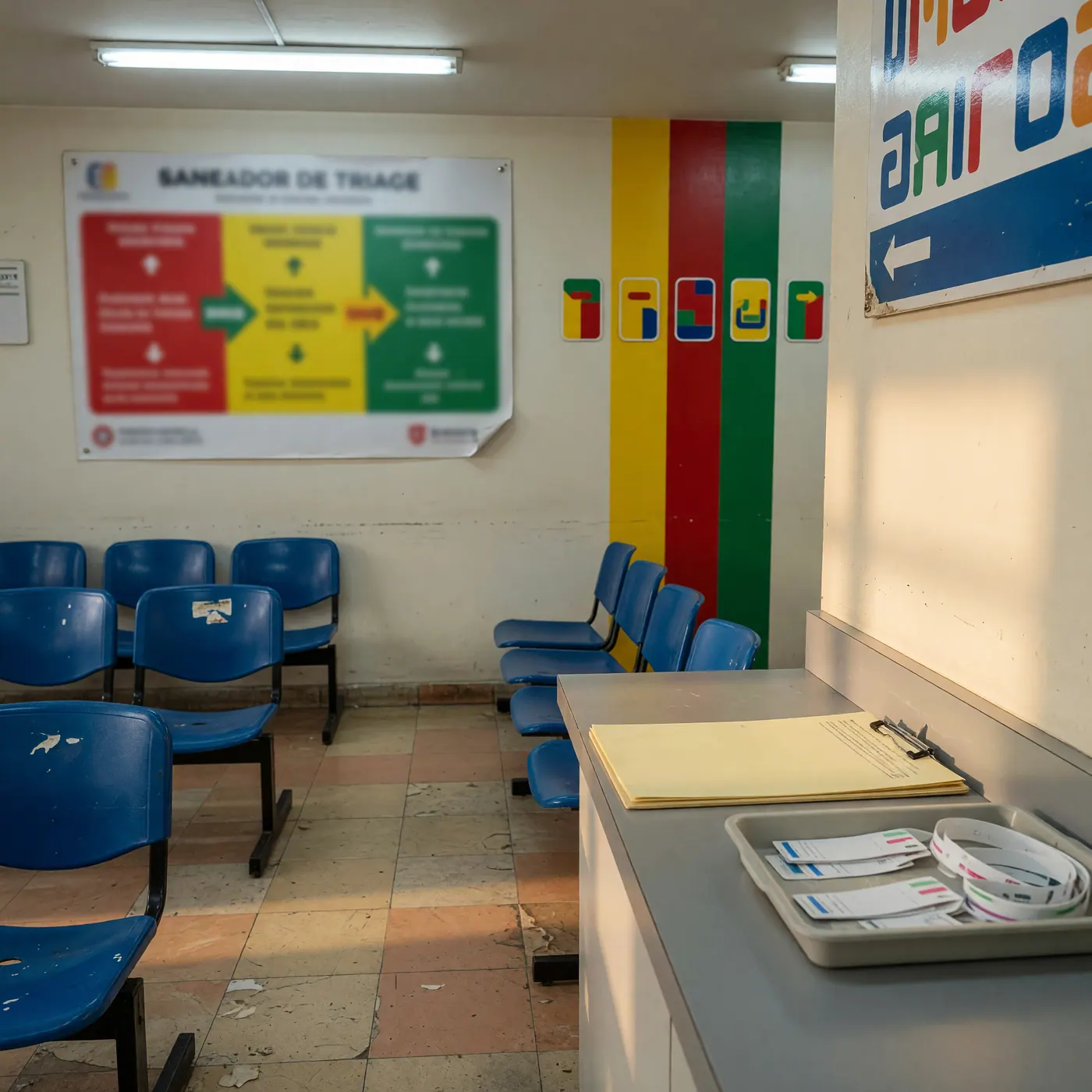
4. ER Triage Levels I–V: How Colombian Hospitals Prioritize Care
Once you arrive at a Colombian emergency department (Servicio de Urgencias), patient care is governed by national legal standards. Under Resolución 5596 de 2015 issued by the Ministry of Health and Social Protection, all emergency rooms in Colombia enforce a standardized five-level triage classification system (Triage I to V).
It is crucial for foreign residents to realize that private hospital emergency rooms do not serve patients on a first-come, first-served basis or by financial status. Your waiting time depends entirely on your clinical category:
- Triage I (Immediate): Resuscitation required. Patient requires immediate life-saving intervention (e.g., cardiac arrest, major respiratory distress, severe hemorrhagic shock). Atención inmediata under Resolución 5596 de 2015.
- Triage II (Urgent): High risk of rapid deterioration or organ failure. Patient requires rapid medical evaluation (e.g., acute chest pain, severe stroke symptoms, high-mechanism trauma). Attention must not exceed thirty (30) minutes under Resolución 5596 de 2015 (as of 2026).
- Triage III (Semi-Urgent): Stable condition requiring diagnostic testing or medication (e.g., moderate abdominal pain, high fever without shock, suspected minor fractures). Patients will wait behind Triage I and II arrivals. Hospitals set and publish their own average wait times for III–V.
- Triage IV & V (Non-Urgent): Low-acuity conditions without systemic compromise (e.g., mild skin rash, chronic back discomfort, minor sprains). Patients categorized as Triage IV or V may face multi-hour waits and are often advised to seek a general outpatient consultation (consulta externa) instead of occupying emergency space.
5. Payment Guarantees, Deposits, and Uninsured Foreigner Rules
One of the largest points of anxiety for foreign nationals is whether medical care will be withheld over financial paperwork. Colombian law provides strong legal guarantees regarding emergency stabilization, backed by Ley 1438 de 2011 and Ley Estatutaria 1751 de 2015 (as of 2026).
Initial Emergency Stabilization (Atención Inicial de Urgencias)
Under statutory law, every health provider institution (IPS)—whether public or private—is legally mandated to provide initial emergency care to any person present on Colombian territory. This initial care cannot be conditioned on up-front payment, presentation of a local Cédula, or proof of insurance. Care includes all clinical actions required to stabilize vital signs, clear airways, control hemorrhages, and prevent death or permanent disability.
Post-Stabilization Care and Payment Guarantees
Once a patient is medically stabilized, the legal mandate for unconditional emergency care ends. If continued hospitalization, emergency surgery, intensive care (UCI), or specialist observation is required, private clinics commonly request a deposit, credit-card authorization, or insurer letter. There is no single nationwide form you must present.
- Travel Insurance or International Policy: The hospital's international admissions desk will typically contact your insurer to request a payment-guarantee letter. Keep a digital copy of your policy document, passport, and insurer contact hotline stored offline on your phone.
- Direct Out-of-Pocket Payment: If you are uninsured, private clinics will require a credit card authorization deposit or wire transfer before transferring the patient from the emergency floor to an inpatient room or surgery suite. Clinics set those amounts themselves.
- Motor Vehicle Accidents (SOAT): If your injury was caused by a traffic accident involving a car or motorcycle, emergency care is designed to be billed first under the vehicle's mandatory SOAT (Seguro Obligatorio de Accidentes de Tránsito) policy in accordance with regulations managed via ADRES. Ensure the ambulance crew and hospital admissions desk record the accident as a motor vehicle event so SOAT billing protocols kick in immediately.
6. What Documents to Keep Accessible and How to Prevent Future Delays
While nobody plans a medical emergency, keeping basic administrative details organized simplifies hospital admissions significantly. Store a physical or digital emergency pocket binder containing:
- Identification: A physical copy of your passport bio-page and entry stamp, or your Cédula de Extranjería if resident.
- Insurance Cards: PDF policies for travel insurance, international plans, or local EPS registration papers. If you live in Colombia long-term, registering for a local EPS health insurance plan provides a long-term safety net beyond temporary travel policies.
- Medical Summary: A brief sheet listing severe allergies, blood type, current prescription medications, and emergency contact numbers (both local and in your home country).
- Consular Assistance: While U.S. Citizen Services cannot pay medical bills or provide medical treatment, they can assist U.S. citizens in notifying family members, arranging emergency funds transfers, and providing lists of local medical facilities. Other nationalities should use their own embassy pages.
Frequently Asked Questions
❓ What is the official emergency dispatch number in Colombia?
The official emergency dispatch number across Colombia is 123. 911 is not the official primary line; stay on 123 and ask for an ambulance (ambulancia). As of 2026, that single number is how police, fire, and medical dispatchers are reached nationwide.
❓ Will Line 123 dispatch an ambulance for an uninsured foreign tourist?
Yes, municipal dispatch centers do not require proof of insurance or Colombian citizenship to send an ambulance for urgent medical evaluation. Operators generally speak Spanish, so clearly state your address, barrio, and the medical situation before anything else.
❓ Can a private hospital in Colombia deny me initial emergency treatment if I cannot pay?
No. Under Ley 1438 de 2011 and Ley Estatutaria 1751 de 2015, all public and private facilities must provide initial emergency care (atención inicial de urgencias) to stabilize any patient. After stabilization, as of 2026, a private clinic may still demand a deposit or insurer letter before continued non-urgent care.
❓ Should I call EMI or SURA private assistance instead of Line 123?
If the person is crashing or you have no membership, call 123 immediately. Private EMI or SURA assistance lines are extra capacity for paid members, not a legal skip of public dispatch. Check each operator’s current site for coverage and numbers before you need them.
❓ What do official ER triage levels I through V mean for waiting times?
Under Resolución 5596 de 2015, Triage I requires immediate resuscitation and Triage II must be seen within 30 minutes. Triage III needs diagnostic workup, while IV and V are lower acuity with hospital-set average waits. Those III–V clocks are published locally, not as a single national minute table.
❓ How are medical bills handled if I am injured in a motor vehicle accident?
Emergency care from traffic accidents in Colombia is designed to be billed first through SOAT, the mandatory vehicle policy, rather than a tourist policy. Still call 123, tell them it is a traffic accident, and do not rely on a quoted coverage cap.



Comments
Loading comments...
Checking sign-in status...