
Colombia Emergency Numbers & Crisis Protocols: Calling 123, Código Dorado & Medical Dispatch
When calling 123 in Colombia, knowing how dispatchers route calls, share real-time GPS locations, and trigger mental health protocols like Código Dorado can save vital minutes in a crisis.
IDIOMA DEL ARTÍCULO
Showing original language
When you encounter an urgent medical, security, or mental health emergency in Colombia, dialing 123 is your single primary point of contact. However, for expats, digital nomads, and travelers, navigating the system effectively requires understanding how municipal command centers dispatch assistance. Whether you are in Bogotá, Medellín, Cali, or Cartagena, knowing how dispatchers locate you, how public medical dispatch operates, and how crisis protocols function will help you communicate clearly when every second counts.
Need a quick reference for general phone numbers? Check out our general Colombian emergency contact directory for immediate hotlines and municipal desk contacts.
Quick Summary: Emergency Call Basics in Colombia
- Universal Number: Dial 123 for Police, Ambulance, Fire, and Crisis dispatch nationwide.
- Cost & Access: Free from any landline or mobile phone, even without airtime credit or active SIM data.
- Address Format: Always state your location using standard Colombian formatting: Calle/Carrera, Número, Barrio, City.
- GPS Location Link: Dispatch operators may send an SMS/WhatsApp text with a Carbyne link to pinpoint your GPS coordinates automatically.
- Psychiatric Crisis: MinSalud Resolution 0347 of March 2026 nationalized Código Dorado, guaranteeing immediate triage without prior insurance pre-authorization.
How Colombia's 123 Dispatch Center Operates Behind the Scenes
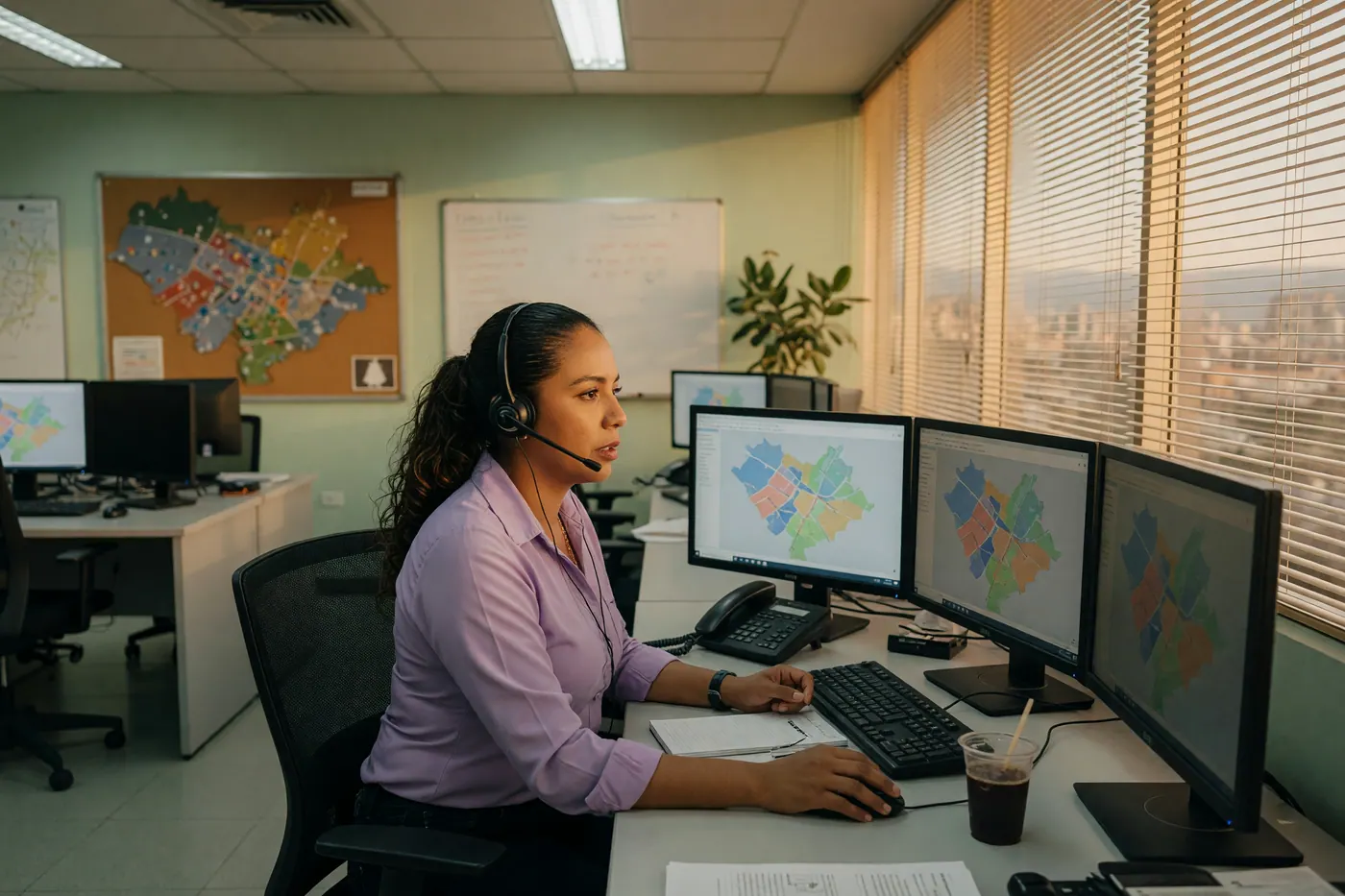
In Colombia, dialing 123 connects you to the Número Único de Seguridad y Emergencias (NUSE). Rather than operating as a simple police switchboard, major urban centers operate advanced dispatch hubs. In Bogotá, this is managed by the C4 (Centro de Comando, Control, Comunicaciones y Cómputo), which coordinates seven key public safety institutions: the National Police, CRUE (Medical Dispatch), Firefighters, IDIGER (Disaster Management), Secretariat of Mobility, Secretariat of Women, and IDPYBA (Animal Welfare).
Similarly, in Medellín, the system is run through SIES-M (Sistema Integrado de Emergencias y Seguridad Metropolitana). When you place a call, the initial intake operator classifies your situation based on risk and routes the file immediately to the appropriate institutional desk. For criminal activity or active threats, radio dispatchers broadcast details directly to local neighborhood patrol units, known as cuadrantes.
Dialing 123 as a Foreigner: Language Realities & Address Formatting
One common concern for foreign residents is the language barrier. While main command hubs in major metropolitan areas maintain access to bilingual dispatchers, primary intake operators speak native Spanish. If you do not speak Spanish fluently, state “Inglés, por favor” clearly at the start of the call. If no English speaker is immediately available on that shift, state your exact city, neighborhood, and physical street address slowly.
In Colombia, giving landmarks alone is rarely sufficient for fast dispatch. You must provide standard grid address coordinates:
- Street type & number: E.g., Carrera 43A or Calle 10.
- Building number: E.g., # 11-25 (indicating 25 meters from Calle/Carrera 11).
- Interior/Apartment: Apartment, tower, or suite numbers.
- Barrio & City: E.g., Barrio El Poblado, Medellín or Barrio Chapinero, Bogotá.
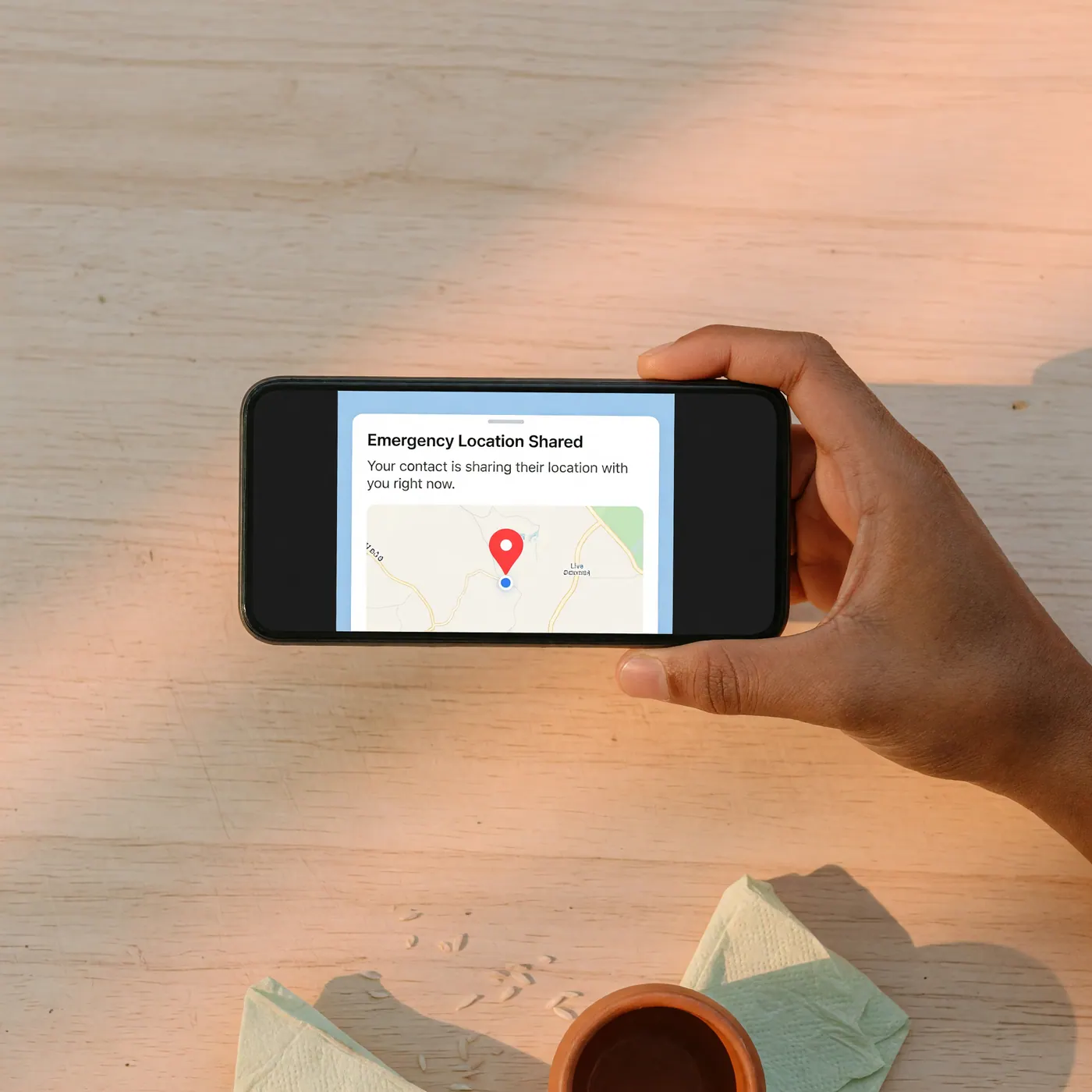
Carbyne GPS Technology: Real-Time Location & Silent Messaging
To overcome vague directions or language barriers, municipal emergency command centers in Colombia leverage integrated technology called Carbyne. When you call 123 from a smartphone, the operator can push a secure text message or WhatsApp link directly to your mobile number.
Tapping this link grants temporary browser permission to share your device's exact GPS coordinates directly with the dispatch screen. In critical situations where speaking aloud could place you in danger, the link allows you to engage in a silent text chat or stream live video directly to dispatchers. This service operates smoothly across cellular networks without requiring you to install any external application beforehand.
Medical Dispatch & CRUE: How Public Ambulances Function
When you request medical assistance through 123, the intake officer transfers your call to CRUE (Centro Regulador de Urgencias y Emergencias). CRUE medical personnel conduct immediate phone triage based on clinical severity before dispatching an ambulance unit.
Because municipal public ambulance fleets are prioritized for severe, life-threatening traumas and accidents, response times for lower-priority calls can vary. Foreigners holding private prepaid medical plans (Medicina Prepagada) or private expat health coverage should also keep their provider's direct dispatch line saved on their phone, as private insurers may offer a separate private ambulance dispatch route.
Código Dorado: Colombia's National Mental Health Crisis Protocol
For mental health emergencies, severe emotional distress, or acute psychiatric crises, Colombia established a dedicated response mechanism known as Código Dorado. Originally developed as a municipal strategy, Código Dorado was formalized as a national emergency standard under Ministry of Health (MinSalud) Resolution 0347 of March 2026.
When you call 123 and indicate a mental health crisis or risk of self-harm, operators activate the Código Dorado route. Key elements of this protocol include:
- Direct Medical Dispatch: CRUE coordinates medical or psychological crisis response based on urgency and available local resources.
- Bypassing EPS Administrative Barriers: Under Resolution 0347 of 2026, emergency rooms and care centers are required to provide immediate psychiatric triage and stabilization without demanding prior EPS insurance authorizations or paperwork.
- Integrated Crisis Networks: In cities like Medellín, 123 operators work with dedicated mental health support routes such as Línea Amiga to offer telephone support while the emergency response is coordinated.
For detailed phone support options and community counseling resources, read our comprehensive mental health crisis lines and Línea 106 guide.
Legal Penalties for Misusing Colombia's 123 System
Because emergency dispatch centers handle critical life-safety traffic, Colombian law strictly penalizes non-emergency, prank, or abusive calls. Under Ley 2197 de 2022 (updating the National Code of Security and Citizen Coexistence), placing improper or false calls to 123 incurs a Multa Tipo 4 fine, amounting to up to 16 daily minimum legal wages (SMDLV). Repeat offenders risk cancellation of the telephone line associated with the account. Keeping emergency lines clear ensures rapid response times for everyone in the community.
Frequently Asked Questions
❓ Can I call 123 in Colombia without a local SIM card or active phone plan?
Yes, 123 is a toll-free emergency number accessible nationwide from any mobile phone or landline. You do not need active mobile data or airtime credit to place the call.
❓ Is English translation available on Colombia's 123 emergency line?
While major dispatch centers in Bogotá and Medellín have some bilingual staff, immediate English translation is not guaranteed on every shift. State “Inglés por favor” right away, speak slowly, and provide your address in clear Spanish format.
❓ How does location tracking work when calling 123 in Colombia?
Dispatch centers use Carbyne technology to send callers a secure SMS or WhatsApp link. Tapping the link shares your smartphone's real-time GPS coordinates directly with the operator's map screen without requiring you to download an app.
❓ What is Código Dorado and how is it activated through 123?
Código Dorado is a national psychiatric crisis protocol established under MinSalud Resolution 0347 of March 2026. Requesting it via 123 triggers medical coordination and immediate hospital emergency triage without requiring prior insurance pre-authorization.
❓ Does calling 123 automatically send a public ambulance?
No. 123 routes medical requests to CRUE dispatchers, who perform phone triage to evaluate clinical severity and available resources. For non-life-threatening conditions, dispatch times vary, so expats with private insurance should also keep their provider's direct number accessible.
❓ What are the legal penalties for false or prank calls to 123 in Colombia?
False 123 calls can trigger a Tipo 4 fine. Under Ley 2197 de 2022, the penalty can reach 16 daily minimum legal wages (SMDLV), with potential cancellation of the associated phone line.


Comments
Loading comments...
Checking sign-in status...