
How to Pay for Emergency Ambulance & Hospital Triage in Colombia: Expat Protocol
Navigating a medical crisis in Colombia as a foreigner can feel daunting without local EPS health coverage. Here is how emergency ambulance dispatch, mandatory hospital triage, credit card deposits, and insurance reimbursements actually work.

IDIOMA DEL ARTÍCULO
Showing original language
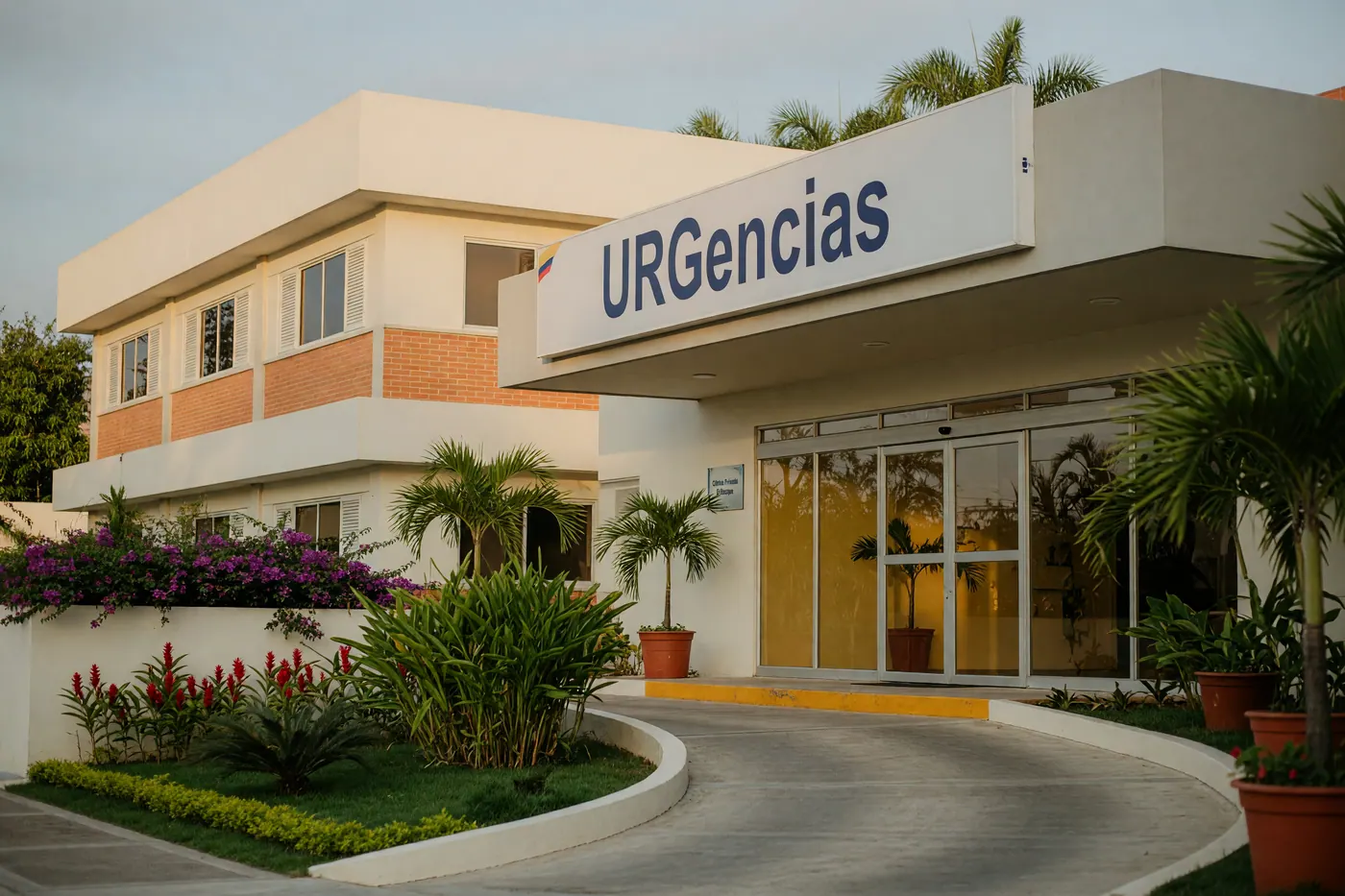
Colombia boasts some of Latin America’s top-ranked hospitals, featuring advanced medical technology and internationally trained physicians in major hubs like Bogotá, Medellín, and Cali. Yet finding yourself in an ambulance or waiting outside an emergency triage unit without local public healthcare coverage (EPS) can feel genuinely stressful. Between navigating medical Spanish, understanding triage priority tags, and figuring out whether a private clinic expects a large cash deposit, foreigners often feel caught off guard during acute medical situations.
Understanding your rights under Colombian health statutory law, how public medical dispatch works, and how to coordinate payment guarantees between your international travel insurance and local billing desks will save you a denied claim and vital minutes when a crisis strikes. If you are preparing your medical emergency baseline, start by reviewing our comprehensive guide to medical emergency rooms and private clinics in Colombia.
Ley 1751 & Your Legal Right to Immediate Emergency Care
The single most important legal reality for any foreigner in Colombia is Ley Estatutaria 1751 de 2015 (Article 14). Under this law, every public hospital and private clinic (Institución Prestadora de Salud or IPS) throughout Colombia is legally obligated to provide mandatory initial emergency stabilization (atención inicial de urgencias) to any human being on Colombian soil—regardless of nationality, visa status, or immediate financial means.
This means that in a true, immediate, life-or-limb threatening crisis, no emergency room intake nurse or security guard can legally turn you away at the door or demand a credit card pre-authorization before doctors stabilize your vital functions. Demanding upfront deposits before life-saving intervention is an explicit violation of Colombian healthcare statutory protections.
However, you must understand the distinction between vital stabilization and subsequent hospital care. Ley 1751 protects your right to not die on an intake gurney; it does not make your medical care free. The moment your airway, cardiovascular rhythm, severe trauma, or acute neurological state is medically stabilized, the statutory emergency mandate ends. From that second forward, the clinic has the full legal right to bill for hospital observation beds, surgical theaters, specialized medications, and intensive care unit (ICU) admissions. If you are an uninsured foreign patient without an accepted Colombian EPS, the billing department will initiate private financial intake.
Calling an Ambulance (123 & CRUE) vs. Private Hospital Transit
When an emergency happens, your first instinct might be to call an ambulance immediately. In Colombia, calling for medical assistance requires dialing the national unified emergency line: 123. For an in-depth breakdown of how local dispatch operators handle language barriers and response protocols, see our guide on using the Colombian emergency number 123.
When you request medical help via 123, your call is transferred to the Centro Regulador de Urgencias y Emergencias (CRUE), the regional regulatory center that monitors emergency beds and public municipal ambulance dispatch across metropolitan zones. Here is how dispatch realities unfold in daily life:
- Public CRUE Ambulances: If an ambulance is dispatched via CRUE for a severe traffic accident or an acute life-threatening collapse in a public space, this transit is integrated into the municipal emergency network. You do not hand cash to the paramedics upon arrival.
- Traffic Gridlock Realities: In dense urban centers like Bogotá or Medellín, traffic congestion can cause significant ambulance delays for non-trauma calls. If the patient is conscious, stable, and ambulatory (e.g., suffering a severe laceration, a broken wrist, or acute abdominal pain), jumping into an app-based taxi or private ride directly to the nearest top-tier private clinic's emergency department is almost universally faster than waiting curbside for a municipal ambulance.
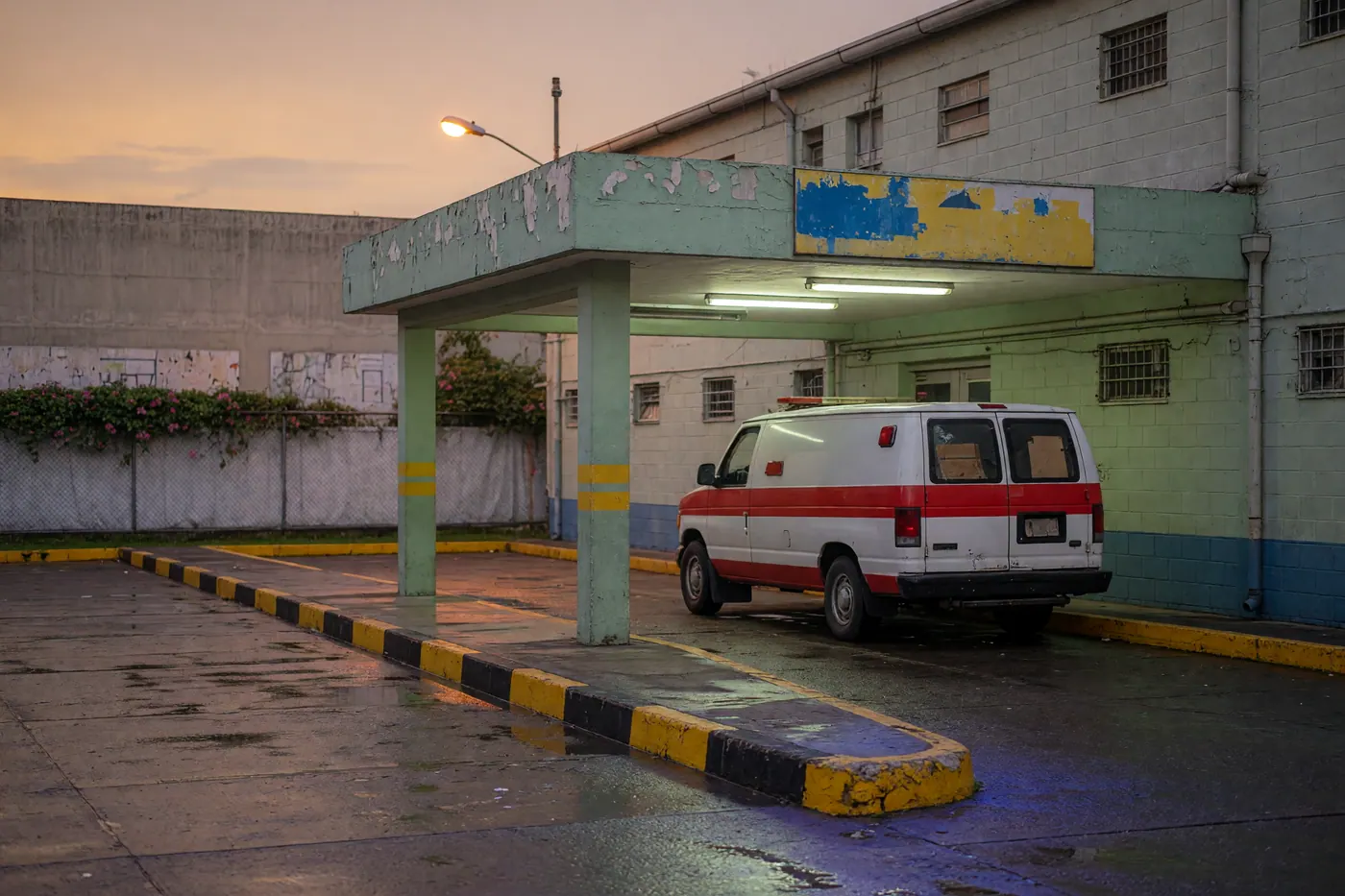
- Private Ambulance Services: Many expats and private residential complexes subscribe to private emergency medical providers (such as Emermédica, Coomeva Emergencia Médica, or EMI). Non-subscribers calling private commercial ambulances for non-CRUE transport or scheduled inter-facility clinic transfers will be billed private out-of-pocket rates. These commercial fees vary based on transit distance, municipal jurisdiction, and whether the vehicle is classified as basic life support (ambulancia básica) or advanced critical care (ambulancia medicalizada).

Navigating Colombian Hospital Triage (Resolución 5596)
When you arrive at a Colombian emergency department (Servicio de Urgencias), you are not seen based on who arrived first. Instead, healthcare providers triage every arrival under Resolución 5596 de 2015 issued by the Ministerio de Salud y Protección Social. This mandatory system classifies incoming patients into five standardized clinical tiers:
| Triage Level | Severity & Color Code | Target Medical Response Time | Administrative & Payment Protocol |
|---|---|---|---|
| Triage I | Resuscitation (Red) | Immediate / 0 minutes | Statutory treatment under Ley 1751. Zero administrative or financial delays permitted before vital stabilization. |
| Triage II | Emergency (Orange) | Within 30 minutes | High risk of rapid clinical deterioration. Clinical priority over payment processing; billing coordinated concurrently with family. |
| Triage III | Urgent (Yellow) | Evaluated by facility capacity | Physiologically stable, but diagnostic tests (labs, ultrasound, X-rays) needed. Administrative intake desk processes payment or insurance pre-check before ordering tests. |
| Triage IV | Semi-Urgent (Green) | Variable / outpatient redirect | Minor illness or mild symptoms. Patient is classified as non-emergency; private clinics require upfront consultation fees or redirect to urgent care. |
| Triage V | Non-Urgent (Blue) | Scheduled outpatient care | Subacute or chronic complaints with no acute risk. Redirected to standard outpatient consults (consulta externa). |
Many foreign travelers arrive at private hospital emergency rooms with food poisoning, uncomplicated traveler’s diarrhea, or a mild flu, and feel frustrated when placed in Triage IV or Triage III and asked to pay an upfront consultation fee before seeing a doctor. Because you are not in an immediately life-threatening state, the clinic is legally operating a standard outpatient medical service, requiring upfront verification of insurance, payment guarantees, or credit card billing as a private patient (paciente particular).
Private Clinic Admissions, Credit Card Holds & Payment Guarantees
When entering a premier private hospital—such as Fundación Santa Fe de Bogotá, Hospital Pablo Tobón Uribe in Medellín, or Centro Médico Imbanaco in Cali—the international relations office or billing desk (Admisiones y Facturación) will ask for your identification (original passport or Cédula de Extranjería) and payment mechanism.
Unless you are enrolled in a domestic EPS or Colombian private prepaid medicine policy (medicina prepagada), you are categorized as a private out-of-pocket patient. Here is how the billing process functions:
1. Direct Billing via Guarantee of Payment (GOP)
If you carry comprehensive expat health insurance (such as Cigna Global, Allianz Care, Bupa, or GeoBlue) or a high-tier travel insurance policy, the clinic’s international patient desk will attempt to verify coverage directly. For non-immediate hospitalizations, the hospital requests a formal Guarantee of Payment (GOP) letter from your insurer. Once your insurer faxes or emails an approved GOP specifying diagnostic coverage and spending limits, the clinic bills the insurer directly, and you only pay non-covered incidentals or deductibles.
2. The Out-of-Pocket Credit Card Hold
If you arrive during the night, during a holiday weekend, or if your travel insurer operates strictly on a “pay-and-claim” reimbursement model, the hospital admissions desk will require a financial guarantee before assigning a hospital bed or scheduling major diagnostic imaging. This guarantee is typically processed as an upfront authorization hold on an international credit card, or via a signed promissory note (pagaré).
The exact deposit amount is never a single flat government-mandated fee; it varies significantly depending on whether you are admitted to general observation, an intermediate care unit, or a surgical floor. Always maintain an emergency credit card with a substantial available credit limit to absorb unexpected intake holds while in transit abroad.
3. Traffic Collisions and Mandatory SOAT Coverage
If your emergency room visit is the result of a motor vehicle or motorcycle collision in Colombia, medical treatment is uniquely governed by statutory automotive law. Every motorized vehicle operating in Colombia is required to carry SOAT (mandatory traffic-accident insurance). Under SOAT regulations, emergency medical expenses, surgery, and immediate hospitalization resulting from traffic crashes are charged directly to the vehicle’s SOAT insurance policy up to mandatory legal statutory limits, regardless of who was at fault in the collision. Only after statutory SOAT coverage limits are exhausted does your personal private travel or expat health insurance policy engage.
The Insurance Claim Checklist: Getting Reimbursed Back Home
If you pay for your emergency hospital care out of pocket using your own cards or funds, getting reimbursed by your domestic insurer back home requires strict adherence to Colombian administrative tax rules. A simple register slip or handwritten receipt will result in immediate claim denial from foreign insurers.
Before you are discharged from the clinic, walk directly to the billing department (Oficina de Cartera / Facturación) and ensure you have secured the following three mandatory documents:
- Factura Electrónica de Venta (Electronic Tax Invoice): Colombia operates under strict DIAN (Dirección de Impuestos y Aduanas Nacionales) electronic invoicing mandates. Your medical bill must be an official PDF Factura Electrónica displaying the alphanumeric CUFE (Código Único de Factura Electrónica), QR validation code, your full passport number, and an itemized breakdown of clinical honorariums, bed days, laboratory codes, and medications.
- The Medical Epicrisis: This is the official comprehensive discharge narrative prepared and signed by your attending Colombian physician. It details your chief admission complaint, triage score, diagnostic codes (CIE-10), vital sign evolution, clinical exam notes, administered medications, and final discharge status. Foreign health insurers will not reimburse claims without the official Epicrisis.
- Diagnostic Reports and Pharmacy Vouchers: Request physical or digital PDF copies of all diagnostic radiology reports (ultrasound, CT scans, X-rays), blood lab results, and itemized pharmacy dispensation dockets.
According to active listings on Colombia Move (September 2026), there are 24 active room-rental ads and 14 recent ones, which is the practical option if follow-up care means you need a room near a clinic instead of stretching a hotel stay.
Frequently Asked Questions
❓ Can a Colombian hospital refuse to treat me in an emergency if I do not have insurance or cash?
No. Under Article 14 of Ley Estatutaria 1751 de 2015, all public and private healthcare facilities in Colombia are legally required to provide initial emergency stabilization without demanding upfront payment, guarantees, or insurance verification when a patient faces a vital life-threatening emergency.
❓ How much does calling an emergency ambulance cost in Colombia?
Public emergency ambulances dispatched through the municipal Línea 123 and CRUE system for acute vital emergencies in public spaces are provided as part of the public emergency service. However, private commercial ambulances or non-emergency medical transfers charge out-of-pocket fees that vary based on travel distance and whether the unit is basic or medicalized. Those public-versus-private rules were still in force in September 2026.
❓ What is the difference between Triage I and Triage III in a Colombian emergency room?
Triage I represents an immediate life-threatening crisis requiring instant resuscitation where administrative and payment steps are strictly forbidden before stabilization. Triage III indicates a physiologically stable patient who requires diagnostic testing; in Triage III, private hospitals routinely process admissions paperwork, insurance confirmation, or payment deposits before proceeding. That split was still the national system in September 2026.
❓ Why do private clinics ask for a credit card deposit when admitting a foreign patient?
For non-life-threatening treatments, ongoing hospitalization, or continued care once vital stabilization has finished, private hospitals require financial guarantees to ensure payment. If you do not have domestic EPS coverage or an approved direct-billing guarantee letter from an international insurer, the clinic will place an authorization hold on a credit card. Deposit amounts vary by hospital, and that practice was still common in September 2026.
❓ What documents do I need from a Colombian clinic to claim insurance reimbursement?
You must obtain the official DIAN Factura Electrónica with its CUFE code and itemized charges. Pair it with the physician-signed Epicrisis and every lab or imaging report. Insurers expected that packet as of September 2026.
❓ Does mandatory vehicle insurance (SOAT) cover my hospital care if I am in a road accident?
Yes. Colombia's mandatory traffic accident insurance, SOAT, covers initial emergency care, surgery, and hospital treatment for a crash victim up to statutory legal caps before private insurance or out-of-pocket billing begins. Those statutory caps were still the rule in September 2026.



Comments
Loading comments...
Checking sign-in status...