
Colombia Real Estate Investor Visa (M-10): The Property Route to Residency
Buying property in Colombia can support an M investor visa, but the bureaucratic reality is unforgiving. Here is the exact 2026 math, the central bank rules, and the renewal trap every foreign buyer must understand.
IDIOMA DEL ARTÍCULO
Showing original language
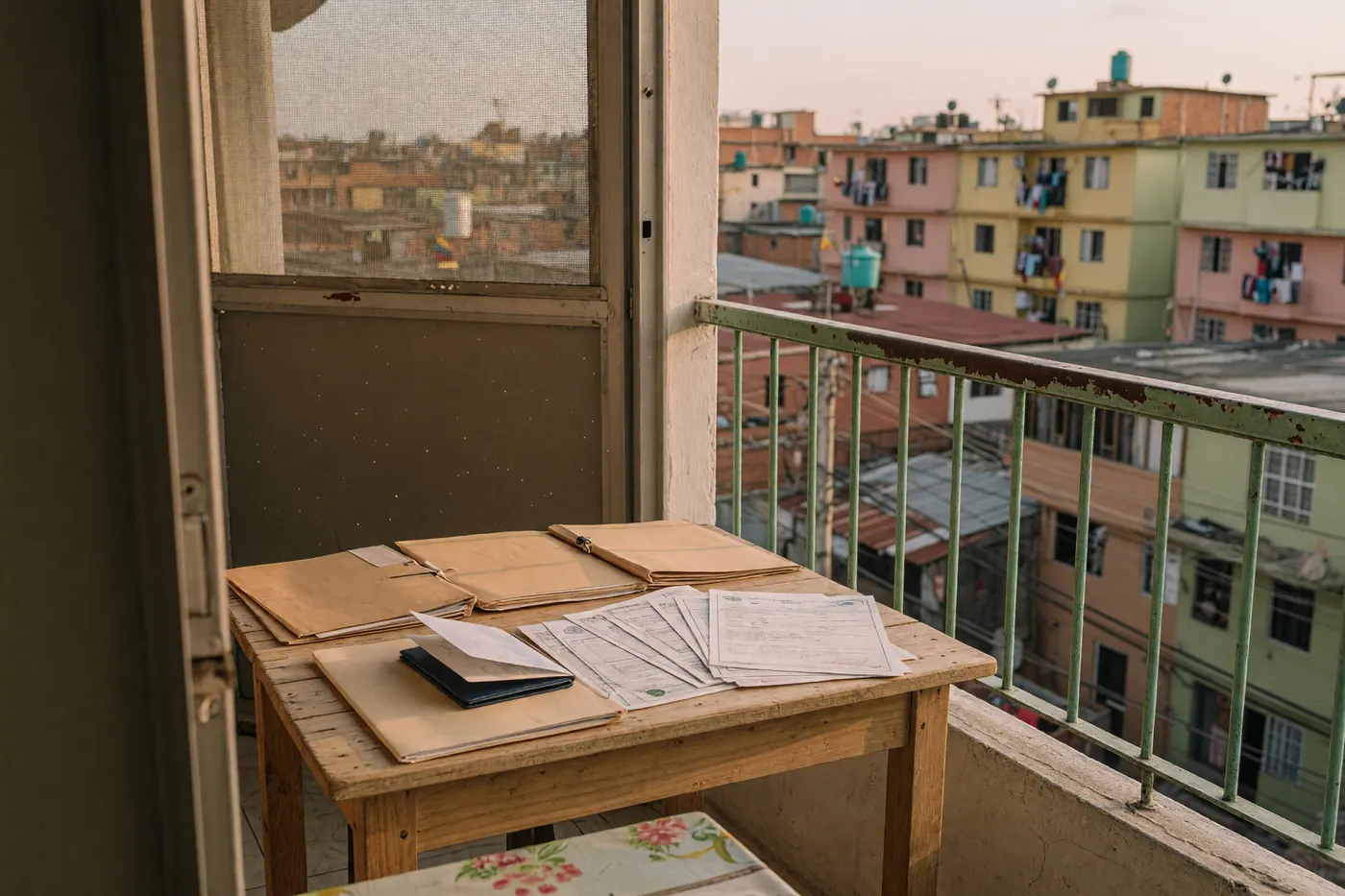
I was sitting on a balcony in Laureles last week talking to an expat who thought buying a $200,000 apartment guaranteed him a Colombian passport. I had to burst his bubble. The real estate route to residency here—officially the Visa M Inversionista—is entirely possible, but it is deeply bureaucratic. It relies on strict math, precise timelines, and central bank registrations that can ruin your plans if you miss a single step.
Quick Answer: The Colombia Real Estate Investor Visa requires a minimum property investment of 350 SMMLV (COP 612,816,750 in 2026). The property must be exclusively in your name, the funds must be formally registered as Foreign Direct Investment with the Banco de la República, and the visa is valid for up to three years. It does not grant instant permanent residency.
The 2026 Math: Why Your Deed Value is Everything
To qualify for the real estate investment visa, you must purchase property worth at least 350 times the current Colombian monthly minimum wage (SMMLV) at the exact time of your application. (Note: Non-real-estate foreign direct investment requires more than 650 SMMLV).
Based on the reported 2026 SMMLV of COP 1,750,905, the 350 SMMLV threshold equals exactly COP 612,816,750. But remember, visa officers only look at the Colombian peso amount printed on your deed, not any foreign-currency equivalent you wired.
Here is the trap: market price means nothing. Private agreements mean nothing. The Cancillería only cares about the formal value printed on your Escritura Pública (public deed) and your Certificado de Tradición y Libertad.
In Colombia, buyers and sellers sometimes under-declare the property value on the deed to save on local taxes. If you do this and your official deed value drops below COP 612,816,750, your visa will be rejected—even if you actually wired a million dollars to the seller.
The 183-Day Trap: Exchange Resident vs. Tax Resident
This is the number one reason I see these visas fail.
To buy property for this visa, your money must be registered as Foreign Direct Investment (FDI) with the Banco de la República. But you can only legally register FDI if you are considered a "non-resident" for exchange purposes.
Under Colombian law, you become an exchange resident the moment you spend 183 days in the country within a 365-day period. If you arrive on a digital nomad visa, rent for eight months to test the waters, and then decide to buy an apartment, you are already past that line. The central bank will treat your incoming wire as local domestic funds, not foreign investment. Without that FDI registration extract, Cancillería will deny the M visa.
The Strict Step-by-Step Sequence
If you are within your 182-day safe window, the order of operations for buying property in Colombia as a foreigner is rigid.
- Get your RUT: You need a Registro Único Tributario from the DIAN (tax authority) to close on a property. You cannot skip this.
- Wire the funds correctly: Send the money through an authorized intermediary (IMC) like a major Colombian bank or brokerage so it is properly channeled and automatically registered as FDI.
- Close and register: Sign the deed before a notary, ensure the full value is recorded, and get your new Certificado de Tradición y Libertad showing you as the sole owner.
- Apply for the visa: Submit your digital dossier to the Cancillería portal.

Consular Fees, Cédulas, and the Repatriation Clause
Let's talk about the actual costs in 2026, because almost every old blog post has this wrong.
The Cancillería charges a two-part fee pegged to the USD and reset every year: a study fee of roughly USD 52–55 just to look at your file, and an issuance fee for an M visa in the range of about USD 230–270 if approved. Once approved, you have a short window to register with Migración Colombia and pay separately for your physical Cédula de Extranjería. Confirm the exact current amounts on the official Cancillería site before you pay—they are reset annually.
Then there is the health insurance. A local Colombian EPS will not work. You need an all-risk international or travel medical policy that explicitly covers hospitalization, illness, accident, death, and—most importantly—repatriation. If the phrase "repatriation of mortal remains" is missing from your policy certificate, they will kick your application back.
You also need an apostilled criminal background check from anywhere you have lived in the last three years, issued within the last three months. For US citizens, this means an FBI Identity History Summary apostilled by the State Department in Washington D.C., which can take weeks to process.
Should You Buy Property Just for the Visa?
Honestly, skip the real estate route if your only goal is a cheap residency permit.
The M investor visa may be valid for up to three years, though the exact grant period should be verified with Cancillería or an immigration attorney before you commit to a purchase. The biggest downside is the renewal trap. If you buy a property for exactly 350 SMMLV today, next year the minimum wage will increase. When you go to renew your visa, your static deed value will mathematically fall below the new 350 SMMLV threshold. You would literally have to buy more real estate—like a parking space or storage unit—to push your total FDI back over the line.
Finding the right property is also competitive right now. According to active listings on Colombia Move (June 2026), there are currently 81 active housing listings (vivienda) and just 3 commercial properties for sale—formal, well-documented supply is still thin in some categories. You shouldn't rush into a bad deal just to beat an immigration clock. Take your time investing in Colombian real estate safely.
Keep in mind that the M visa can accumulate time toward a Resident (R) visa after 5 continuous years. But if you leave Colombia for more than 180 continuous calendar days in a 365-day period, your M visa loses validity automatically and your clock resets. And no, holding a salvoconducto does not count toward your accumulated continuity time.
Frequently Asked Questions
❓ Can buying property in Colombia get me residency?
Yes, buying property can support an M investor visa, but it does not grant instant permanent residency. Under the Cancillería rules in force in 2026, you must hold the M visa continuously for 5 years to qualify for a Resident (R) visa.
❓ How much property do I need to buy for the investor visa in 2026?
You must invest at least 350 SMMLV, which equals COP 612,816,750 based on the reported 2026 minimum wage. The property must be exclusively in your name.
❓ Does the market price or deed value matter for the visa?
Do not rely on market price, offer price, or a private agreement alone. The visa file depends on formal property ownership, the Certificado de Tradición y Libertad, the 350 SMMLV threshold, and Banco de la República investment registration and extracts (per Cancillería requirements, Resolución 5477 de 2022). Under-declared deed values can fall short of the legal threshold even if the agreed price was higher.
❓ Do I need to register the money with Banco de la República?
Yes, Cancillería requires investment extracts for the real estate route. The funds must be formally registered as Foreign Direct Investment (FDI) when they enter the country.
❓ How long is the M investor visa valid?
The M investor visa may be valid for up to 3 years under current Cancillería rules (Resolución 5477 de 2022, as of June 2026). The exact grant should be verified with Cancillería or an immigration attorney before relying on a purchase plan.
❓ Does the M investor visa lead to permanent residency?
It can count toward a resident visa after 5 years as a holder under current 2026 rules, but strict continuity rules apply. If you leave Colombia for more than 180 continuous days in a year, you lose your visa validity and reset your timeline.
❓ What can make the property visa fail?
Common failure points include a weak title, the wrong ownership name, missing central bank investment registration, falling below the 350 SMMLV threshold at renewal, or lacking health insurance with a repatriation clause.



Comments
Loading comments...
Checking sign-in status...