
Country house in Colombia: A guide to buying and selling with confidence
A country house is not a farm or a plot of land. This guide explains the differences, the zones by climate, a checklist before buying, and how to sell yours without a commission.
IDIOMA DEL ARTÍCULO
Showing original language
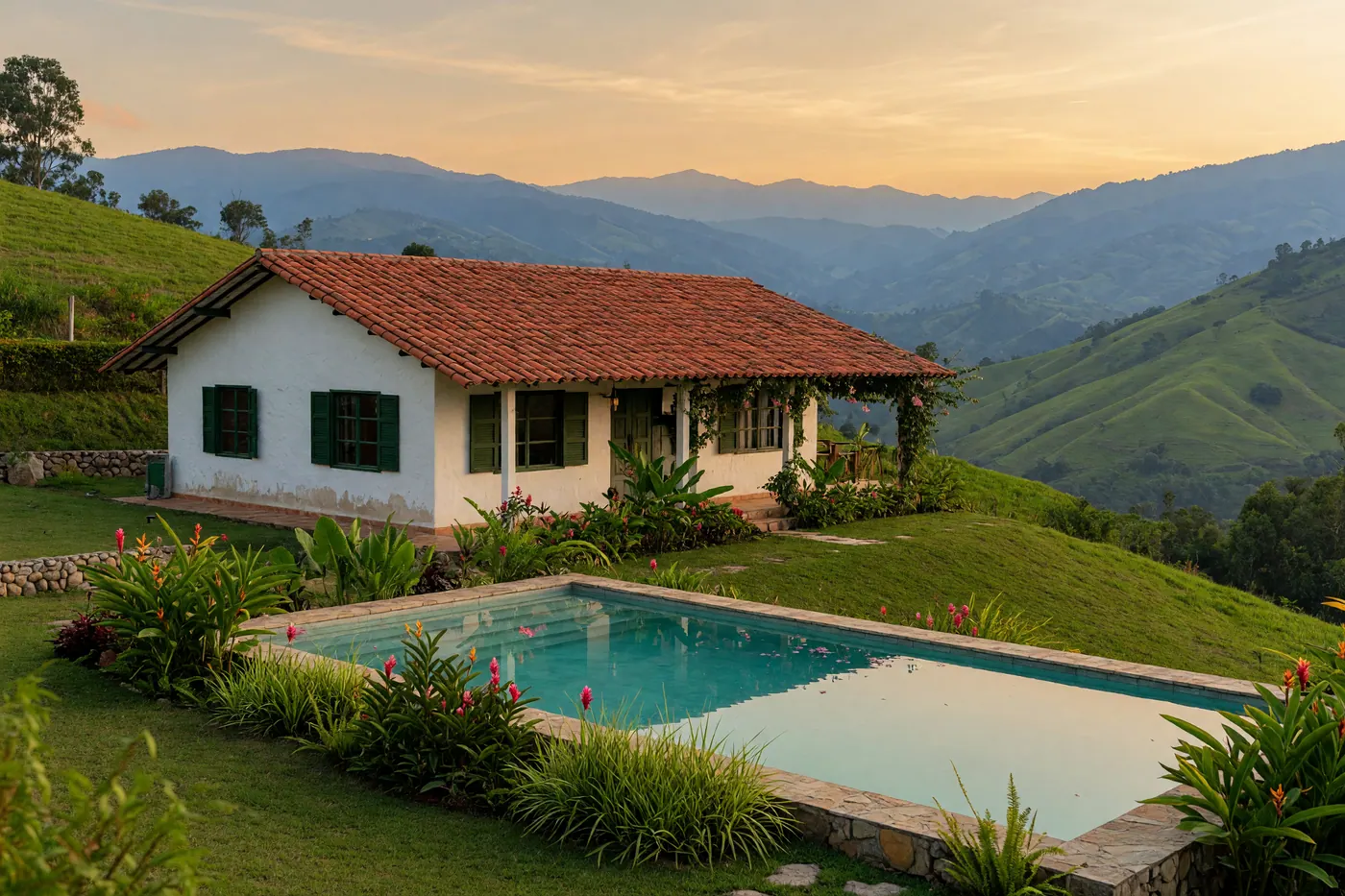
Owning a country house is one of the most common dreams in Colombia: clean air, green spaces, a pool, room for the family, and being just an hour away from the city. But between the dream and the deed, there are decisions that should be made with a cool head, because buying in the countryside is very different from buying an apartment in the city.
A country house is bought for the climate, travel time, water, road access, and legal title just as much as for the pretty photo. And it sells better when the listing answers those questions before the buyer has to ask them. If you want to see real options right now, you can see farms and lots available on Colombia Move — posting is completely free.
This guide is for those who want to buy their first country house and for those who want to sell theirs without intermediaries. It does not replace the advice of a lawyer or a surveyor; it helps you understand the land, avoid surprises, and negotiate with clarity.
Quick Answer
- A country house is for living or relaxing, not for commercial production like a farm, nor for development like a lot.
- They are grouped by climate: cold near Bogotá (La Calera, Sopó), warm for weekends (Anapoima, La Mesa), and the highlands of Eastern Antioquia (Rionegro, La Ceja, El Retiro).
- Before visiting: certificate of tradition, land use, horizontal property or subdivision, water, road access, and internet.
- Costs that get forgotten: property tax, maintenance fees, maintenance, and rural utilities.
- To sell: post clear data and filter out curiosity seekers; contact directly without portal commissions.
Country house, farm, or lot: they are not the same
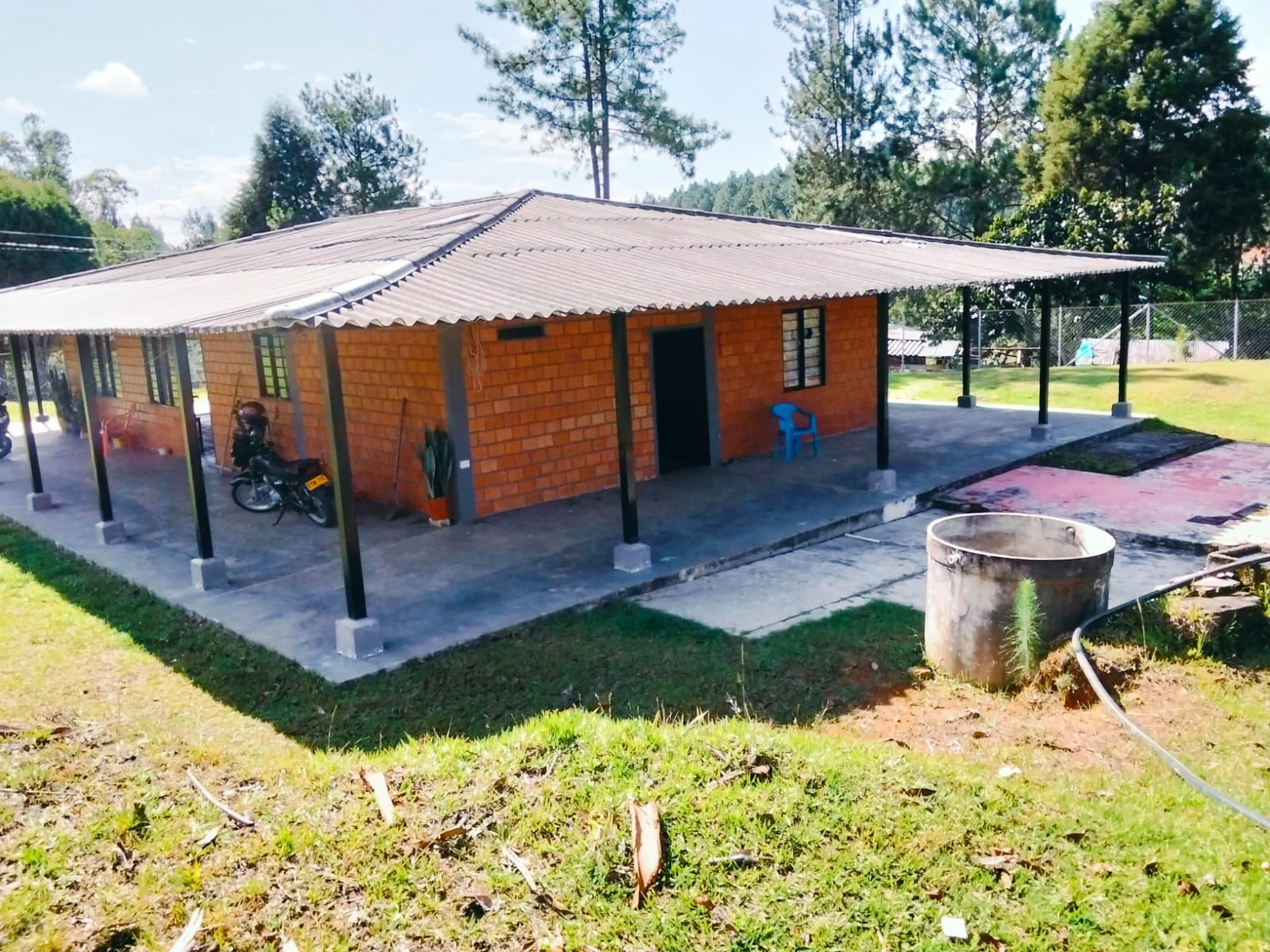
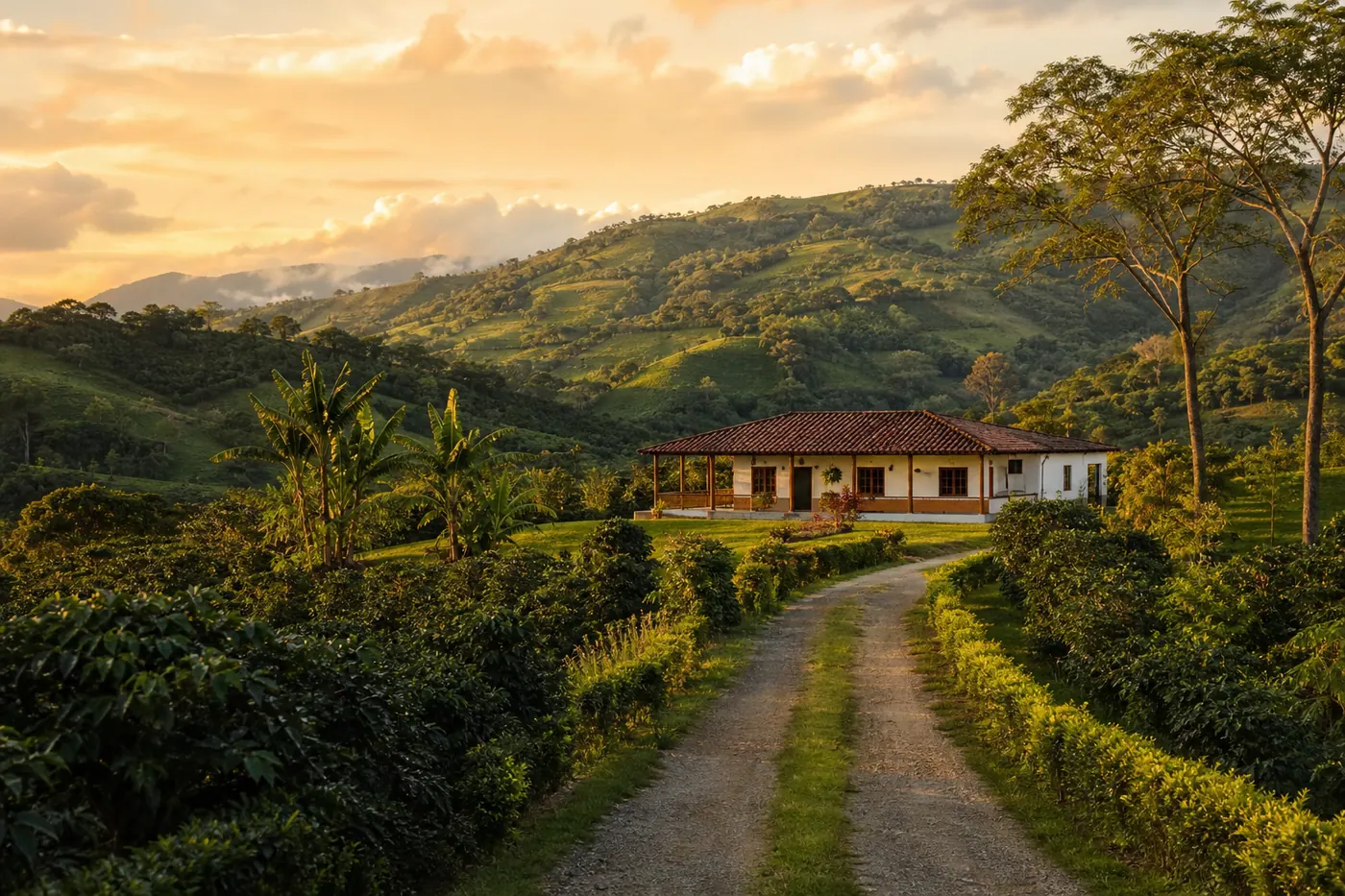
The most expensive confusion starts with the name. A country house is a residence designed for living or relaxing comfortably on the outskirts of the city, usually with the services and finishes of an urban home in a rural setting. A farm (finca) combines housing with more land and is usually geared toward cultivation, livestock, or recreation, with operating costs (a caretaker, animals, crops) that a country house in a condominium does not have.
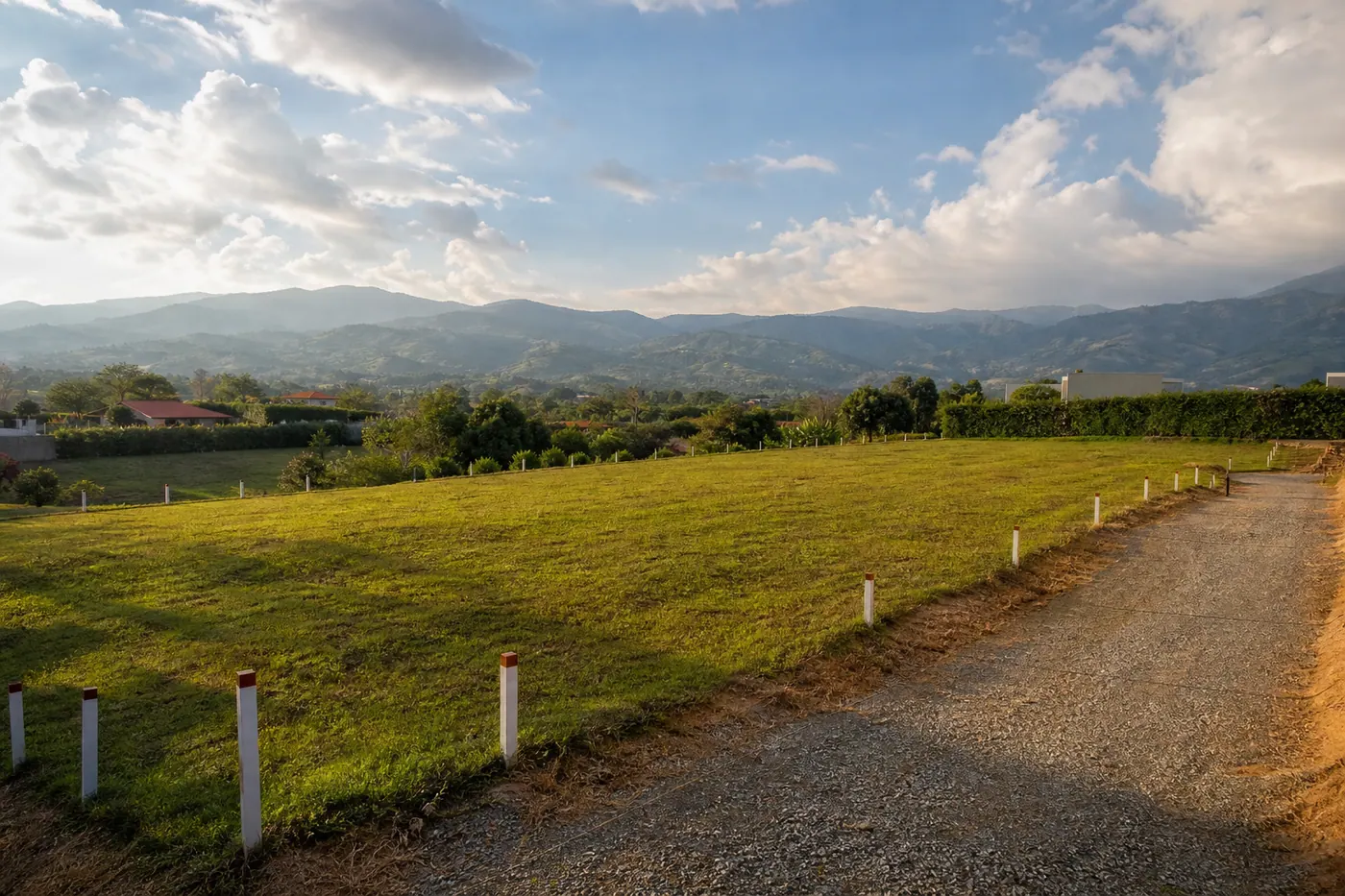
A country lot is land to build on later or to invest in, and the risk changes there: what matters is whether you can actually build on it, not the view. And a parcelación or country condominium is a collection of houses or lots with common areas; if it is under a horizontal property regime, there are bylaws, administration fees, and shared rules.
Knowing what you are looking for saves weeks of time. Someone who wants to relax on weekends does not need the same thing as someone who is going to live there all year round or someone buying for capital appreciation.
Where are the country houses in Colombia?
The market is organized by climate and proximity to major cities. In Eastern Antioquia, about 45 minutes to an hour from Medellín, is the most sought-after plateau: Rionegro, Llanogrande, La Ceja y El Retiro, with cold and temperate climates, featuring condominiums near clubs and schools.
Near Bogotá there are two worlds. In the cold climate Savannah are La Calera, Sopó, Tabio, Tenjo, and Subachoque, ideal for living all year round. And in the warm weekend municipalities are Anapoima, La Mesa, La Vega and Villeta, where the sun rules. In the southwest, near Cali, popular areas are Pance, La Buitrera, Jamundí, and Dapa; and in the Coffee Axis, the Cerritos corridor between Pereira and Armenia.
The thermal zone is not a minor detail: it defines whether you will use a fireplace or a fan, what the garden will be like, and how much you will pay for utilities. Decide on the climate and the travel time you can tolerate each week first; that narrows down the map faster than your budget does.
Before buying: the list that avoids surprises
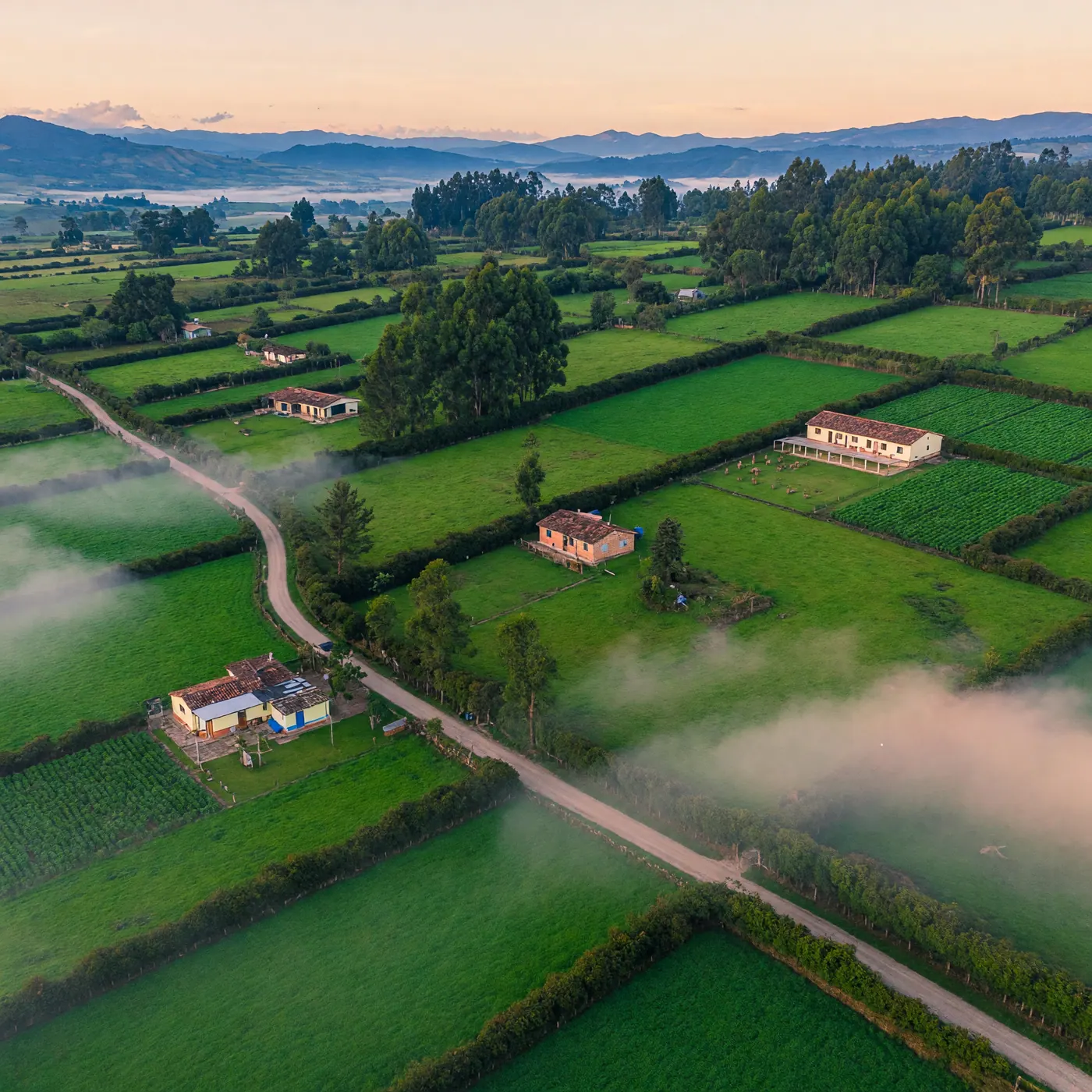
In the countryside, problems aren't visible in photos. The first document is the Certificate of Tradition and Freedom (Certificado de Libertad y Tradición), which can be checked via the Superintendence of Notary and Registry. There you verify that the person selling is the owner and that there are no mortgages, liens, or measures blocking the sale. Read it along with the deed, never just one or the other.
The second is land use. The Ministry of Housing defines the concept of land use as the designation that territorial planning gives to each property. In plain English: just because the land is empty doesn't mean you can build or expand whatever you want. Confirm it at the municipal planning office before paying.
Then come water and utilities. Ask if the water comes from a rural aqueduct, a well, or a spring; a well or private intake usually requires a water concession from the regional corporation (CAR, Cornare, CVC, depending on the area). Also check the type of road (paved or unpaved and who maintains it), the available internet, and the status of property taxes and administration fees.
If you are going to buy, it is also worth reading the guide to buying a farm in Colombia and, if you are looking at land to build, buying rural land in Colombia. Many legal steps are shared between a farm and a country house.
How much does it cost to own a country house
The purchase price is only one part. The property tax is calculated on the cadastral appraisal at a rate set by each municipal council; Law 44 of 1990 generally places it between 5 and 16 per thousand, so it varies greatly between municipalities. Ask for the latest receipt to avoid surprises. If you want to understand how it works by city, look at the property tax guide.
If the house is in a condominium, there is a management fee: on the order of tens of thousands of pesos per month in mid-range complexes and significantly more in exclusive ones. Add maintenance (gardening and pool cost time or money), the septic tank if there is no sewage system, and rural utilities. Starlink-type satellite internet costs around hundreds of thousands of pesos per month as of 2026 where fiber does not reach; confirm the current rate and coverage before committing.
None of these costs are reasons not to buy; they are reasons to budget well. A poorly calculated country house becomes a burden; a well-calculated one, a good life plan or investment.
Buying to live, relax, or invest?
If it is for living all year round, prioritize a stable climate, a good road, real internet, and proximity to schools and healthcare. If it is for resting, the warm climate and the ease of arriving on a Friday afternoon prevail; look at temperate and warm municipalities near Bogotá or the Eastern Antioquia corridor.
In Antioquia, the Eastern municipalities—El Retiro, La Ceja, and Rionegro—were among those with the highest housing appreciation in 2025 according to the La Lonja de Propiedad Raíz de Medellín y Antioquia (press report). It is a sign of sustained demand, not a promise of profitability.
If you compare areas near Medellín, this comparison of farms, lots, and country houses helps to locate prices and distances; and if you are looking at warm land near Bogotá, check the guide to warm land near Bogotá.
How to sell your country house without intermediaries
Selling in the countryside is selling trust. A successful listing responds quickly: where it is located and how long it takes to reach from the city, what the climate is like, how big the lot and the construction are, what utilities are available, how to access it, and how clear the title is. Without that, the chat fills up with curious people who never visit.
You don't have to upload private documents to the public ad, but you should have them ready: certificate of tradition, deed, property tax, and, if applicable, the horizontal property regulations. Publish the municipality and the sector with a broad reference, and share the exact pin only with filtered buyers. If you want a template, the guide to publishing a farm for sale works, and for lots, how to publish a lot.
As of June 2026, there are country houses published on Colombia Move in Cali, La Vega, Medellín, San Francisco, and Tuluá, among other areas. It is a young inventory, and that is why a well-published country house today competes with few and is seen more. You can avoid the chaos of WhatsApp with a stable listing: read how to search and publish without the mess of WhatsApp.
Publish for free
Publish your country house and reach serious buyers
On Colombia Move, you publish country houses for sale or rent with photos, location, climate, price, and direct contact, without commission. A stable listing that you can share via WhatsApp.
What makes a country house listing reliable
Whether you are buying or selling, this is the list that separates a serious listing from one that only generates noise. If you are going to publish, follow it; if you are going to buy, demand it.
What makes a country house listing reliable
- Municipality, rural area (vereda) or sector, and approximate time to the nearest city.
- Climate or thermal zone (cold, temperate, or warm) and altitude if you know it.
- Lot and construction area, with the source (deed or cadastre).
- Actual utilities: water, electricity, gas, internet, and road type.
- If it is horizontal property, the management fee and what it includes.
- Title status: deed and registration, without promises you cannot keep.
- Real photos of the front, green areas, view, and access (not just the interior).
Frequently Asked Questions
What is the difference between a country house and a farm (finca)?
A country house is a residence to live in or rest near the city, with services and house finishes. A farm combines a residence with more land and is oriented toward crops, livestock, or recreation, with operating expenses (caretaker, animals, crops) that a country house does not have.
What should I check before buying a country house?
Start with the certificate of tradition and freedom and the municipality's land use. Then confirm if it is horizontal property or subdivision, the water source and its concession, the road type, the internet, and that the property tax is up to date. Read everything before handing over money.
How much does a country house cost in Colombia?
There is no single price: it depends on the area, climate, size, and services, and portals show very wide ranges. Instead of focusing on a single number, compare similar properties in the same area and check the current reference value before making an offer.
How do I avoid scams when buying or selling a country house?
Verify the certificate of tradition and freedom and confirm that the seller is the true owner. Be wary of prices well below market, anyone who avoids showing documents, and anyone asking for money in advance; always cross-reference data with the official source before signing.
Do I need a water concession if the house has a well or cistern?
Generally, yes. Water from a well, cistern, or spring usually requires a water concession from the regional autonomous corporation of the area (e.g., CAR, Cornare, or CVC). Confirm that the concession exists, is current, and can be transferred to the new owner.
Can I rent out my country house for seasons?
Yes, but first check the condominium's horizontal property regulations. In warm and tourist areas, seasonal rentals have good demand; some condominiums limit it, and if you formalize it, check the current tourist registration regulation. Also, add cleaning and maintenance.
Where can I publish or sell a country house?
You can post it for free on Colombia Move, in the country house category, with direct contact and no portal commission. Include real photos, location, climate, area, utilities, and the status of the title so the buyer understands everything from the first message.

Comments
Loading comments...
Checking sign-in status...