
How to list a lot for sale in Colombia without wasting time on tire-kickers
A lot doesn't sell based on area and price alone. This guide shows what data to publish, which documents to have ready, and how to filter serious buyers.
IDIOMA DEL ARTÍCULO
Showing original language
Posting a lot for sale seems easy: area, price, location, and some photos. But a serious buyer doesn't just buy land because it's pretty. They buy possibility: what can be built, what services it has, if the deed is clear, if the road is adequate, if the property taxes are in order, and if the lot isn't going to become a headache.
That is why many lot listings receive messages but not buyers. They say “beautiful lot, excellent location, negotiable” and leave out what really matters. The result: curious people, intermediaries, repeated questions, and viewings that go nowhere.
This guide is for owners, family members, local agents, or sellers who want to list a lot or land in Colombia with more clarity. It does not replace legal or urban planning advice; it helps you put together an advertisement that filters better and builds trust from the first message.
Quick answer
- A lot is sold with clarity of use. Area and price are not enough.
- Publish the deed, land registry number, tax status, land use, and access to utilities. Without data, only curious people will reach out.
- Do not hide the location. Provide the municipality, rural area/neighborhood, and a reference; share the exact pin only with screened buyers.
- Explain if it is urban, rural, a subdivision, or a countryside lot. Each buyer is looking for something different.
- Filter before you show the property. Ask about budget, payment method, and what they want to build or do.
A lot is sold based on what it allows you to do.
The difference between a cheap lot and an expensive one is not always the size. Sometimes it is the land use. Sometimes it is having electricity right at the front. Sometimes it is a road that allows construction materials to enter. Sometimes it is having an individual deed and a clear land registry number. The buyer wants to know if the lot serves their plan.
Someone who wants to build a country house does not evaluate things the same way as someone looking for a warehouse, a farm, a subdivision, or an urban lot for housing. If the ad doesn't explain the type of lot, everyone will write to you, but few will be a good fit.
My rule: if a piece of information could kill the sale later, it must appear sooner. It is better to lose a curious person in the ad than to lose three weeks in a negotiation that was never going to close.
Documents and data you must have before publishing
You don't have to upload private documents to the public ad. You do need to have them ready for an advanced stage. The first filter is usually the property registration number (matrícula inmobiliaria) and the certificate of tradition and freedom, which is consulted through the Superintendence of Notary and Registry. That document helps to check ownership, encumbrances, and annotations.
Also, check the cadastral and property tax information. The IGAC and municipal land registries handle physical and economic data of the property. If the area in the deed, the cadastre, and reality do not match, it is better to know before publishing. In lots, those differences are common and can slow down the sale.
For land use, the reference point is usually the planning office of the municipality or district. MinVivienda explains the concept of land use as the destination assigned to the land by the land-use planning instrument. In plain terms: don't assume you can build whatever you want just because the land is empty.
The data that a serious ad must contain
A well-posted lot answers quickly: where it is, how big it is, how much it costs, what its use is, what services are available, how you access it, and how clear it is legally. Without that, your chat gets filled with basic questions.
If you don't know a fact, don't invent it. It is better to write “land use pending confirmation with planning” than to promise “suitable for building” without support. That honesty attracts better buyers and avoids arguments when the lawyer or surveyor arrives.
The template that actually filters out curious people
You don't need to embellish. You need precision. A lot buyer appreciates a short but verifiable description. If your ad can be copied to WhatsApp and still makes sense, you are doing well.
Template to copy and adapt
Selling a lot in [municipality/neighborhood/rural area]. Area: [m²/hectares]. Price: $[value] COP. Current or permitted use: [residential/rural/countryside/commercial, according to available information]. Has [deed/registration number], property taxes up to date, access via [type of road], and services [water/electricity/gas/internet] [installed/at front/pending]. Located [time] from [town/city]. Ideal for [house, investment, warehouse, farming, parcelation]. I share the exact location and documents with serious buyers.
After that foundation, add what makes the land different: view, flat or sloped topography, proximity to a main road, public transport, schools, rural aqueduct, previous license, fencing, subdivision administration fees, gatehouse, or real possibility to subdivide if applicable. But do not sell promises without proof.
Photos, map, and location: show context
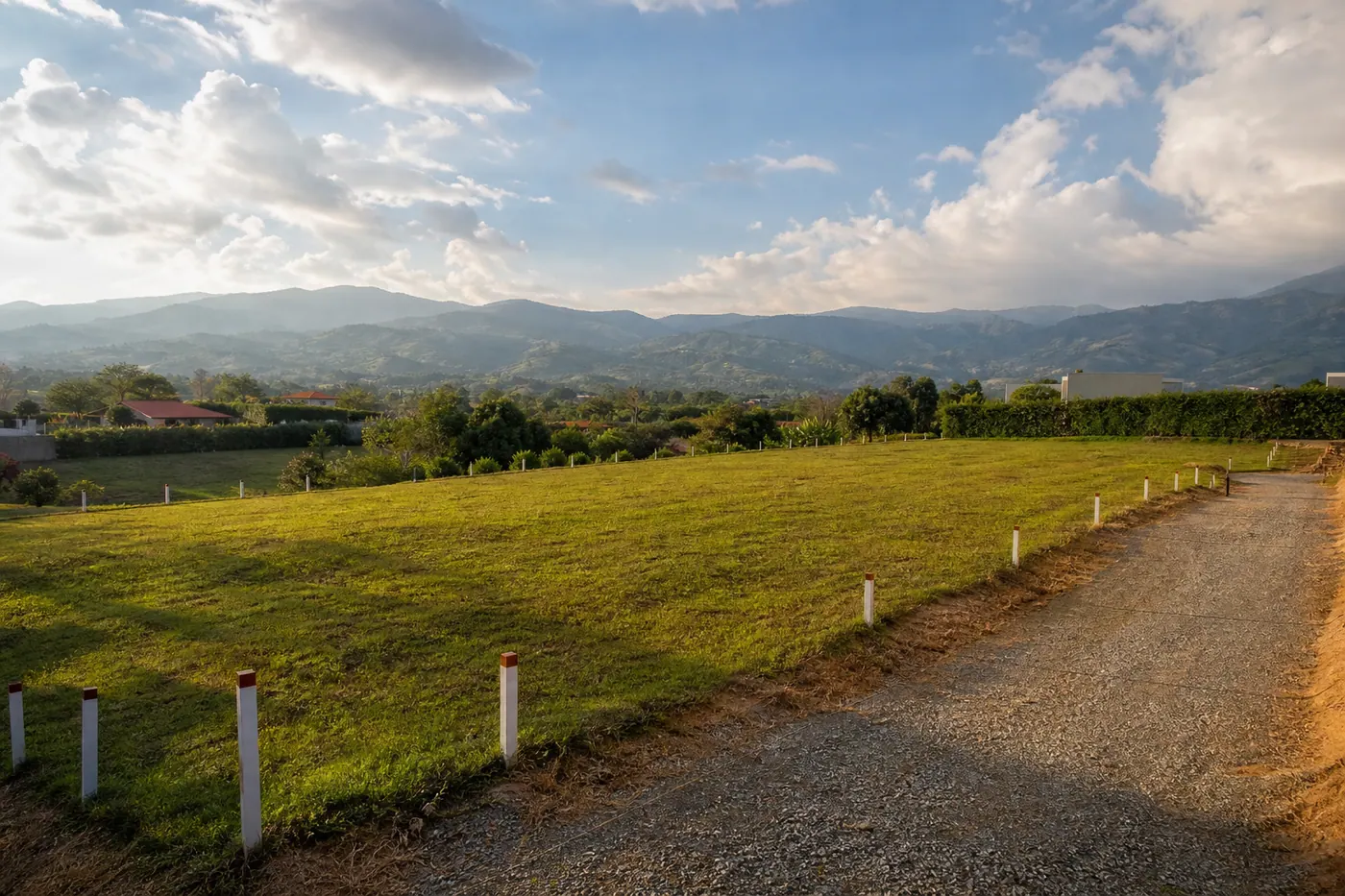
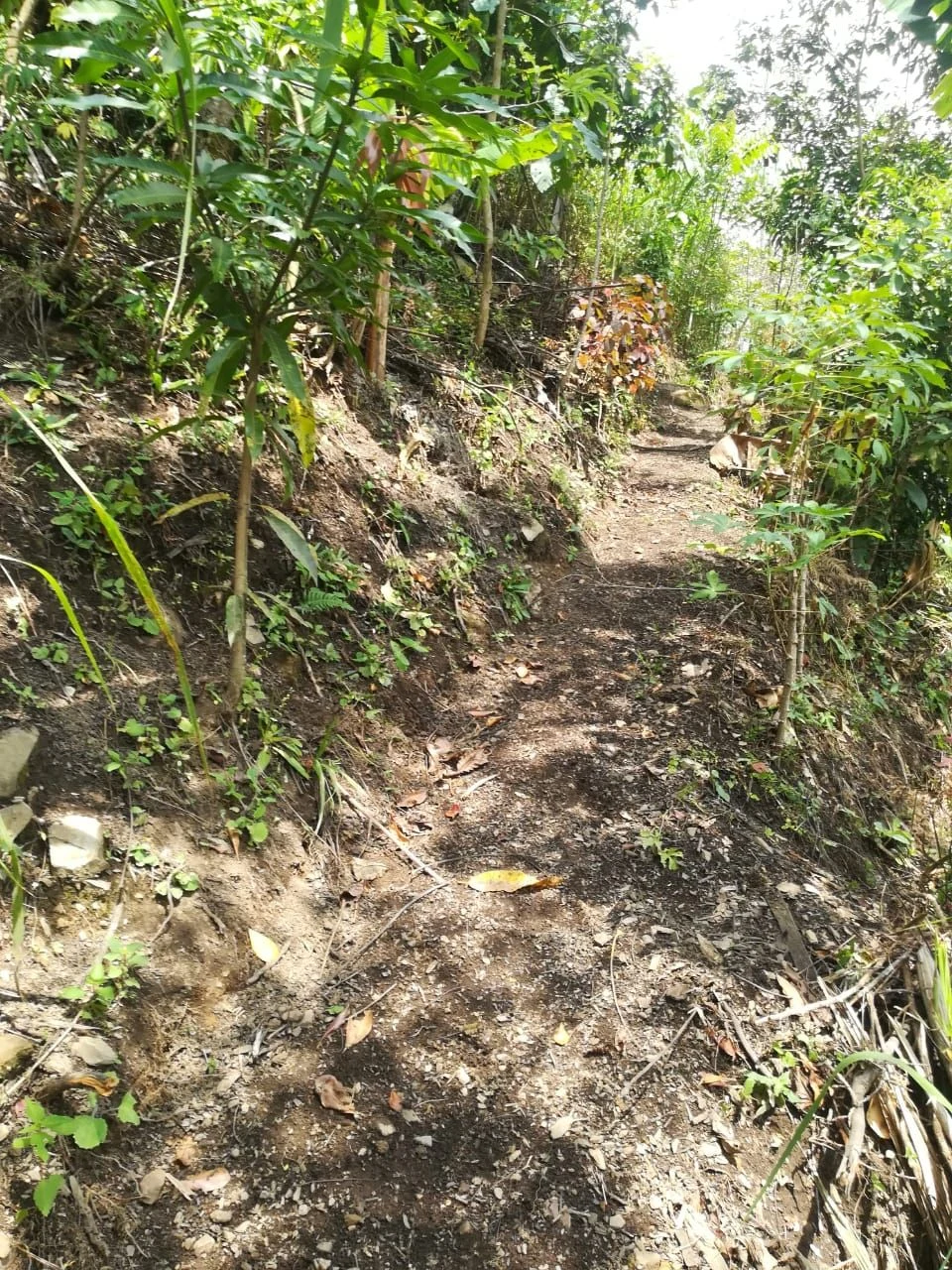
The photos of a lot must show scale. A shot of grass is not enough. Upload photos of the lot frontage, access road, visible boundaries, general view, slope, nearby services, entrance, neighboring environment, and a photo where the size is understandable. If there is an electricity pole, aqueduct, fencing, or paved path, show it.
The map helps, but use it carefully. In the public ad, you can provide the municipality, rural area/neighborhood, and a wide reference. I would share the exact pin only with screened buyers, especially if the lot is isolated or has materials, fences, crops, or any other asset.
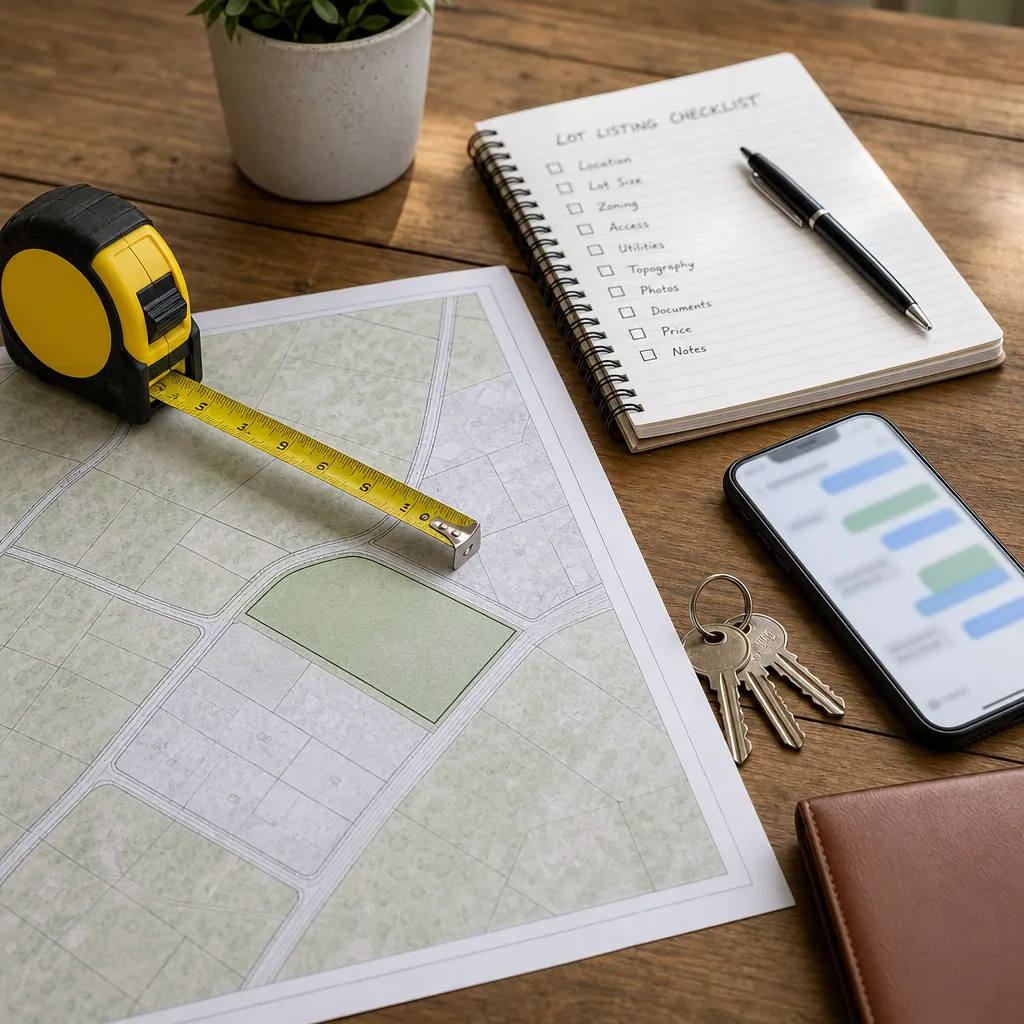
If you have a blueprint, use it as support, not as the only image. Many people don't know how to read blueprints. Combine the blueprint + real photos + simple description. The goal is for the buyer to understand without guessing.
How to filter buyers before showing
With lots, there are many curious people, many intermediaries, and many who just say “send me the exact location.” Filtering is not about being closed off; it's about protecting your time and security. Before sending the pin or full documents, ask standard questions.
Filter for a serious buyer
- What use do you want to give the lot: housing, investment, business, farming, or subdivision?
- What is your real budget and payment method?
- Do you need a loan or are you purchasing with your own resources?
- Do you already know the municipality or are you just comparing areas?
- Do you have an architect, engineer, or advisor reviewing the land use?
- What is your closing timeline: this month, three months, this year?
A serious buyer will not be offended by these questions. On the contrary, they usually have clear answers. Someone who only asks for the “bottom price” without reading the ad is probably not your buyer yet.
Mistakes that lower trust
The first is to sell something as buildable when you haven't verified it. That word carries weight. If the land use isn't confirmed, say so. The second is hiding the lack of utilities. A lot without water or power can be sold, but the price and buyer profile will change.
The third is using vague measurements: “large,” “spacious,” “approx.” Publish square meters or hectares and clarify the source: deed, cadastre, topographic survey, or approximate measurement. The fourth is pricing without context. If you are asking for $250 million COP, explain what justifies it: location, road access, utilities, deed, view, subdivision, or nearby development.
Where to post and how to move the ad
Post the lot on a stable page and then circulate it through groups, local contacts, and WhatsApp. If you only post it in one group, it gets lost. If you have a URL, you can send it, update it, and use it as a foundation for all your conversations.
On Colombia Move you can post directly in lots and land. It is also helpful to link it to related content, such as the guide to selling a farm or the property posting checklist.
The right metric: fewer chats, better visits
A good lot ad isn't about answering a hundred messages. It’s about ensuring the person who writes already understands the area, price, location, utilities, and potential use. That creates less noise and better visits.
Clarity doesn’t just help the buyer; it also protects you as a seller. When the ad is specific, every conversation starts further along. Less “where is it?”, less “is it buildable?”, more “I want to review the documents and visit it.”
FAQ
❓ Where can I post a lot for sale for free in Colombia?
You can post it for free on Colombia Move, in the lots/land category. Include photos, area, price, city, utilities, access, and direct contact with no commission.
❓ Should I post the exact pin of the lot?
Not necessarily. Post the municipality, rural area (vereda), or neighborhood and a general reference. Share the exact pin with vetted buyers, especially if the lot is isolated or has visible assets.
❓ What documents does a serious lot buyer ask for?
They usually ask for the certificate of tradition and freedom, the deed, property tax records, and cadastral data. Depending on the case, they may also ask for land use, a plot plan, or a topographic survey.
❓ Can I say a lot is buildable?
Only if you have support or reasonable confirmation. Land use depends on municipal land-use planning. If you haven't verified it, write that it is pending confirmation from the planning office.
❓ What photos help most to sell a lot?
Photos of access, boundaries, general view, slope, road, nearby utilities, and surroundings. A photo of grass isn't enough; the buyer needs to understand scale, access, and context.
Comments
Loading comments...
Checking sign-in status...