
Getting Around Bogotá: How to Use TransMilenio, SITP, and When to Just Take Uber
Bogotá's public transit system moves 2.4 million people a day. Once you know how it works, it's one of the best ways to cross the city quickly and cheaply. Here's how to actually use it.
IDIOMA DEL ARTÍCULO
Showing original language
The first time I got on a TransMilenio during rush hour, I understood immediately why so many expats default to Uber for the first year. The bus was packed past any reasonable capacity. Someone elbowed me out of the way of a seat I wasn't even trying to reach. I missed my stop because I couldn't get to the door in time. I stood there, pressed against the window, watching the station slide past.
That said, I've taken TransMilenio hundreds of times since then and it's genuinely one of the best ways to cross Bogotá quickly and cheaply — once you know what you're doing. The system moves around 2.4 million passengers a day across 12 trunk lines. During rush hour it will beat an Uber every time on the main corridors, sometimes by 30 or 40 minutes. For anyone living in Bogotá for more than a few weeks, ignoring it entirely costs real money.
This guide covers everything you need: the Tullave card, how the trunk lines work, when SITP is useful versus useless, and the honest situations where you should just open the app and take a car.
What to know first
- TransMilenio is a Bus Rapid Transit system on dedicated surface lanes — not an underground metro
- You need a Tullave card (COP 5,000–6,000) to board — no cash accepted on any bus or station
- Fare is around COP 2,950 per trip; free transfers within 90 minutes of first tap
- SITP buses use the same Tullave card and cover neighborhoods the trunk lines don't reach
- Uber and InDrive are legal, widely available, and smarter for late nights, luggage, and short residential hops
TransMilenio — How the Backbone of Bogotá Transit Actually Works
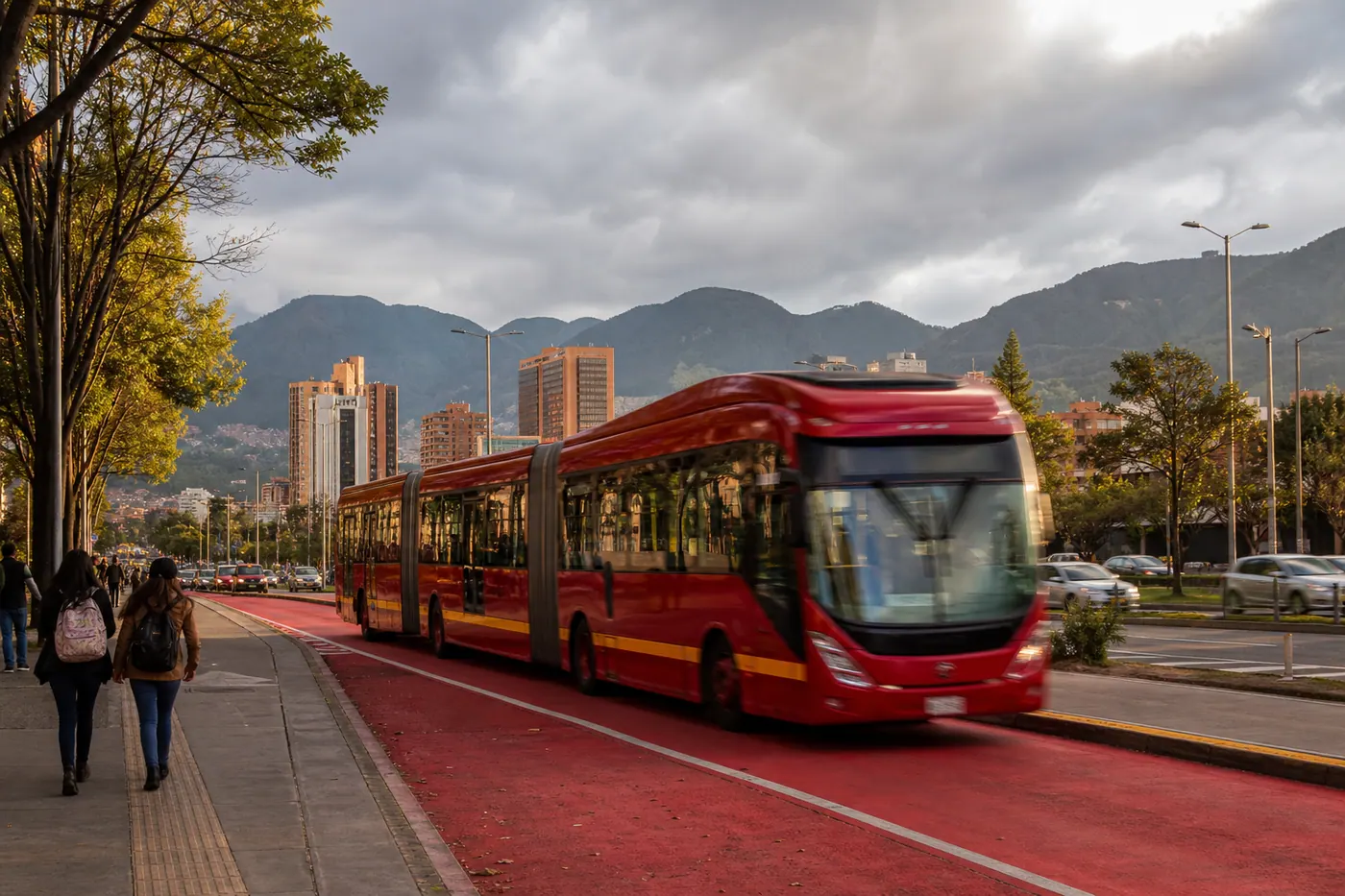
TransMilenio is a Bus Rapid Transit (BRT) system, which means the buses run in the middle of major avenues in completely dedicated lanes called troncales. No cars, no motorcycles — just the red articulated buses on a fixed corridor. This is the reason TransMilenio can beat a taxi during rush hour: the rest of the road is stuck, but the troncal keeps moving.
There are 12 trunk corridors covering the main axes of the city. The most important ones to know: Carrera 10 through the historic center and La Candelaria; Avenida Caracas running north-south through Teusaquillo and Chapinero; Avenida NQS (diagonal) from the south to the northwest; Autopista Norte heading toward Portal Norte; Avenida Suba; Calle 26 connecting the airport to the center. Stations are elevated platforms in the road median, accessed by overhead walkways from the sidewalk.
Feeder buses (rutas alimentadoras) run from surrounding neighborhoods into the main stations. These use the same Tullave card. There are also cable car extensions in Usme in southern Bogotá — functional transit for hillside comunas that connects them into the main network.
Rush hour on the central corridors — Caracas and Séptima, mostly — is brutal between 6:30 and 9:00 AM and again from 5:00 to 8:00 PM. During those windows on those specific corridors, boarding is a full-contact situation. If you can leave 20 minutes earlier or later, do. Outside peak hours, the same buses are comfortable and fast.
🗺️ Which Option to Use?
| Situation | Best option |
|---|---|
| Long cross-city trip during rush hour | TransMilenio |
| Short neighborhood hop during the day | SITP bus or walk |
| Airport run or late at night | Uber or InDrive |
| Traveling with luggage or during heavy rain | Uber or taxi |
| Sunday in a central neighborhood | Bike or walk (Ciclovía) |
The Tullave Card — Get One Before You Need It
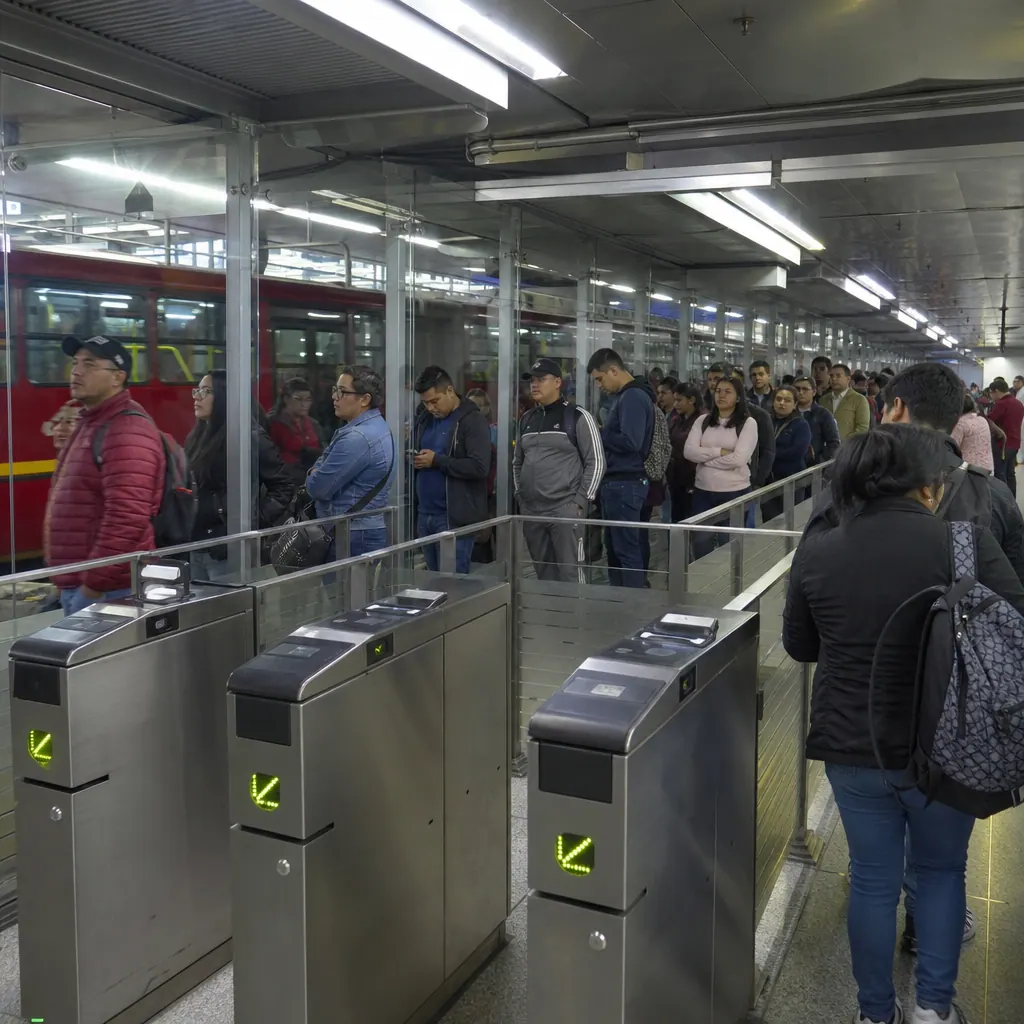
You cannot board TransMilenio or SITP buses with cash. Full stop. The Tullave card (or the newer Tullave+ with NFC) is the equivalent of London's Oyster card. It's a contactless transit card you load with money and tap at the turnstile.
Where to get one
Any TransMilenio station sells them — look for the Puntos de Recarga windows near the station entry. You don't have to pay to enter the station area just to buy the card; the sales points are usually at ground level before the fare gates. The card costs around COP 5,000–6,000 to purchase. Load at least COP 15,000–20,000 to start (roughly 5–7 trips). Reload at authorized top-up points: most Éxito and Jumbo supermarkets, pharmacies like Cruz Verde and Drogas la Rebaja, and many corner tiendas with a Tullave sticker in the window.
The Tullave+ card supports NFC balance loading via the Tullave app — useful if you want to reload without finding a physical top-up point. You'll need a Colombian phone number to register the app. The app also shows your current balance and transaction history.
The 90-minute transfer window
This is the part most people miss: if you board a second bus within 90 minutes of tapping your first trip, that second boarding is free. The system tracks it automatically on your card. So a typical trip might be: take a TransMilenio troncal for 20 minutes, then connect to a feeder bus or SITP to your actual destination — and pay only one fare for the whole journey. Plan your connections with this window in mind.
SITP — The Regular Bus Layer (and When to Use It)
SITP (Sistema Integrado de Transporte de Pasajeros) is the conventional bus network that fills in where TransMilenio trunk lines don't go. Same Tullave card, same fare, same 90-minute transfer window. SITP buses look like regular urban buses — not the red articulated TransMilenio — and stop at regular marked bus stops on the side of the road.
Routes are numbered and color-coded. Urban routes are blue, complementary routes fill gaps, and peak-hour express routes exist on some corridors. Google Maps includes SITP routes, though real-time data is imperfect. The Moovit app tends to be more accurate for live bus tracking.
Honest advice: skip SITP for anything time-sensitive during your first month. Routes are complex, frequency varies wildly, and if you're in an unfamiliar area, the wait can be 20 minutes or 5 minutes and you won't know until you've stood there. Once you've mapped out the specific routes in your neighborhood — especially the one connecting you to your nearest TransMilenio station — SITP becomes genuinely useful for short daily hops. Before that point, it's more frustrating than it's worth.
Uber, InDrive, and Taxis — When the App Wins
Uber is fully legal and widely used in Bogotá. InDrive is popular for longer trips because you name your own price and negotiate with the driver — useful when you know roughly what a trip should cost. Cabify is also around. Regular yellow taxis can be flagged on the street or booked through TaxiExpress or Taxis Libres apps; always prefer the app over a street flag to get a traceable booking.
One real downside to ride apps in Bogotá: rain. The city gets heavy afternoon rains almost daily from March to May and October to November. When it pours, surge pricing kicks in hard — I've seen 2–3x fares in a short storm. And during those same rainstorms, TransMilenio platforms get crowded fast. Neither option is great. The move is to time your trips around the rain if you can, or just accept waiting it out at a café.
For the full rundown on ride apps, fees, and safety tips, see the Uber, InDrive, and Taxis in Colombia guide.
Pico y Placa — Why This Affects Your Uber Too
Bogotá's pico y placa restricts private cars from roads during peak hours based on license plate numbers. This applies to ride-hailing drivers too — which means that during restricted hours, fewer Uber and InDrive drivers are available, waits get longer, and prices go up.
The current rotation and hours are covered in the Pico y Placa Colombia city guide. The short version for daily planning: 6:00–9:00 AM and 3:30–7:30 PM on weekdays are the restricted windows. If you're trying to get an Uber during those hours and it's taking forever, pico y placa is likely why.
Monserrate and the Cable Lines Worth Knowing
Monserrate — the mountain shrine visible from most of the city — is reached by aerial tramway (teleférico) or funicular, not public transit. Tickets run around COP 26,000–30,000 round trip. The hike up is free but steep, about 1.5–2 hours. Both the tramway and the view from the top are worth it once; after that, most residents stop going.
More interesting for understanding the city: TransMilenio has integrated cable car lines in Usme and San Cristóbal in southern Bogotá. These connect steep hillside comunas to the main transit network using the Tullave card — included in the transfer window. They're not tourist routes, but taking one gives you a perspective on the city that the Zona Rosa never will.
Ciclovía — Bogotá's Sunday Institution
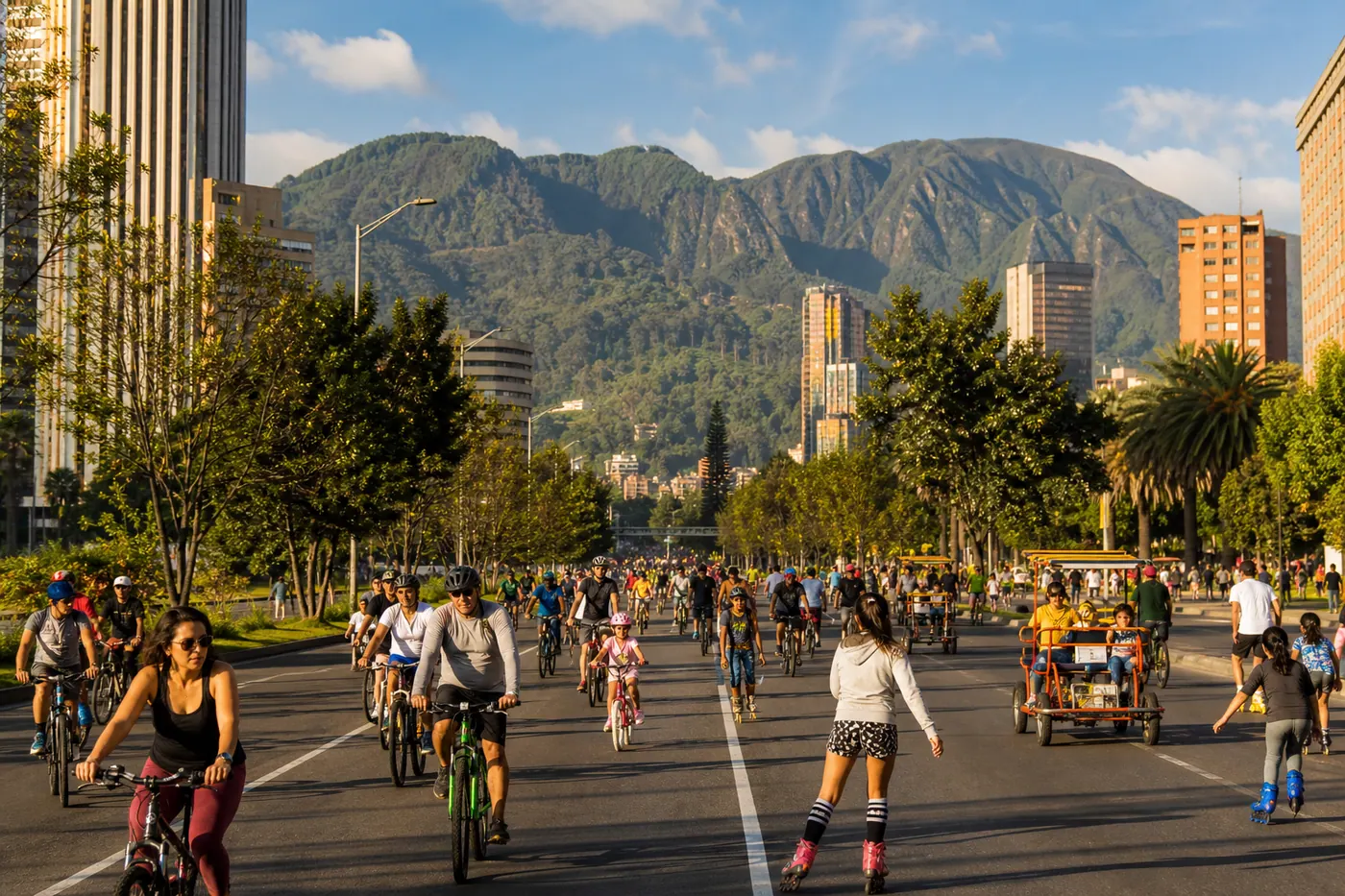
Every Sunday and on public holidays, Bogotá closes roughly 120 km of its main roads to cars and opens them exclusively to cyclists, joggers, rollerbladers, and pedestrians. This is the Ciclovía, and it's been running since 1976. Carrera Séptima from the south all the way through Chapinero and beyond is transformed. Avenida El Dorado. Avenida Suba. Large sections of the Circunvalar.
Bike rentals are available at various Ciclovía stations; bring ID. If you live in a neighborhood along one of the Ciclovía routes, Sunday is genuinely the best day to use the street — no exhaust, no honking, and you can bike or walk across the city without the usual obstacle course. Most expats I know make Sunday their main outdoor day specifically because of this.
Neighborhood-by-Neighborhood Transit Notes
Chapinero and Chapinero Alto
Well-served by both the Caracas and Séptima troncales. Probably the easiest neighborhood to live in without owning a car. SITP coverage is solid for the hillside streets above Carrera Séptima. Multiple stations within 5–10 minute walk of most apartments.
Zona Rosa / Parque 93 / Chicó
Not directly on a troncal. Typical approach: TransMilenio to a nearby station (Héroes or Calle 100) and then SITP or a short Uber into the neighborhood. Weekend traffic near Parque 93 is chaotic — walking between restaurants is often faster than waiting for a car in the evenings.
La Candelaria (Historic Center)
Extremely well-connected — Carrera 10 runs right through it, and several TransMilenio stations are walking distance from the main plazas. Easy to reach from almost anywhere in the city. The historic center is also compact and very walkable. The caveat: street crime is higher here than in northern neighborhoods, especially at night. During the day it's fine and fascinating; after dark, take a car back.
Usaquén
A bit disconnected from the main troncales — Uber is usually the most practical way to get there from other parts of the city. Once you're in Usaquén itself, Sunday is the best day: the artisan market runs until the late afternoon, the streets are closed to traffic, and you can walk the whole neighborhood without any transit at all.
Suba and Engativá (Far North and Northwest)
Portal Suba and Portal 80 connect these areas to the main TransMilenio network. Expect 45–70 minute commutes to central Bogotá on a normal day, longer during peak hours. If commute time matters to you and your work is in the center or north, this is worth factoring into your apartment search.
🏙️ Keep Reading
Got a question about a specific route or neighborhood connection? The Colombia Move community at colombiamove.com/comunidad has plenty of Bogotá residents — expats and locals — who can give you a real-time answer.
Frequently Asked Questions
❓ How much does TransMilenio cost in Bogotá?
Around COP 2,950 per trip as of 2025. Transfers within 90 minutes of your first tap are free, so a trip requiring one connection still costs one fare. Fares increase in January each year, adjusted for inflation — check current rates after any January 1st.
❓ Can I use a credit card or contactless payment on TransMilenio?
Not directly. You need a physical Tullave card. The Tullave+ version supports NFC reloading via the Tullave app, but you still must have the card itself to tap the turnstile. No card, no boarding.
❓ Is TransMilenio safe?
Reasonably safe during the day and normal evening hours. Pick-pocketing does happen in crowded buses and busy stations, so keep your phone in a front pocket and your bag visible in front of you during peak hours. Avoid the last few runs late at night on less-traveled routes — that's when risk increases and the buses are mostly empty, which creates its own set of issues.
❓ Does pico y placa affect Uber availability?
Yes. Ride-hailing drivers are subject to the same plate restrictions as private cars. During restricted hours — weekday mornings and evenings — fewer drivers are on the road, which means longer waits and higher surge pricing. TransMilenio is the smarter choice during peak hours on the main corridors.
❓ Is there a good app for planning TransMilenio routes?
Google Maps covers TransMilenio reasonably well and is the most convenient option for most people. Moovit tends to have better real-time tracking for SITP buses specifically. The official Tullave+ app handles balance management but isn't a route planner.
Comments
Loading comments...
Checking sign-in status...