
Rent or Buy Housing in Colombia? Financial Guide to Decide in 2026
A realistic financial guide to evaluate whether it's better for you to buy a house or maintain the flexibility of renting with current interest rates in Colombia.
IDIOMA DEL ARTÍCULO
Showing original language
Mid-2026 has arrived, and the usual question is back on the table: should I keep paying rent or take out a loan to buy my own home? In Colombia, social pressure almost always pushes you to buy, repeating the old myth that "renting is throwing money away." But when you look at the real numbers for this year, the decision requires a lot more cool-headedness and less romanticism.
Quick answer: With mortgage rates averaging 13% E.A. in 2026, buying a home is ideal if you have a good down payment saved (over 30%) and are looking for long-term stability. If your cash flow is tight or you plan to move in the next five years, renting offers unbeatable flexibility and saves you from high hidden closing costs (which add up to between 3% and 4% of the property value).
The Real Estate Outlook in the Second Half of 2026
To make a good decision, we first need to understand where we stand. The Bank of the Republic has stabilized its intervention rate at 11.25% for mid-2026. This means commercial banks are offering interest rates for peso-denominated mortgage loans that are around 13% effective annual (E.A.). These are not the single-digit rates we saw a few years ago, which significantly increases the total cost of debt.
On the other hand, real estate in Colombia remains a solid hedge against inflation. According to DANE, housing prices continue to appreciate at a rate of 8.91% for houses and 9.15% for apartments. This means that if you manage to buy, your assets will grow, but the entry cost (credit) is expensive. You have to do very precise calculations so that the bank's installment doesn't end up drowning your monthly budget.
Mid-Year Audit: San Pedro y San Pablo Bridge as a Starting Point
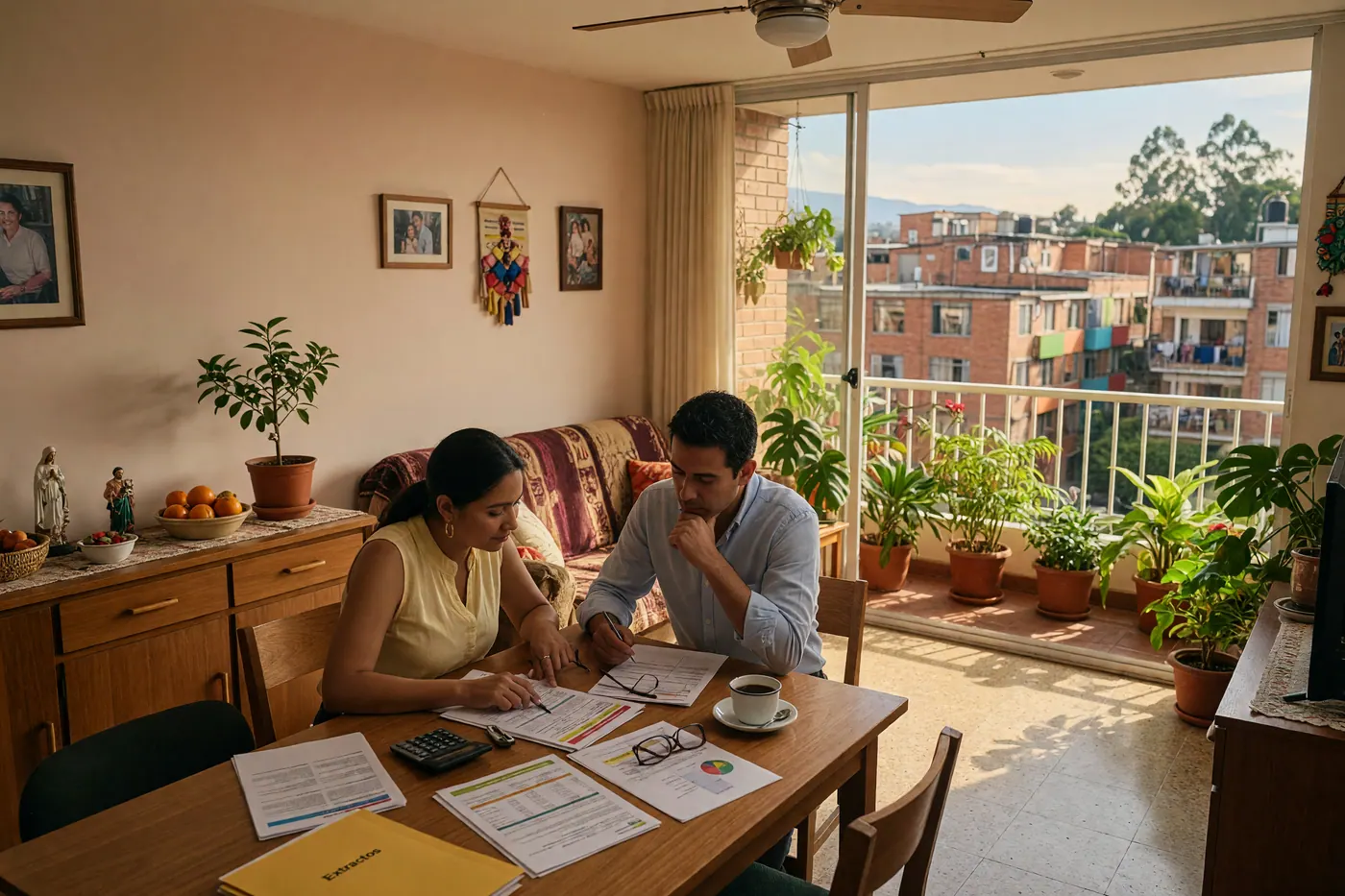
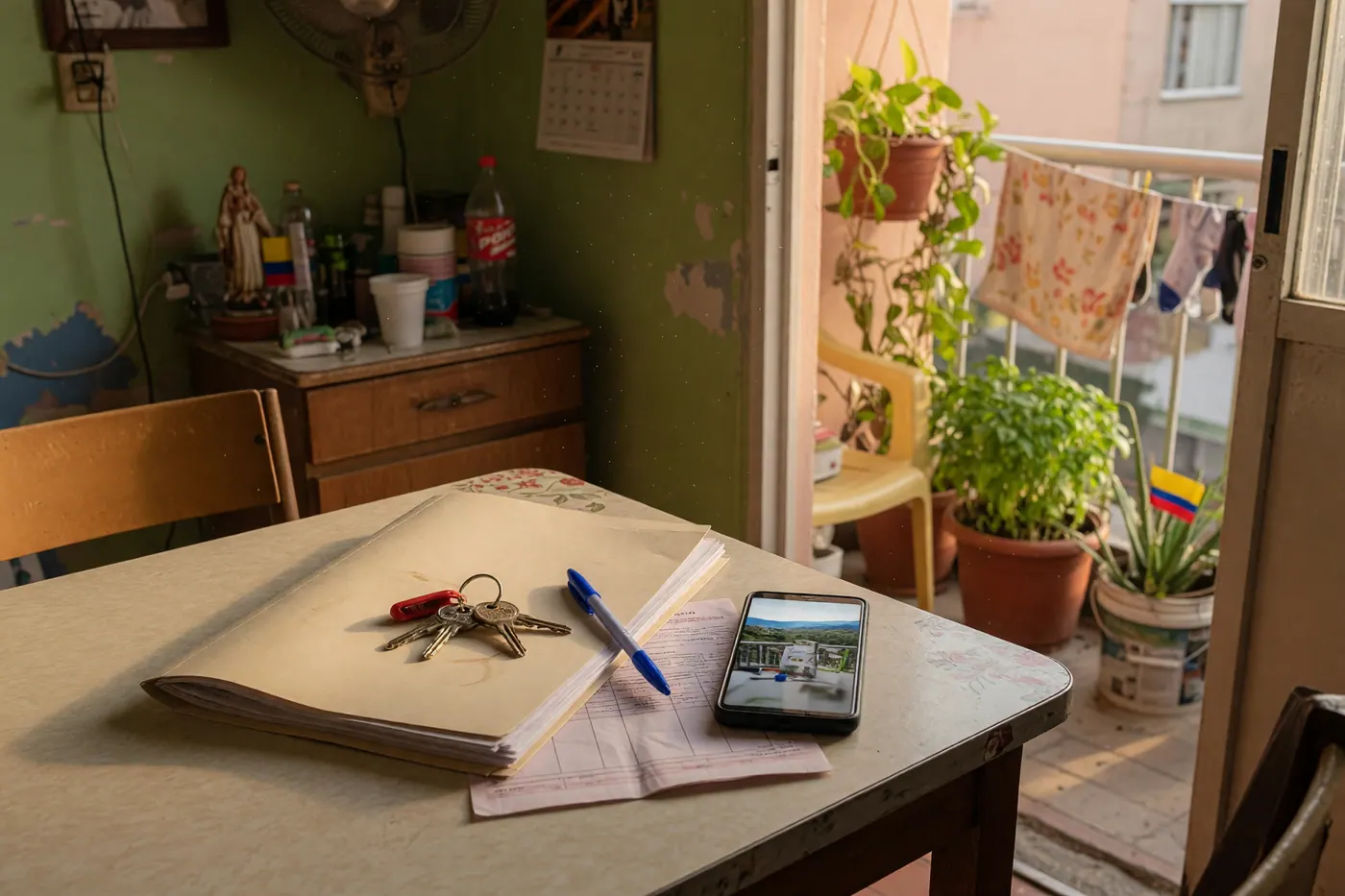
Traditionally, the San Pedro y San Pablo bridge at the end of June marks the exact moment when Colombians pause. It's the perfect excuse to sit down with a tinto, open your Excel, and do a mid-year audit. Review how much rent you've paid in these six months, how much you have saved in severance pay, and how much room you have left at the end of the month.
If your savings don't cover at least 30% of a property's value, taking out a 20-year loan with current interest rates could be a headache. Take advantage of this mid-year review to set a realistic goal: either adjust your expenses to save for that down payment, or sign a new lease with peace of mind knowing it's the most sensible financial decision for now.
The Hidden Costs of Buying a Home in Colombia
One of the most common mistakes when buying a house is only looking at the sale price and forgetting about closing costs. Watch out for this: being a homeowner in Colombia means reaching into your pocket before you get the keys. On average, a buyer must set aside between 3% and 4% of the property's market value just for paperwork.
| Concept | Who pays for it? | Approximate cost (2026) |
|---|---|---|
| Notarial Rights (Deeding) | 50% Buyer / 50% Seller | 0.54% of the value (0.27% each) |
| Registry Tax (Beneficencia) | 100% Buyer | Between 1% and 2% depending on the department |
| Withholding Tax | 100% Seller | 1% of the sale value |
| Title Study and Appraisal | 100% Buyer (if using credit) | Approx. $1.5 to $2 million COP |
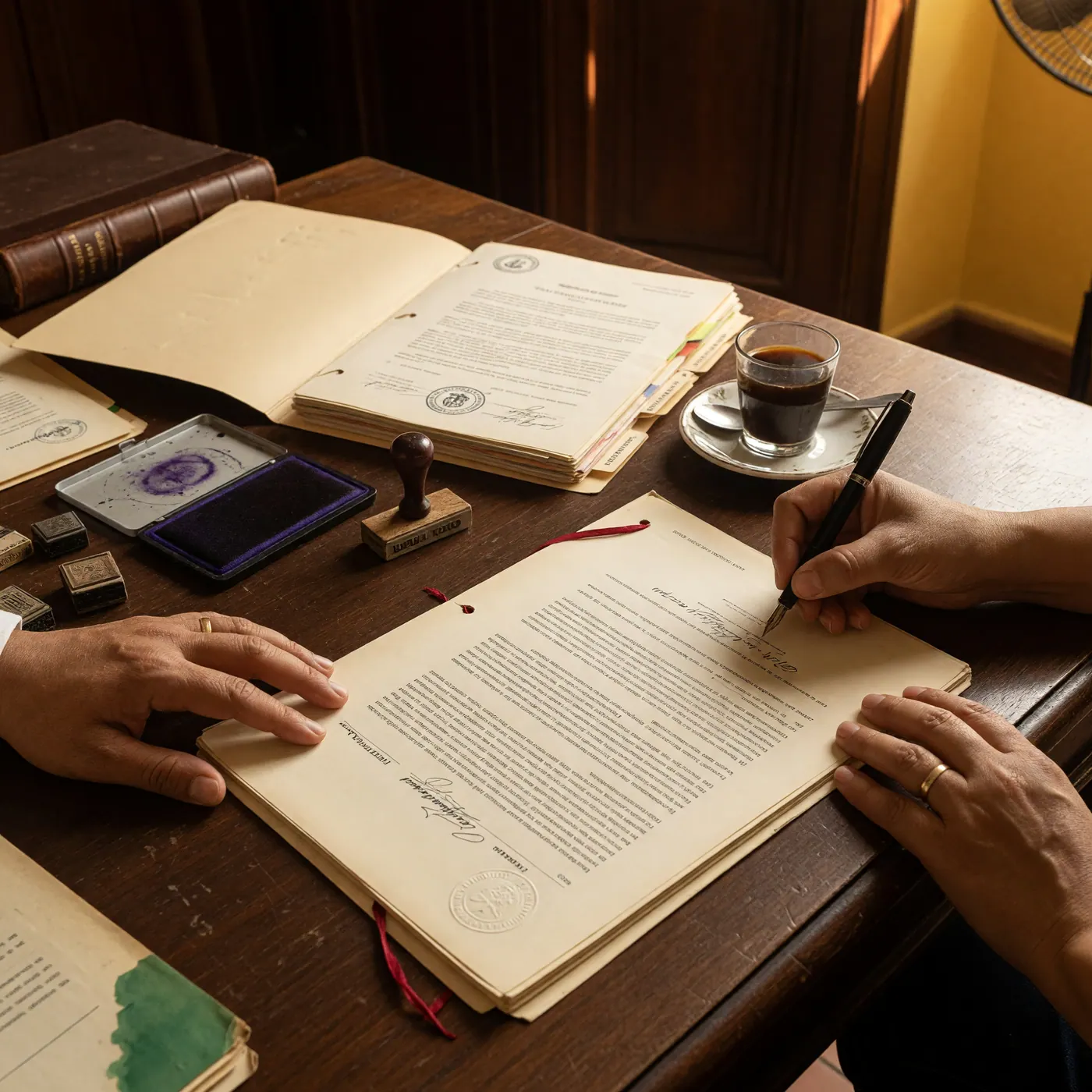
Also, once you sign, you assume the annual property tax and the monthly administration fee for life, items that in a traditional rental contract are usually already covered by the owner.
The Flexibility of Renting vs. Credit Barriers
The market is speaking clearly. Today, 71% of real estate searches in the country prefer renting, compared to 29% looking to buy. This trend is no accident: financing barriers and lack of liquidity make renting the smartest option for most.
In fact, according to active demand on the Colombia Move marketplace (June 2026), the housing section has accumulated over 16,400 recent views, and we see waiting lists of users specifically looking for apartments for rent in cities like Medellín and Cartagena. The scales tip towards mobility and cash flow management. If your job is remote or you're not sure where you want to live in three years, you can opt for a monthly seasonal rental. And even if you don't find what you're looking for, today it's very easy post your rental search so that owners contact you directly.
Housing Leasing: The Alternative Way to "Buy by Paying Rent"
If you definitely want to buy but don't have 30% for the down payment, housing leasing is an excellent alternative in 2026. Unlike a traditional mortgage, in leasing, the bank is the legal owner of the property, and you pay a monthly "lease payment" that includes principal and interest.
The great advantage is that it allows you to finance up to 80% or even 90% of the home's value, requiring a much lower down payment (10% to 20%). At the end of the contract (which can be from 10 to 20 years), you exercise the "purchase option" for a minimum percentage and the property becomes yours. This model has gained a lot of traction this year, especially given budget restrictions that have limited government programs, as we detailed in our guide on the Mi Casa Ya subsidy.
Golden Rule for Deciding in 2026
To close, use this rule of thumb: calculate how much the monthly mortgage payment (including insurance) plus property tax and administration fees would cost you, and compare it to the monthly cost of renting a similar place. If the difference is manageable and you have the initial savings, go ahead and buy. If the bank's payment exceeds 30% of your monthly income, honestly, keep renting. Use the money difference to invest in other financial instruments that generate returns for you while interest rates ease a bit in the future.
Frequently Asked Questions
❓ Is it better to rent or buy a house in Colombia in 2026?
It depends on your cash flow in 2026; with average mortgage rates at 13% E.A. (source: Imnoba/Banrep), renting offers temporary flexibility while buying a used home allows for negotiating better base prices. If you plan to settle long-term and have the down payment, buying is still a good way to protect yourself against inflation.
❓ How much does it cost for deed and registration when buying a home?
Closing costs add up to between 3% and 4% of the property's value (June 2026, source: Metrocuadrado/SNR). This includes notary fees (0.27% each, buyer and seller) plus the registration-welfare tax paid only by the buyer (1% to 2% depending on the department). This is money you must have in cash before signing.
❓ What is Housing Leasing and How Does it Work in 2026?
Housing leasing is a bank contract with a purchase option upon term expiration. The bank buys the property, and you pay a monthly rent; at the end, you exercise the option for a minimum balance, and ownership transfers to your name. It allows financing up to 80%-90% of the value with down payments starting at 10%, making it more accessible than a traditional mortgage.
❓ Who Must Pay Withholding Tax on a Property Sale?
Withholding tax is paid exclusively by the seller—never the buyer—and is calculated at the notary's office when signing the public deed. According to current rates in 2026 (source: Notary 19 of Bogotá / Ciencuadras), it typically equals 1% of the sale value.
❓ How Did the Central Bank's Rate Affect Mortgage Loans?
After the intervention rate stabilized at 11.25%, commercial banks have set their peso mortgage rates around 13% E.A. for the second half of 2026. This increases the cost of credit compared to previous years.
❓ Can I Use My Severance Pay to Buy a Home or Pay My Lease?
Yes, as of 2026, you can withdraw your severance pay partially or totally to cover the down payment for your home or make extraordinary payments towards your mortgage or lease. This is one of the few early withdrawals permitted by Colombian labor law—request it directly from your severance fund.

Comments
Loading comments...
Checking sign-in status...