
Colpass and Flypass in Colombia: How Foreign Drivers Pay Highway Tolls (Peajes) Without Cash
Colpass is the government's electronic toll system, and Flypass, FacilPass and GoPass are companies that issue the tag. Here is how foreign drivers set one up, fund it, and still avoid getting stuck at a booth.
IDIOMA DEL ARTÍCULO
Showing original language
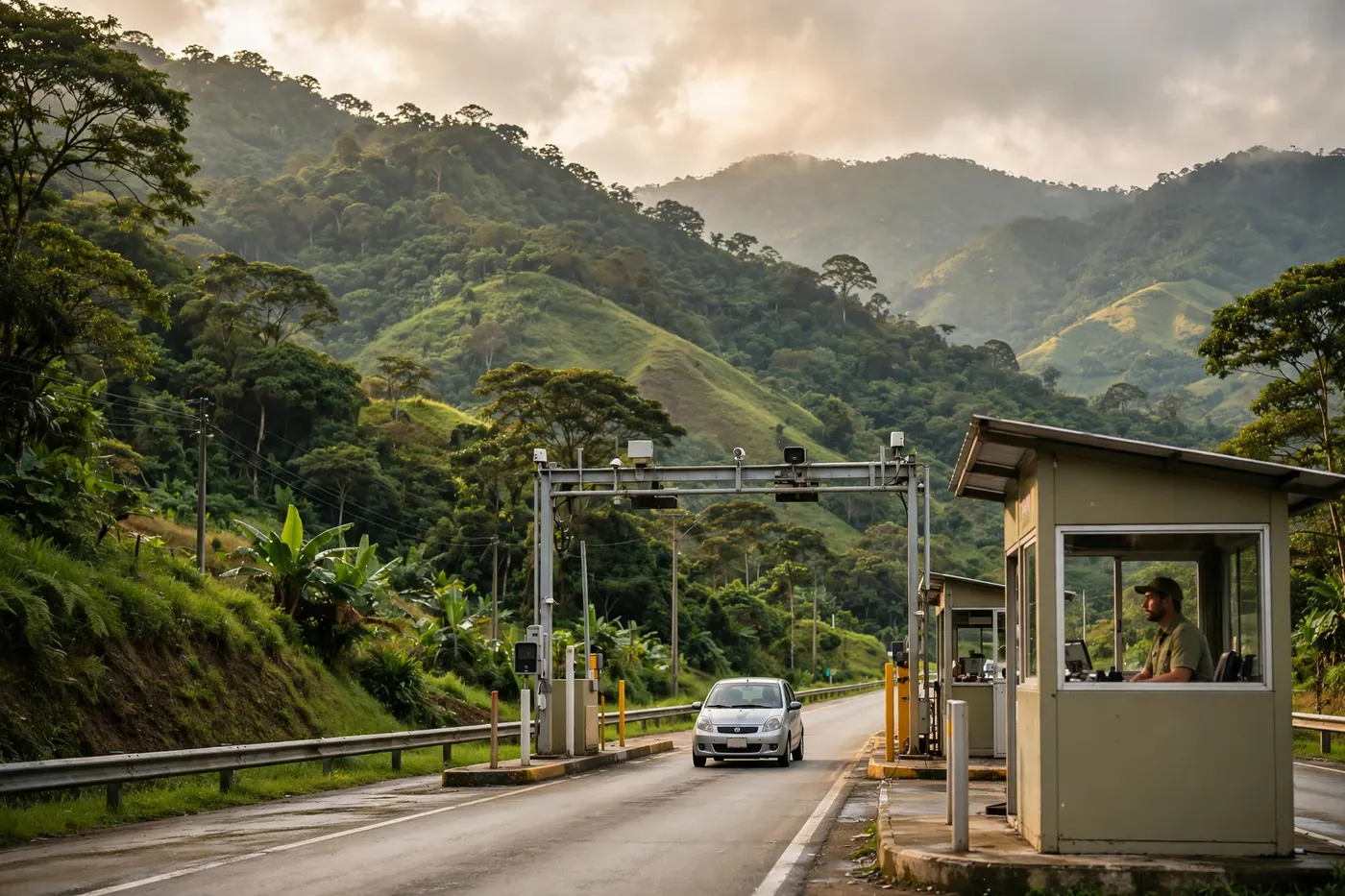
The first time you hit a Colombian toll plaza on a long drive, you notice two things fast: the line of trucks on the cash side, and a lane where cars simply roll through. That second lane is Colpass. It is the cashless way to pay participating peajes, but it has real limits for foreigners, and the biggest one is how you put money on the tag.
Short answer: Colpass is the Ministerio de Transporte's name for the system. Flypass, FacilPass, GoPass and five others are the companies that sell you the tag. Cash lanes still exist, and a foreign card is not a documented way to fund a tag, so carry pesos either way.
What Colpass is, and how it differs from Flypass, FacilPass and GoPass
Colpass is the public brand for IP/REV, a system built around a single RFID tag stuck to the windshield. Under Resolución 20213040035125 de 2021, you contract with an intermediary enabled by the ministry, and that tag is tied to a payment method. One working tag is designed to pay in any enabled Colpass lane, whichever company issued it.
So Flypass, FacilPass and GoPass are not separate toll networks, and none of them is a regional franchise. Think of them like different banks issuing cards on the same payment rail. Operators must also assign at least one Colpass lane at each toll station, and that lane carries the Colpass mark so you can spot it.
Who can issue your tag
On 4 October 2026, the ministry homepage listed eight intermediaries: GoPass, FacilPass, FlyPass, ViaRápida, OpenPass, Copiloto, Tolis and SimonPay. Start from the official list at colpass.mintransporte.gov.co/usuarios rather than a random site selling a "Colpass card." Resellers are where people get burned.
Coverage is wide but not complete. A February 2026 FacilPass briefing described 176 stations as enabled, about 94%, with 11 still pending, and roughly 1.09 million affiliated vehicles so far that year. Flypass's own homepage advertises "+164" peajes. Those are company documents, not a live ministry census, and the ministry's operator list kept adding enablements afterward. Treat them as a sense of scale, not a map.
Getting and mounting a tag as a foreign driver
The process is similar across brands: create an account, register the vehicle's plate, activate the tag (Flypass uses the app and a QR code), then link a way to pay. FacilPass told natural persons on its site that signup needs no extra document pack. Company accounts are different and ask for a contract, a Cámara de Comercio certificate, the legal representative's cédula and a vehicle list.
Before you register, confirm the plate is not already attached to another intermediary. FacilPass says this explicitly, and it matches the one-tag-per-vehicle idea in the regulation. Tag price is set by each intermediary. FacilPass listed a one-time natural-person price of COP 20,000 with VAT and free delivery when I checked its site on 4 October 2026, but that is one company's price, so recheck its page.
Sticking it on the glass
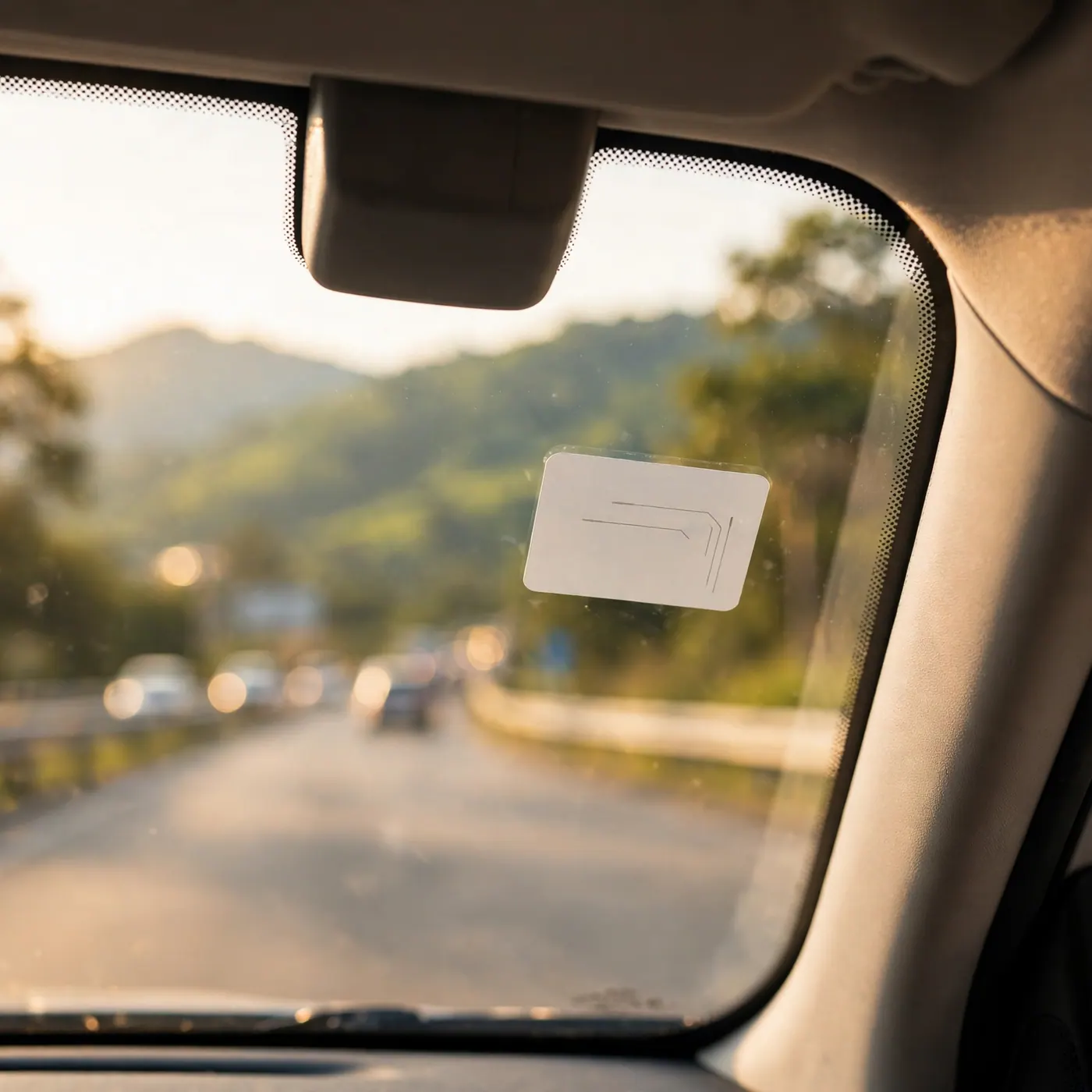
Flypass's instructions: clean the glass just behind the rear-view mirror, toward the passenger side, and stick the tag horizontally on the inside of the windshield. Follow the diagram in your own package, since inclined and vertical windshields use different layouts and other brands may differ.
One honest warning: you get one shot. Flypass says that even slightly peeling the sticker can ruin it, and replacement goes through the app. Do not pull it off to test the placement.
How the money works, and the foreign-card problem
There are two basic models. A prepaid wallet is loaded with money before you drive. A linked debit or credit product charges you as you pass. Some intermediaries offer both.
Here is the frustrating part for visitors. The documented funding methods are Colombian rails:
- Flypass: Bancolombia products, a credit card from any bank, PSE, Puntos Colombia and Bancolombia correspondents.
- FacilPass: PSE, Efecty, and portals of named Colombian banks. It says to reload at least 6 hours before you travel.
- GoPass: PSE, Nequi, Daviplata and up to three linked debit or credit cards.
None of these pages says a foreign Visa or Mastercard works, and none says it is refused. Ask the intermediary before you rely on it. If you only hold a foreign card, plan to pay cash at the booth.
Also skip the idea that electronic tolls are free of extras. The toll fare belongs to the road operator, and GoPass says it does not set it. Tag price, reload charges and plan fees are the intermediary's own terms, and the figures published by different pages conflict, so read the current fee table before you pick one.
On the road: what actually happens at the plaza
Look for the Colpass mark above the lane. Some lanes are electronic only, others stay mixed, and a plaza with one booth per direction can run cash and a tag reader together. As of that February 2026 briefing, cash was still accepted on non-exclusive lanes.
If your balance is zero or no charge method is authorized, the automatic pass is not allowed and you pay manually. I found no sourced fine for rolling up with a dead tag. The documented consequence is simply losing the automatic lane, which in a long Friday queue is punishment enough. A mismatch between tag and plate can also get the tag blocked.
Discounted toll categories exist at some plazas, but you start them with the plaza operator, and the February briefing says a full-fare charge is not refunded retroactively. Do not assume a discount applies automatically.
The tag solves payment only. A police stop can still ask for your documents and equipment, so read our highway car kit guide. City driving limits like pico y placa are a separate matter from highway toll lanes, covered in the pico y placa guide for foreigners.
Rental car versus a car you own
For rentals, no Colpass, Flypass, FacilPass or GoPass page I reviewed publishes a rental-tag policy. My advice: do not stick your personal tag on a rental windshield unless the company agrees in writing. If the car already has a tag, ask how it is billed. Our rental car guide covers the booking side, and the foreign license rules post covers whether you may drive at all.
For a car you own, the tag stays with that plate. If you change cars, tell the intermediary so the old device is deactivated and a new one issued. Residents who are still sorting out a Colombian license can start with how foreigners get a Colombian driver's license.
What the tag does not do
It does not set the toll price, and it does not replace a valid license, SOAT or required equipment. Extras some tags offer, like parking, fuel or inspections, are services of the intermediary, not Colpass itself.
Quick checklist before your trip
- Pick one intermediary from the ministry list.
- Confirm the plate is not on another intermediary.
- Fund it with a method that company actually lists, at least 6 hours ahead if it is FacilPass.
- Mount the tag once, following the package diagram.
- Carry cash anyway.
Frequently Asked Questions
❓ What is Colpass, and is Flypass the same thing?
Colpass is the national electronic-toll system run under the Ministerio de Transporte, while Flypass is one of eight companies that can issue the tag. The others are GoPass, FacilPass, ViaRápida, OpenPass, Copiloto, Tolis and SimonPay. Check the ministry's usuarios page for the current list (verify with the official source, as accessed).
❓ Can one tag pay every toll in Colombia?
It is meant to pay every plaza that is actually enabled and signed as Colpass, not every booth in the country. Cash lanes remain, and coverage was still being completed in 2026. Check your route with your intermediary before a long drive.
❓ Do I still need cash if I have a tag?
Yes. Cash lanes remain part of the system, and a tag with no usable balance or authorized charge method does not get automatic passage. Keep enough pesos for the tolls on your route, since a failed read means paying manually at the booth.
❓ Can I top up with a foreign credit card?
The published methods are Colombian rails such as PSE, Bancolombia products, Nequi, Daviplata and Efecty, not a documented foreign-card top-up. Ask your intermediary before relying on a foreign card, and carry cash as a backup (verify with the official source, as accessed).
❓ Can I put my tag on a rental car?
Do not stick a personal tag on a rental windshield unless the rental company agrees in writing. The tag is tied to one plate and a mismatch can get it blocked. If the rental already has a tag, ask how its tolls are billed (verify with the official source, as accessed).
❓ What if I sell the car or buy another one?
You do not peel the tag onto the next car. Tell your intermediary, which deactivates the old device and issues a new one for the new plate. Peeling a sticker, even slightly, can destroy it, so treat it as single-use.
❓ Does the tag change the toll price?
No. The road operator sets the peaje, and the tag company does not set the fare. Any extra charge is the intermediary's own plan or reload fee, which differs by company, so read its current fee table (verify with the official source, as accessed).

Comments
Loading comments...
Checking sign-in status...