
How Foreigners Can Get a Colombian Driver's License: RUNT, CRC Exams & Foreign License Conversion
Driving legally in Colombia requires knowing when your foreign license expires and how to navigate RUNT biometrics, CRC medical exams, and local driving schools.
IDIOMA DEL ARTÍCULO
Showing original language
Quick Summary: Can You Drive in Colombia With a Foreign License?
Yes, but only for up to 6 months as a tourist. Under Article 25 of Colombia’s National Transit Code (Ley 769 de 2002), foreign tourists can legally drive using their valid home-country license alongside an original passport with a current immigration entry stamp. However, once you receive a visa and a Cédula de Extranjería, that 180-day grace period ends. To stay legally compliant on Colombian roads, foreign residents must register in the RUNT database, complete a 4-part CRC medical exam, and obtain an official Colombian driver's license.
The 3 Legal Pathways to Drive in Colombia
Before spending money on medical exams or driving schools, you must identify which legal pathway applies to your nationality and residency status in Colombia. If you want to see real-world options right now, you can browse apartments and houses on Colombia Move — posting is completely free.
Pathway A: The Tourist Grace Period (Up to 180 Days)
If you enter Colombia as a tourist, your valid foreign driver's license lets you drive cars or motorcycles for up to 180 days. You do not need a Colombian license, nor do you need to register in the national transit database. However, you must always carry your original foreign license and your passport showing your official entry stamp. If you extend your Colombia tourist stay from 90 to 180 days, your driving privilege remains valid until your tourist status expires.
Pathway B: Bilateral License Recognition (Homologación)
Colombia holds formal reciprocal license recognition agreements (known as canje or homologación) under Resolution 1244 of 2019 with exactly four countries:
- Spain
- Peru
- Republic of Korea
- Chile
Citizens of these four nations who hold a valid driver's license and a Cédula de Extranjería can convert their home license directly without taking practical or theoretical driving school classes. Note that Spanish citizens exchanging their license must surrender their original Spanish card, which Colombian transit authorities return diplomatically to Spain's DGT.
Pathway C: First-Time Application (USA, Canada, UK, EU & Others)
If your home country is not on the Resolution 1244 list—such as the United States, Canada, the United Kingdom, Australia, or Germany—you cannot directly convert or swap your license. Once you hold a Cédula de Extranjería, you must apply for a Colombian license as a first-time applicant (Licencia por Primera Vez). This requires completing mandatory theoretical and practical training at an accredited driving school (CEA).
Step 1: In-Person RUNT Registration
Every transit transaction in Colombia—from buying a car to getting a license—requires an active profile in the Single National Transit Registry (Registro Único Nacional de Tránsito, or RUNT). Colombia Move recorded 4,631 search impressions for driver-license acquisition procedures as of August 2026, a first-party signal that this bureaucracy is a recurring question for foreign residents.
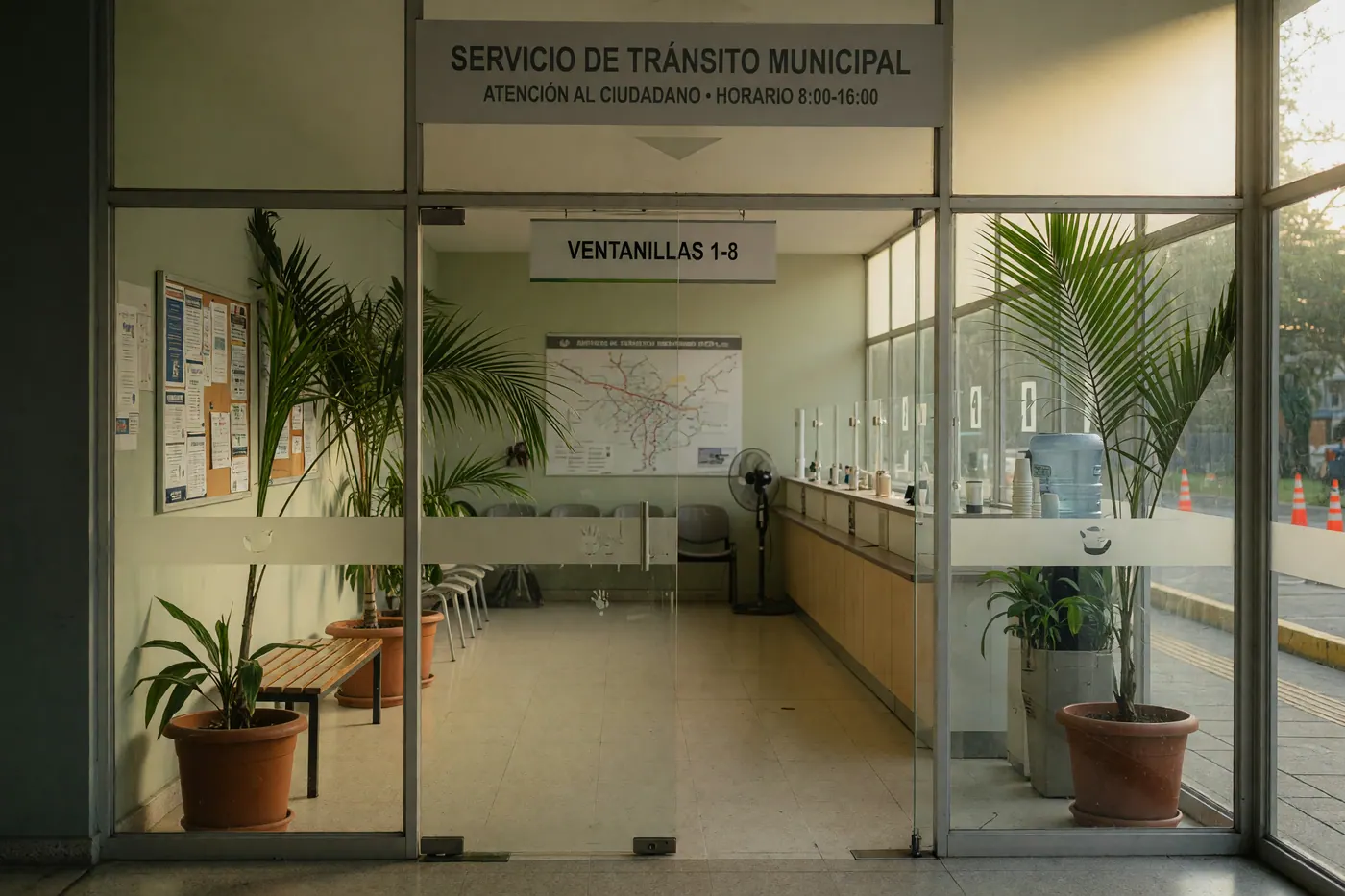
To register in RUNT for the first time, visit a local transit service window (such as the Ventanilla Única de Servicios - VUS in Bogotá or a municipal Secretaría de Tránsito office). You will need:
- Your physical Cédula de Extranjería or PPT (Protection Permit).
- A valid email address and local phone number.
- Any supporting document requested by your local office; our guide to proof of address in Colombia for foreigners explains commonly used address documents.
- Payment of the locally applicable RUNT registration fee.
During the appointment, the transit official captures digital fingerprint biometrics, a digital signature, and a profile photo. For a comprehensive walkthrough, check our detailed guide on inscripción RUNT para persona natural.
Step 2: The CRC Medical & Psychophysical Exam
Once registered in RUNT, you must pass a medical evaluation at an ONAC-accredited Driver Recognition Center (Centro de Reconocimiento de Conductores - CRC). Check the center's current booking procedure before you go.
The CRC examination consists of four diagnostic modules:
- General Medicine: General health and physical assessment.
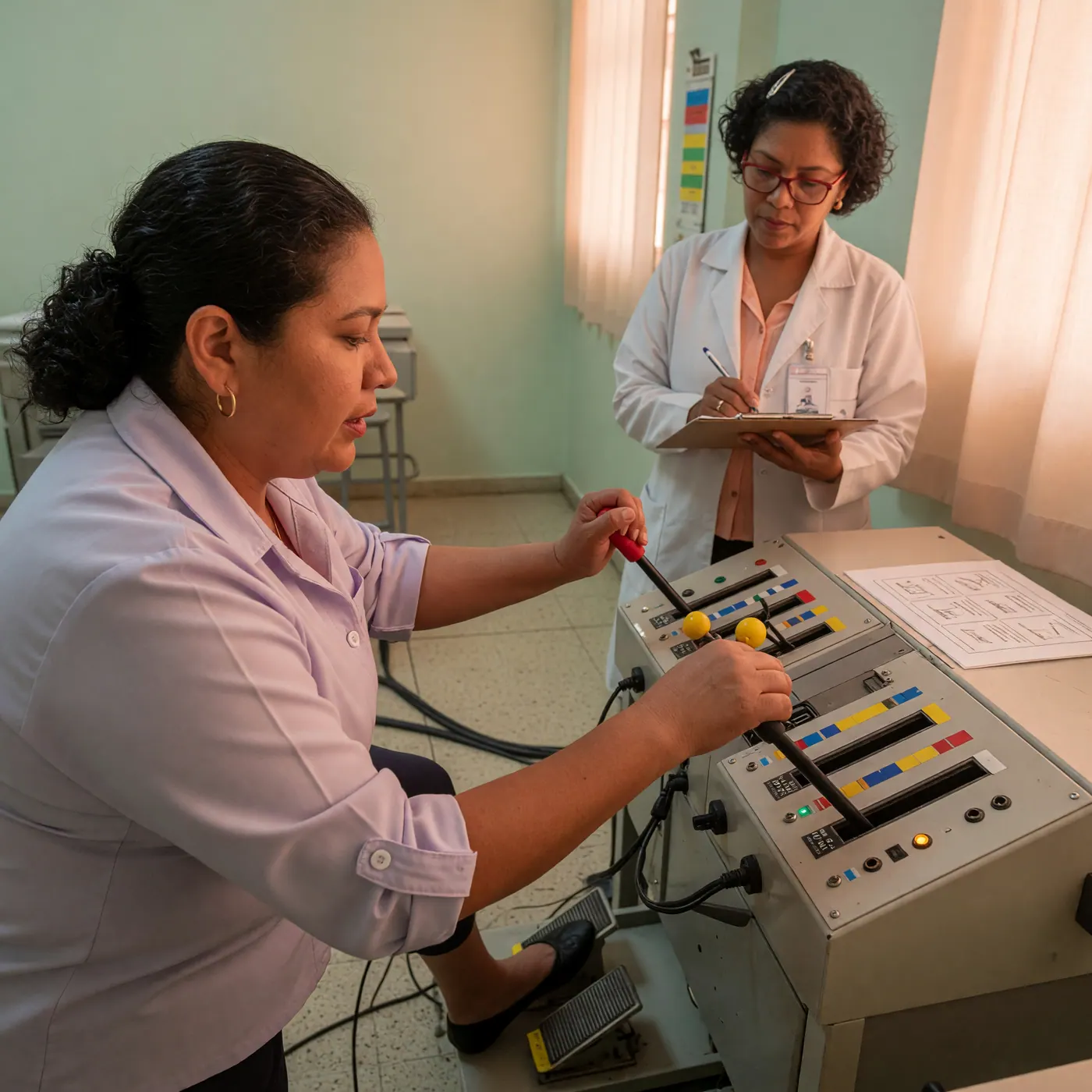
- Psychology & Coordination: A computerized test measuring coordination, reaction speed, and spatial awareness.
- Optometry & Vision: Visual function and acuity tests.
- Audiology & Hearing: Hearing assessment.
Upon passing, the CRC digitally signs your certificate and uploads it directly into the RUNT database linked to your Cédula de Extranjería. Fees vary by city and vehicle category.
Step 3: Driving School (CEA) vs Direct Bilateral Submission
Depending on your nationality pathway, Step 3 determines which procedure applies.
For Non-Agreement Nationalities (CEA Requirements)
You must enroll in a Mintransporte-certified Automobile Teaching Center (Centro de Enseñanza Automovilística - CEA). For a Category B1 license (private cars), this includes required theoretical and practical training. Classes are generally taught in Spanish. Once you complete the required training and evaluations, the CEA uploads your certification to RUNT.
For Bilateral Agreement Holders (Spain, Peru, Korea, Chile)
You bypass the CEA driving school. Instead, follow the official document-verification and validation procedure published for your country's bilateral agreement through the Ministry of Transport and the local transit authority.
Step 4: Final Transit Application & License Issuance
With your active RUNT registration, valid CRC medical results, and CEA certification when required uploaded to the national system, you can finalize your license issuance:
- Schedule a final appointment at your local transit office (VUS or Secretaría de Tránsito).
- Present your physical Cédula de Extranjería.
- Pay the locally applicable transit rights and printing fee.
- Have your official license photograph taken at the counter.
Issuance timing and total cost vary by municipality, vehicle category, and whether CEA training is required. The official steps can collectively run from several hundred thousand pesos upward, so confirm current tariffs with the CRC, CEA, and transit office before paying.
Frequently Asked Questions
❓ Can I drive in Colombia with my US or Canadian driver's license?
Yes, as a tourist you can legally drive for up to 180 days using your valid home license alongside your passport showing your entry stamp. However, if you receive a visa and Cédula de Extranjería, you must get a Colombian driver's license.
❓ Can I convert my foreign driver's license directly to a Colombian license?
Direct license conversion (homologación) is available only for citizens of Spain, Peru, Republic of Korea, and Chile under Resolution 1244 of 2019. All other nationalities, including US, UK, and Canadian citizens, must complete the first-time applicant process.
❓ What is RUNT and why must foreigners register for it?
RUNT is Colombia's centralized transit database. It digitally links your biometrics, medical evaluation results, driving school certifications, vehicle ownership records, and driver's license to your official identity profile.
❓ What tests are included in the CRC medical exam for a Colombian driver's license?
The CRC medical evaluation consists of four mandatory modules: a general medical exam, a psychological and motor-coordination test, a vision and optometry check, and an audiology hearing test.
❓ How long does it take to get a Colombian driver's license as a foreigner?
Timing varies by pathway and local processing. First-time applicants must allow time for CEA training plus transit processing, while bilateral recognition can take up to two months for official validation. Confirm current timing with the competent transit office.
❓ Do I need an International Driving Permit (IDP) in Colombia?
An IDP is a useful translation alongside your original license and passport, but it does not extend your legal driving period beyond the tourist grace period. Carry the original documents and verify current requirements before driving.




Comments
Loading comments...
Checking sign-in status...