
Pico y Placa Driving Rules in Colombia for Foreigners: City Schedules & Exemptions
Foreign drivers in Colombia face steep automated camera fines under municipal Pico y Placa rules. Here is how license plate rotations, rental liabilities, and legal exemptions actually work in 2026.
IDIOMA DEL ARTÍCULO
Showing original language
Few moments shock a newcomer in Colombia faster than getting pulled over on an empty morning avenue or receiving a hefty charge on their credit card weeks after returning a rental vehicle. In Colombia, urban traffic congestion is managed by a strict, mandatory license plate rationing system known as Pico y Placa ("Peak and Plate").
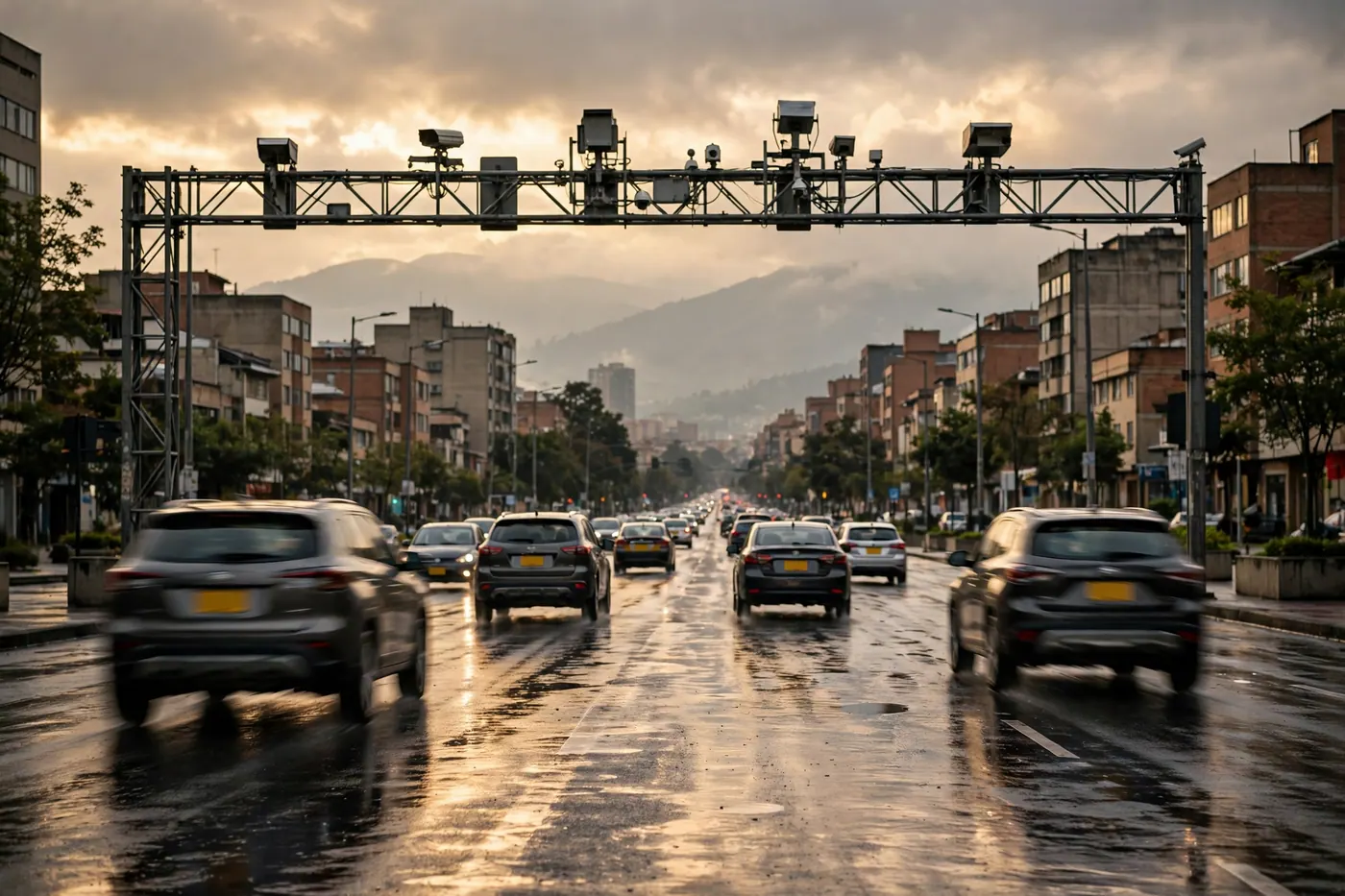
Many foreign drivers assume that an international driving permit, a rental contract, or tourist status provides a temporary grace period. It does not. Every passenger vehicle on public urban roads—whether privately owned or leased from an airport rental desk—is subject to municipal driving restrictions enforced by high-resolution roadside cameras (cámaras de fotodetección or cámaras salvavidas).
This guide breaks down how the statutory rules operate across major cities, what happens when you drive a rental during restricted windows, and how you can legally register for daily exemptions.
The Statutory Rule: Infracción C14 and Vehicle Towing
Pico y Placa is not just a polite recommendation; it is anchored in national transportation legislation. Under Article 131 of Colombia's National Transit Code (Ley 769 de 2002), driving a private vehicle through restricted zones or during restricted hours constitutes Infracción C14: "Transitar por sitios restringidos o en horas prohibidas por la autoridad competente." On Colombia Move you can check today's pico y placa for free, no signup.
The statutory fine is indexed to the daily legal minimum wage: 15 SMDLV (salarios mínimos diarios legales vigentes). In 2026, this fine amounts to roughly COP 630,000 to COP 710,000 before potential prompt-payment educational discounts or additional tow-lot and impound fees if you are stopped by an officer.
More critically, Infracción C14 empowers transit officers to immobilize the vehicle. If you are stopped at a physical police checkpoint during restricted hours, the officer has the statutory authority to call a flatbed tow truck (grúa) and impound your vehicle at the municipal impound lot (patios). Recovering an impounded vehicle requires paying the flatbed tow fee, accrued daily lot storage fees, and resolving the citation through an official transit hearing—a multi-day bureaucratic nightmare for any visitor. If a checkpoint turns into a tow, the official emergency line is in the Colombia emergency numbers guide.
City-by-City Pico y Placa Breakdown
Because transit governance in Colombia is decentralized, there is no single nationwide Pico y Placa calendar. Each metropolitan municipality sets its own restricted hours, digit pairings, and geographic perimeters. Before driving between regions, always check the current rotation. On a restricted day, ride-hailing is often simpler than moving the car. The Uber, InDrive, and taxi guide covers how those apps work in the same cities.
1. Bogotá: Weekday Alternations and Pico y Placa Regional
In Bogotá, restrictions for private passenger vehicles run Monday through Friday from 6:00 a.m. to 9:00 p.m. across the entire urban perimeter. The capital operates on an alternating even/odd digit schedule:
- One weekday group: plates ending in 1, 2, 3, 4, and 5.
- The other weekday group: plates ending in 6, 7, 8, 9, and 0.
Which group sits out on which weekday is set by the active district rotation, not by a permanent "odd calendar date" rule. Check the current decree before you leave the parking spot.
Pico y Placa Regional on holiday returns: If you take a weekend road trip outside the city, the drive back is the trap. On holiday return Sundays and Mondays, entering Bogotá through the main highway corridors is governed by Pico y Placa Regional entry windows. A tourist rental plate does not waive those windows. Confirm that day's even- and odd-plate entry hours with the district mobility secretariat before you head back.
2. Medellín and the Aburrá Valley (AMVA)
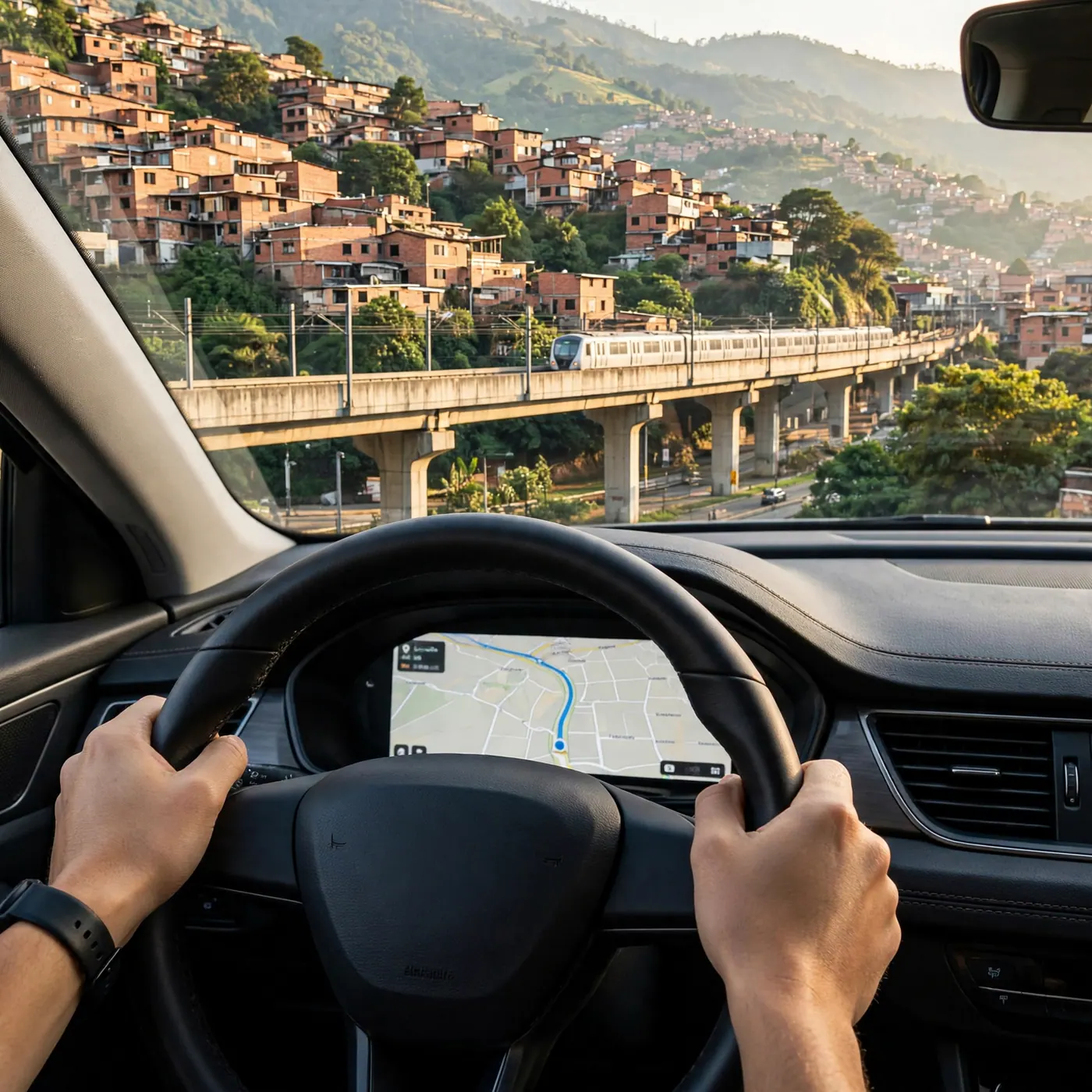
Medellín coordinates its traffic regulations across the 10 contiguous municipalities of the Valle de Aburrá (including Envigado, Sabaneta, Itagüí, and Bello). Restrictions operate Monday through Friday from 5:00 a.m. to 8:00 p.m.
- The system restricts two ending digits per day. The pairing itself is set by decree and changes, so do not memorize a permanent Monday chart.
- The digit pairings rotate every six months via official municipal decrees issued by the Secretaría de Movilidad de Medellín.
- Do not treat a valley-floor highway as an automatic bypass. Confirm the active perimeter with the Secretaría de Movilidad before you try to cross the valley during daytime hours.
3. Cali
In Cali, the restriction applies across the entire urban road network Monday through Friday from 6:00 a.m. to 7:00 p.m. Two ending digits are banned each day. Confirm the active pair with Cali's Secretaría de Movilidad before you drive. Cali does not offer exempt center corridors; entering the municipal perimeter during restricted hours with a restricted plate triggers immediate detection. If your ending digits are restricted, the MIO is the way across the city. See the Cali public transportation guide.
4. Cartagena
Confirm the active hours, restricted corridors, and any temporary decrees directly with Cartagena's Departamento Administrativo de Tránsito y Transporte (DATT) before you drive. Do not treat a printed visitor exemption as valid until DATT confirms it.
Planning to drive on foreign credentials? Review our detailed guide on Driving in Colombia: Foreign License Rules for Tourists before getting behind the wheel. Residents who later need a local license can follow how foreigners get a Colombian driver's license through RUNT and the CRC. Pico y Placa still applies after that license is issued.
Automated Cameras (Fotomultas) and Rental Car Realities
Foreigners often assume that if they do not encounter a transit officer, they have successfully avoided a ticket. In modern Colombia, this assumption is costly. Major urban centers utilize high-density networks of automated license plate recognition cameras (cámaras de fotodetección or cámaras salvavidas).
These cameras operate continuously, capturing high-resolution photos and video of passing vehicles. The system automatically cross-references the yellow license plate (placa amarilla) against the national transit database (SIMIT) and flags prohibited vehicles instantly.
Here is what happens when you drive a rental car during Pico y Placa:
- The roadside camera registers the infraction and issues an automated notice against the registered owner of the vehicle (the rental agency).
- Because rental agreements require an open credit card voucher, the agency charges the statutory fine directly to your card once the citation posts to SIMIT.
- The rental agency then adds an administrative processing fee on top of that fine and charges both amounts to the card on the rental agreement.
If you plan to hire a vehicle for exploring the country, read our companion breakdown on Renting a Car in Colombia: What Foreigners Actually Need to Know to understand contract terms, insurance clauses, and deposit procedures.
Legal Exemptions: Pico y Placa Solidario and Hybrid Vehicles
Fortunately, foreign drivers and residents have several legitimate pathways to drive without risking fines, depending on the municipality.
Bogotá's "Pico y Placa Solidario"
Bogotá offers a formal district exemption program that allows passenger vehicles to legally circulate on restricted days by paying an official municipal contribution. You can purchase access for a single day, one month, or six months.
The daily base fee starts around COP 70,000, but the final price is calculated through a municipal multiplier formula that factors in vehicle model year, fuel efficiency/emissions rating, and the municipality where the car is registered (vehicles registered outside Bogotá pay a higher tariff). Confirm the simulated total on the official portal before you pay, because the multiplier moves the figure.
How to register as a foreigner:
- Access the official portal at picoyplacasolidario.movilidadbogota.gov.co. Warning: Never use third-party intermediary websites; unofficial sellers targeting foreign tourists are common.
- Select vehicle registration and enter your identification (passports and Cédulas de Extranjería are accepted by the portal).
- Complete the mandatory online environmental awareness module.
- Pay the calculated tariff online via PSE using a local digital bank or payment gateway. For setup advice, see our guide on How Bre-B and Digital Payments Work for Expats.
Electric Vehicles (EVs) and Hybrids
100% pure electric vehicles (BEVs) are broadly exempt from Pico y Placa nationwide and are automatically recognized in transit registries. However, hybrid vehicles (HEVs/PHEVs) are a major trap for foreign drivers.
In cities like Medellín, hybrid vehicles are not automatically exempt simply because they have an eco-badge. The owner or rental company must formally register the vehicle's technical specs in advance through the municipal mobility secretariat's portal. If you rent a hybrid in Medellín and assume you can drive freely, you will likely accumulate automated camera fines unless the rental desk confirms that the vehicle is already entered into the metropolitan exemption registry.
If renting keeps colliding with the rotation, buying is not a crowded shortcut either. According to active listings on Colombia Move (September 2026), the carros category shows 3 active sale listings against 294 listing views, so demand is running ahead of the cars actually posted.
Frequently Asked Questions
❓ Do foreign tourists or international driver's permit holders get an exemption from Pico y Placa?
No. Foreign visitors, international permits, and tourist status do not create a Pico y Placa exemption in Colombia. Hired cars use ordinary yellow private plates and follow the same municipal hours as locally owned cars. That rule was still in force in September 2026, so check the city rotation before a weekday drive.
❓ Can a rental car company guarantee me a license plate that won't be restricted during my stay?
No. Agencies assign cars from whatever is free that day, so a guaranteed unrestricted plate is not something you can count on. You can ask for a preferred ending digit or a vehicle swap on a multi-day booking. As of September 2026, you should still plan another way to move on any day that plate is restricted.
❓ How do automated fotomulta cameras work if I am driving a rental car?
The camera logs the yellow plate instantly and the citation is issued to the registered owner, which is the hire company. The company then charges the statutory fine plus an administrative processing fee to the card on the agreement. As of September 2026, you can look the citation up later on the national SIMIT portal.
❓ How can I legally drive during Pico y Placa in Bogotá?
In Bogotá, buy an official Pico y Placa Solidario pass on the district portal before you drive. The portal accepts a passport or cédula de extranjería plus a short environmental module. As of September 2026, the Secretaría Distrital de Movilidad starts the daily base around COP 70,000 before vehicle multipliers, so skip unofficial sellers of the same pass.
❓ Are hybrid and electric cars exempt from Pico y Placa across all Colombian cities?
Fully electric cars are widely exempt, but hybrids are not automatically exempt in every city. In Medellín, as of the September 2026 mobility rules, a hybrid usually needs advance registration with the municipal secretariat before cameras treat it as exempt. Ask the rental desk to confirm the car is already in that registry.
❓ What happens if I get pulled over by a transit police officer during restricted hours?
The officer can write Infracción C14 and order the car towed to a municipal impound lot. Under Ley 769 de 2002, the fine is 15 daily minimum wages (SMDLV), which in 2026 totals over COP 630,000 before discounts, tow fees, and daily storage. Clearing the citation and the lot charges can take several days.
Comments
Loading comments...
Checking sign-in status...