
Cali Public Transportation Guide: How to Use MIO Buses, Cards & Route Safety
A complete practical guide for expats and travelers navigating Cali's MIO bus system, from contactless fare payments to scenic cable car transfers and street-smart safety tips.
IDIOMA DEL ARTÍCULO
Showing original language
The first week I tried to cross Cali at 5:30 p.m., Calle 5 was a parking lot. The Masivo Integrado de Occidente—the MIO—is the way through that jam: a bus rapid transit network plus an aerial gondola, cheap enough that I stopped pricing taxis for ordinary errands.
If you live in San Antonio, work out of Granada, or head south toward Ciudad Jardín, the dedicated bus lanes beat sitting in a private car that also has to obey Pico y Placa.
Local mobility tip: Driving in Cali comes with strict plate-based schedule limits during peak hours. Check our comprehensive guide on Pico y Placa driving rules in Colombia to see why many foreign residents choose the dedicated MIO bus lanes instead of owning a private car.
2026 MIO Fares, Smart Cards, and Contactless Payment
One of the biggest modern conveniences of riding Cali's public transit system is that you no longer need to hunt down a ticket vendor just to catch your first bus. As of January 2026, the standard single fare across the entire integrated MIO network is set at $3,500 COP (about $1.06 USD at the 26 September 2026 TRM of COP 3,307 per USD). This single fare covers your initial ride plus system transfers within a specified time limit.
To pay your fare at station turnstiles or board outdoor buses, you have two primary options:
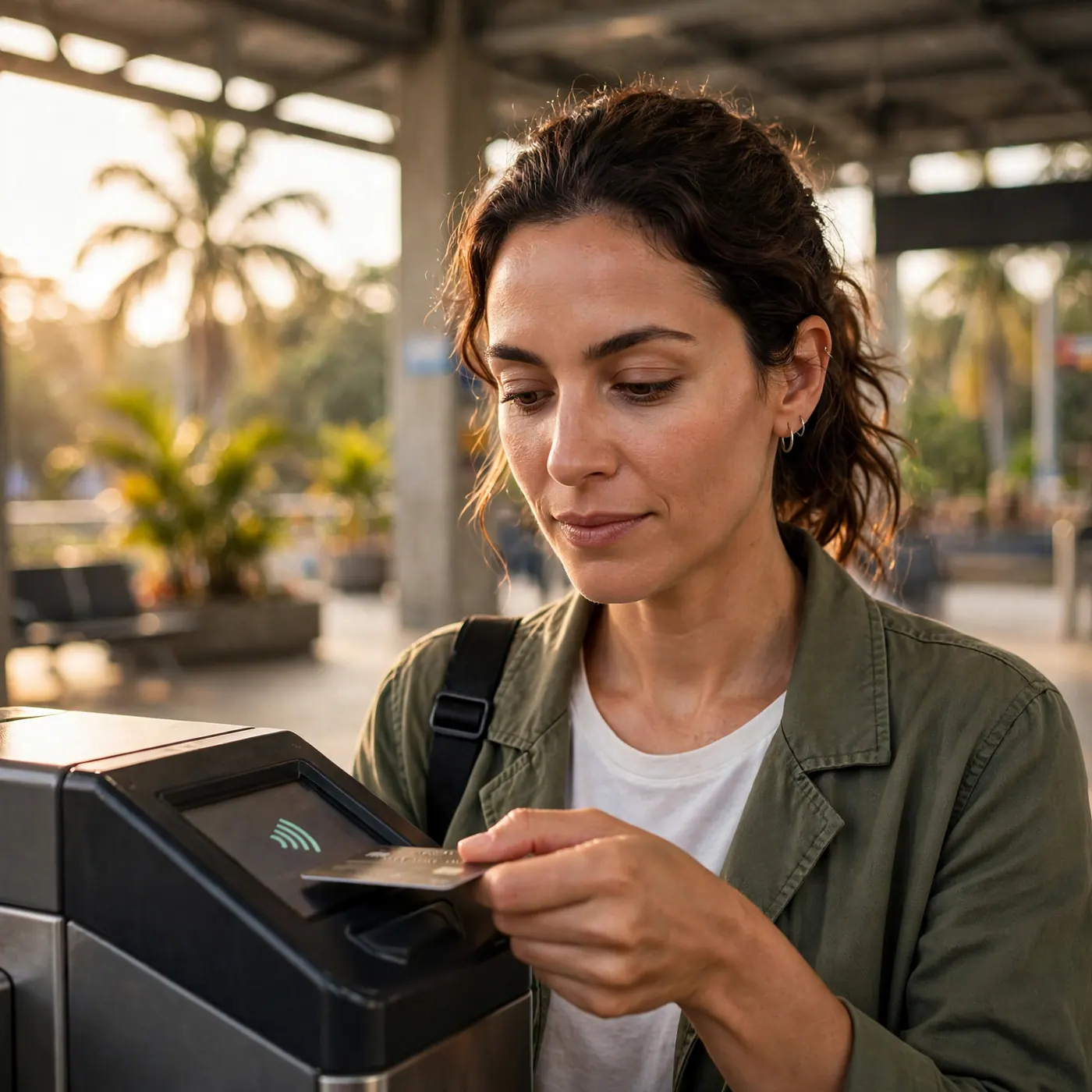
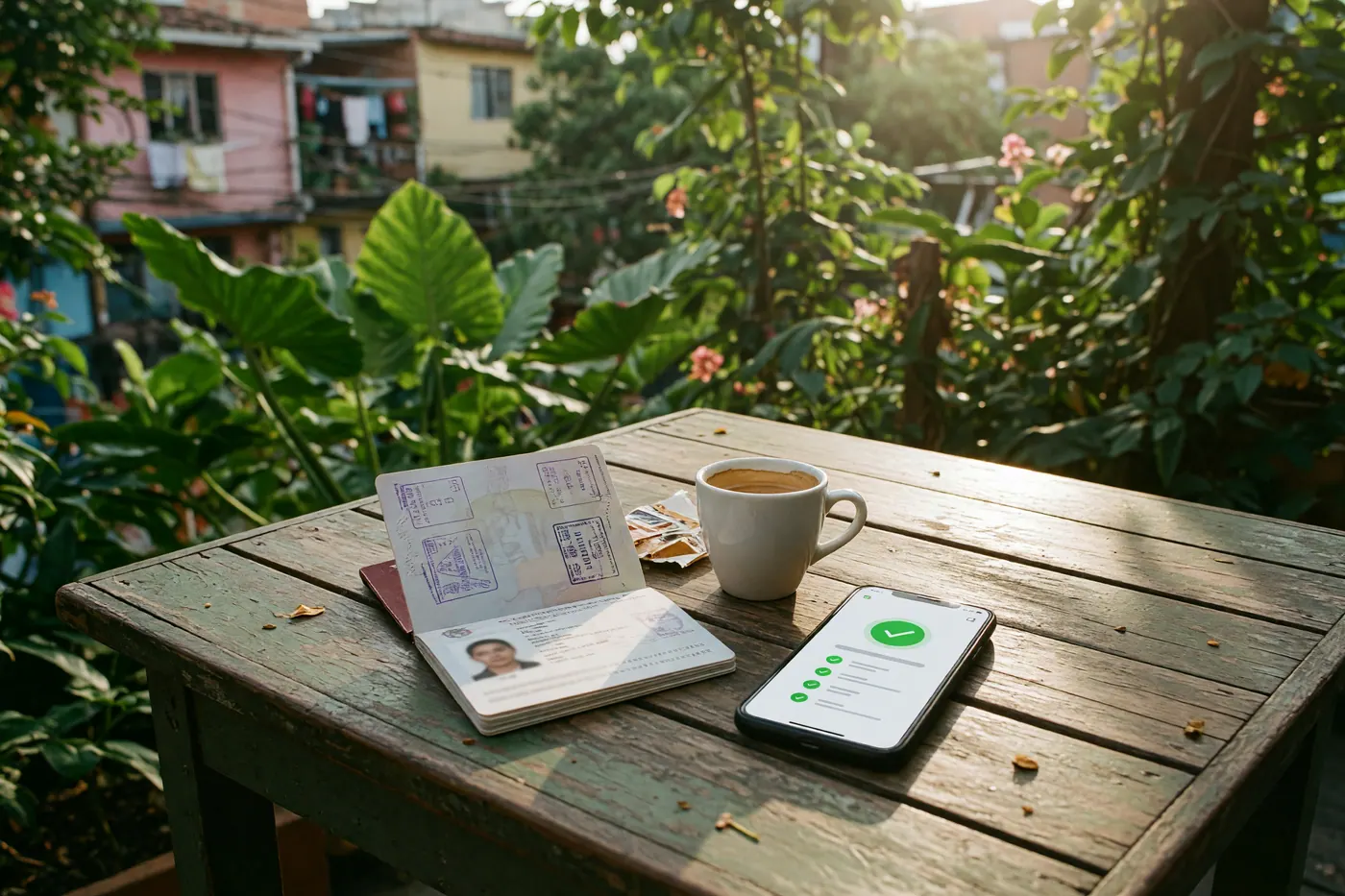
- Contactless Bank Cards and Mobile Wallets: Metro Cali and Credibanco have rolled out open-loop contactless validation across all turnstiles and bus card readers. You can simply tap your contactless Visa or Mastercard credit or debit card, or use smartphone wallets like Apple Pay and Google Wallet. There is no need to stand in line or purchase a plastic transit card. Just remember that if you are using an international credit card, foreign transaction fees from your home bank could add a minor surcharge per tap.
- The Physical Tarjeta MIO: If you prefer using cash or want a dedicated local transit card, you can purchase a reloadable plastic Tarjeta MIO at any station ticket booth (taquilla) or at neighborhood Gane lottery retail outlets. The card blank typically costs between $3,000 and $5,000 COP and can be loaded with cash balance directly at ticket booths or automated recharge kiosks inside major terminals.
Crucial Rule: Drivers on MIO buses never handle cash under any circumstances. Always ensure you have balance on your Tarjeta MIO or carry an active contactless card before stepping up to the bus doors.
Decoding the Route Network: Troncales, Pretroncales, and Feeders
The first letter of each route code tells you which tier you are boarding:
1. Troncal Routes (Letter "T")
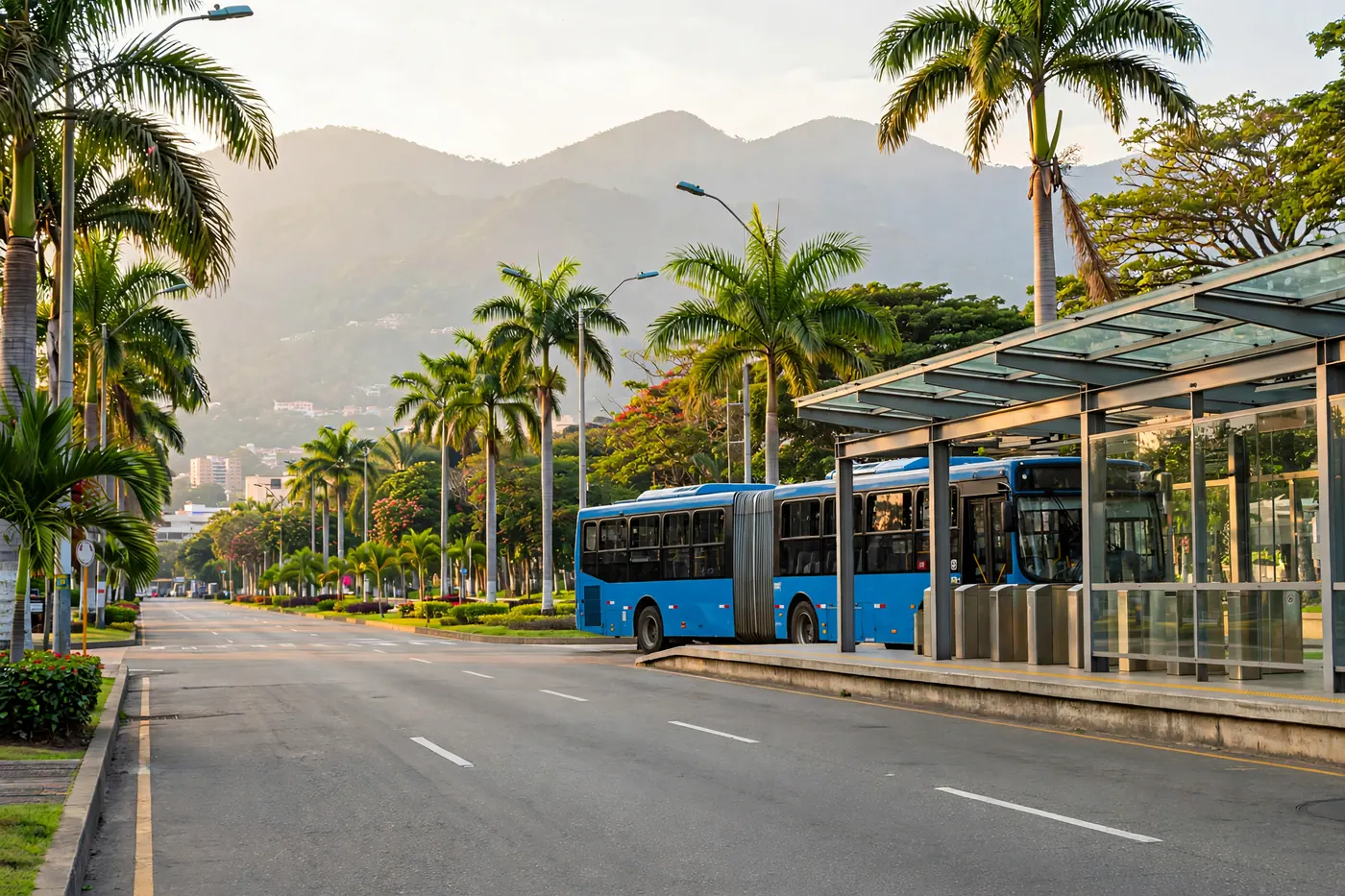
Troncales (such as the T31 or T47B) are the backbone. These large blue articulated buses run in dedicated center-road lanes, between terminals along corridors such as Calle 5, and stop only at raised center-median stations.
2. Expreso Routes (Letter "E")
Expreso buses share those center busways but skip intermediate stations between major hubs.
3. Pretroncal Routes (Letter "P")
Pretroncal routes use mid-sized buses (locally, padrones) in mixed traffic. They stop at curbside shelters where there is no dedicated busway.
4. Alimentador Routes (Letter "A")
Alimentadores are smaller green feeder buses. They link quieter residential streets to the nearest MIO terminal or trunk station.
The 90-Minute Transfer Window (Integración Virtual)
The MIO operates on an integrated ticketing model known as integración virtual. Once you tap your card at a turnstile or onboard validator, you have a 90-minute window to make free transfers between different lines across the entire network—including trunk buses, pre-trunk routes, neighborhood feeders, and the MIO Cable gondola.
However, there is an essential technical caveat that trips up many foreign visitors: every passenger must tap their own individual card to benefit from free transfers. While the turnstile will let you tap a single card twice to pay for yourself and a travel companion entering the same station, the validation system will register the second tap as a separate journey when you attempt to change buses later, charging an additional full fare.
Riding the MIO Cable to Siloé: Views and Cultural Etiquette
One of the most scenic urban journeys in southwestern Colombia is the MIO Cable, an aerial gondola system stretching 2.08 kilometers up the western mountain slopes of Comuna 20 (Siloé). The cable car offers sweeping panoramic views across the valley below and the mural-covered rooftops of the hillside community.
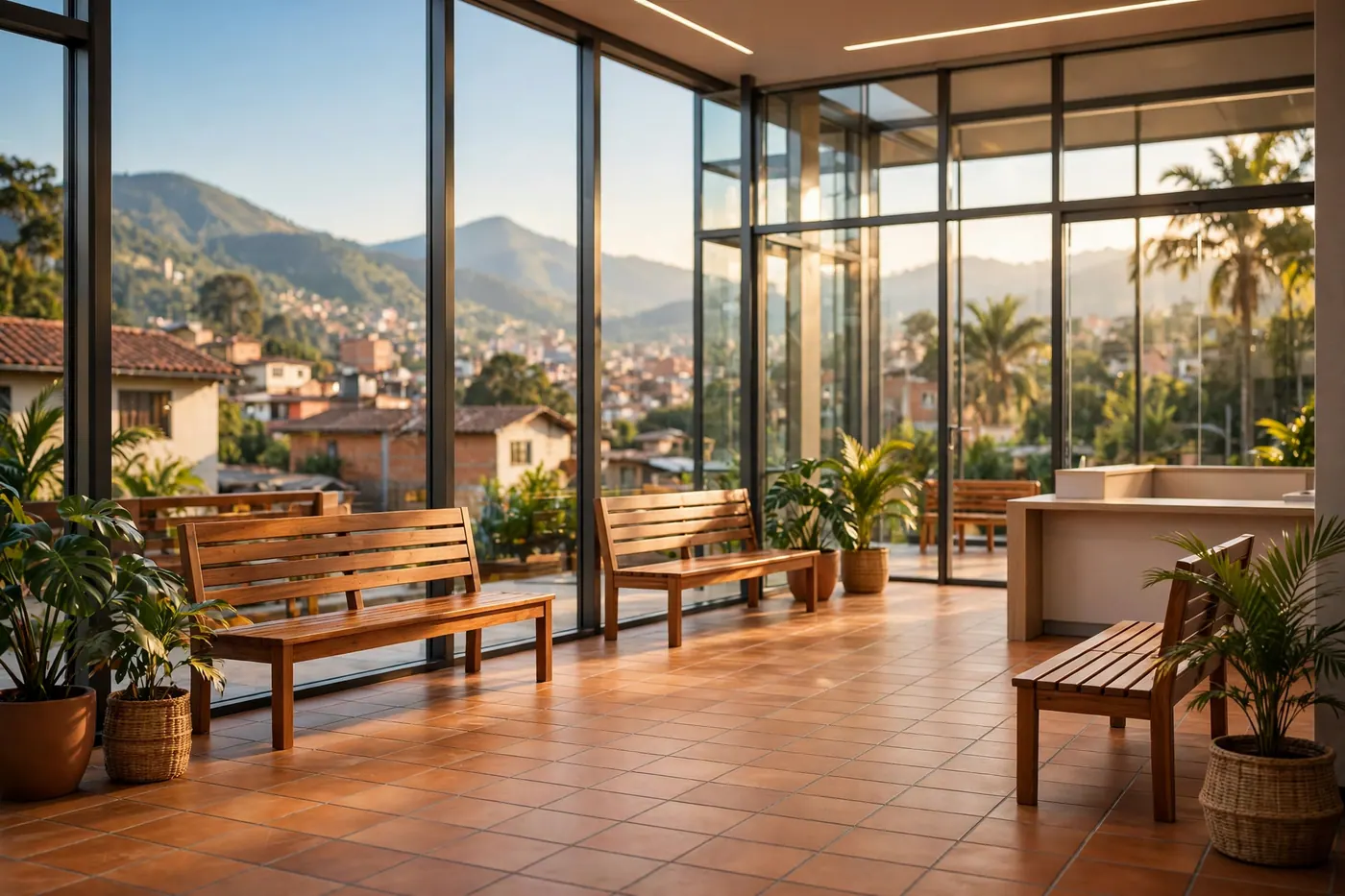
The system originates at Terminal Cañaveralejo, situated along Calle 5 with Carrera 50, which is directly connected to Estación Unidad Deportiva via an underground pedestrian transit concourse. From Cañaveralejo, the cable car ascends through three elevated mountain stations:
- Tierra Blanca
- Lleras Camargo
- Brisas de Mayo (the upper mountain terminal)
Best of all, the MIO Cable is completely integrated into the transit network: if you arrive at Terminal Cañaveralejo on a MIO bus, your transfer to the gondola is included in your standard $3,500 COP fare without extra fees.
Etiquette in Siloé: The round trip in the cabin is a routine daytime ride. I would not wander the hillside alleys off the upper stations on my own. If you want the street art, go with an organized community walking tour.
Digital Route Planning Tools for Everyday Commuting
These are the tools I actually use to plan a connection:
- Official Mio App: This official app provides real-time bus arrival tracking, step-by-step route planning, and notifications regarding line diversions or service interruptions.
- Moovit: Because Metro Cali shares open transit data directly with Moovit, the platform offers accurate door-to-door transit itineraries, complete with estimated walking times and arrival countdowns.
- Google Maps Transit: Highly reliable for straightforward trunk line navigation across major corridors like Calle 5, Avenida Colombia, and Carrera 1.
For a trip to Alfonso Bonilla Aragón International Airport (CLO) with heavy luggage, or any ride past the city limits, a MIO bus is the wrong tool. See hiring a private driver and van transfer in Colombia when the bags will not fit.
Transit Safety and Street Smarts: Avoiding "Cosquilleo"
Most trips are uneventful. Crowded hubs are still where cosquilleo (stealth pickpocketing) shows up, and that is the part that frustrates me: the bus itself is fine, the doorway crush is not.
- Wear your backpack in front on trunk buses at peak hours (about 6:30–8:30 a.m. and 5:00–7:30 p.m.). Keep the phone in a front pocket near the doors. The grab happens as the doors close.
- Read the local habit in no dar papaya: do not flash a wallet or passport on a packed platform.
- Night cutoff: Service runs roughly 5:00 a.m. to 11:00 p.m. Monday through Saturday, and 6:00 a.m. to 10:00 p.m. Sundays. After about 8:30 p.m. I skip quiet feeder stops, including late rides from Granada or Menga, and take a licensed radio cab or a ride-hailing app.
According to active listings on Colombia Move (September 2026), the marketplace currently shows 60 active furniture listings and 21 active appliance listings, and those furniture listings have drawn about 5,877 views. Once the MIO gets you across town, that is the practical pool for a table, a fan, or a fridge from someone who is moving, without a store markup.
Frequently Asked Questions
❓ How much does a MIO bus fare cost in Cali in 2026?
The official 2026 MIO fare is $3,500 COP for the whole integrated network, including transfers inside 90 minutes. Metro Cali set that flat fare by municipal decree effective 10 January 2026, and drivers do not accept cash on any bus.
❓ Can I use my international contactless credit or debit card to ride the MIO?
Yes. As of 2026, station turnstiles and onboard validators accept contactless Visa and Mastercard debit or credit cards, plus Apple Pay and Google Wallet. Tap the card or phone at the reader. A foreign bank may still add its own foreign-exchange fee on each tap.
❓ How do free transfers work between MIO buses and the MIO Cable?
Riders get a 90-minute window from the first tap to switch buses and board the MIO Cable at no extra charge. Each passenger must tap their own card. A second tap on one card at the same turnstile starts a separate journey and will not carry the transfer.
❓ Is riding the MIO Cable into Siloé safe for foreign tourists?
Riding the cable car for panoramic views of Cali during daylight hours is a normal visitor trip. Skip unguided walks into residential side streets at the upper stations unless you are with an organized community cultural tour.
❓ Where can I buy and reload a physical Tarjeta MIO?
Buy and reload a plastic MIO card at station ticket booths (taquillas), automated recharge machines, and authorized Gane lottery shops around Cali. Load cash there before you ride, because drivers do not take cash on the bus.
❓ What is the difference between a Troncal (T) and Pretroncal (P) bus?
Troncal (T) buses are large blue articulated vehicles in dedicated center-road corridors. Pretroncal (P) buses travel in mixed traffic on ordinary avenues and stop at curbside shelters.
❓ Is Cali's MIO bus safe to use late at night?
In 2026, daytime rides on busy corridors are the normal commute. Waiting at quiet feeder stops after 8:30 PM is a poor idea, so use a licensed cab or a ride-hailing app for late trips.
Comments
Loading comments...
Checking sign-in status...