
Things to Do in Medellín: The Honest Activity Guide
Most visitors spend a week in El Poblado and call it Medellín. This guide covers what actually deserves your time — downtown, the Metrocable, paragliding, where locals eat, and the day trips worth doing.
IDIOMA DEL ARTÍCULO
Showing original language
Most people arrive in Medellín clutching a list they borrowed from someone else — a tour agency's pamphlet, a Reddit thread from two years ago, or a friend who spent four days in El Poblado and called it an adventure. The problem isn't the city. It's the template. Medellín gets summarized too easily, and the easy summary misses most of what makes it worth visiting.
The transformation this city pulled off since the 1990s is real — you feel it in the metro stations, in the libraries planted into hillside comunas that once had no running water, in the street art that replaced narco graffiti. But there's also a tourist Medellín that fits into eight blocks around Parque Lleras, and you can spend a week there without seeing the actual city. The good news: both versions are close, and you can do them in the same trip.
This guide covers what actually matters — the highlights worth doing, what locals enjoy, and which activities are genuinely worth the price. I've linked to more detailed guides where depth matters. No need to repeat what's already been written.
📍 Five Things Not to Miss in Medellín
- Botero Plaza + Museum of Antioquia — free outdoor sculptures, museum entry ~25,000 COP
- Metrocable Line K → Line L to Parque Arví — most dramatic urban ride in Colombia, 8,000–10,000 COP round trip
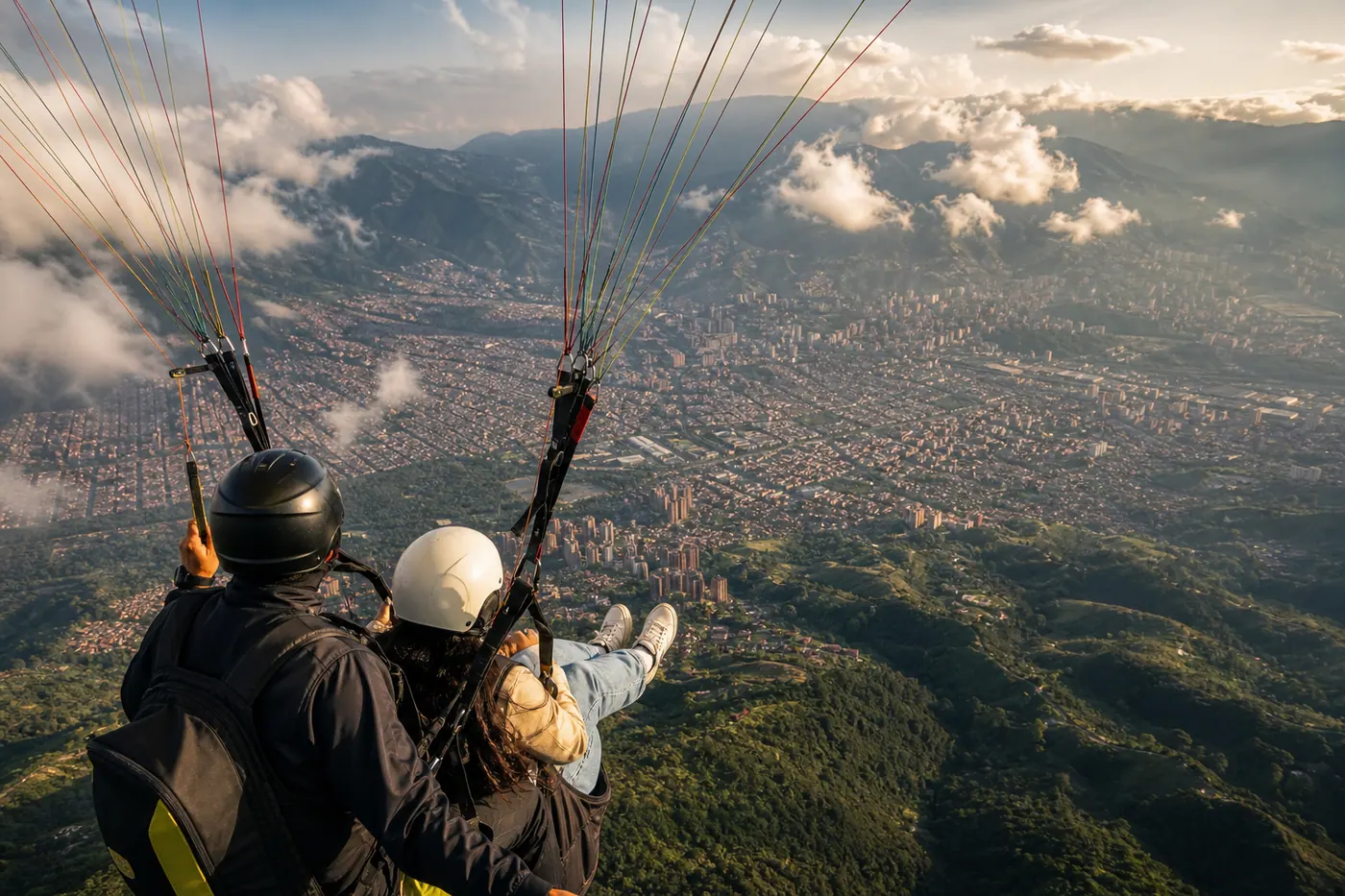
- Paragliding from San Felix — 100,000–150,000 COP, 40 min from downtown, views that beat any drone shot
- La 70 nightlife strip in Laureles — cheaper, more local, better empanadas than El Poblado
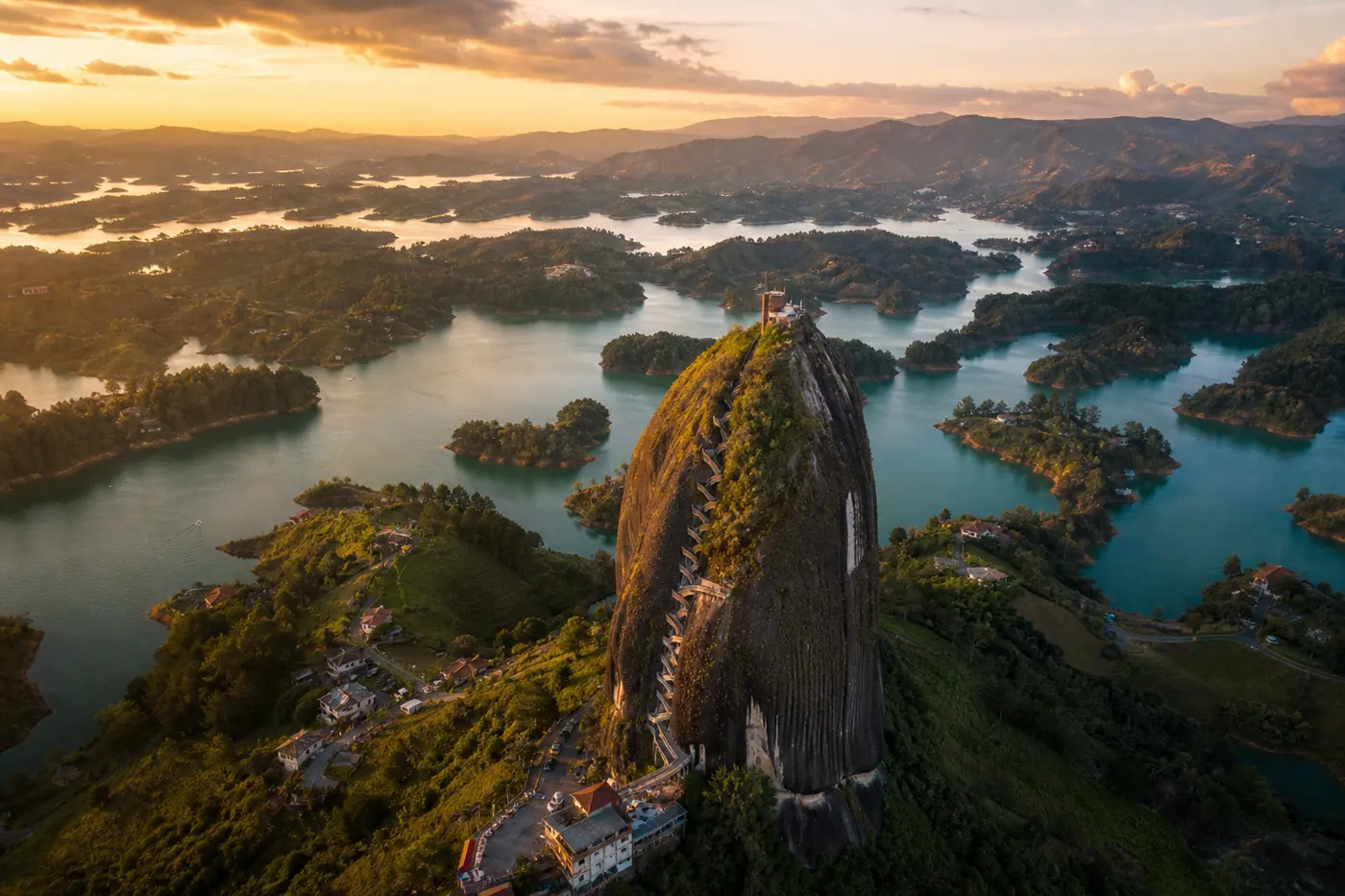
- Day trip to Guatapé — 2 hours each way, climb El Peñol rock, return the same evening
Start Downtown, Not in El Poblado
El Poblado is comfortable. It has reliable WiFi, decent coffee, and enough English speakers that you never have to try. None of that is a problem, but if you start there you'll probably stay there — and Medellín's best stuff isn't in El Poblado.
Botero Plaza in El Centro is where I'd send anyone on their first morning. Fernando Botero donated 23 monumental bronze sculptures to his home city, and they sit on a pedestrianized plaza in front of the Museum of Antioquia. The outdoor collection is completely free — an hour of walking around the figures costs nothing. Inside, the museum runs about 25,000 COP and holds more Botero work plus a strong permanent collection of Colombian art.
From there, Parque de las Luces is a 10-minute walk east: hundreds of illuminated LED columns fill a plaza that once ranked among the most violent corners in the city. Go at night — the installation reads completely differently after dark. That contrast, a public art piece in what was essentially a war zone, says more about Medellín than any guided tour of the narco era.
Practical note: explore El Centro during the day on your first visit. Keep your phone in your bag, skip the flashy watch, and don't wander north of Carabobo station without knowing where you're going. The area has genuinely improved, but spacing out with your camera up is still not a good idea.
Ride the Metrocable First Thing
The metro is Colombia's only urban rail system, and it works — clean, punctual, 3,400 COP anywhere on the network. Most visitors use it as occasional transport. The mistake is treating it as a means to an end rather than part of the experience.
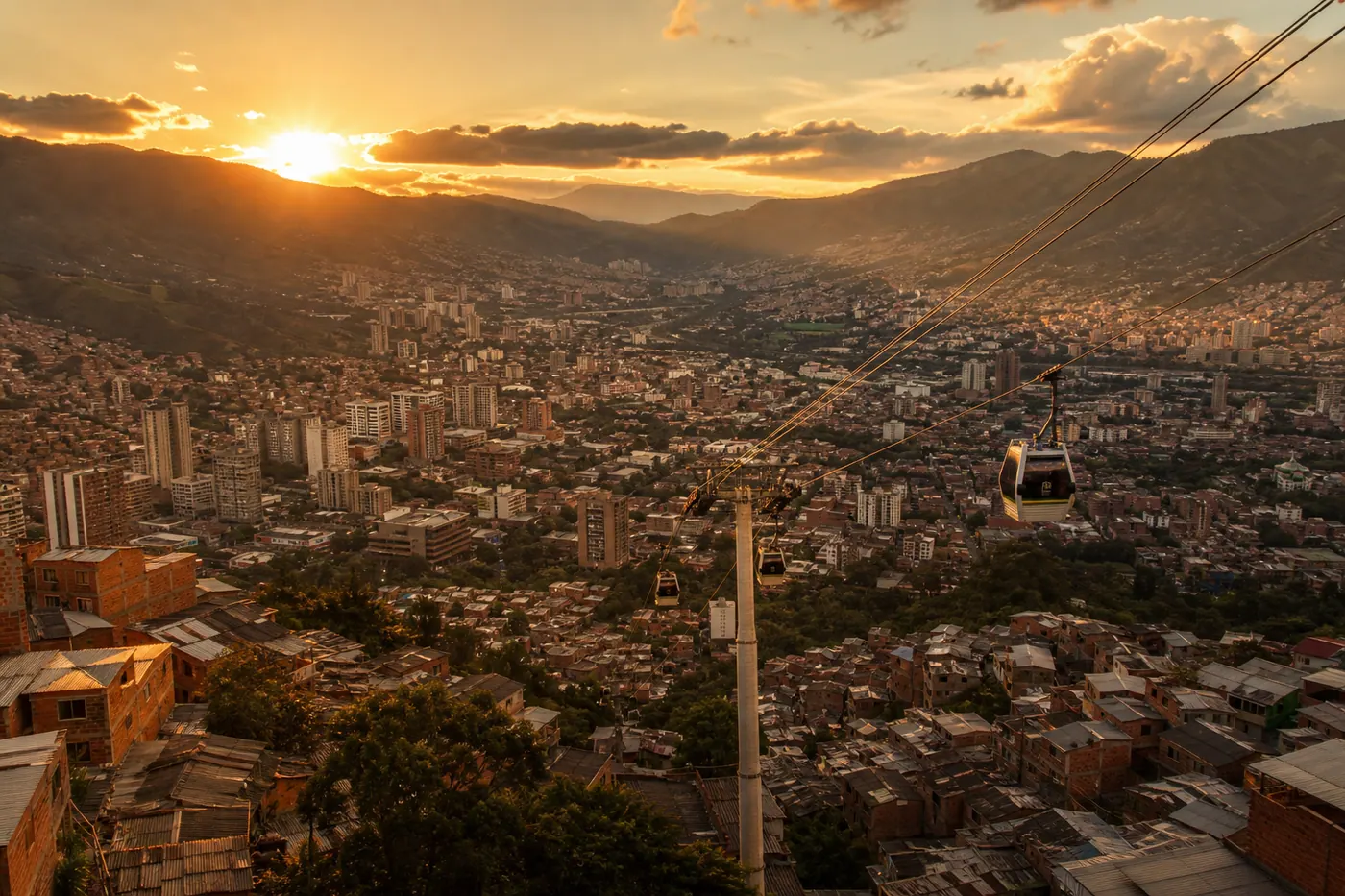
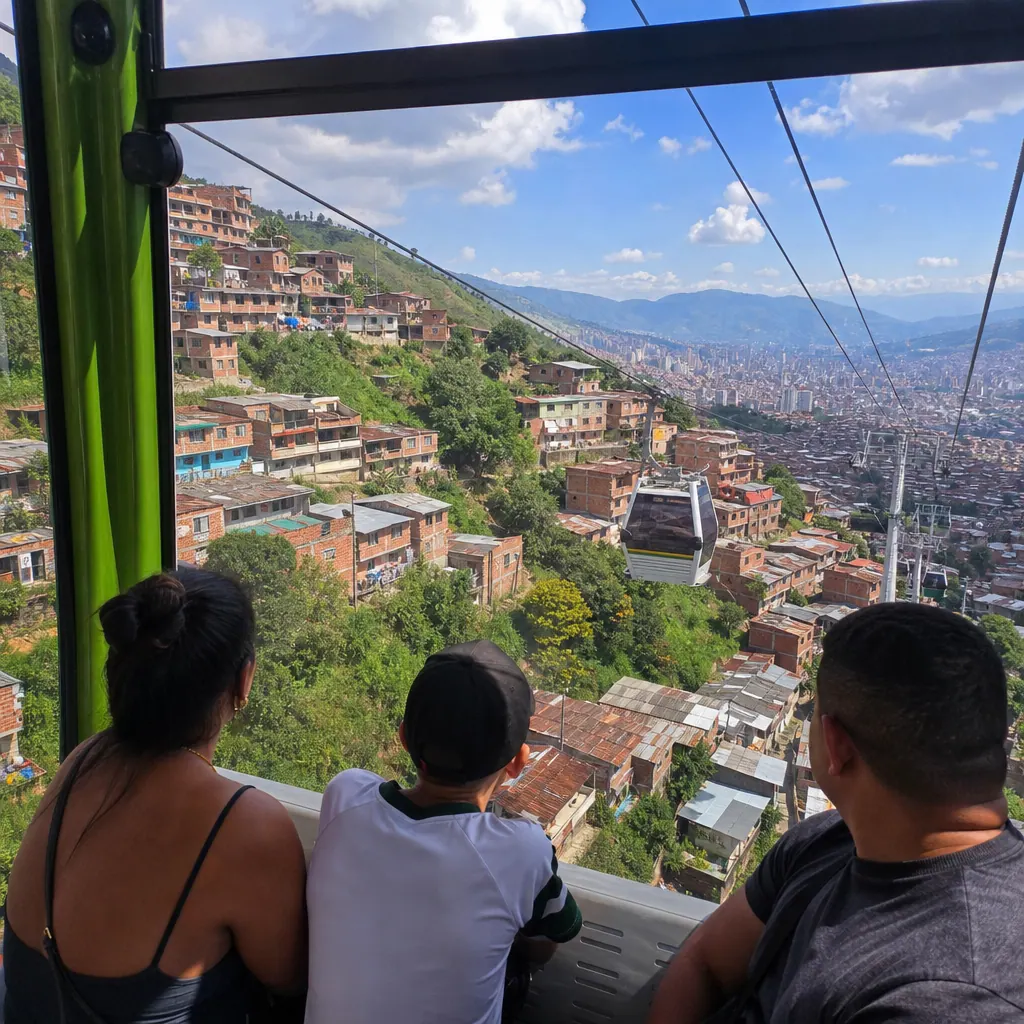
Line K, the Metrocable running from Acevedo station up to Santo Domingo Savio, is one of the most dramatic urban rides in Latin America. You board near river level and climb steeply through the comunas — at some points the gondola passes close enough to rooftops that you can see clothes drying on lines below. Santo Domingo Savio, once one of the most dangerous areas in the city, now has plazas, a library, and a cable car transfer point that connects to the forest above.
Line L continues from Santo Domingo up to Parque Arví: a 16 square kilometer forest reserve perched above the urban basin. The climate flips completely from downtown — bring a light jacket even in summer. There are marked hiking trails, a local market selling cheese and fruit on weekends, and almost no tourists compared to El Poblado. The full round trip costs 8,000–10,000 COP. Do it on a weekday; weekend lines are long.
For full details on the metro system, Cívica card, and every cable car line: complete Medellín metro and Metrocable guide.
Paragliding and Getting Outside
San Felix is 40 minutes northeast of Medellín, and it has some of the best tandem paragliding thermals in South America. Flights run 100,000–150,000 COP, you're in the air 15–25 minutes, and the views across the Aburrá valley — city below, mountains on all sides — are better than most drone footage you'll see online. It's not an adrenaline sport here; it's more like floating slowly above something enormous.
Skip the packages sold near Parque Lleras — you'll pay twice for a middleman. Book direct with a licensed operator in San Felix. Full breakdown and what to ask before booking: paragliding in Colombia guide.
For ground-level outdoor time: El Salado waterfall near Bello is a two-hour hike that most visitors have never heard of. Cerro Quitasol is harder — 5+ hours to 2,300 meters — and worth hiring a local guide for. Parque Arví (above) handles the lower-commitment nature fix well.
The Real Food Scene
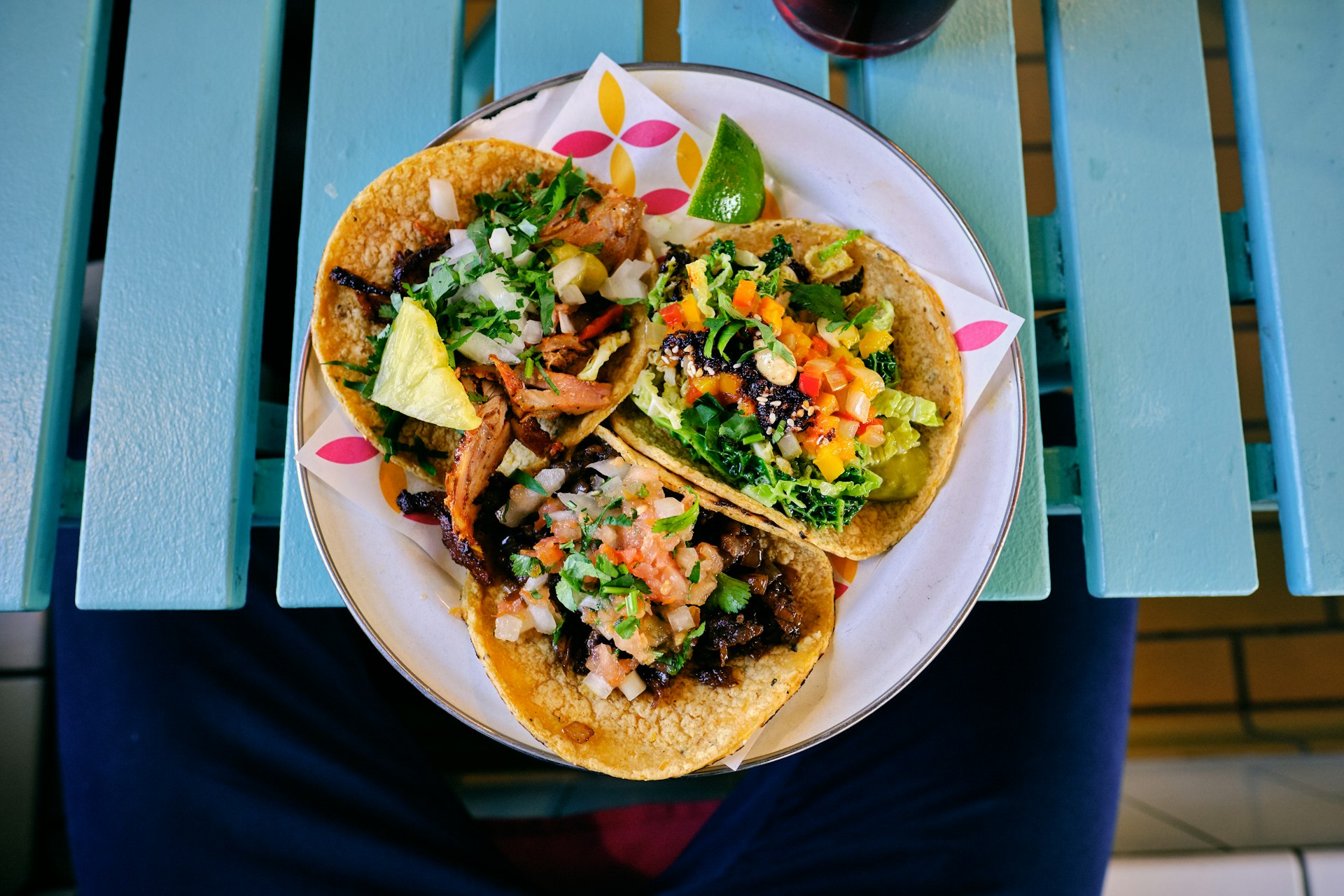
Bandeja paisa — rice, beans, chorizo, chicharrón, a fried egg, fried plantain, avocado, and a small arepa all on one plate — is the Antioquia anchor dish. In Laureles or Floresta you'll find spots serving it for 18,000–25,000 COP. The same plate in El Poblado runs 35,000–45,000 and arrives slightly redesigned for international expectations. Neither version is bad. The local version is more honest.
For markets: Mercado del Río near El Centro is an upscale food hall — well-organized, good for an evening, strong coffee options. Plaza Minorista is the opposite: a raw wholesale market operating 5am to 1pm where produce and food vendors work at actual Colombian prices. You don't need to buy anything. Just walking through it is one of the more alive hours you can spend in the city.
The San Alejo flea market runs on the first Saturday of the month at Parque de El Periodista in El Centro — vintage clothes, artisan goods, plants, records, and a lot of very social Colombians. It's free, unpredictable, and genuinely good. Mark your calendar if the dates align.
Pueblito Paisa, the replica Antioquia town on Cerro Nutibara hill, is a bit cheesy in the way that replica towns always are, but the viewpoint is genuinely good and the park below it is pleasant. Don't pay for a guided tour — walk up yourself.
Nightlife — How It Actually Works
Medellín has some of the best nightlife in Latin America. The scale, the music, and the social energy on a weekend night are real. But it means different things depending on your point of reference.
Parque Lleras is the tourist hub — high energy, plenty of English speakers, safe enough, expensive. Provenza, a few blocks away, skews toward cocktail bars and a slightly older crowd. Both work; neither is where most Colombians are actually going.
La 70 in Laureles is where I'd point you. A long commercial strip where salsa clubs, bars, and late-night food spots occupy the same stretch of road. Cheaper drinks, real crowds, and the empanada vendors open until 3am are some of the best in the city. The vibe shifts as the night goes on — families eating early, nightlife crowd arriving after 11pm. It functions at every hour.
The city doesn't properly start until 11pm. Most clubs peak between midnight and 3am. Take Uber home — it's the right call at 4am. Full guide on venues, safety, and what to skip: nightlife in Medellín guide.
Day Trips That Are Actually Worth the Effort
Guatapé is the standard answer and it's standard for a reason. Two hours by bus from Norte terminal (about 15,000 COP each way), El Peñol rock takes 740 steps to climb and delivers a view of a fractured reservoir that doesn't look quite like anywhere else in Colombia. The village below has colorfully tiled facades (zócalos) and trout restaurants on the lake. Depart early, return before dark — it's manageable in a single day.
Jardín and Jericó are the ones worth staying overnight for. Both are classic Antioquia coffee towns — whitewashed church plazas, good coffee, cable cars above the hills, and almost no mass tourism yet. Each is 3–4 hours from Medellín by bus. Going as a day trip means 6–8 hours of buses for 3 hours on the ground. Stay two nights minimum.
For the coffee region proper — Salento, Filandia, Armenia, Pereira — base yourself there rather than commuting from Medellín. They deserve more time. Practical guide: coffee region day trips from Medellín. For longer escapes: best weekend trips from Medellín.
🗓️ What to Do Based on Your Time in Medellín
| Time Available | What to Prioritize |
|---|---|
| 3 Days | Day 1: El Centro (Botero Plaza, museum, Parque de las Luces at night) · Day 2: Metrocable Line K → Line L → Parque Arví (full day) · Day 3: Paragliding morning + Laureles lunch + La 70 at night |
| 5 Days | Add Day 4: full day trip to Guatapé · Day 5: slow morning at Plaza Minorista, afternoon café in Laureles, Provenza evening |
| 1 Week+ | Add a 2-night stay in Jardín or Jericó. Catch the San Alejo flea market on the first Saturday of the month. Start working the coworking scene if you're staying longer. |
The Safety Reality Check
Medellín gets categorized as 'safe' by expat standards, which needs some calibration. The tourist zones — El Poblado, Provenza, Laureles — are about as safe as any major Latin American city for visitors who stay alert. Pickpocketing and scams are the main risks, not violence.
Areas north of Santo Domingo Savio, parts of El Centro after dark, and any offer that involves a stranger taking you somewhere late at night deserve real skepticism. The scopolamine risk in Colombia is real — it's almost always social engineering (a drink you didn't watch being poured, a piece of gum from a new 'friend') rather than random attack. Main rule: don't accept drinks you didn't watch being prepared.
None of this means staying in your hotel. Millions of people visit Medellín every year without incident. Make smart defaults, especially in the first 48 hours before you've read the terrain. More practical guidance: safety tips for foreigners in Colombia.
Frequently Asked Questions
❓ What's the single best free thing to do in Medellín?
Botero Plaza in El Centro. Twenty-three monumental bronze sculptures on a pedestrianized plaza, completely free, with the Museum of Antioquia visible from the same spot. Add a 10-minute walk to Parque de las Luces for the evening and you've had an excellent day for zero pesos.
❓ Is the Metrocable safe for tourists?
Yes. The Metrocable is used daily by thousands of commuters and has security staff and cameras at every station. The neighborhoods you pass over have improved significantly — just stick to the marked cable car route rather than wandering into unfamiliar side streets after stepping off. Daytime is completely fine.
❓ How many days do you actually need in Medellín?
Three days covers the highlights without feeling rushed. Five days lets you add Guatapé and slow down a little. A week is enough to actually settle in — spend a morning at Plaza Minorista, an afternoon working from a café in Laureles, one night properly on La 70. Less than three days and you're mostly just sampling the tourist strip.
❓ Are the Pablo Escobar tours worth doing?
It depends entirely on the operator. Some tours cover the narco era seriously — the violence, the politics, the comunas' recovery — and are genuinely educational. Others are morbid selfie packages that Colombians find offensive. Ask your accommodation what they'd recommend; the honest operators will tell you which is which. The city has moved far past that chapter and most residents would rather show you what came after.
❓ Is Medellín worth visiting if I only have one day?
One day is tight but workable. Go to El Centro first (Botero Plaza, quick museum pass, Parque de las Luces in the evening), then Metrocable Line K in the afternoon for the views. Skip Guatapé — you need the full day for that. One day gives you a real impression; you'll want to come back for longer.
🇨🇴 More Colombia, Less Guessing
Practical guides for expats and visitors — straight to your inbox.
Subscribe Free →

Comments
Loading comments...
Checking sign-in status...