
Getting Around Medellín: Metro, Metrocable, and When to Just Take Uber
The Medellín Metro is Colombia's only urban rail system — and once you know how it works, it's the fastest and cheapest way across the city. Here's everything you need: Cívica card, metro lines, Metrocable, and when Uber still wins.
IDIOMA DEL ARTÍCULO
Showing original language
My first week in Medellín, I Ubered everywhere. It felt safe, easy, and cheap by any standard I was used to. Then a friend who'd been living in Laureles for two years looked at my phone, saw the Uber app, and laughed. "You live one block from a metro station. You're paying for Ubers." She was right. Once I got the Cívica card figured out and learned which lines went where, I cut my transport costs by roughly half and started getting across the city faster during rush hour.
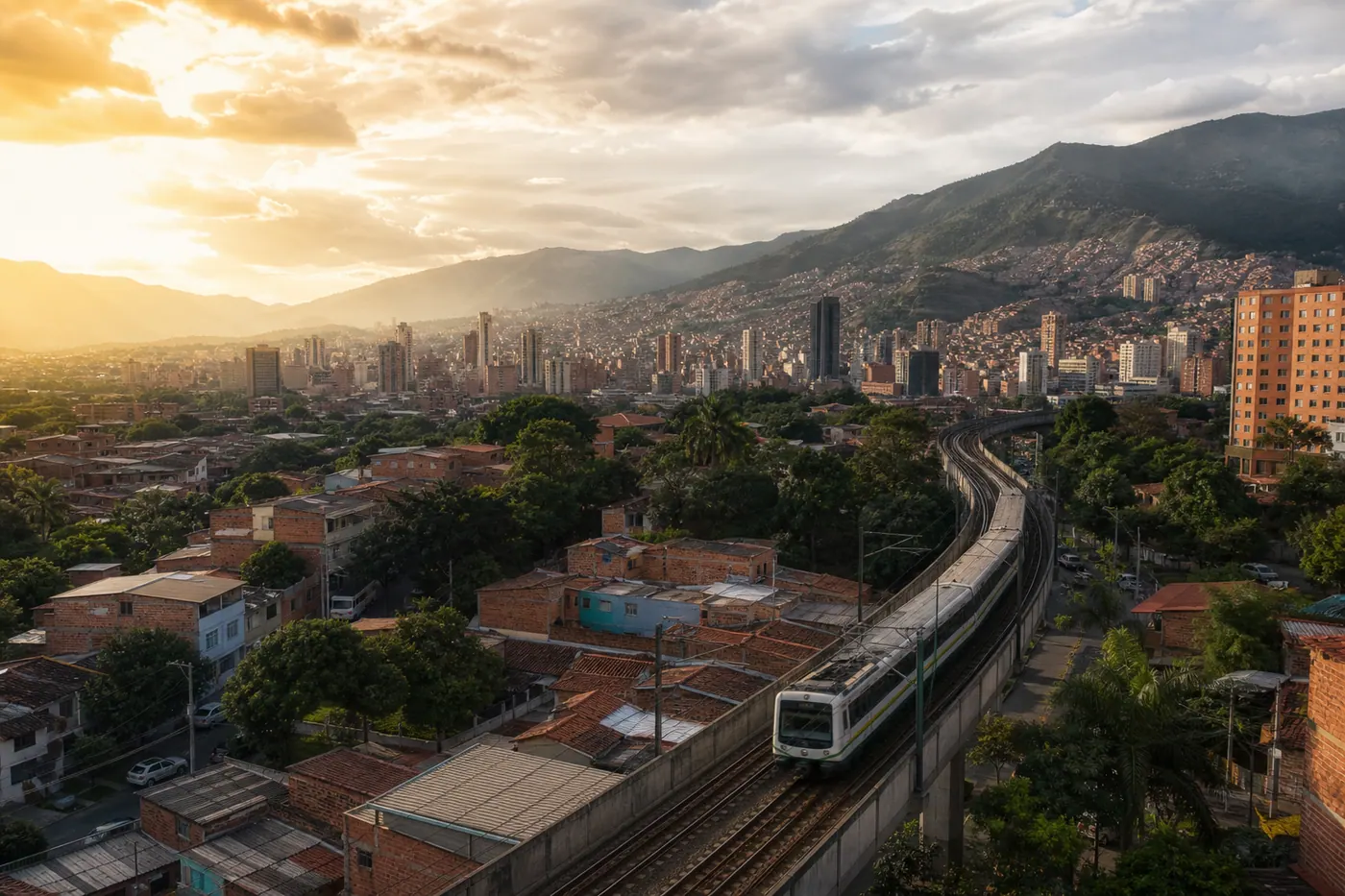
The Medellín Metro isn't just functional — it's genuinely good. Opened in 1995, it's still the only urban metro in Colombia, and paisas take obvious pride in it. Graffiti is almost nonexistent on the trains. Fare-dodging is rare. The system also connects directly to the famous Metrocable lines that climb the steep hillside comunas — built originally as social infrastructure to serve neighborhoods that buses couldn't reach, and now one of the more remarkable transit experiences in South America.
This guide covers what you actually need: how to get and load the Cívica card, which metro lines go where, how the Metrocable works, what the tranvía and electric buses are useful for, and the honest situations where skipping all of it and calling an Uber is still the smarter call.
What to know first
- You need a Cívica card to board everything — metro, Metrocable, tranvía, and electric buses. No cash at turnstiles.
- The card is free (or ~COP 5,000–7,500 deposit) at any station kiosk. Load credit there or at convenience stores.
- Fare is roughly COP 3,100–3,500 per trip; you get a discounted integration transfer within 70 minutes on the same card.
- Line A is the backbone — runs north-south through the Aburrá Valley from Niquía to La Estrella, stopping at Poblado, Estadio, San Antonio, Parque Berrío, and Acevedo along the way.
- The Metrocable climbs up to Santo Domingo (Line K) and Parque Arví (Line L) from the Acevedo station.
- Uber and InDrive are widely used and practically tolerated — use them for late nights, heavy bags, and neighborhoods off the metro grid.
The Medellín Metro — Colombia's Only Urban Rail
A few things make the Medellín Metro work better than you'd expect for a city of 2.5 million: nearly all of Line A's 27 stations are elevated above street level, which means traffic doesn't affect it. When everyone else is stuck in a rush-hour gridlock on Avenida El Poblado, the metro is moving.
Line A runs north-south through the Aburrá Valley. The stations you'll use most are probably Poblado (El Poblado neighborhood), Estadio and Suramericana (Laureles area), San Antonio (the central hub where both lines converge), Parque Berrío (downtown), and Acevedo (the northern connection point for Metrocable Line K).
Line B is short — just six stations — but connects San Antonio westward to the Occidente terminal via Floresta and San Javier. If you're in La América, Belén, or anywhere on the western hillside, Line B is your access point to the metro grid. San Javier is also where Metrocable Line J departs going up the western comunas.
Trains run from around 4:30 AM to 11 PM Monday through Saturday, with reduced hours on Sundays. During rush hours — roughly 6–8:30 AM and 5–7:30 PM — trains come every 3–5 minutes. Off-peak you're looking at 8–12 minutes. The one real annoyance: the stretch around Industriales and Universidad heading south during the morning rush can get genuinely crowded. Not TransMilenio-level chaos, but you'll want to stand clear of the doors.
Getting and Loading Your Cívica Card
The Cívica card is the contactless tap card that works across all Metro de Medellín modes — Line A, Line B, all Metrocable lines, the Tranvía, and the integrated electric buses. You cannot pay cash at any turnstile, and you can't buy single-use tickets. Get the card first.
Walk up to any staffed ticket window or self-service kiosk at any metro station. Ask for a tarjeta Cívica. You'll pay around COP 5,000–7,500, which typically covers the card plus a small initial credit. The card is yours indefinitely — reload it as you go.
Loading options: at any station window (cash or debit card), via the Metro de Medellín app (works with a Colombian phone number; foreigners have had mixed results with passport numbers but it's worth trying), or at Éxito, Carulla, and Oxxo convenience stores — just hand over the card and say how much you want to add.
Integration transfers: if you tap into the metro and then tap into a Metrocable or electric bus within 70 minutes, the system automatically charges a discounted integration fare instead of a full second trip. Useful to know when you're doing metro + cable combinations — you're not paying double. The Moovit app (free) is the most reliable way to plan multi-modal trips in Medellín; it knows all the routes and transfer logic.
Metrocable Lines — Not Just a Tourist Ride
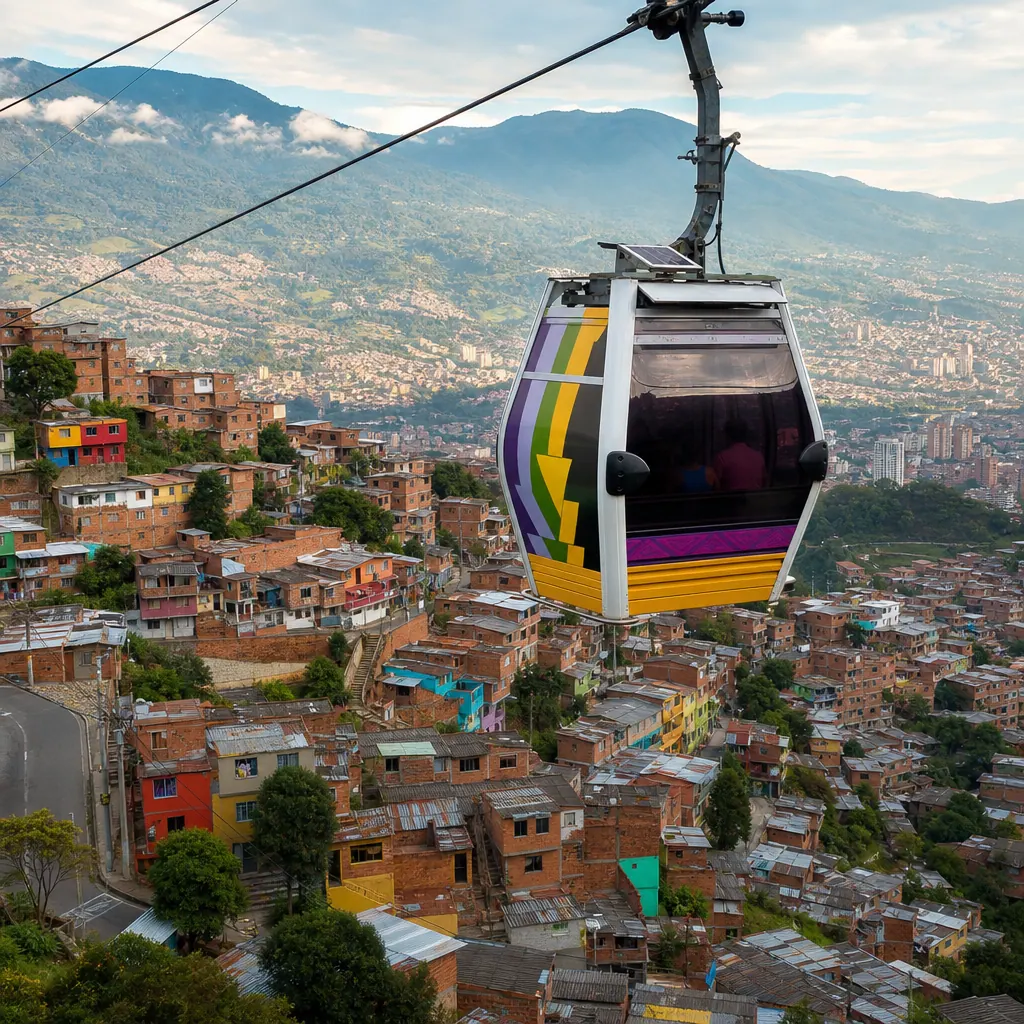
The Metrocable is one of those things that looks like a gimmick until you understand the context. These aerial gondola systems were built in the mid-2000s as genuine social infrastructure, connecting steep hillside comunas that conventional buses struggled to serve reliably. The cable cars turned a 45-minute uphill bus grind into a 10-minute ride. For residents of comunas 1, 2, and 13, this was transformative.
There are now four cable lines in the Metro network:
- Line K (from Acevedo on Line A): the most famous — climbs northeast through Andalucía and Aranjuez to Santo Domingo Savio. This is the one with the striking views over the hillside comunas. Included in standard metro integration fare.
- Line L (from Santo Domingo): continues up to Parque Arví, a large nature reserve at the rim of the valley. Primarily recreational/tourist use. Higher fare than standard integration, roughly COP 6,500–8,000 one-way.
- Line J (from San Javier on Line B): serves the western hillside comunas. Less visited by expats, but a working commuter line for residents.
- Line M (from Miraflores): connects the eastern center with the tranvía and hillside comunas to the northeast.
For most expats living or visiting Medellín, Line K is the one to know. From Acevedo, it's about a 10-minute gondola ride to Santo Domingo — the famous escaleras eléctricas de Medellín (public outdoor escalators) are nearby, as is the Biblioteca España area. If you're going up to Parque Arví for a hike or picnic, add Line L from Santo Domingo. Budget a full morning or afternoon for the Arví trip.
One thing to watch: when there's heavy rain or lightning in the upper comunas, the cable lines sometimes suspend service temporarily. It doesn't happen constantly, but if you're planning a specific trip and the weather looks uncertain, have a backup plan.
The Tranvía and Electric Buses
The Tranvía de Ayacucho is a street-level electric tram that runs through Medellín's eastern center, connecting San Antonio (metro hub) to Miraflores and then linking to Metrocable Line M for the northeastern hillside. If you're working or living in the El Centro corridor or need to reach the eastern comunas, it's useful. For most expats based in El Poblado, Laureles, or Envigado, you probably won't use it regularly.
Electric buses (Buses Eléctricos) fill the last-mile gaps the metro doesn't reach. They're modern, clean, run on the same Cívica card, and cover neighborhoods across the valley. The challenge is figuring out routes — they're not well signed. Moovit handles this well; plug in your destination and it'll tell you which bus to take and where to board. Once you've learned 2–3 regular routes, they become a reliable option for short hops the metro doesn't serve.
Quick Transport Decision Guide
| Situation | Best Option |
|---|---|
| Crossing the valley north-south | Metro Line A — fastest during rush hour |
| Getting to El Poblado station | Metro Line A (Poblado station) |
| Santo Domingo or Comunas 1/2 | Metro A → Acevedo → Metrocable K |
| Parque Arví day trip | Metro A → Acevedo → Cable K → Cable L |
| Western neighborhoods (La América, Laureles hills) | Metro Line B + Electric buses |
| Night out past 11 PM | Uber or InDrive |
| Heavy bags or grocery run | Uber or InDrive |
| Short hop, familiar area, under 2 km | Walk or Rappi Moto |
When to Skip Transit and Just Take Uber
Uber and InDrive both operate openly in Medellín. Drivers are plentiful in El Poblado, Laureles, and El Centro; wait times are typically under 5 minutes. InDrive lets you propose a fare upfront (usually 10–20% below Uber rates) and the driver either accepts or counters — useful if you're doing the same route regularly and want to lock in a price.
Public transit makes no sense in three situations: after the metro shuts down at around 11 PM (midnight on some Fridays and event nights), when you're carrying anything unwieldy like luggage or big purchases, and when your actual destination is several blocks uphill from the nearest station. The El Poblado neighborhood is a good example of the last one — the metro station sits on the main avenue, but many apartments and restaurants in the residential hillside are a 10–20 minute walk up steep streets. Late at night, an Uber to your actual door is the call.
One practical safety habit for public transit: keep your phone in a bag or inner pocket while riding, not held in your hand. Phone snatching at busy station exits and crossings does happen. If you're commuting daily, a secure anti-theft backpack with a hidden zipper compartment is worth having — it keeps valuables inaccessible without taking it off.
For very short trips where you'd normally walk but don't want to, Rappi Motos (motorcycle taxis booked through the Rappi app) are fast and inexpensive within a few kilometers. They're not something you want for anything over 15 minutes, but for a quick cross-neighborhood hop when it's raining, they work.
Keep Reading
Getting around Bogotá? The TransMilenio system works differently. How to Use TransMilenio, SITP, and When to Take Uber in Bogotá →
Living in Medellín?
See how the metro access changes by neighborhood: Where to Live in Medellín — Neighborhoods by Budget and Lifestyle →
Frequently Asked Questions
❓ How much does the Medellín Metro cost per trip?
A single metro trip costs roughly COP 3,100–3,500 as of 2025-2026 — fares adjust annually. You can't pay cash at the turnstile; you need a Cívica card with credit loaded. Transfers to Metrocable lines within 70 minutes of your first tap are integration-discounted, so you're not paying a full second fare if you're continuing your journey.
❓ Is the Medellín Metro safe?
Yes — the metro stations and trains are among the safest public spaces in Medellín. Metro security staff are present at every station, and the system has a reputation for cleanliness that locals actively protect. Standard precautions apply: keep your phone out of sight, use a bag rather than displaying valuables, and be aware of your surroundings at busy exit areas. Late-night commutes are generally fine but use your judgment about which areas you're walking to after exiting.
❓ Can I use my Cívica card on the Metrocable and tranvía?
Yes — the same Cívica card works on all Metro de Medellín modes: Lines A and B, all Metrocable lines (K, J, L, M), the Tranvía de Ayacucho, and integrated electric buses. Parque Arví (Metrocable Line L) has a slightly higher fare than regular metro, but still uses the same card.
❓ How do I get to Parque Arví from El Poblado?
Take Metro Line A northbound to Acevedo station. From Acevedo, take Metrocable Line K up to Santo Domingo. At Santo Domingo, board Metrocable Line L to Parque Arví — this is the final stretch and has a separate, slightly higher fare. Total travel time from El Poblado station is around 45–55 minutes. Budget a minimum of half a day for the visit; it's a nature reserve with hiking trails, and rushing it misses the point.
❓ Does Uber work in Medellín?
Yes, Uber operates openly in Medellín and is widely used. InDrive is also popular and often 10–20% cheaper for the same routes. Both apps show pricing upfront. Taxi apps like inDriver, and traditional yellow taxis called via app (Tappsi or similar) are also options. During peak hours, app-based rides occasionally surge — the metro wins on those corridors if it can take you directly.

Comments
Loading comments...
Checking sign-in status...