
How to Host on Airbnb in Colombia: What New Hosts Need to Know
Listing your place on Airbnb in Colombia is more straightforward than many hosts expect — but the legal, tax, and pricing details will make or break your success.
IDIOMA DEL ARTÍCULO
Showing original language
A friend of mine bought a small apartment in Laureles in 2023 thinking she'd move there eventually. Then life happened, she stayed in Toronto, and the place sat empty for months. A neighbor suggested Airbnb. Within three weeks she had her first booking, and by month two she was covering her mortgage and condo fees from short-term rental income alone. That's the best-case version of this story.
The less glamorous version: someone else I know listed his Bogotá apartment without telling the building administration. He got fined, had to take the listing down after one booking, and nearly lost his tenant's security deposit in the dispute. He hadn't read the reglamento de propiedad horizontal. One five-minute conversation with his administración would have saved him all of it. If you want to see real-world options right now, you can browse apartments and houses on Colombia Move — posting is completely free.
Both stories are common. Airbnb has grown significantly across Colombia — Medellín, Cartagena, Bogotá, and Santa Marta are all markets with real demand. But the difference between a smooth hosting experience and a stressful one comes down to a few things most guides don't mention. This one will.
Quick answer: What to know first
- Airbnb is legal in Colombia for individuals — no special tourism license required at the national level
- Check your building's reglamento first — some copropiedades prohibit short-term rentals
- You must declare rental income with DIAN; Airbnb only handles the service tax, not your income tax
- Airbnb pays Colombian hosts in COP via bank transfer (1–3 business days after check-in)
- Photos, fast WiFi, and honest neighborhood descriptions drive reviews more than anything else
Is Airbnb Legal in Colombia?
At the national level, yes. Colombia doesn't require individual hosts to hold a hotel or tourism license for casual short-term renting. Law 300 of 1996 (the tourism framework) and its updates govern commercial accommodation, but individual hosts renting a primary or secondary residence aren't typically caught by those rules the way hotels and hostels are.
The real legal question isn't national — it's hyper-local. If you own an apartment in a propiedad horizontal (any building managed by an administración), your reglamento almost certainly has something to say about commercial activities. Some buildings explicitly prohibit short-term rentals. Others allow them with conditions — guests must register at reception, noise after 10 p.m. is grounds for a complaint, that kind of thing. A few have added Airbnb-specific clauses in recent years after noise incidents.
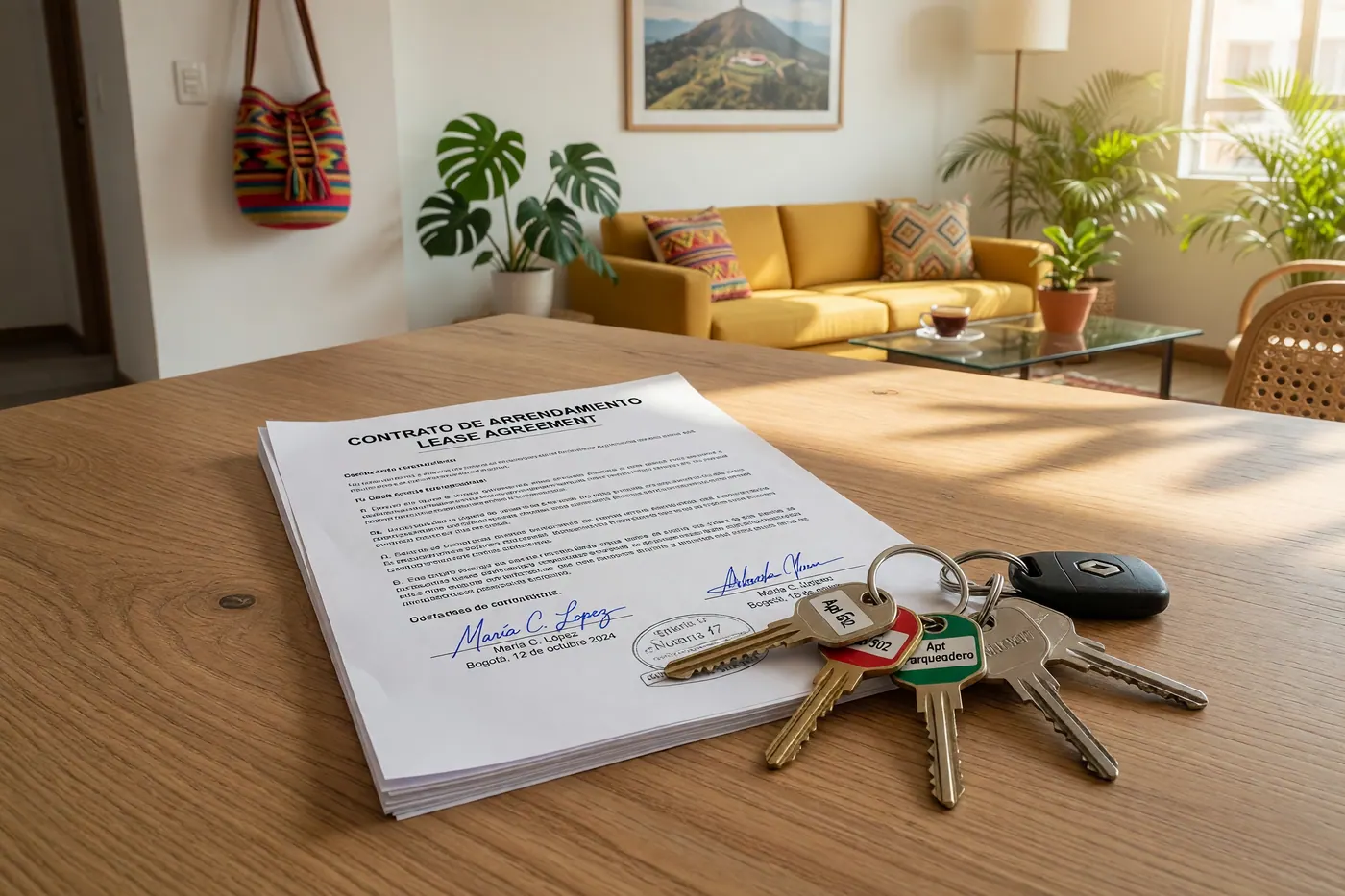
If you're renting rather than owning, your lease contract matters too. Most standard Colombian arrendamiento contracts prohibit subleasing without written landlord permission, and Airbnb hosting counts as subletting. If your landlord finds your listing on Airbnb's public search results — and they will, if they look — you can lose your apartment quickly.
Cartagena has been the flashpoint for the most enforcement pressure. The city has discussed short-term rental registration requirements for years, and several buildings in Bocagrande and Getsemaní have enacted outright bans after noise and security complaints. Know your specific building and city context before you list.
Setting Up Your Airbnb Account and Listing
Getting live on Airbnb in Colombia is straightforward. You'll need a government ID for verification (cédula de ciudadanía for Colombians, cédula de extranjería or passport for foreigners). Airbnb's verification process has tightened globally — Colombia isn't an exception. Expect to complete identity verification before your first payout processes.
For payment, Airbnb pays Colombian hosts in COP via local bank transfer, typically 1–3 business days after a guest checks in. You'll need a Colombian bank account — Bancolombia, Davivienda, Banco de Bogotá, and most major banks connect without issues. If you don't have a Colombian account yet, PayPal is an alternative but the currency conversion fees add up fast on COP amounts.
One thing trips up new hosts: your RUT (Registro Único Tributario from DIAN). Airbnb may request it for tax documentation, especially once earnings accumulate. Get your RUT sorted before earnings flow — it's an online process through the DIAN portal and you'll need it for your declaración de renta anyway.
Payouts arrive after check-in, not before. Don't spend the money before the guest arrives — it won't be there. Airbnb holds payments through a guest's stay as a buffer for disputes.
Pricing Your Place to Actually Get Bookings
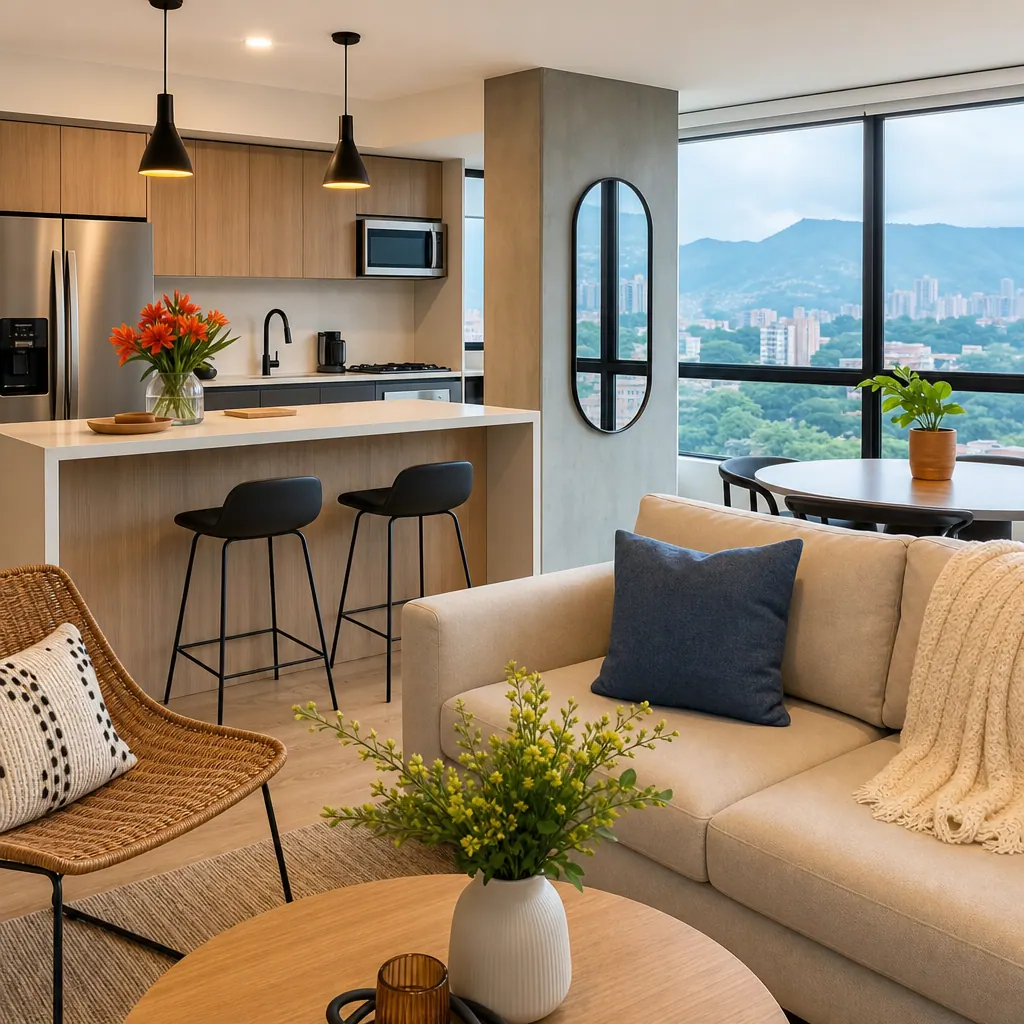
The most common mistake new Colombian hosts make is guessing at price. Don't. Open Airbnb and search your exact neighborhood with comparable specs — same bedrooms, similar building type, similar amenities. Filter by your target dates and look at what's getting booked (the "rare find" and "popular" badges are Airbnb's way of telling you something about actual demand, not just listing volume).
In Medellín, El Poblado commands the highest nightly rates — a well-furnished 1-bedroom in a decent building runs roughly COP 150,000–250,000 per night (~$35–60 USD). Laureles and Envigado run cheaper but pull a different kind of guest: longer-stay digital nomads who leave detailed reviews and sometimes book again for the next trip. In Bogotá, Chapinero and Zona Rosa attract very different travelers than La Candelaria, and pricing reflects that.
Cartagena is seasonal in a way the interior cities aren't. December through January, Semana Santa, and long holiday weekends push nightly rates up 40–60% above baseline. If your apartment is near the walled city or Bocagrande, learning to price dynamically during those peaks matters. Airbnb's built-in pricing tools are a starting point, but manually reviewing comps the week before high season beats the algorithm on local context.
Weekly (10%) and monthly (20%) discounts are worth considering from day one. A lot of Medellín hosts I've talked to actually prefer guests who stay two or more weeks — lower turnover, better reviews, more predictable income. One host in Envigado told me she stopped accepting one-night bookings entirely; the cleaning cost made them unprofitable.
One more thing on pricing: don't hide the administration fee. If your building charges COP 300,000/month in admin that you pass to guests, build it into the listed rate or disclose it clearly in the listing. Guests surprised by extra charges at checkout leave lower reviews.
Taxes on Your Airbnb Income
This section is the one most hosts skip and pay for later. Airbnb does collect and remit the Colombian service tax (IVA on platform services) on your behalf, and it's included in your listing price automatically. That is not your income tax.
Every Colombian resident — including foreigners with a cédula de extranjería — must file a declaración de renta with DIAN if total annual income exceeds roughly COP 47 million (the threshold adjusts annually). Airbnb income counts toward that threshold. If you earn COP 3 million/month (~$700 USD) from hosting, you're over the line. The income is classified as "rentas de capital" — capital income — and the effective rate depends on your total picture.
Rough rule of thumb: set aside 10–15% of your gross payout for income taxes. Keep copies of your Airbnb payout statements — they're the primary documentation for your DIAN filing. If you're hosting seriously rather than occasionally, it's worth having a contador público handle your declaración de renta. A basic filing runs COP 300,000–800,000 and they'll find deductions you'd miss: maintenance expenses, furnishing depreciation, platform fees.
Keep Reading
How Taxes Work for Independent Income in Colombia →
A practical breakdown of RUT, declaración de renta, and what independent earners need to know about DIAN.
What Actually Gets You Bookings
Optimization tactics are endless, but here's what actually moves the needle for Colombian hosts specifically:
Photos are the single most important factor. A dark, poorly-staged photo of a great apartment will underperform a well-lit photo of an average one every time. Natural light during the day, shots of every room, and a window view if there is one. Hiring a photographer costs COP 200,000–400,000 in Medellín for a real estate shoot and pays back within the first booking.
Hot water is not a given in Colombia. If your apartment uses an electric shower head (common outside Cartagena), test it before guests arrive and state clearly in your listing that it has hot water. Guests from the US, Canada, and Europe flag this constantly in reviews when they find out the hard way.
WiFi speed is now a filtering criterion for a meaningful chunk of travelers. Digital nomads — a big segment in Medellín and Bogotá — routinely message hosts before booking to confirm speeds. Test yours with Speedtest.net and put the number in your description. "Fiber 80 Mbps" books where "good WiFi" doesn't.
Be honest about your neighborhood. If you're in Belén, say it's Belén and explain the commute to El Poblado. If there's a bar two blocks away that gets loud on weekends, mention it. Guests who know what to expect leave better reviews than guests who feel misled about location.
Response rate matters more than most hosts realize. Airbnb's algorithm actively penalizes slow responses. If you can't reply within an hour during normal hours, set up instant booking and save yourself the ranking drop.
Beyond Airbnb: Other Options Worth Knowing
Airbnb isn't the only option, and smart hosts usually appear on multiple platforms. Booking.com has strong reach with European travelers who tend to skip Airbnb in favor of familiar booking interfaces. The fee structure is comparable, and listing there after your Airbnb profile is polished is a logical next step.
For stays of one to three months, the economics shift. Airbnb's combined platform fees (roughly 3% host fee + 14% guest service fee) make long monthly stays expensive for guests. Many experienced Colombian hosts eventually move medium-term bookings off Airbnb entirely — either through direct WhatsApp repeat clients, or through listing on a platform where there's no intermediary commission. Direct bookings take time to build (you need reviews first), but they're the goal worth working toward.
Keep Reading
How to List Your Rental Property for International Tenants →
What expat renters actually look for, and how to position your Colombian property to reach them.
Frequently Asked Questions
❓ Do I need a special license to host on Airbnb in Colombia?
No — Colombia doesn't require individual hosts to hold a hotel or tourism license for casual short-term renting. The real constraint is your building's reglamento de propiedad horizontal. Some buildings explicitly prohibit short-term rentals, and that rule is enforced by the administración, not the national government. Read your reglamento before listing.
❓ How does Airbnb pay Colombian hosts?
Airbnb pays in COP via local bank transfer, arriving 1–3 business days after a guest checks in. You need a Colombian bank account (Bancolombia, Davivienda, and similar banks connect easily). PayPal is available as an alternative if you don't have a local account, but conversion fees make it less efficient.
❓ Do I have to declare Airbnb income on my Colombian taxes?
Yes. Airbnb handles the service tax (IVA) on its fees, but your income tax is separate. If your total annual income — including Airbnb earnings — exceeds roughly COP 47 million, you must file a declaración de renta with DIAN. Hosting income is classified as "rentas de capital." A contador público can handle the filing for COP 300,000–800,000 if you'd rather not navigate DIAN's portal yourself.
❓ Can my building's administration prohibit Airbnb?
Yes, if the reglamento de propiedad horizontal includes a clause restricting commercial or short-term rental activity. This is increasingly common in buildings that have had noise, security, or neighbor complaints. The administración can fine you, restrict guest access, and in extreme cases escalate to legal action. Read your reglamento first — it takes ten minutes and saves a lot of problems.
❓ Is Airbnb worth it in smaller Colombian cities like Pereira or Bucaramanga?
It exists but demand is meaningfully lower than in Medellín, Bogotá, or Cartagena. Occupancy in smaller markets tends to be more seasonal and tied to specific events. If your property is in a smaller city, targeting monthly-rate tenants through platforms like Colombia Move often generates more consistent income than chasing nightly Airbnb bookings — lower turnover, no platform fee, and direct contact with tenants.
Comments
Loading comments...
Checking sign-in status...