
Police Stops and Street Requisas in Colombia: What Officers Can Legally Check
A plain-English guide to street requisas under Colombia's Police Code (Law 1801 of 2016): what officers can check, what they can't, and what to do about passports, phones and fines.
IDIOMA DEL ARTÍCULO
Showing original language
You are leaving a bar or a shopping strip at night, and a uniformed officer asks you to stop. Your stomach drops, and you start wondering what you are obliged to hand over. In Colombia the legal word is registro (people say requisa), and it is narrower than most expats fear. It is not a blank permission slip to read your phone. If you are still learning street habits generally, our guide to no dar papaya covers the cultural side; this article covers the legal side.
Short answer: uniformed National Police can check your identity and register you and your belongings in six listed cases. They cannot treat that as a judicial order to open your private messages. Cooperate calmly, know the limits, and complain afterward through official channels. This is public legal information, not advice on a specific case.
What Law 1801 actually regulates
Law 1801 of 2016 is the National Code of Security and Citizen Coexistence, usually called the Police Code. It applies to all natural persons, foreigners included. Article 158 defines a registro as an action to identify or find items in order to prevent or stop behavior contrary to coexistence rules, or in the course of police activity. It can cover people, transport, belongings, and movable and immovable goods, as the law provides.
That is an administrative police measure. It is not a judicial warrant and not a criminal search. If a stop turns into a criminal matter, different procedural rules apply, and this guide does not describe them.
The six reasons an officer can register you
Article 159 says uniformed National Police may register a person and the goods that person possesses in these cases:
- to establish identity when the person refuses to provide documents or the identity looks doubtful;
- to check for weapons, ammunition, explosives or dangerous objects;
- to check whether a good may be stolen or lost, or its ownership is doubtful;
- to check for illegal drugs or prohibited substances;
- to prevent a crime or a coexistence offense;
- for security or identity control to enter an activity or place.
The Constitutional Court reproduced this text in Sentencia C-025 de 2020 but was inhibited, so it did not rule on the merits. The practical point: an officer needs one of these grounds. Politely asking which one applies is reasonable.
Where it can happen and who may touch you
A personal registro can take place on public roads and public spaces, in businesses open to the public, in private spaces with public access or public services, and in common areas of horizontal property. Inside a private home it needs authorization from the owner, possessor or tenant.
Physical contact must be done by a person of the same sex. If someone resists the registro or the contact, they may be taken to a police unit, where it can still be carried out. So do not physically resist. Note any visible badge or plate number instead.
Private security guards at a bar or mall are not the National Police. They do not perform physical-contact searches, except at entry to shows or events under national rules, or when uniformed police ask for support. A bag check at a club door is a different thing from a police registro.
Identity documents for foreigners
Carry your passport or cédula de extranjería. That is the safest practical rule. The Constitutional Court's Sentencia T-385 de 2019 held that the Code does not expressly require Colombians to carry the physical cédula, and that not carrying it is not automatically resisting identification when the person cooperates. It was a citizen's case, not a ruling that visitors may go without a travel document.
The National Police itself says a loss certificate is not an identity document and that a person may be identified with another document that establishes identity, such as a driver's license or a work or student card.
On retention: Ley 962 de 2005, article 23, says no authority may retain a citizenship card, foreign-resident card, passport or driver's license, and that showing the document satisfies an identification demand. Hand it over to be looked at, and expect it back. That is an administrative rule. A criminal evidence seizure or an immigration measure is a different proceeding. This is also not a background check; for the official certificate see our certificado de antecedentes guide.
Phones: stolen-handset check versus your messages
Article 159 allows checking whether a good is stolen, lost or of doubtful ownership. For a phone, that is about the IMEI. The communications regulator CRC tells users to display the IMEI by dialing *#06# and to check the negative database at imeicolombia.com.co. News outlet El Tiempo reported that police told it officers may ask the holder to dial that code; that is reported practice, not a statute. You can show the code on screen without handing over an unlocked phone.
Reading WhatsApp, photos or email is another matter. Article 159 does not say a street registro includes that, and it does not require you to disclose a PIN. Article 15 of the Constitution makes private communications inviolable, to be intercepted or registered only by judicial order, with the formalities the law sets. If your handset was bought abroad, see our phone homologation guide so it is not blocked in the first place.
Don't turn this into a standoff: no deleting data, no hiding things, no obstructing. State calmly that you will show the IMEI.
A car stop is a different article
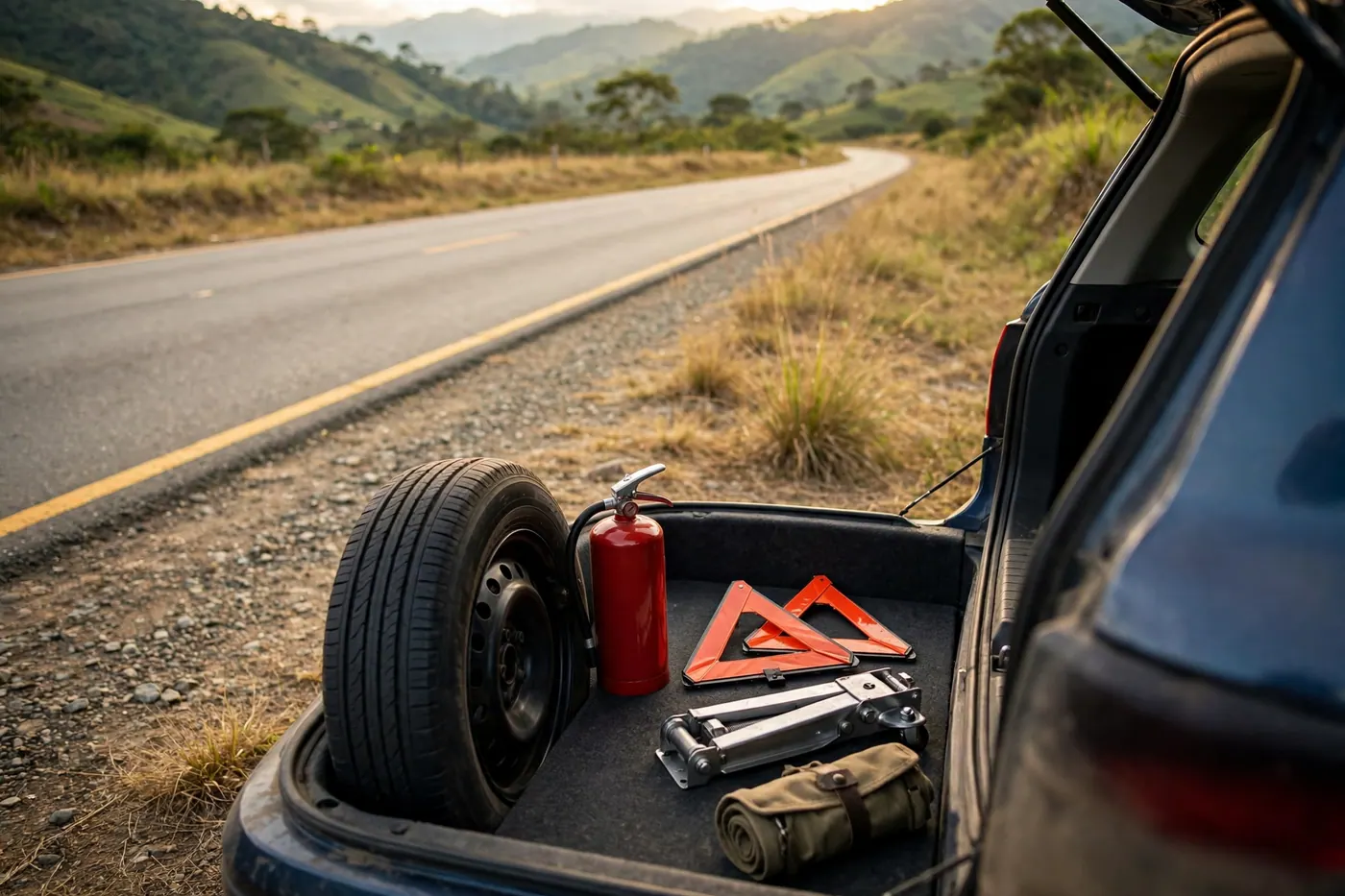
Article 160 is a separate power to register public or private means of transport. A pedestrian stop is not that procedure. If you were stopped in a vehicle, start with the highway car kit guide rather than this one.
Recording, comparendos and fines
Article 21 says any police procedure may be recorded with information and communication technology, and an officer who prevents a recording without legal justification commits a misconduct cause. Filming is fine; blocking the procedure is not.
Impeding or resisting identification is article 35, numeral 3, with a Type 4 general fine plus community or pedagogical participation. Under Law 2450 of 2025 (article 19), a Type 4 fine is 16 current legal daily minimum wages (SMDLV). Paying within five business days after the comparendo cuts it by 50 percent. Only Type 1 and Type 2 fines can be swapped for community or pedagogical participation, so Type 4 is outside that swap. If you disagree, you may appear within three business days before the competent authority. Check the current daily wage yourself to convert it.
If it doesn't feel like a real stop
Article 159 assigns the personal registro to uniformed National Police. People in civilian clothes who demand your phone, PIN or passport may be impersonating police. Don't follow anyone to a second location. If it feels like a robbery, call 123, the single national emergency line, free and open 24 hours (see the 123 guide). Visitors can also read about tourist police assistance.
To complain about a real officer, use the National Police PQRS channels: citizen-attention offices, the police website, or toll-free lines 018000-910600 and 018000-910112, with or without giving your name. In-person administrative attention is at Carrera 59 26-21, CAN, Bogotá, weekdays 08:00-12:00 and 14:00-17:00. If someone is actually detained, contact a lawyer and your consulate.
These are national rules; local orders can add procedure, and a stop can become a criminal procedure with different rules.
Preguntas frecuentes
❓ Can police search me on the street in Colombia?
Yes, uniformed National Police may register a person and their belongings in the six cases listed in article 159 of Law 1801 of 2016, such as doubtful identity, weapons, stolen goods or illegal drugs. A private home needs the occupant's authorization. (verify with the official source, as accessed)
❓ Do I have to carry my passport?
As a foreigner, carry your passport or cédula de extranjería. The Constitutional Court case about not carrying a Colombian cédula does not mean a visitor may go without a travel document. Cooperating with identification is different from resisting it. (verify with the official source, as accessed)
❓ Can an officer read my WhatsApp or photos?
A street registro is not a judicial order to intercept private communications. Article 15 of the Constitution requires a judicial order and legal formalities. Showing your IMEI by dialing *#06# is not the same as unlocking the phone. (verify with the official source, as accessed)
❓ Can police keep my passport?
For an ordinary identification demand, Ley 962 of 2005 says authorities must not retain a passport or cédula de extranjería, and showing it is enough. A criminal evidence seizure or an immigration measure is a different proceeding. (verify with the official source, as accessed)
❓ Can I film the stop?
Yes, article 21 says a police procedure may be recorded, and blocking a recording without legal justification is misconduct. Filming must not become obstruction, which article 35 can fine, so keep your distance and stay calm. (verify with the official source, as accessed)
❓ What is the fine if I refuse to identify myself?
Resisting identification falls under article 35, numeral 3, with a Type 4 fine, set by Law 2450 of 2025 at 16 daily minimum wages, plus community or pedagogical participation. Paying within five business days cuts 50 percent; you can object within three business days. (verify with the official source, as accessed)
❓ What if someone out of uniform demands my phone?
Article 159 assigns the personal registro to uniformed National Police. If it feels like a robbery, call 123 and do not follow them to a second place. Complaints about real officers go through Police PQRS. (verify with the official source, as accessed)

Comments
Loading comments...
Checking sign-in status...