
Buying Land to Build in Colombia: Lot Inspections, Curaduría Licenses, and Utility Connections
A practical guide for foreign buyers: verify the title, confirm zoning, commission a soil study, get the Obra Nueva license from a Curaduría, and secure legal utilities before you wire money.
IDIOMA DEL ARTÍCULO
Showing original language
Quick answer: Owning a lot in Colombia does not mean you can build on it. Before paying, verify a clean, independent title, get the local zoning rules, commission an NSR-10 soil study, apply for a Licencia de Construcción (Obra Nueva), and confirm legal water and power. Skip any step and you may own a pretty field you cannot legally build on.
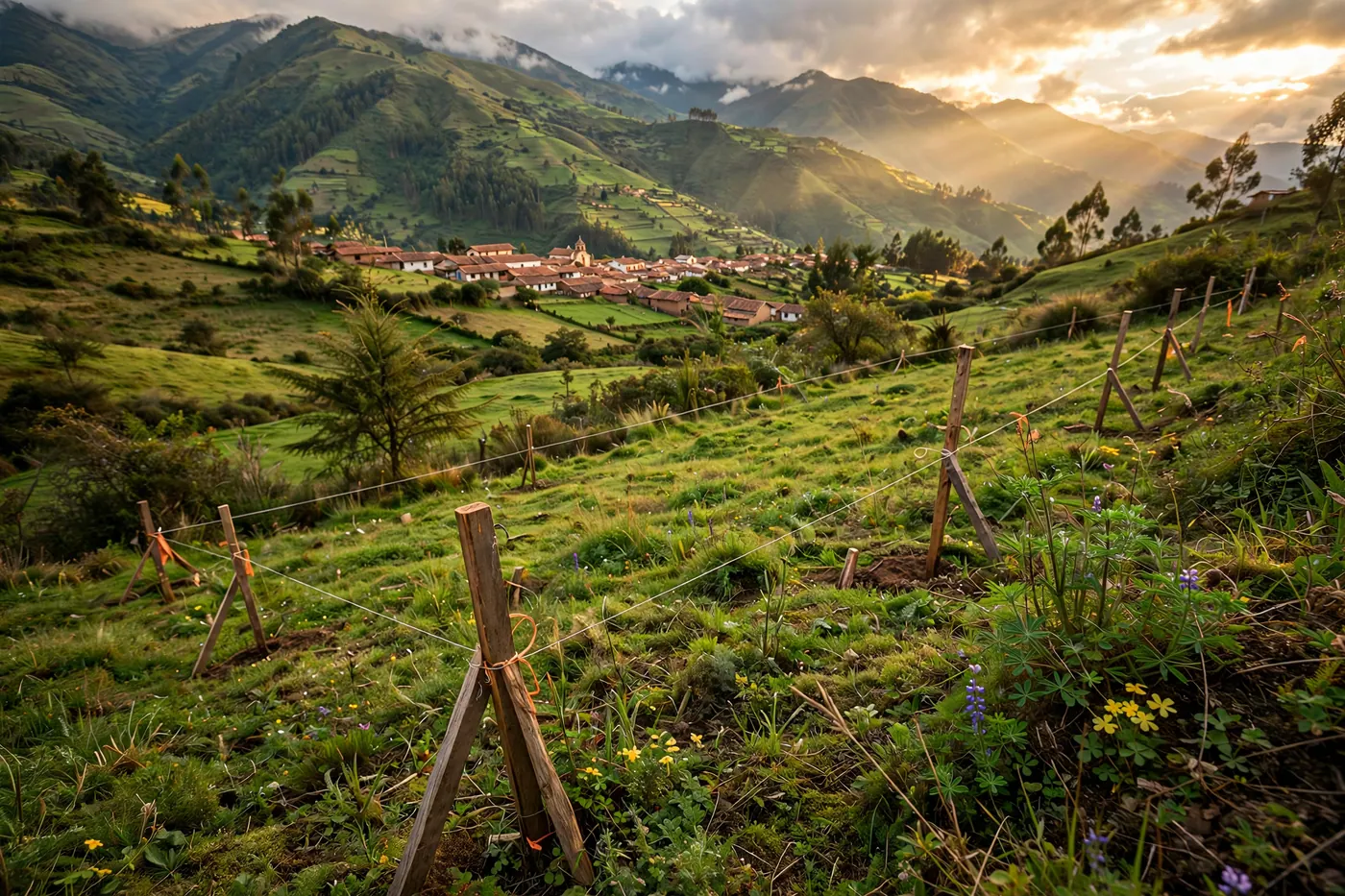
The pattern is familiar: someone falls for a green hillside outside a pueblo, the seller offers a quick promesa de compraventa, and only months later the buyer learns the plot has no independent title, no water rights and no building permit. This guide walks through the sequence that prevents that, in the order I would do it.
Step 1: Make sure you are buying a real, titled lot
Foreigners have the same constitutional right to buy titled land as Colombians, and you can do it with your passport, without a local partner. The risk is not your nationality; it is the title. Ask for a Certificado de Tradición y Libertad issued within the last 30 days, and have a lawyer read the chain of ownership, liens, seizures and easements. Our guide on falsa tradición and title checks explains the red flags, and hiring a real estate lawyer covers who should do the reading.
The classic trap on rural land is the pro-indiviso share, sold as "a piece of a bigger farm" (derechos y acciones). Each buildable lot needs its own independent matrícula inmobiliaria registered with the Supernotariado. Rural agricultural parcels also cannot be divided below the Unidad Agrícola Familiar (UAF) set for that municipality (Ley 160 de 1994), so a "fraction" without its own folio leaves you with an unbuildable share. If the lot came from a split, read about how rural subdivision is approved and ask for the paperwork.
Then walk the land with a licensed surveyor. Boundaries, area, fences and access roads on the ground should match the documents. Mismatches are a common source of disputes.
Never sign before these three papers
- The current Certificado de Tradición y Libertad with an independent folio.
- Municipal planning clearance on land use.
- Written proof of service availability (urban) or the water and discharge route (rural).
Fraudulent developers love the "promise of future utilities". Treat that phrase as a warning, not a selling point.
Step 2: Check zoning in the POT before you fall in love
The municipality's Plan de Ordenamiento Territorial (POT, or PBOT/EOT in smaller towns) decides what you may do: allowed land use, índice de ocupación (how much of the lot you can cover), maximum height, setbacks (aislamientos) and environmental buffers such as rondas hídricas. Request the concepto de uso del suelo or the equivalent norm certificate from the local planning office. A river running through your dream lot can quietly remove a large share of the buildable area.
Holding a title does not grant building rights. Unurbanized land may first need a licencia de urbanización or parcelación. Rural classification can also change what is allowed, which is why a "lote campestre" must be checked against the actual rules, not the brochure.
Step 3: Soil study and structural design under NSR-10
Colombia is seismic country. Homes must be designed under the national earthquake-resistant code, NSR-10, with architectural and structural plans signed by licensed professionals, plus a soil study (estudio geotécnico) signed by a licensed civil or geotechnical engineer. Soil studies generally involve at least three exploratory boreholes or test pits (sondeos o apiques) down to competent bearing strata. There are narrow exceptions for simple one- and two-story masonry homes, but slopes, unknown fill or taller structures call for the full study.
My honest advice: commission the soil study before closing if the seller allows it, or make the purchase conditional on it. It is the cheapest insurance you will buy. Ask local engineers for written quotes, because cost varies with terrain and access.
Warm-climate lots also deserve a thought on moisture; our note on humidity in Colombian homes is a useful design prompt.
Step 4: Find the lot, then get the Obra Nueva license
If you are still shopping, you can browse fincas and land listings and filter by what matches your zoning checklist. According to active listings on Colombia Move (October 2026), there are 39 active lot listings and 34 active finca listings, so there is real choice to compare.
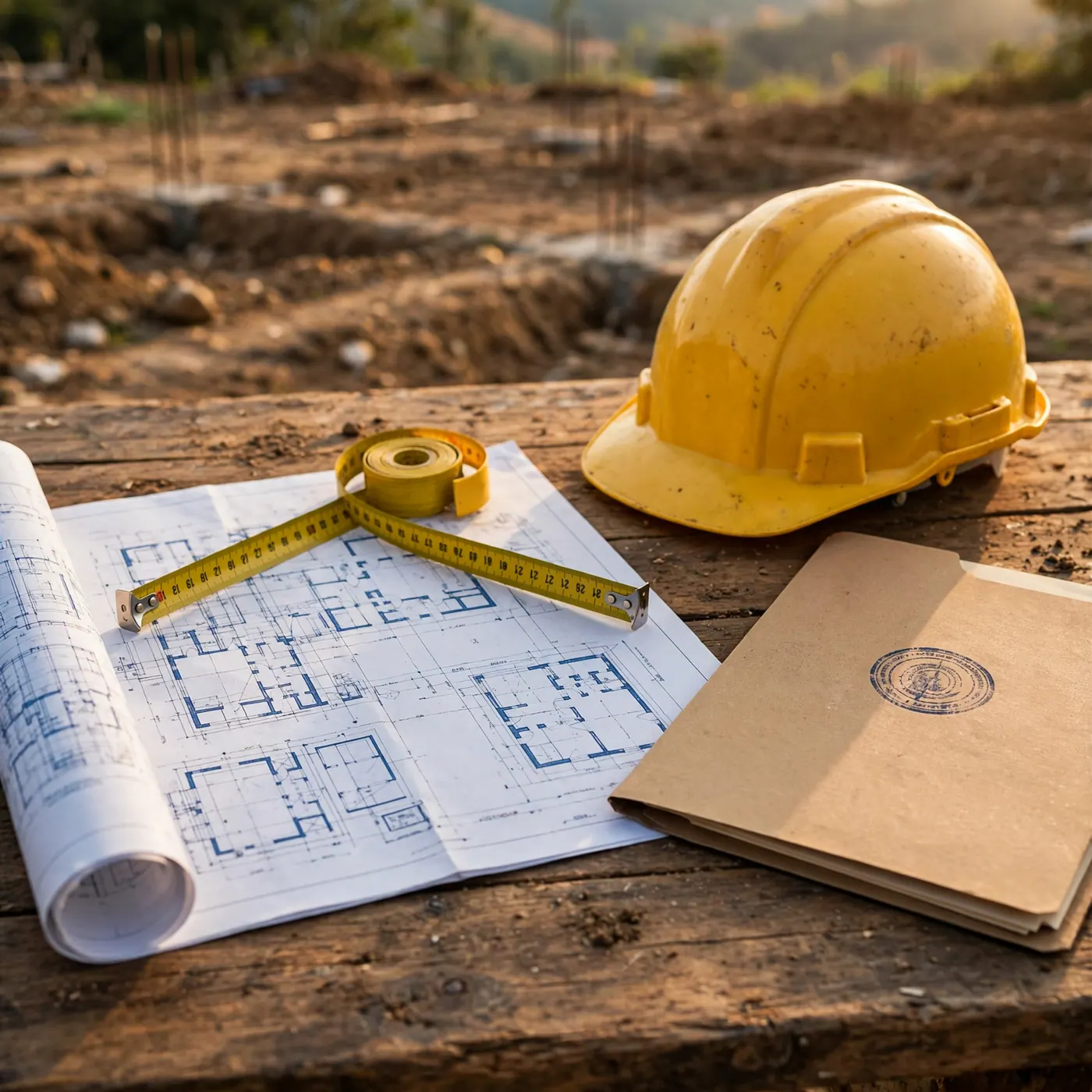
Under Decreto 1077 de 2015 (Art. 2.2.6.1.1.7), building a new structure on raw land requires a Licencia de Construcción in the Obra Nueva modality, issued by a curador urbano or, where no Curaduría exists, the municipal planning office (Secretaría de Planeación). Both apply the same national standards.
What the dossier usually contains
- Title certificate issued within 30 days.
- The national single application form (Formulario Único Nacional).
- Architectural plans signed by a registered architect.
- Structural design and calculations under NSR-10.
- The geotechnical study.
- Proof of municipal tax payments.
Fees (expensas) follow official formulas based on built area, stratum and project type, not a flat rate. Ask the Curaduría for a written liquidación before filing, and never accept a figure someone quotes from memory.
Once issued, the license is valid for 36 months, with a single 12-month extension if you request it before it expires (at least 30 working days beforehand, per the verified guidance). Build slowly and you can lose it.
Step 5: Water, sewer and power
Urban lots
On an urban lot, the utility companies issue a certificate of immediate service availability (disponibilidad inmediata de servicios públicos) for water, sewer and electricity. Get it in writing; a seller saying the pipes are "right there" is not a document.
Rural and campestre lots
Without a municipal aqueduct or sewer, domestic water needs a water concession (concesión de aguas) and a septic system needs a wastewater discharge permit (permiso de vertimientos) from the regional environmental authority, under Decreto 1076 de 2015. Surface and groundwater belong to the state, so an unpermitted well or river pump can bring closure orders and fines. For a regional example, see how the CAR handles these procedures. Power is a separate question: distance to the nearest grid line drives the cost, so request a quote from the local provider before you buy.
Your pre-wire checklist
- Independent folio and clean 30-day title certificate; lawyer review.
- Surveyor confirms boundaries and area.
- Zoning concept from the planning office confirms housing is allowed.
- Soil study done or purchase made conditional on it.
- Utility availability, or concession and discharge route, confirmed in writing.
- Curaduría fee liquidación and a realistic timeline.
- Only then, sign the promesa and wire funds through a traceable channel.
One caveat: buying land is not a shortcut to residency. The property investor visa has strict thresholds and registration requirements, and raw-land deals can complicate them, so check the visa rules separately.
Have a question about a specific lot? Ask in the Colombia Move community.
Frequently Asked Questions
❓ Can foreigners legally buy raw land and build a house in Colombia?
Yes, foreigners have the same property rights as Colombians and can buy titled land with a passport. Building still requires a Licencia de Construcción from a Curaduría Urbana or municipal planning office, regardless of nationality. (verify with the official source, as accessed)
❓ What is the difference between a Curaduría Urbana and a Secretaría de Planeación?
Curadurías are public-function entities that issue building permits in many cities, while smaller municipalities without one process permits through their planning secretariat. Both apply the same national standards under Decreto 1077 de 2015, so the rules do not change, only the office. (verify with the official source, as accessed)
❓ How long is a Colombian construction license valid?
An Obra Nueva license is valid for 36 months once it becomes binding. You can request a single 12-month extension, and it must be filed before the original term expires. Plan your construction schedule around that deadline. (verify with the official source, as accessed)
❓ Is a soil study mandatory before building a single-family home?
Generally yes. NSR-10 and Curaduría requirements call for a geotechnical study signed by a licensed engineer. Narrow exceptions exist for simple one- and two-story masonry homes, but slopes or unknown fill require the full study. Ask the Curaduría what it expects for your lot. (verify with the official source, as accessed)
❓ Can I dig a water well on my rural land without permission?
No. Surface and groundwater are state property, so a well or river pump needs a water concession from the regional environmental authority. Unpermitted extraction can lead to fines and work-stoppage orders, so apply for the concession before drilling anything. (verify with the official source, as accessed)
❓ What is the biggest scam to avoid with a lote campestre?
The most common one is selling pro-indiviso shares or an informal subdivision instead of a lot with its own matrícula inmobiliaria. Without an independent folio and approved subdivision, you cannot get a construction license or individual utility meters. Have a lawyer check the title first. (verify with the official source, as accessed)
Comments
Loading comments...
Checking sign-in status...