
Ending a Rental Lease Early in Colombia: Notice, Penalties, and Handover
Breaking a lease in Colombia without knowing the law can be an expensive mistake. Here is how to handle your notice, avoid penalties, and manage a smooth handover.
IDIOMA DEL ARTÍCULO
Showing original language
Moving is stressful enough, but breaking a lease in Colombia without knowing the law can be an incredibly expensive mistake. I've seen expats get hit with unexpected penalties simply because they sent a WhatsApp message instead of a formal letter.
Quick Answer: Under Colombia's urban residential lease law (Ley 820 de 2003), you must give three months' written notice via certified mail to end a lease. Breaking it mid-term without legal cause triggers a mandatory penalty of three months' rent. Cash security deposits are illegal.
If you are renting an apartment or house, Ley 820 de 2003 is your rulebook, and any clause in your contract that contradicts it is legally void, no matter what your landlord tells you. Before you get anywhere near the exit, it's worth reviewing these rental contract red flags so you know exactly what you signed. Commercial leases follow entirely different rules, but for residential tenants, here is exactly how to handle notice, penalties, and the final handover.
The Golden Rule: Mutual Agreement (Article 21)
The easiest and cheapest way out of any lease is mutual agreement. Under Article 21, if you and your landlord agree to end the contract early, you can walk away immediately with zero penalties.
Landlords are often willing to negotiate if the local rental market is hot or if you help them find a replacement tenant. If you plan to pitch this, check our WhatsApp scripts for landlords to start the conversation on the right foot.
If they agree, never rely on a verbal "okay." Draft a simple, signed agreement (acta de terminación por mutuo acuerdo) stating the exact move-out date and confirming that neither party owes the other any penalties.
Ending the Lease at the End of the Term (No Penalty)
Colombian leases automatically renew (prórroga) unless one party explicitly states otherwise. To prevent this, you must provide a written notice of non-renewal (preaviso) at least three months before the contract's end date.
Here is the catch that trips up many foreigners: you cannot just hand the landlord a letter or send an email. The law requires you to send the notice via an authorized postal service (servicio postal autorizado) like Servientrega, 4-72, or Interrapidisimo. Keep the physical shipping receipt. A WhatsApp text has zero legal standing and leaves you exposed to automatic renewal.
Breaking the Lease Mid-Term (With Penalty)
If your plans change and you have to leave halfway through your contract without the landlord's consent, it will cost you. Under Article 24, Numeral 4, breaking a lease early without a legal breach by the landlord requires you to pay an indemnity equal to three months of the current rent (canon de arrendamiento).
You are also still required to give three months' notice. This is a heavy financial hit, which is why negotiating a mutual agreement should always be your first step.
Paying the penalty isn't as simple as wiring three months' rent straight to your landlord, either. Under Article 25, you have to deposit that indemnity with an authorized government entity, Banco Agrario is the standard option, within the three months before your termination date, then send the landlord the deposit receipt (comprobante de consignación) as formal proof. Pay the landlord directly instead of going through this deposit process, and you can end up in a dispute over whether you actually settled on time.
When Can You Terminate Early Without Penalty?
You can legally break the lease mid-term without paying the three-month penalty if the landlord breaches the contract. Article 24 defines these breaches strictly. They include the landlord cutting off your utilities, failing to maintain the property's habitability (like ignoring a massive roof leak), or causing serious disturbances to your privacy.
If you face these issues, document everything. However, you cannot simply pack up and leave; you still need to follow a formal notification process, and I highly recommend consulting a Colombian real estate lawyer (abogado inmobiliario) to ensure you are legally protected.
Landlord-Initiated Terminations: What to Know
Landlords can also terminate the lease, but they face strict rules. If they need the property for personal use, to demolish it, or because it has been sold, they must give you three months' notice and deposit a guarantee to prove their claim.
There is also the "4-year rule" (Article 22). If you have rented the same property for four consecutive years or more, the landlord can terminate the lease at the end of a renewal period without any specific cause. To do this, they must pay you an indemnity equal to 1.5 months' rent.
The Handover Process: Inventory, Utilities, and Keys
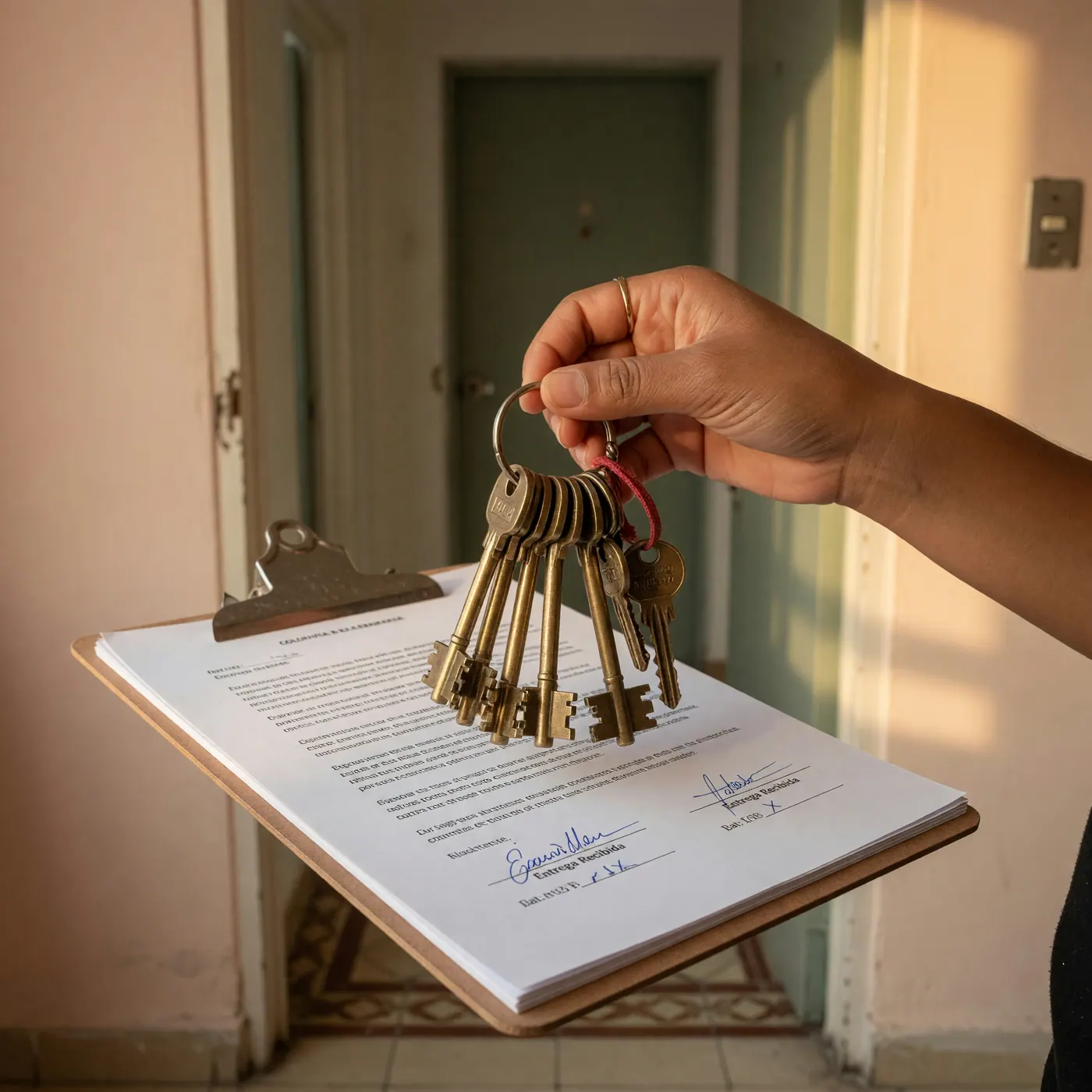
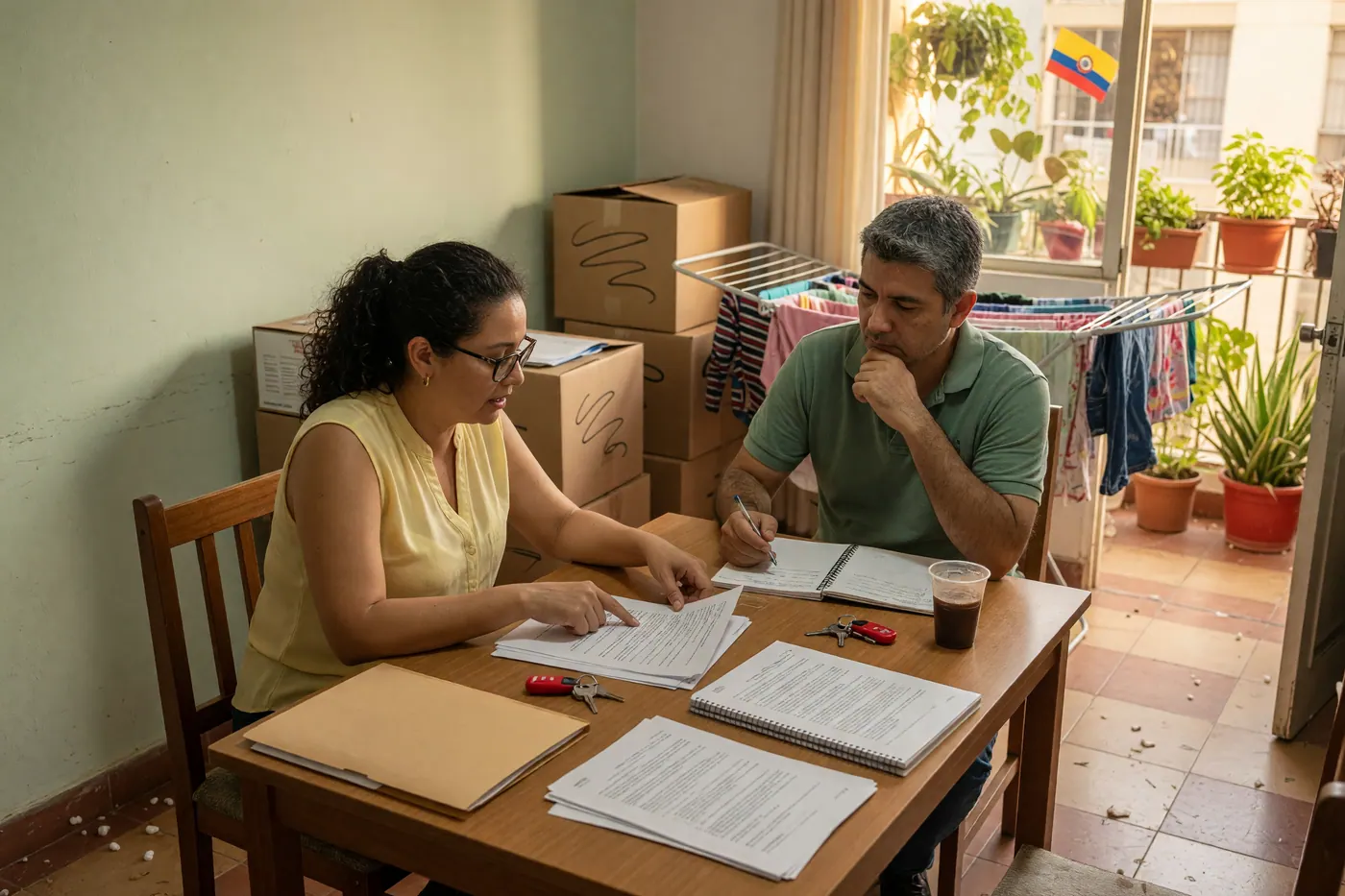
The day you leave, you will complete an acta de entrega (handover document). You should compare the current state of the apartment against the apartment inspection checklist you signed when moving in, and building a proper inventario de entrega protects both sides if there's ever a dispute. Take photos and videos of everything, documenting the final state of the property and the keys to prevent future disputes.
Many landlords will ask for a cash deposit to cover potential damages or unpaid utilities. Under Article 16 of Ley 820, cash security deposits (depósitos de garantía) are strictly illegal for residential leases in Colombia. Landlords cannot legally demand them. The only legal exception is a utility guarantee (Article 15), which cannot exceed two billing cycles and must be set up directly with the utility companies, not paid in cash to the owner. Once the keys are handed over, work through closing your apartment accounts so you're not still fielding utility bills or bank notifications months after you've left.
When planning your exit, logistics matter too, so book movers early. According to active listings on Colombia Move (July 2026), there is currently only one active listing for moving services (mudanzas) even though demand keeps coming in, so don't wait until the final week to start calling around.
Frequently Asked Questions
❓ Can I terminate my lease early in Colombia without paying a penalty?
Yes, but only in specific situations: mutual agreement with the landlord, proper notice at the end of the lease term, or a legal breach by the landlord under Ley 820 de 2003. Common breaches include cutting off utilities or failing to make essential repairs, and you still need written proof of notice.
❓ Is a WhatsApp message or email sufficient for a lease termination notice?
No, under Colombian law (Ley 820 de 2003), the notice must be sent in writing via an authorized postal service (servicio postal autorizado) like Servientrega or 4-72 to be legally binding and indisputable.
❓ How much is the penalty for breaking a lease early in Colombia?
The penalty for breaking a lease early without cause is three months of the current rent (canon de arrendamiento), per Ley 820 de 2003. You also owe three months' written notice before moving out.
❓ Can my landlord keep my security deposit for damages when I leave?
No, because cash security deposits (depósitos de garantía) for damages or rent defaults are strictly illegal for residential leases under Article 16 of Ley 820 de 2003. The landlord must return any such illegal deposit and cannot legally withhold it.
❓ What is the "4-year rule" for landlords terminating a lease?
Under Article 22 of Ley 820 de 2003, a landlord can end the lease at renewal without cause once you've rented the same property for four consecutive years or more. In that case, they must pay you an indemnity equal to 1.5 months' rent.


Comments
Loading comments...
Checking sign-in status...