
Requirements for Opening a Barbershop or Hair Salon in Colombia: Biosafety and Resolution 2117
What Resolution 2117 of 2010 requires to open a barbershop or hair salon: sanitary certificate, infrastructure, biosafety, waste management, and how to publish your service with verifiable data.
IDIOMA DEL ARTÍCULO
Showing original language
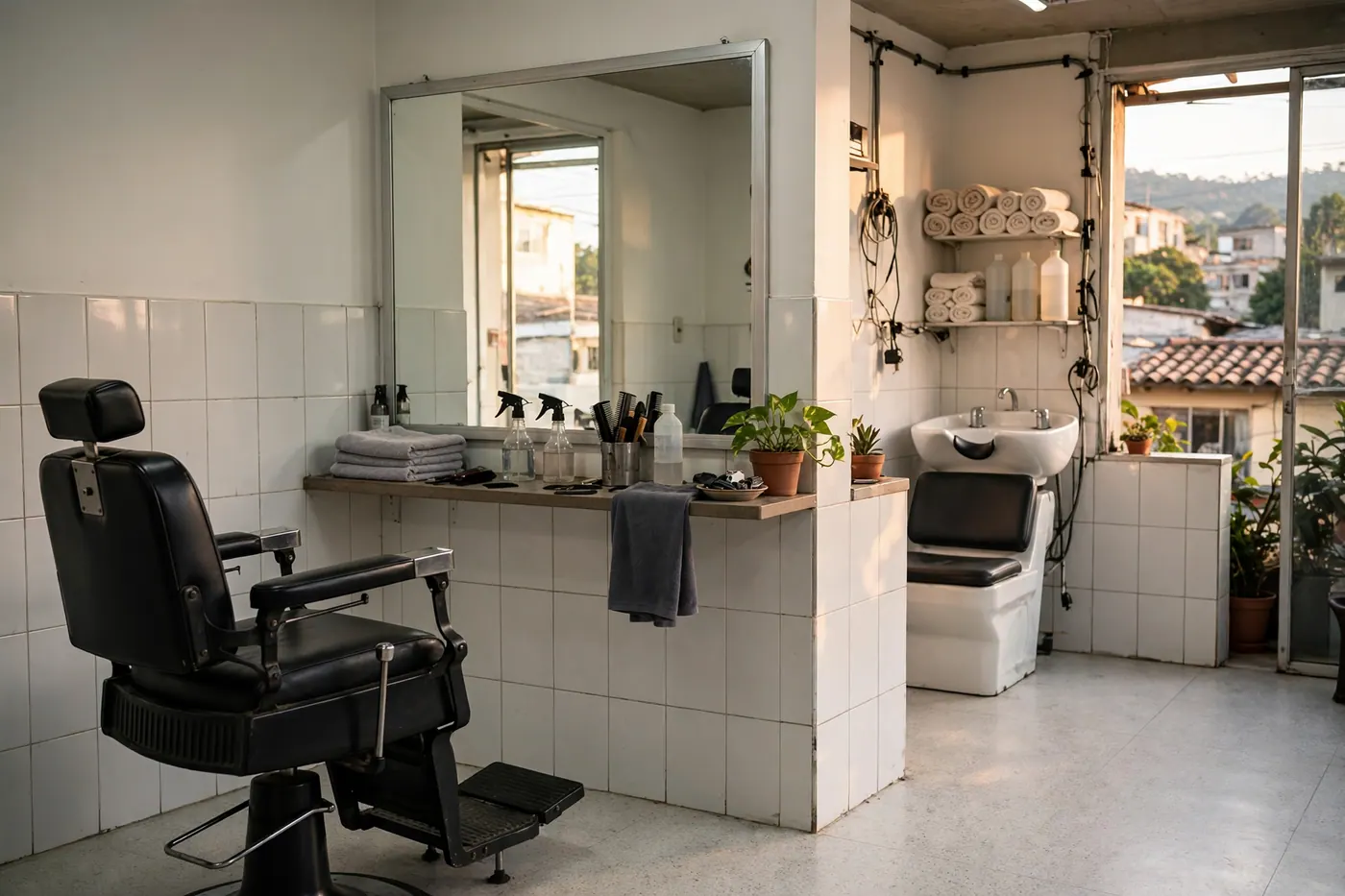
Between setting up the chair, the mirror and the hair-washing basin, many people remember too late that a barbershop doesn't open just with good scissors: the health authority also inspects the premises. This guide gives you the practical checklist so your barbershop or hair salon is ready for that visit, and so you can then publish your service with information that builds trust.
Keep reading: if you work with a portable kit and not from a fixed location, see how to get home-service barbering clients.
Which premises Resolution 2117 covers and what falls outside it
Resolution 2117 of 2010, issued on June 9, 2010 and published in Official Gazette 47.741 on June 15, 2010, sets the requirements for opening and operating barbershops, hair salons, stylist and manicurist schools, beauty rooms and similar businesses that provide ornamental aesthetics.
Be careful not to mix up regulations, because it's the most common mistake:
- Resolution 2117 of 2010: opening and operation of the establishment.
- Resolution 2827 of 2006: adopts the biosafety manual.
- Decree 780 of 2016, articles 2.8.10.1 and 2.8.10.2: compiles Decree 351 of 2014 on waste, and includes barbershops, hair salons, stylists, manicurists and beauty rooms.
If your premises also offers facial and body aesthetics, you must additionally comply with Resolution 2263 of 2004 and the rules that add to, replace or modify it. Resolution 2117 does not cover laser, botox, injections or other health procedures. And tattoos or piercings are not an "extra" that can be added to a barbershop under this resolution.
Sanitary certificate: who issues it and how to request it in Bogotá
Establishments of ornamental aesthetics must have a favorable sanitary certificate issued by the health authority of their jurisdiction. Ask your local health authority how to apply, because the specific procedure is not the same everywhere.
The example that is verified is Bogotá. According to the Bogotá District Health Secretariat (consulted on October 22, 2026), anyone can request the certificate at no cost, with the premises already open, from the Secretariat or the local health network. The visit is carried out by the Integrated Health Services Subnetwork of the locality; the official identifies themselves as a health authority and leaves a record with one of three results: favorable, favorable with requirements, or unfavorable.
Here's a trap: "favorable with requirements" is not the same as the favorable result required by article 1 of the resolution. An unfavorable certificate can lead to sanitary measures, and in cases of serious risk, articles 576 and following of Law 9 of 1979 apply. I did not find a national fee for the certificate, so outside Bogotá, ask your territorial entity about the cost (verify the current figure).
In addition, the territorial health entity must visit the establishment at least once a year, identify itself and draw up a record.
Infrastructure the visit checks
This is what the resolution requires and what I would review with a notebook in hand before opening:
- Drinking water from the public network, with a tank if the supply is not permanent.
- Connection to the sewer or another adequate system.
- Hair-washing basin for exclusive use, independent of the toilet facilities.
- Toilet facilities with liquid soap, toilet paper, disposable towels or a dryer, and a waste bin with a bag and lid.
- Aseptic area with a handwashing sink.
- Separate cleaning area with a toilet bowl.
- Lockers that separate work clothes from street clothes.
- Independent electrical outlet per station, with appropriate wiring and grounding.
- Signposted first-aid kit with cotton, disinfectant, gauze and adhesive tape. If it includes medicines, they must be over-the-counter, with an Invima sanitary registration and a valid date.
- Signs prohibiting activities (smoking, eating at the workstation, pets entering) and fire-fighting equipment located and signposted according to the risk and fire load.
- Environmental disinfection and pest control program, at least once a year.
The heaviest cost for your budget is usually the separate hair-washing basin and the wiring for each station. If you plan to buy a used chair or basin, see this guide to used barbershop furniture and remember: the furniture does not come with the sanitary certificate.
Premises in a home or rented station
An establishment in a home must be in a separate area, with physical separation and independent entrances. Without that, it cannot be part of the home. Note: some summaries simplify and say it is prohibited outright; the text of the resolution is what governs.
If you plan to rent a station in a salon, the sources reviewed show no separate national permit for the station: the certificate belongs to the establishment. Before paying for the chair, ask to see that the premises has a certificate and accept following that premises' manual.
People and paperwork
Anyone working in ornamental aesthetics must present a certificate from an institution of education for work and human development and/or higher education, with a program registered with the Secretariat of Education. The two-year transition period, counted from June 15, 2010, has already expired: today it is not an open window.
According to the Bogotá Healthy Businesses guide, the premises must also have the diplomas, the biosafety manual and the integrated waste management plan. Add your staff's certificates and you will have the folder the official will ask for.
Biosafety and instruments
First you clean, then you disinfect or sterilize. The manual of Resolution 2827 of 2006 (Official Gazette 46.362) describes moist-heat autoclave sterilization between 121 °C and 132 °C, at a pressure of 15 pounds per square inch, and 30 minutes at 132–134 °C for tools, elements and utensils. This is what the manual describes, not the only possible method, and here I will not give you chemical recipes: follow the manual and the manufacturer's instructions.
Other points from the authority's text:
- Bleaches, perms, straighteners and dyes are cosmetics requiring special handling; the resolution recommends a sensitivity test before applying them, even if the person has used them before.
- According to the Bogotá authority, cosmetics you store and apply in the salon must have a mandatory Invima sanitary notification.
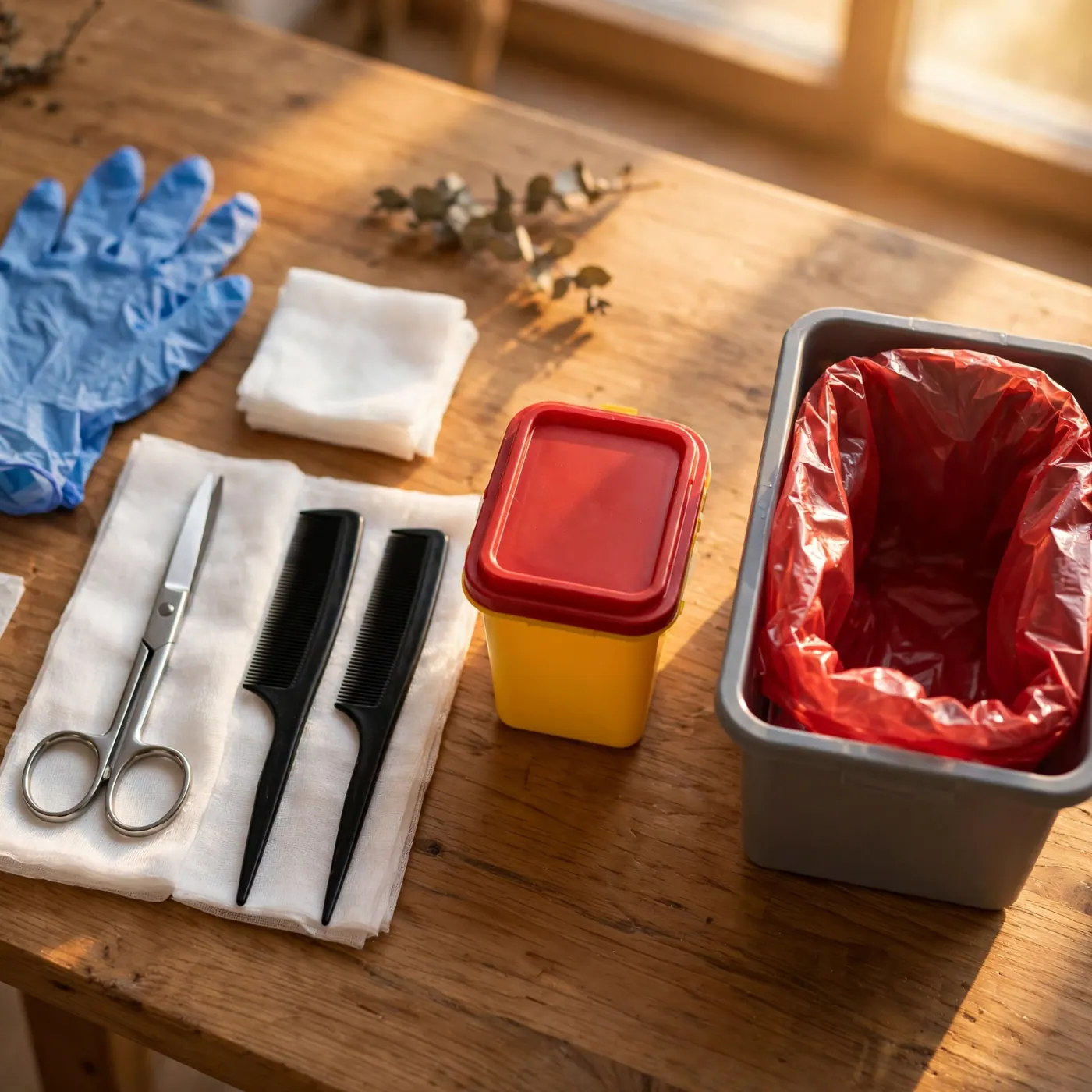
Waste: sharps container, red bag and manager
This is what is most often done wrong, and I say it frankly: the blade does not go in the regular bin or the red bag. With the Bogotá Health Secretariat self-assessment list:
- Files, blades, applicators and broken glass are sharps: they go into a rigid, puncture-resistant container with an airtight lid and a capacity of no more than 2 liters, next to the station. They do not go in garbage bags.
- The red bag is for infectious and other hazardous waste. The premises must contract external management with a company authorized by the environmental authority.
- Keep the receipts from the hazardous waste carrier for five years; do not keep infectious waste more than 7 days (a maximum extension of one month if you generate less than 100 kg per month) nor other hazardous waste more than twelve months.
- For non-hazardous waste, the list refers to the code of Resolution 2184 of 2019: green for usable organics, white for recyclables and black for non-recyclables.
These are rules from the Bogotá list; in another jurisdiction, confirm the details with your health and environmental authorities. There is no national waste manager fee in the sources reviewed (verify the current figure).
Procedures that do not replace the sanitary certificate
The health certificate is one piece; there are others. The commercial registration of the establishment is explained in this commercial registration guide, and human safety inspection is covered by the Fire Department technical certificate guide. Also check the land use of your property.
About the RUT: in the DIAN note, CIIU 9602 "Hairdressing and other beauty treatments" includes washing, cutting, styling, dyeing, perming and straightening, artificial nails and eyelashes, shaving and trimming beards, facial massage, manicure, pedicure, makeup and waxing hair removal; tattoos, piercings and permanent makeup fall under 9609. This is a tax classification, not a sanitary permit; confirm the current note before registering.
How to publish your service once the premises is in order
With the premises in order, the ad can promise true things. Include the specific service, neighborhood or area, hours, a "from" price and photos of your station and of the clean, stored tools. The "from" price saves you the "how much does it cost?" chat, and photos of a tidy station filter out casual browsers. To write the text, use this guide to publishing beauty services. Note: the ad does not replace the sanitary certificate.
According to Colombia Move's internal inventory of October 21, 2026, the beauty services category had zero active ads: whoever publishes today appears with no direct competition in that category.
Frequently asked questions
❓ How much does the sanitary certificate cost?
In Bogotá, requesting the sanitary certificate is free of charge. In other jurisdictions, the sources consulted show no national fee, so ask the health authority in your area before opening, because the cost and procedure may vary. (verify at the official source)
❓ How do I publish my service safely and avoid scams?
Publish only real information and do not hand over money in advance to strangers. Show your area, hours, starting price and photos of your station, and agree on payments at the time of service. Contact clients via WhatsApp and be wary of anyone who asks for codes or advance transfers. (verify at the official source)
❓ Where do I publish my barbershop's service?
You can publish it in the beauty services category of Colombia Move, in addition to your social networks and neighborhood WhatsApp groups. Include coverage area, hours, experience and photos of the station so the client knows what to expect before messaging you.
❓ Can I use Resolution 2117 to open a barbershop at home?
Yes, if the premises is in an area separate from the home, with physical separation and independent access, and meets the rest of the resolution. Some summaries omit that exception; the text of the resolution governs. (verify at the official source)
❓ With 2117, can I do facials, laser or botox?
No. Resolution 2117 covers ornamental aesthetics and not laser, botox, injections or other health procedures. If you offer facial and body treatments, you must additionally comply with Resolution 2263 of 2004 and the rules that modify it. (verify at the official source)
❓ Where do I dispose of blades?
In Bogotá they go into the rigid sharps container, with a capacity of no more than 2 liters, next to the station; not in the red bag or the regular bin. The red bag is for infectious and other hazardous waste, collected by an authorized manager. (verify at the official source)
❓ What certificate must a person who cuts hair show?
A certificate from an institution of education for work and human development or higher education, with a program registered with the Secretariat of Education. The two-year transition period counted from 2010 has already expired. (verify at the official source)
Sources
- Resolution 2117 of 2010 (MinSalud)
- Resolution 2117 of 2010 (Bogotá District Legal Secretariat)
- Regulations for beauty establishments (Bogotá District Health Secretariat)
- Healthy Businesses, beauty salons (Bogotá District Health Secretariat)
- Sanitary certificate (Bogotá District Health Secretariat)
- Resolution 2827 of 2006 (MinSalud)




Comments
Loading comments...
Checking sign-in status...